
Kira Matus
- 619 Followers
- 406 Following
- 55 Posts
Professor of Public Policy and Environment & Sustainability at HKUST; Green tech, sustainability, innovation, science/tech, and public policy, regulation & emerging tech (incl AI ethics these days), occasional chemistry (and green chemistry!), Hong Kong, academia; she/her
 William C Clark
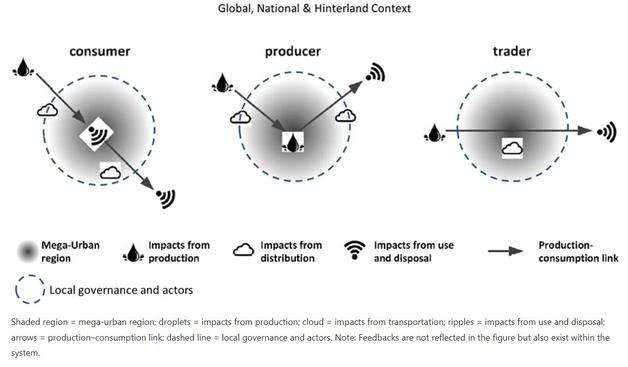
"The emerging role of mega-urban regions in the #sustainability of global production-consumption systems" (Npj Urban Sustainability, 3, 2023) https://doi.org/10.1038/s42949-023-00098-w) maps their key role in global flows of natural & social resources, shows how and under what conditions #governance #innovations can be transferred. Authors: Doran, E., Golden, J., Matus, K. (@KiraM), Lebel, L., Timmer, V., van ‘t Zelfde, M., & de Koning, A. Npj Urban Sustainability, 3(1), https://doi.org/10.1038/s42949-023-00098-w. #OA !
 kcarruthers
Woot!
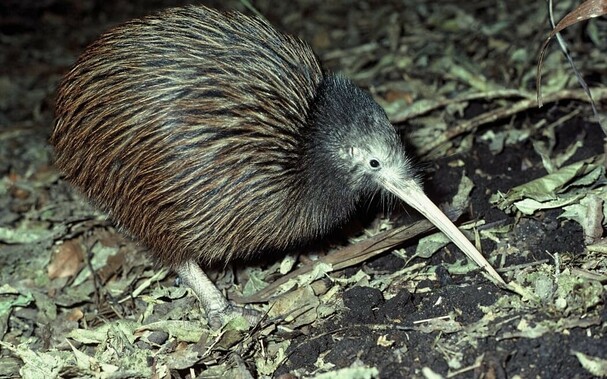
First wild kiwi egg laid in Wellington in over a century 🙌
https://www.rnz.co.nz/news/national/482754/first-wild-kiwi-egg-laid-in-wellington-in-over-a-century

And an important reminder as we consider the strengths, and limitations, of science advice:
"While expert science advice may help to avert a pandemic’s situational crisis, it may not necessarily prevent the onset of an institutional crisis, which could be fuelled by internal factors like politics and poor inter-agency communication, as well as external factors like low public trust in government and a highly polarised, defiant public. "
Who needs yet another #Covid-19 paper? Well, since this one has been in review since 2021, I have no choice but to give it a bit of love...
But seriously, for those interested in #scienceadvice and #expertise in #policy, we look at the evolution of advisory institutions in HK post-SARS, and how these impacted early pandemic responses in 2020.
https://www.nature.com/articles/s41599-022-01467-z?utm_source=dlvr.it&utm_medium=twitter

From SARS to COVID-19: the role of experience and experts in Hong Kong’s initial policy response to an emerging pandemic - Humanities and Social Sciences Communications
As one of the most densely populated places in the world, Hong Kong fared relatively well in the first year of the COVID-19 pandemic, with a very low number of cases and fatalities per capita. This was mostly due to the Hong Kong government, healthcare workers, and the general public’s institutional and individual memory after they successfully overcame the deadly severe acute respiratory syndrome (SARS) epidemic in 2003. However, while Hong Kong was well accustomed to measures such as wearing masks and social distancing, the cooperation of the Hong Kong public to government restrictions was highly affected by its local political context, especially after widespread anti-government protests began mid-2019. This brought the public’s trust in government to an all-time low, creating a political ‘new normal’, which underpinned how COVID-19 policies would be proposed, accepted, and implemented, if at all. To understand how science advice was offered and how public health decisions were made, this research investigates the evolution of Hong Kong’s science advisory mechanisms for public health from before SARS, after SARS, and during COVID-19 in 2020, including the roles of key organisations and departments, the establishment of new centres and committees, and the creation of workgroups and expert advisory panels. This paper compares and analyses the reasons behind these differences in science advisory mechanisms between SARS and COVID-19. The findings from this research reinforce the unquestionable need for robust science advisory structures and knowledgeable scientific experts to solve health-related crises, though more research is required to understand the ways in which science advice influences both policy decisions and public acceptance of these policies.
Absolutely the best part of the past week or so has been having multiple former students pop by my office to say hi and catch up. (And two of them were UCL STEaPP visitors!)
 Shobita Parthasarathy
A commercial entity is trying to manipulate solar radiation to combat #climatechange. https://t.co/b3HSlDKWFM
We need to regulate #geoengineering technologies like this NOW, and including limiting/prohibiting patents that incentivize this madness. I wrote about using the patent system to regulate controversial tech here. #geneediting and geoengineering have much in common.) https://t.co/AcJq51r18u
And the answer is that it doesn't matter, because the 'final' proofs are a hot mess that will have to be fixed. So 2023 it will surely be.