Dr Kelley Hess

@KHesser
108 Followers
75 Following
43 Posts
Astronomer @ IAA-CSIC, immigrant, ultra runner, adventure racer, cyclist. Ironman World Champs 2012, 2014. Xterra World Champs 2014. (she/her)

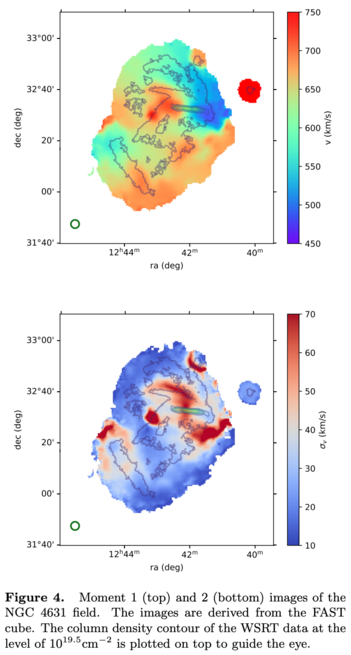
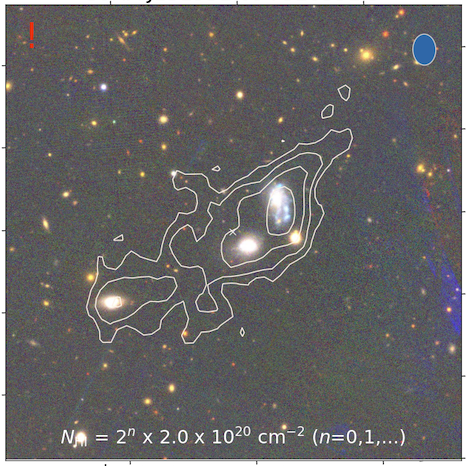
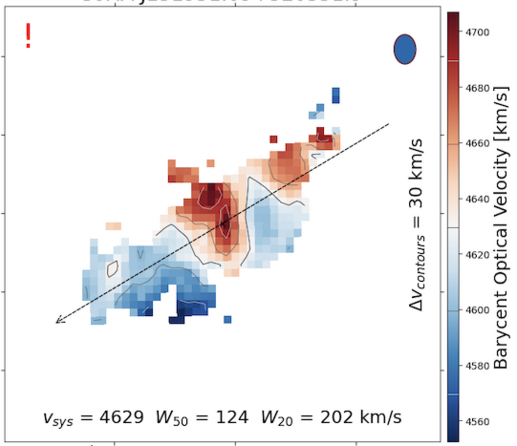
Last week's pretty galaxy detected by #ASTRON's #Apertif. A triple interacting system! Left: Neutral atomic hydrogen contours on a false color image by PanSTARRS1. Right: velocity map showing the galaxy rotation. Plotting by https://github.com/kmhess/SoFiA-image-pipeline. (Posted last week on the bird app.)

This is the first(ish) in a roughly (irregularly) weekly series, #KAPOW (Kelley's Apertif Picture Of the Week; name inspired by my former officemate). Stay tuned for more!
GitHub - kmhess/SoFiA-image-pipeline: Generate figures of spectral line sources, for publication or quick inspection, based on SoFiA-2 output catalog and fits files.

Generate figures of spectral line sources, for publication or quick inspection, based on SoFiA-2 output catalog and fits files. - GitHub - kmhess/SoFiA-image-pipeline: Generate figures of spectral ...
GitHub
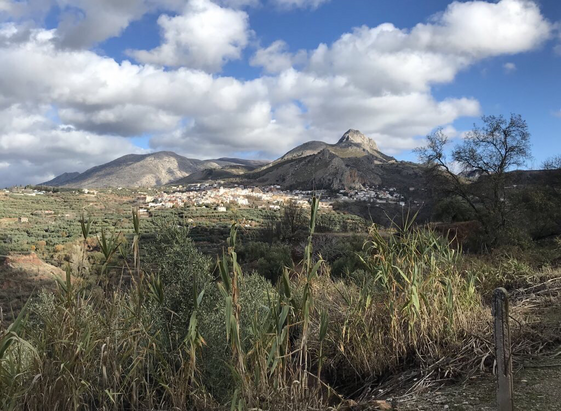
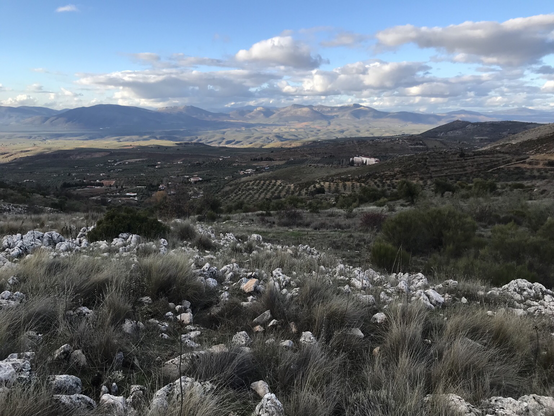
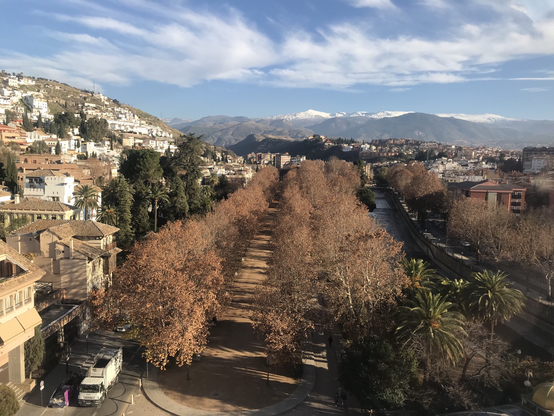
Adiós, #Granada. I’m sad to be leaving so soon, but new adventure awaits and I’ll see you again. Besos.😘
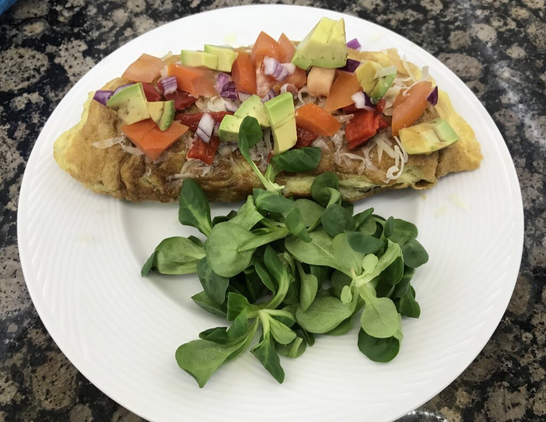
I think (the other) social media really started to lose it way back when we stopped posting #food / #foodphotography photos. So here is the amazing #omelette I made this morning. #nofilter
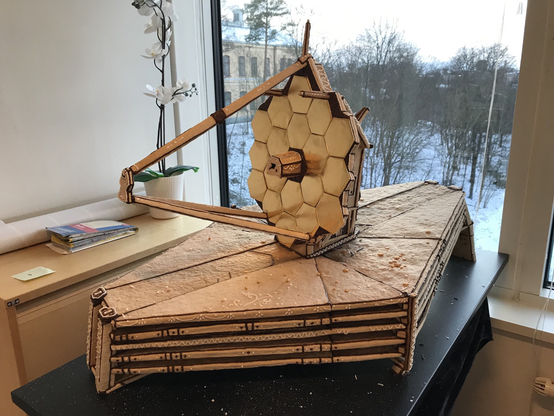
Stockholm Uni #astronomy has a gingerbread model of #JWST ! #astrodon
"Audio Astronomy Unlocks a Universe of Sound". Congrats to my @[email protected] colleague, Rubén García-Benito, on this article and ongoing work. https://www.scientificamerican.com/article/audio-astronomy-unlocks-a-universe-of-sound/ #astrodon #astronomy #accessibility #sonification
Audio Astronomy Unlocks a Universe of Sound

Turning astronomical data into sound rather than images can inspire blind and visually impaired people—and maybe lead to some discoveries, too

Scientific American
Hi #AAS241 I'm giving my dissertation talk tomorrow Monday Jan 9th at 10:10am in the Starburst Galaxies session! Come by and listen to me explain what exactly I've been working on these past few years! #122.02D
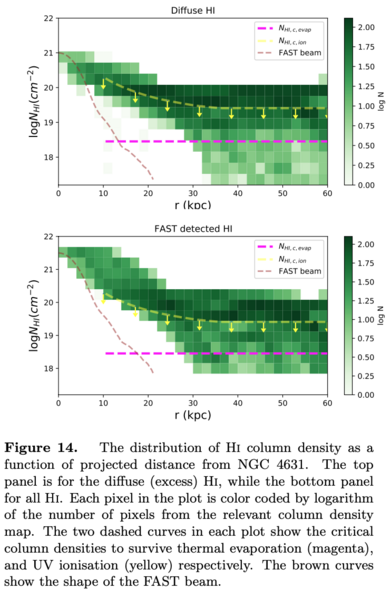
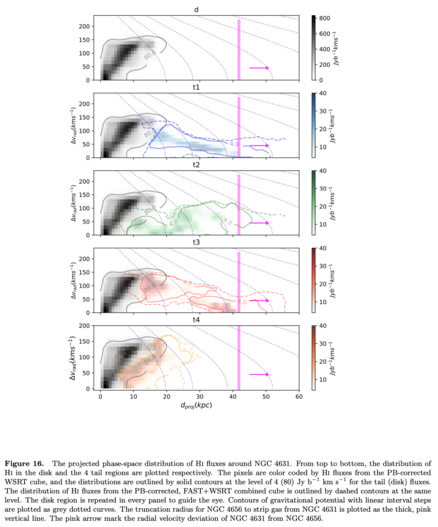
With some simple modeling, we argue that the majority of diffuse gas in the tail region is cooling rather than being ionized or evaporating through thermal conduction. The phase-space diagram of the tails suggest a complex history of interaction. More details in the paper: https://arxiv.org/abs/2301.00937 3/3 #astronomy #astrodon
FEASTS: IGM cooling triggered by tidal interactions through the diffuse HI phase around NGC 4631

We use the single-dish radio telescope FAST to map the HI in the tidally interacting NGC 4631 group with a resolution of 3.24$'$ (7 kpc), reaching a 5-$σ$ column density limit of $10^{17.9}$ cm$^{-2}$ assuming a line width of 20 km s$^{-1}$. Taking the existing interferometric HI image from the HALOGAS project of WSRT as reference, we are able to identify and characterize a significant excess of large-scale, low-density, and diffuse HI in the group. This diffuse HI extends for more than 120 kpc across, and accounts for more than one fourth of the total HI detected by FAST in and around the galaxy NGC 4631. In the region of the tidal tails, the diffuse HI has a typical column density above $10^{19.5}$ cm$^{-2}$, and is highly turbulent with a velocity dispersion around 50 km s$^{-1}$. It increases in column density with the dense HI, and tends to be associated with the kinematically ``hotter'' part of the dense HI. Through simple modeling, we find that the majority of the diffuse HI in the tail region is likely to induce cooling out of the hot IGM instead of evaporating or being radiatively ionized. Given these relations of gas in different phases, the diffuse HI may represent a condensing phase of the IGM. Active tidal interactions on-going and in the past may have produced the wide-spreading HI distribution, and triggered the gas accretion to NGC 4631 through the phase of the diffuse HI.

arXiv.org
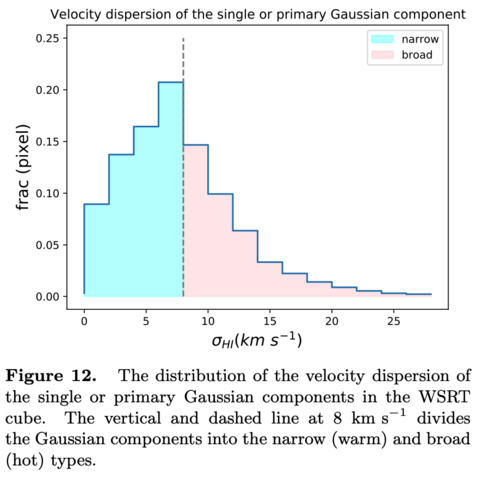
Combining low resolution, high surface brightness observations from #FAST, with high resolution observations from #WSRT, and some clever profile fitting, Jing is able to separate the dense HI vs diffuse HI... 2/3 #astronomy #astrodon
Paper accepted! Congrats Jing Wang et al. on "FEASTS: IGM cooling triggered by tidal interactions through the diffuse HI phase around NGC 4631" https://arxiv.org/abs/2301.00937. We use the incredible sensitivity of the #FAST #telescope to map a huge reservoir of neutral hydrogen around #NGC4631 (out to 120 kpc)... 1/3 #astronomy #astrodon
FEASTS: IGM cooling triggered by tidal interactions through the diffuse HI phase around NGC 4631

We use the single-dish radio telescope FAST to map the HI in the tidally interacting NGC 4631 group with a resolution of 3.24$'$ (7 kpc), reaching a 5-$σ$ column density limit of $10^{17.9}$ cm$^{-2}$ assuming a line width of 20 km s$^{-1}$. Taking the existing interferometric HI image from the HALOGAS project of WSRT as reference, we are able to identify and characterize a significant excess of large-scale, low-density, and diffuse HI in the group. This diffuse HI extends for more than 120 kpc across, and accounts for more than one fourth of the total HI detected by FAST in and around the galaxy NGC 4631. In the region of the tidal tails, the diffuse HI has a typical column density above $10^{19.5}$ cm$^{-2}$, and is highly turbulent with a velocity dispersion around 50 km s$^{-1}$. It increases in column density with the dense HI, and tends to be associated with the kinematically ``hotter'' part of the dense HI. Through simple modeling, we find that the majority of the diffuse HI in the tail region is likely to induce cooling out of the hot IGM instead of evaporating or being radiatively ionized. Given these relations of gas in different phases, the diffuse HI may represent a condensing phase of the IGM. Active tidal interactions on-going and in the past may have produced the wide-spreading HI distribution, and triggered the gas accretion to NGC 4631 through the phase of the diffuse HI.

arXiv.org
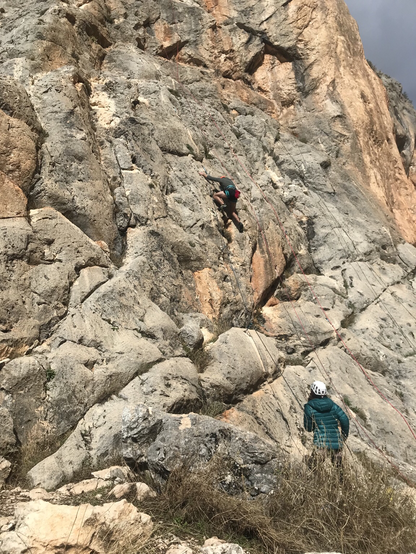
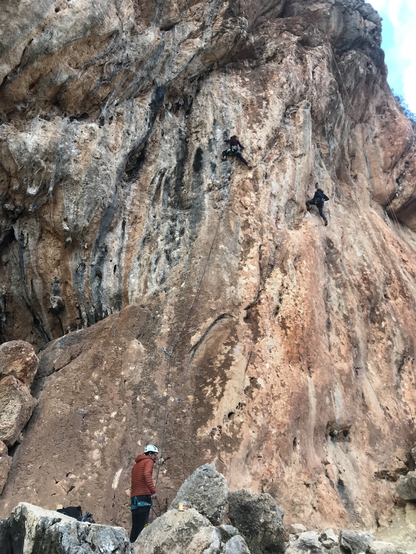
A great day for #cycling , #climbing , and #hiking ! #Granada