Judith Schomaker

@JudithSchomaker
210 Followers
110 Following
24 Posts
Cognitive Neuroscientist
Assistant Professor Health, Medical & Neuropsychology department - Leiden University - the Netherlands

🌶️ Hot from the press: Our new article on the effects of novelty on memory is out in Applied Cognitive Psychology.

https://onlinelibrary.wiley.com/doi/10.1002/acp.70109

🗝️ Key takeaways:
- Memory for mundane events that may otherwise be forgotten is boosted by exploration of environmental novelty.

- The link between novelty and memory is a complex one.

Thanks to Christine Bastin for a great collaboration and Camille Aron for the hard work and commitment to this project!


‼️ CALL FOR PAPERS!

Together with Christine Bastin I am editing a special issue on the effects of novelty on memory for the Journal of Cognitive Enhancement.

📜 Have you conducted a study that addressed the specific factors and/or potential neurobiological mechanisms driving effects of novelty and memory.

🖐 Are you working on this or a related topic, and do you have a paper (almost) ready to submit, please check out the call for papers: https://link.springer.com/collections/iaibejidba

📅 Deadline: October 1st, 2025

Call for Papers: Effects of Novelty on Memory

Deadline: October 1st, 2025 Novel information can provide information about a threat or offer opportunities for reward and behavioral and psychophysiological ...

SpringerLink

Paper alert!

In our new paper "Towards a characterization of human spatial exploration behavior" in BRM, we introduce a novel, fine-grained approach to analyse 3D exploration behavior.

We tested our method in a sample of n >400, and validated it on the Silcton dataset: https://link.springer.com/article/10.3758/s13428-024-02581-3

Towards a characterization of human spatial exploration behavior - Behavior Research Methods

Spatial exploration is a complex behavior that can be used to gain information about developmental processes, personality traits, or mental disorders. Typically, this is done by analyzing movement throughout an unknown environment. However, in human research, until now there has been no overview on how to analyze movement trajectories with regard to exploration. In the current paper, we provide a discussion of the most common movement measures currently used in human research on spatial exploration, and suggest new indices to capture the efficiency of exploration. We additionally analyzed a large dataset (n = 409) of human participants exploring a novel virtual environment to investigate whether movement measures could be assigned to meaningful higher-order components. Hierarchical clustering of the different measures revealed three different components of exploration (exploratory behavior, spatial shape, and exploration efficiency) that in part replicate components of spatial exploratory behavior identified in animal studies. A validation of our analysis on a second dataset (n = 102) indicated that two of these clusters are stable across different contexts as well as participant samples. For the exploration efficiency cluster, our validation showed that it can be further differentiated into a goal-directed versus a general, area-directed component. By also sharing data and code for our analyses, our results provide much-needed tools for the systematic analysis of human spatial exploration behavior.

SpringerLink

Universities have a hard time accepting women who speak truth to power.

This is the essay that led her university to wanting to fire Susanne Täuber. I recommend reading it https://onlinelibrary.wiley.com/doi/10.1111/joms.12516

Excited to share to have received an NWO Open Competition grant (thanks NWO!). In this project we will investigate the role of dopamine and noradrenaline in the effects of novelty on memory. A post-doc position will be available from mid 2023. Feel free to share!
[OC] Magic coding

Posted in r/comics by u/PLutonium273 • 792 points and 14 comments

reddit

🥳🚨 PUBLICATION ALERT! 🚨 🥳

Have you ever wondered why humans play? How play relates to learning? Why play feels so fun?

In this paper, we propose a cognitive theory of play utilising recent ideas of the brain as a predictive organ.

Open Access: https://doi.apa.org/fulltext/2022-72028-001.html

🧵 1/5

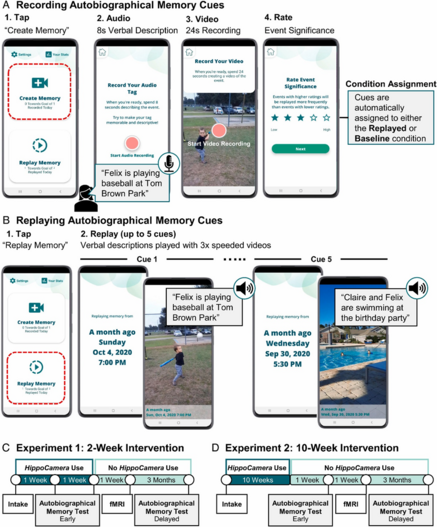
I’m very proud to share: A smartphone intervention that enhances real-world memory and promotes differentiation of hippocampal activity in older adults.

Over the last 8 years, we developed @HippoCamera as an easy-to-use smartphone app that embodies principles from memory science to record and replay brief but powerful memory cues of everyday events.

Work led by @_chris__martin_, w/ @honey @chrishoney @bryan_hong_ @rachelnewsome @melellen_m

https://www.pnas.org/doi/10.1073/pnas.2214285119

(1/4)

Dennett's (2014) 4 step approach to critical commentary: https://www.themarginalian.org/2014/03/28/daniel-dennett-rapoport-rules-criticism/

1.You should attempt to re-express your target’s position so clearly, vividly, and fairly that your target says, “Thanks, I wish I’d thought of putting it that way.”

2. You should list any points of agreement.

3. You should mention anything you have learned from your target.

4. Only then are you permitted to say so much as a word of rebuttal or criticism.

#AcademicChatter
@academicchatter
#Criticism
#Dennett

How to Criticize with Kindness: Philosopher Daniel Dennett on the Four Steps to Arguing Intelligently

“Just how charitable are you supposed to be when criticizing the views of an opponent?”

The Marginalian