Last-input-priority interlock — advanced PLC logic #InstrumentationTools https://www.youtube.com/watch?v=asN1GZ7eZk0&pp=0gcJCSgKAYcqIYzv


| Website | https://instrumentationtools.com/ |
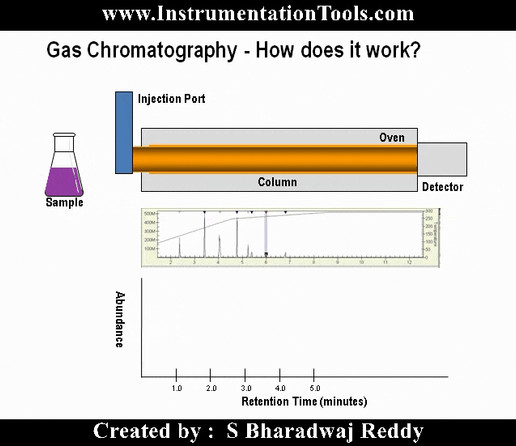
Gas Chromatograph Working Principle Basics of Gas chromatograph Working Animation Overview Gas chromatography is one of the most widely used techniques for analyzing hydrocarbon mixtures. Some of the advantages of chromatography are the range of measurement (from ppm levels up to 100 %), the detection of a wide range of components, and the repeatability of the measurements. Chromatography is used in the laboratory, in permanently installed online systems, and in the field with portable systems. No matter the location, style, or brand, all gas chromatographs are composed of the same functional components: the sample handling system, the chromatograph oven, and

Which RTD type is most common in process industries? A. Pt1000 B. Pt250 C. Pt500 D. Pt100 ▶ View Answer Explanation: The Pt100 is the most widely used RTD type in process industries due to its excellent balance of accuracy, stability, availability, and compatibility with industrial instruments. The term Pt100 means: Pt = Platinum sensing element 100 = 100 Ω resistance at 0°C Comparison of Common RTD Types Pt100 100 Ω at 0°C Most common industrial RTD Widely supported by PLCs, DCS...
| Pt1000 | |
| Pt250 | |
| Pt500 | |
| Pt100 |

Which RTD element construction offers better vibration resistance? A. Wire wound B. Film type C. Glass tube D. Ceramic rod ▶ View Answer Explanation: Film-type RTDs generally offer better vibration resistance than traditional wire-wound RTDs. In a film RTD, a very thin layer of platinum is deposited onto a ceramic substrate and protected with a coating. This compact construction makes the sensing element more resistant to mechanical shock and vibration. Comparison of RTD Constructions W...
| Wire wound | |
| Film type | |
| Glass tube | |
| Ceramic rod |