 Mirjana Gavrilović Nilsson
Congratulations to my dear friend and colleague @FraSoliman who launched her new book on social harms at the borders of Lampedusa in Italy! 🎊


| Profile | https://napier-repository.worktribe.com/person/2812558/francesca-soliman |
| Orcid | https://orcid.org/my-orcid?orcid=0000-0003-0784-9771 |
| https://twitter.com/FraSoliman |
New book, presented here by author, @FraSoliman
Accounting for the myriad harms generated by the border regime at #Lampedusa and by constantly governing through crises.
https://www.taylorfrancis.com/books/mono/10.4324/9781003348177/social-harm-border-francesca-soliman
#harm #research #socialharm
@SCCJR
[EDITED: missing photo added]

Many thanks Andy!
None of this work would have even happened without your guidance and support. Happy Publication Day to us both! 🥳
Teaching criminology: The Human Element
Another @SCCJR event, this time considering the people behind the teaching and research that constitutes academic criminology, with Milena Tripković, @FraSoliman, @fergusmcneill and Miha Hafner.
Thurs 29 June, 1300hrs BST, online

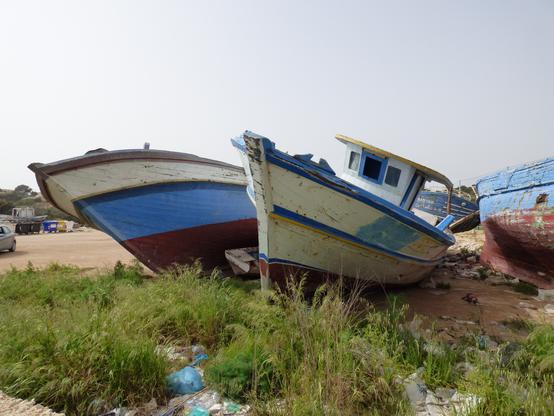
If anyone needed another reason to dismay over the impact of EU border policies, here's a paper on the impact of trawler wrecks on the environment from my Napier colleague @FraSoliman ...
https://link.springer.com/article/10.1007/s10612-023-09692-x#citeas
#Criminology #GreenCriminology #Environment #Polution #Borders #Migration #EU #Law #Policy

In this paper I examine authorities’ management of migrant boats on the island of Lampedusa, Italy, as an example of environmental border harm. A danger to trawlers, sunken wrecks are also hazardous to the environment, with pollutants such as oil and fuel seeping into the sea. Migrant boats that reach the island, whether independently or towed by rescuers, are left to accumulate in the harbour and eventually break up, scattering debris in bad weather. When boats are uplifted onto land, they are amassed in large dumps, leaking pollutants into the soil. Periodically, the resulting environmental crises trigger emergency tendering processes for the disposal of the boats, which allow for the environmental protections normally required in public bidding to be suspended for the sake of expediency. The disposal of migrant boats thus relies on a pattern of manufactured environmental emergencies, consistent with the intrinsically crisis-based management of the border itself.
In this paper I examine authorities’ management of migrant boats on the island of Lampedusa, Italy, as an example of environmental border harm. A danger to trawlers, sunken wrecks are also hazardous to the environment, with pollutants such as oil and fuel seeping into the sea. Migrant boats that reach the island, whether independently or towed by rescuers, are left to accumulate in the harbour and eventually break up, scattering debris in bad weather. When boats are uplifted onto land, they are amassed in large dumps, leaking pollutants into the soil. Periodically, the resulting environmental crises trigger emergency tendering processes for the disposal of the boats, which allow for the environmental protections normally required in public bidding to be suspended for the sake of expediency. The disposal of migrant boats thus relies on a pattern of manufactured environmental emergencies, consistent with the intrinsically crisis-based management of the border itself.
 Andy Aydın-Aitchison
 耀西
耀西 
 🌐 ☸️
🌐 ☸️