Bork Group at EMBL Heidelberg

363 Followers
97 Following
141 Posts
Deciphering function and evolution of biological systems.
Homepagehttps://www.bork.embl.de/
GitHubhttps://github.com/grp-bork/
BlueSkyhttps://bsky.app/profile/borklab.bsky.social

The paper by @biocs has been published in the NAR Database Issue! https://doi.org/10.1093/nar/gkaf1118

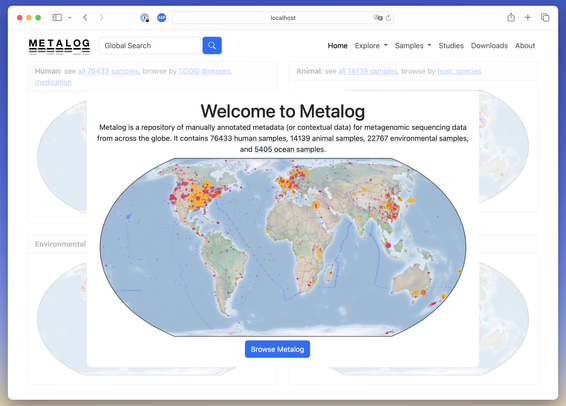
Visit the database itself on https://metalog.embl.de/ to access manually annotated contextual data for #microbiome samples around the globe. We're up to 1000 included studies as of today!

Apply until December 15th!

More info:

group homepage: https://www.bork.embl.de/
TREC: https://www.embl.org/about/info/trec/
BIOcean5D, the funding source: https://biocean5d.org/
SPIRE: https://spire.embl.de

Also, as a teaser, we plan to release out database of contextual data (a.k.a. metadata) for metagenomic samples soon! (4/4)

Bork Group

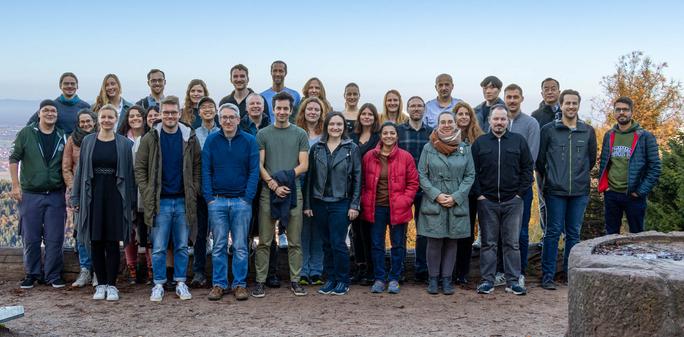
The first day of our lab retreat is underway. We didn't venture far from EMBL, just up the hill to Königstuhl overlooking Heidelberg and the Rhine valley. However, we did invite guest from other labs who are working on the microbiome and are enjoying the discussions across the groups!
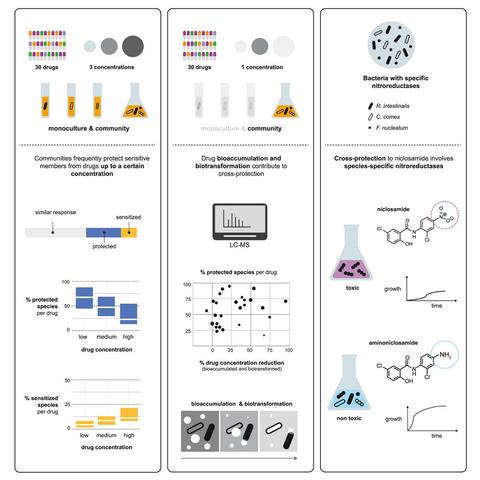
Our paper together with @TypasLab is out now! https://doi.org/10.1016/j.cell.2024.08.037 Previously available on bioRxiv, it has now been accepted in Cell. 🎉

Sarela Garcia-Santamarina and @biocs show that bacteria can be protected from & sensitized to drugs in community; that cross-protection dissipates at high drug concentrations; that biotransformation & bioaccumulation can partially explain communal protection; and that enzyme specificity & expression dictate detoxification of nitroaromatic drugs

Emergence of community behaviors in the gut microbiota upon drug treatment

Pharmaceuticals can directly inhibit the growth of gut bacteria, but the degree to which such interactions manifest in complex community settings is a…

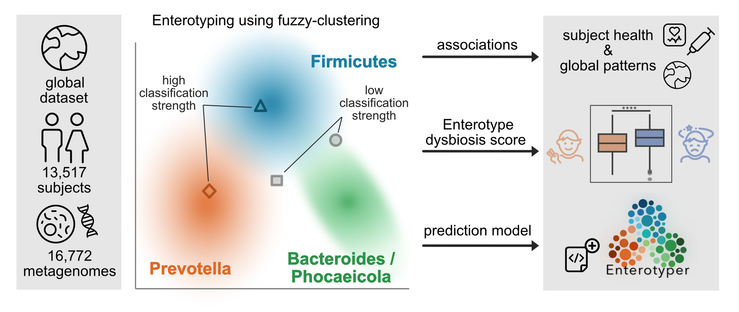
⚡️ Our latest preprint "Refined Enterotyping Reveals Dysbiosis in Global Fecal Metagenomes" led by https://scicomm.xyz/@marisa is now available! We’ve revisited the concept of #enterotypes using a massive dataset of 16,772 human fecal #metagenomes from 38 countries! 🌍🧬 https://doi.org/10.1101/2024.08.13.607711 (1/2)
Marisa Keller (@[email protected])

4 Posts, 54 Following, 57 Followers · Phd Candidate | Scientist working with the Microbiome 🧫 and Computational Biology 👩🏼‍💻
she/her | also likes music 🎶, carnival 🥳, nature 🌱 & hiking 🏔
 
📍Heidelberg, Germany

A community for scientists and science communicators.
New paper: "Bifidobacterium and Lactobacillus Probiotics and Gut Dysbiosis in Preterm Infants: The PRIMAL Randomized Clinical Trial" showing that while the probiotics did not reduce the incidence of MDRO+, they modulated their microbiome toward eubiosis. From a #microbiome perspective, it's interesting to note that the probiotic strains often made their way into the control group's guts. https://jamanetwork.com/journals/jamapediatrics/fullarticle/2821939
Probiotics and Gut Dysbiosis in Preterm Infants

The Priming Immunity at the Beginning of Life (PRIMAL) randomized clinical trial investigates if preterm infant exposure to multistrain Bifidobacteria and Lactobacillus probiotics reduces the colonization rate of multidrug-resistant organisms at day 30 of life compared with placebo.

Peer Bork, Jonel Trebicka (Uni Münster) and Benjamin Lelouvier (Vaiomer) on stage during the MICROB-PREDICT discussion session about the microbiome in liver cirrhosis

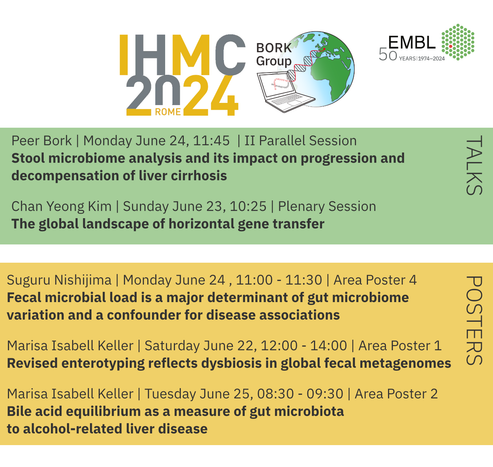
Are you coming to #IHMC in Rome? The Bork Group is represented with three posters and two talks ("Stool #microbiome analysis and its impact on progression and decompensation of liver cirrhosis" by Peer on Monday & "The global landscape of horizontal gene transfer" by Chan Yeong Kim on Sunday). Looking forward to seeing you there!

#IHMC2024

Congratulations to Askarbek Orakov, who successfully defended his PhD at the University of Würzburg today!

Peer is dressed in a Kazakh traditional “Shapan”, which is given to honorable people – a gift from Askarbek's and his wife's families. Thank you very much for this!

Importantly, we found that microbial signatures of each disease are strongly correlated with the altered microbial load of patients, indicating that change in microbial load, rather than the disease itself, is the main driver in shaping altered microbial profile in patients.

Our prediction tool, named Microbial Load Predictor (MLP), is freely available from here. https://microbiome-tools.embl.de/mlp/

Microbial Load Predictor