
@AustNerevar

3 Followers
56 Following
39 Posts

Home Movies – A Forgotten Craft – Proquest #017

When was the last time you sat down to watch a home movie. Not just a 10-second phone clip, but a real hour-long recording of family or friends? If your answer is “never,” you’re not alone. The art of home movie-making, once a cherished family pastime, has faded in the era of TikTok clips and quick social media stories.

It wasn’t always this way. In the 80s and 90s, after the rise of consumer video camera market, it was incredibly common for families to make hours-long tapes of holidays, birthdays, weddings, and reunions.

Now, making extended recordings of family get-togethers or a day at the park has fallen out of fashion in exchange for those brief clips of funny moments or “live selfie” poses.

This, I believe, is a gross mistake and something that will be a future source of regret for smartphone-bearers who aren’t in the habit of organizing and archiving their digital memories.

A few weeks before I was born, my father purchased a VHS camcorder and began chronicling the lives of his family.

Eighteen years later, long after he had abandoned the practice, I took up the hobby myself.

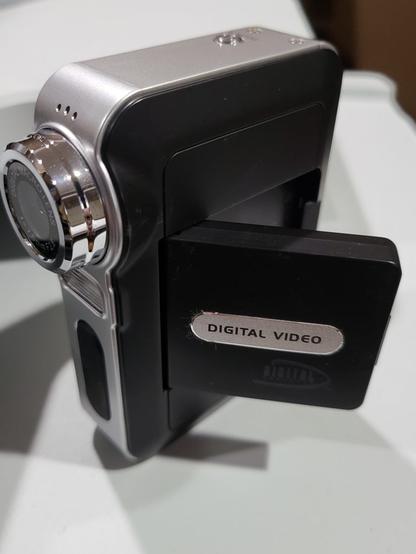
It was a dinky little handheld digital camera I received Christmas of 2005. With a laughably low resolution and abysmal audio, I recorded about an hour and a half of my life with it–all with a clattering, raucous backing track. The sound I actually wanted to capture was flat and scratchy.

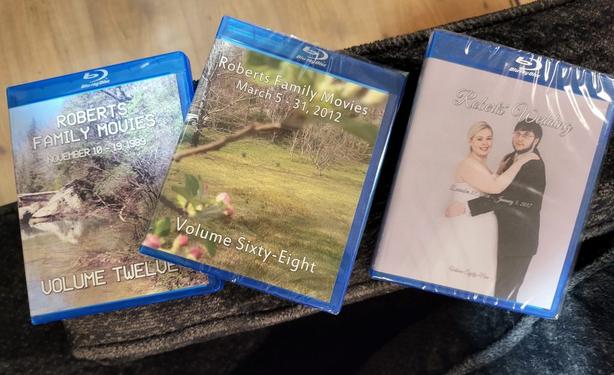
I edited those video files together in Windows Movie Maker and burned the render to DVD, labeling it Volume One of my home movies.

Once my cheap camera died, I upgraded to a Sony Handycam with a DVD drive—my first big leap in quality—and eventually moved on to HD-capable smartphones and other camcorders.

But my workflow has largely remained the same. Where the common trend today is to share a video through group chat or to social media with a caption explaining the context, I prefer to give that context via narration in the video itself. I create content primarily to edit together into a 1.5 hour long movie format for viewing on a TV screen.

Eventually, convenience won out: I filmed most of my content on smartphones, even though I kept a camcorder around.

Video in a “portrait orientation” is not suited for my uses. It’s always an irritation to deal with, requiring me to upscale and zoom the content to fill the screen or to center it with a background to occupy the borders.

The cameras themselves stopped holding interest for me eventually. It was the editing process that always fascinated me. Utilizing music to convey a message or emotion felt empowering in a way that writing didn’t. And creating home volumes themed around things like The Legend Of Zelda was satisfying.

But ultimately, the end product is the most important thing about the craft. Putting a home video on to play in the background is comforting, whether it’s a volume from recent years or half a century ago.

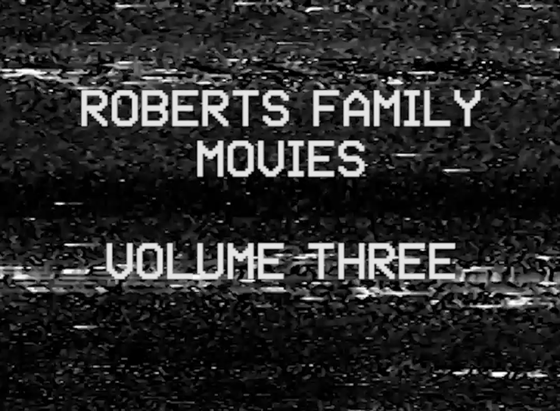
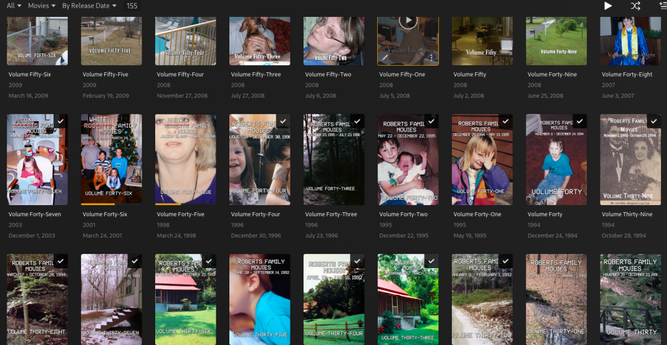
Of course, my dad’s old VHS recordings weren’t on DVD. After months of transferring and editing the scattered footage, I ended up with forty-seven volumes. My own first digital recordings, starting with my high school graduation, became Volume Forty-Eight, and since then, my library has grown to over one hundred fifty-five digital volumes.

I don’t intend to stop making them. Though, I lament the fact that physical media has fallen out of fashion, I keep a Blu-Ray version of each.

However, the wonder of streaming and self-hosting through Plex means that I and my family can enjoy these films wherever we please. Sometimes I’ll start an old one up on my phone and let it serve as ambient sound.

I recognize that it’s a bit of an obsession of mine at this point–one that many wouldn’t understand or wish to take upon themselves. It’s an understandable position. But I’ve prepared some counter-arguments for potential reasons why one would find this type of project daunting:

It takes too long to edit.

If you do incremental editing once a month or so, it’s manageable. Simply adding new clips to your timeline is all that’s needed. The result is priceless. 

My phone can’t capture professional audio/video.

This is unimportant. I’ve preserved memories in the worst quality imaginable. That was before smartphones existed and every device has a serviceable HD camera. I promise you, this won’t be an issue.

Nobody wants to watch a full hour of aimless family events.

You might be surprised how many do, especially during gatherings. But that aside, you needn’t watch the whole thing. Just have it running during a hangout session and point out the most interesting moments. Or, the better solution, use this as a challenge to create a narrative with your real life. (I’ve had an idea on the back burner to interview my family, mockumentary style, during a summer vacation)

Short clips on social media are good enough.

Social media is fleeting; posts get buried under newer content, and platforms change or shut down over time. A dedicated home movie is something you control, archived for posterity.

I’ll just snap photos instead. Videos are too bulky to store.

Photos are wonderful, but they can’t capture voices, laughter, or the dynamism of a moment unfolding. Home movies expand on what photos preserve.

External hard drives, cloud storage, or network-attached storage (NAS) make organizing large video files easier than ever. The cost of storage has dropped significantly over the years.

Try to label files with dates or events and maintain a simple folder structure. This practice helps keep a manageable archive.

My kid/grandkids won’t know these people and won’t be interested in them.

But they know you. They will come to know their long-passed family through the on-camera interactions you had with them. It isn’t like seeing some forgotten ancestor in a still photo. Movies are live. Immersing yourself in the video of a conversation is a magnificent way to become familiar with people you never had the chance to meet. This is the failing of the current, short-form format. You cannot know someone in sixty seconds.

So the next time you’re tempted to settle for a ten-second clip or a vertical selfie video, remember there’s a deeper magic in letting the camera roll. Home movies aren’t just artifacts of the VHS era; they’re an art form waiting to be preserved, refined, and shared for generations. All it takes is a little planning, a willingness to narrate your own story, and the desire to give tomorrow’s family members a chance to watch life as it truly was. Long after social media trends fade, these home volumes will remain—a heartfelt record of who we were, how we lived, and what really mattered.

#Family #homemovies #legacy #memories #vhs

Story of Seasons: Grand Bazaar Took Over My Life (A Review) – Proquest #019

I’m a longtime Story of Seasons fan, having started out with Harvest Moon 64 back in the early 2000s. I dipped out of the series for a time after the GameCube release of A Wonderful Life (check out my AWL remake review here), but made a return to the series after Stardew Valley re-initiated my farming craze.

I make it a point to check out every SoS release, usually the ones that hold nostalgic value for me. I also tend to play them in a rather unique manner. I allocate one in-game day per real-life day. It means I often don’t complete the game for a year or more, but it lends a more authentic life-sim experience. Finishing one of these games after playing it over the course of years, feels a lot like putting down a great novel. The characters and world has become such a regular part of my daily life, that I actively miss it. At least until I pick up the next farming game.

When I picked up the newest remake in the Story of Seasons franchise, Story of Seasons: Grand Bazaar, I had zero expectations. I never played the original on DS and was not even aware that it was mostly disregarded by fans. The removal of the shipping bin felt like an affront to tradition. The freshness system meant you were scrambling to sell or use crops/products before they expired. And the map was somewhat of a hassle. There was no way to pause aside from talking to NPCs. Players criticized the writing and small pool of marriage candidates, the sparse offering of heart events, lack of mining, miniscule world, limited innovation… I could go on.

They have, however, addressed most of these concerns with a fresh take on the game.

Remake Differences

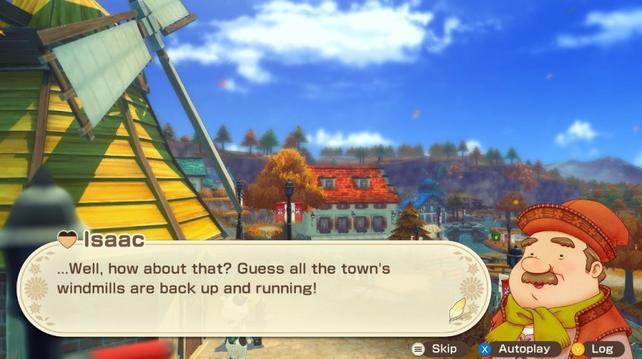
Marvelous Inc. has done something praise-worthy here: turning a flawed game into a good one instead of retreading an already successful title. Grand Bazaar is a tour de force in revitalizing old content. Zephyr Town is larger, with an added mountain path for basic mining. Some characters introductions have been moved to earlier in the game to better facilitate heart event progression. Windmills are unlocked sooner, making the crafting system more accessible. Crops can be turned into seeds earlier and becomes core element of maxing out a crops’ star ranking.

But let’s take a look at what sets Grand Bazaar out from the traditional Story of Seasons experience. The general farming hasn’t changed much, but what has are the crafting systems and mechanisms for making money.

Crafting is done with windmills and is on a timer system that is adjusted by the current wind speed. Drop off some eggs at the windmill, come back later, and you have mayonnaise. Each item has its own process time, and the windmill can only hold so many things in its production line at one time. Thankfully, there are three of them, each unlocking as the story progresses and each one opening new avenues for crafted goods.

The windmill system offers a greater depth to item gathering and farming that the more classic entries in the franchise never have. It feels like a bit of an apology from Marvelous Inc, for the maker system in Story of Seasons: Pioneers of Olive Town, a similar crafting mechanic that was poorly received by fans. Progression was regularly gated behing waiting for makers to produce goods, which it did so rather slowly and in limited quantities. The windmills are now much faster, having six slots of item creation, with each slot permitting stacks of ten.

On days when the wind is calm you’ll be waiting some time for the production line to clear. On windy days, your goods will develop at a steady pace. And on stormy days, it all moves along rather quickly. This adds a bit of strategy for choosing which goods to craft. On a very windy day, you might choose to focus on items that usually take longer to make, taking advantage of the accellerated crafting times. But your area of concentration will almost always be defined by current market trends, which change each month, ensuring that you vary up the kind of items you produce.

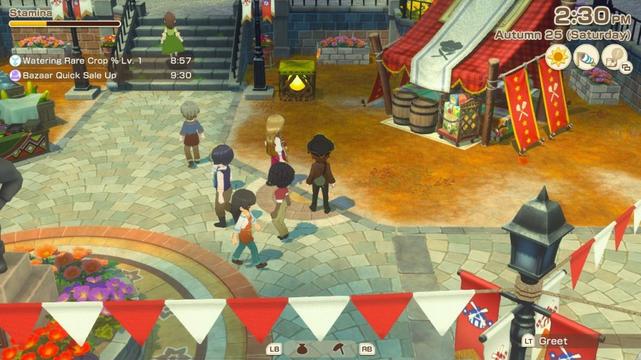
Selling is done every Saturday at the bazaar, with the shipping bin of old having been totally cast aside. You can still take some goods to Miguel, the proprietor of the local general store, if you’re short on cash, but you really want to save most stuff for bazaar day. The more sales you complete, the faster the town’s bazaar ranking grows. You’ll find that some mechanics and even story bits are gated behind bazaar progression. Fortunately, the bazaar minigame is quite fun though not overly complicated.

You have a limited number of item slots in your stall’s stock menu, meaning you’re going to want to place a higher number of expensive goods for sale, taking into account the current trending items (so sense in focusing on yogurt if cheeses is the hot item, even if the former nets large profits). Unfortunately, the gap between how fast trending items sell versus non-trending ones isn’t very large. There was rarely a time when I didn’t sell out of my stock, even when I sold mostly non-trending goods. This is a departure from the DS original which, as I understand it, often left you with product left unsold at the end of each Bazaar day. I sort of wish there was a greater incentive to focus on trending items.

Regardless, the fact that anything you put up for sale will inevitably sell makes for a rather speedy main story, as plot progression is tied to advancing your Bazaar rank. There’s something to be said for a farming game that respects your time and allows you to wrap the main quest within the first year. It’s just that I enjoyed my time with Grand Bazaar so much, I actually found myself wishing the main plot had dragged out a little longer, something I rarely find myself wishing for as a real-life father of two with a full-time job and a wife.

Writing & Characters

The plot isn’t anything revolutionary for Story of Seasons, as it follows the classic formula. You arrive to take over the abandoned farm north of Zephyr Town. As you settle in, you learn the town used to be something of a legend for the success of its bazaar, but it’s recently fallen onto hard times and has been all but forgotten. It’s your job to help turn that around. There’s some additional emotional beats regarding the mayor and the previous inhabitant of your farm that is satisfying to see the resolution to, but it’s nothing groundbreaking.

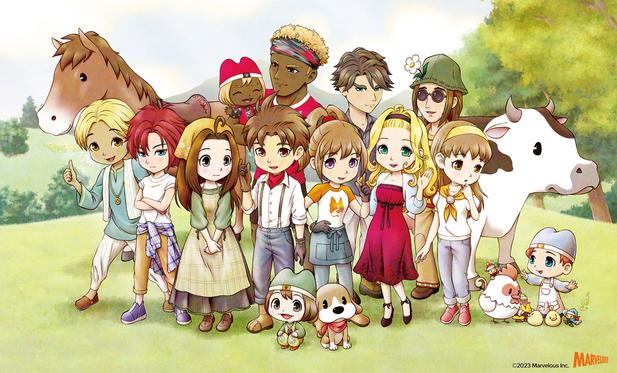
Two new marriage candidates have joined the cast, Arata and Diana. As someone who never played the original DS game, the new characters are right at home with the mainstays. I never once felt they were out of place.

The characters in general are all well-written and endearing—perhaps not as charming as the ones from the classic games (honestly, it might be my nostalgia bias showing), but still a marked improvement over entries like Pioneers of Olive Town. It’s evident Marvelous has discovered what works here.

Performance, Visuals, & Sound Design

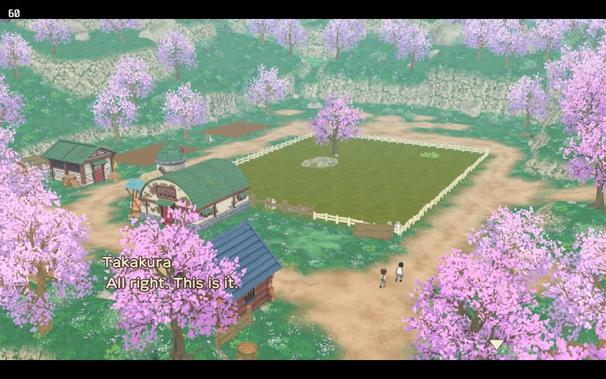
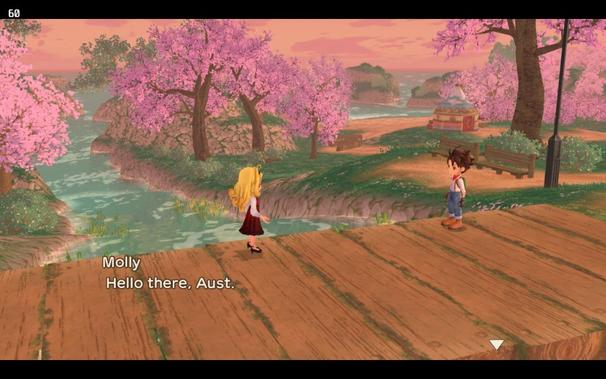
Firstly this is the best looking Story of Seasons game ever made. Graphical impressiveness has never been a selling point of farming sims, but when the target hardware allows, it’s never a bad thing to have. Although many of the animal and character designs are rather simple, there is a level of detail in the overall world that you don’t typically see in Story of Seasons.

The soundtrack is quite enjoyable. The main themes for each season are memorable, with the winter one being my favorite (that one’s going on my Christmas playlist). There’s some variety in the tracks as well, with the music shifting upon nightfall and on rainy days (although the latter sounds a bit too much like Praise & Worship music for my tastes). The collector’s edition comes with the soundtrack on CD, and that alone made me feel better about buying a game I had no idea I’d end up loving so much.

For the first time, Story of Seasons has fully voiced cutscenes. This isn’t something I can say I ever wanted, but it’s certainly welcome. Each member of the cast is well suited for their roles, with the line deliveries for Mayor Felix (voiced by Brent Mukai), perhaps being my favorite.

Final Thoughts

I can confidently say that Grand Bazaar is the best entry in the series, making it my go-to recommendation for new-comers to the series. It seems Marvelous put a lot more passion and care into it than their previous remakes (although, I would never suggest they disrespected the source material for the others). I have to wonder what made them dedicate a larger budget to this title (no other Story of Seasons game has featured a fully voiced cast, after all). Was tbe DS original the favorite of some producer? Or did they simply see a Grand opportunity to enhance a title that previously failed to capture the fanbase? Either way, they’ve successfully enthralled the community with this attempt. Reception to Grand Bazaar has been overwhelmingly positive amongst farming sim addicts, with many—myself included—claiming they haven’t been so hooked by a game since Stardew Valley.

Grand Bazaar filled a role in my life that video games have not for half a decade now. It was the game I kept thinking about when I felt obligated to play other titles. And it utterly consumed my free time. I found myself playing every night after the family went to bed, often realizing with dread that it was 2 AM and I needed to put it down. This might sound like typical gaming to the average college-aged enthusiast. But, at thirty-six, I simply don’t do this anymore. My free time is precious, so I tend to apply it to more productive pursuits. Grand Bazaar would not allow that, however. It needed to be played. And I enjoyed every second of it.

#bokomono #Gaming #storyOfSeasons

Story of Seasons: A Wonderful Life Review – Proquest #016

This is a video game blog, right?

It’s been a while since I’ve reviewed a game (My DQ3 First Impressions doesn’t really count), and I recently wrapped up my playthrough of Story of Seasons: A Wonderful Life remake. What better opportunity to cover something than one of my favorite game series?

Story of Seasons (titled Bokujo Monogatari in Japan) is a beloved franchise of farming sim games that started on the Super Nintendo. The usual SoS plot aims to immerse players in a town full of lovable characters as they work to restore a neglected farm to its former glory.

Story of Seasons: A Wonderful Life (2023) is a remake of Harvest Moon: A Wonderful Life, which debuted on the Nintendo GameCube in 2003. The original was a charming experience that earned positive reviews, though some felt it offered fewer activities than expected.

I’ll admit, the original’s limited scope was always an issue for me: crops didn’t yield much profit, leaving you to spend most of your time caring for animals. While not feeling pressured to plant and harvest can be liberating, I can’t deny it took away some of the excitement. Many of us also didn’t realize that cross-breeding crops was the true way to farm profitably. In fact, when I first played, I’m not sure I even knew hybrids existed!

Mechanics

Thankfully, the remake addresses the crop concern by increasing the base profit of crops. The entire game has also been shortened and streamlined, making crossbreeding more accessible. To counter the original’s emptiness, a bulletin board now offers delivery jobs and fetch quests, filling some downtime and providing extra earnings.

Still, you might occasionally find yourself with idle in-game hours. At no point did I ever feel pressed to accomplish something rapidly. There’s little difficulty here: cows and chickens no longer get sick in the rain, and neither do pets if you neglect them. Plus, there’s no failing condition for ignoring farm upkeep, though it’s true the series has long since moved away from harsh penalties.

Mining remains a minor diversion—something BokuMono titles have never expanded deeply. But that’s arguably part of the charm: the game isn’t striving to bury you in tasks.

Where A Wonderful Life shines is in its villager interactions. You’ll find a generous number of cutscenes tied to each era of your farmer’s life, and you’ll definitely want to google gift lists to boost everyone’s affection. One slight annoyance is that some NPCs, like Gordy, won’t accept gifts while they’re busy working, meaning you’ll have to return later. It’s a mild inconvenience, but not a deal-breaker

Character designs have been tweaked, ranging from subtle changes to the complete replacement of at least one figure. While I sometimes miss the old designs, none of them drastically undermine the nostalgic feel. The marriage system returns, and this game goes a step further by letting your child grow into adulthood, choosing their future. During childhood, you can influence their interests; eventually, they settle on a path. In my playthrough, I guided my child toward the joys of farm life, and by adulthood, they were set to inherit the farm—an incredibly heartwarming twist I wish more BokuMono titles offered.

Other additions to the remake include gay marriage—a welcome trend in the more recent BokoMono games—and the ability to choose your character’s gender at creation (a feature once relegated to an entirely separate title, Harvest Moon: Another Wonderful Life). There are also helpful quality-of-life improvements, such as faster story progression (the original dragged on a bit) and a bell that automatically transports all animals in and out of the barn or coop.

Sound Design

The music is wonderfully nostalgic, though it can get repetitive. Fortunately, unlockable records allow you to swap tracks on your farm, just like in the original, helping keep the soundtrack fresh. Many menu and action sounds also return from the original—an excellent move that preserves the game’s legacy feel.

Graphics

There isn’t much to say about the visuals: they’re perfectly fine and never unpleasant, but they don’t go out of their way to wow you either. I’ll admit, a remake of a beloved classic might have been a chance to push the art style further. Still, A Wonderful Life was never about flashy visuals; it’s more about the relaxed vibe of the farm and village life.

Final Verdict

I genuinely enjoyed my time with Story of Seasons: A Wonderful Life—especially the character interactions and memorable cutscenes. Watching my in-game child grow into someone ready to continue the farm remains one of my favorite gaming memories. Though less jam-packed with activities than some other farming sims, A Wonderful Life keeps the focus on a simpler, slower pace.

If you prefer farming sims bursting with endless tasks and challenges, you might find A Wonderful Life a bit too relaxed. But if you enjoy a calmer, more personal farming experience, it offers a comforting return to the series’ roots—reminding us that sometimes, less can be more.

Finally, although comparisons between Story of Seasons and Stardew Valley are inevitable, it’s best to see them as different takes on the same genre. Stardew Valley is a phenomenon born from one dedicated creator, while BokuMono developers produce a steady line of polished farming titles within a narrower scope. If you accept A Wonderful Life for the easier, more heartfelt experience it is, you’ll likely find it a warm, nostalgic journey that doesn’t try to overshadow Stardew—and that’s perfectly okay.

In the end, Story of Seasons: A Wonderful Life remains a gentle reminder of what these games aim to provide: a cozy sanctuary from life’s hustle, where tending to animals and nurturing relationships can be enough. It may not reinvent the farming sim formula, but it successfully preserves the heart of the original while smoothing out a few rough edges. If you’re looking for a nostalgic, laid-back adventure that gently unfolds rather than races at full speed, this remake offers a truly wonderful life indeed.

#bokomono #farmingsim #Gaming #storyofseasons #xseed

Goban Shadow – GoInOurLives 3rd Place – Contest Entry

Contest Page And Winners

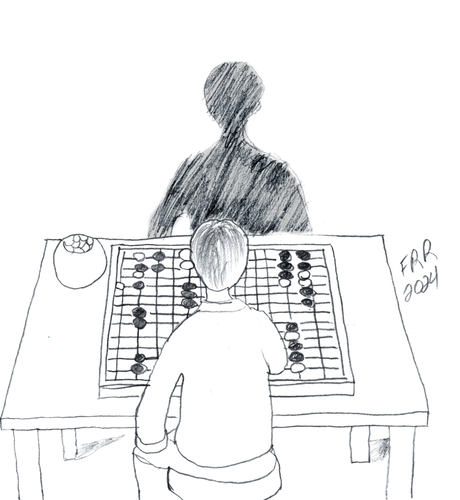
“Take your time,” he says, smugly. “It doesn’t matter, anyway. Whatever you choose will be the wrong move.” He leans back in the chair, his hands hooked behind his head.

Usually, my shadow clings so closely I barely notice him—lurking behind my back or under my feet. I only catch glimpses in mirrors, glass, or the black screen of my phone before I fall asleep.

But when a decision needs to be made, he slips into sight, taunting me with that familiar, twisted smile. It’s a coy little game he plays, surfacing only to deride me and dial up the pressure when I’ve a task to do.

“Just like every other choice,” he chuckles. “You’ll hem and haw for as long as you can until the clock runs out—or you’ll rush, missing some crucial detail. But it doesn’t matter, does it? Because you know, and I know, that you will fail. Like always. College, work—someone else always swoops in to clean up your mess. You don’t have a clue what you’re doing. It’s been that way all your life.”

I want to tell him he’s wrong. That I wouldn’t take something on that I don’t understand. But he knows better. I glance at the goban. Minutes have passed, but I haven’t a clue where to play.

His grin widens. “You’re good at pretending.” He puts his feet up on the board. “At first. But they all figure it out. And all secretly mock you for it.”

He’s right. They always find out. I garner respect and recognition initially, but at some point they all witness the blunder and lose faith.

But what options does that leave me? I can persist, with everyone believing I’m a failure. Or I can give up, with everyone knowing I’m a failure. The only winning move is to keep playing, even if that means I lose.

My stone clicks against the board. I meet his gaze and say, “Then that’s their problem.”
His smile falters. He peers at the clock, and I watch as his form slowly deflates, dissolving back into the shadows of the chair.

I don’t yet know if I made the right move, but at least it’s mine.

© 2024 Copyright — Forrest R. Roberts, All Rights Reserved

The Go in Our Lives – A Creative Writing Campaign by Go Magic

Winners Announcement 🏆 First of all, thank you to everyone who participated in our global campaign, The Go in Our Lives! 🌟 Your stories have…

Go Magic

Game Master

He was a lean fellow—seven feet in height,
Black of beard and hair peppered with white.

“Come in, welcome!” he said with a grin.
“Have a seat. I’ll fetch refreshments,
While Rose fills you in.”

He led me to the dining room;
A party of strangers there sat,
Dice and minis cluttered the table
And character sheets spread flat.

He was gone but a moment, hardly out of sight,
Before he returned, bearing sliced veggies,
With fried cauliflower bites.

“I hope you like vegan,”
He said with a smile.
“It might be a long session,
But this will last us a while.”

“Is Adam still coming?” I asked, nervously.
It was odd my friend was absent,
Who recommended this to me.

The game master smiled wider, his eyes bulging forth.
He said gently, “No. Such a shame.”
“He fell to a skeleton. So he’s out of the game.”

“Oh,” I said, puzzled. “He didn’t roll a new sheet?”

“He’s playing a new character,” said the GM. “Just not one he controls.”
His joy was exuberant as he gestured at the grid.
“He’s part of the town, you see,
forever and ever bound to me.”

I looked at the board and before me I saw
My friend Adam, in pewter, two inches tall.
“It looks quite real,” I marvelled and gasped.
“You could make good money with a skill like that!”

“My work I won’t sell,” his smile slightly faltered.
“With my craft I collect players–their forms lightly altered.

At my friend’s likeness I once again glanced.
With a jolt, I realized his meaning at last.
For the miniature before me bore
A look of sheer terror as never before.

I pushed back my chair and got up to leave.
But all the game’s players turned and stared at me.

The GM gave a belly laugh and said with much glee,
“You might try to run, but that would only hasten my scheme.
For to retire from my game, I demand a small fee.
A roll you must make, at least above three.”

I trembled with fear and pondered the toll.
To remain and play, I might keep some control.
But to exit and run, on fortune I’d call,
Unsure of the fate that might then befall.

Taking my seat, I swallowed my fear.
And said through gritted teeth.
“Alright. How do I start here?”

His face split open and out poured a laugh.
“That’s perfect,” he said.
“Fill out your sheet, and follow the path.”

I think back to that night, repeatedly these days.
I wonder what might’ve happened, if I’d chosen another way.
If I’d run out the door or accepted his dare.
If I hadn’t chosen Thief or had taken the stairs.

But pondering the past does me no good.
I must live in the moment—really I should.
As it isn’t often he opens the display
And takes us out to join in the play.

© 2024 Copyright — Forrest R. Roberts, All Rights Reserved

#DnD #GM #horror #poem

The Sleep Gremlin

My sleep gremlin has grown increasingly malevolent of late.

Initially, it was content merely to wake us from our sleep with its unearthly screeches and wails, shattering the warm embrace of slumber before slipping back into the shadows once its goal was met.

Eventually, it escalated its tactics. It began clambering onto me in my deepest of sleep, tiny claws digging into my skin, ferocious kicks jolting me awake. I must confess, it succeeded many times. There is little else as frightening as being wrenched from dreams by the thrashing of a beast.

In recent months, its actions have me re-evaluating its very nature. For now, I find it prowling our home even in daylight, maliciously knocking over water glasses and tormenting the cat with sinister glee. Just yesterday, I had barely set down a stack of important papers before it seized them, scattering them across the floor.

It has me fearing for my young son’s safety, if not my own. Consequently, we have forbidden him from sleeping between us, terrified of what effect this malevolent presence may have upon him. It has gotten so that I flinch at the ominous thump-thump-thump of its hurried crawl down the hallway, each sound a harbinger of the horrors to come.

I have prayed to god and goddess alike, begging for deliverance from this relentless nightmare, but I know in my heart that this haunting is retribution for some act we once committed. It has been with us a year today, and its invasion of our sanity grows greater each night. Neither my wife nor I have slept soundly in what feels like an eternity—the nights blur together, each one a torturous echo of the last, our marriage straining under the weight of our fragile grip on reality.

Until it has seen fit to release us from its torment, we must endure the suffering. And when it awakens us with its bone-chilling howls, we must appease it with the offering it demands–a six-ounce bottle of warmed milk and a fresh diaper. 

© 2024 Copyright — Forrest R. Roberts, All Rights Reserved

Image by rawpixel.com

#fiction

Dragon Quest III HD-2D First Impressions – Proquest #015

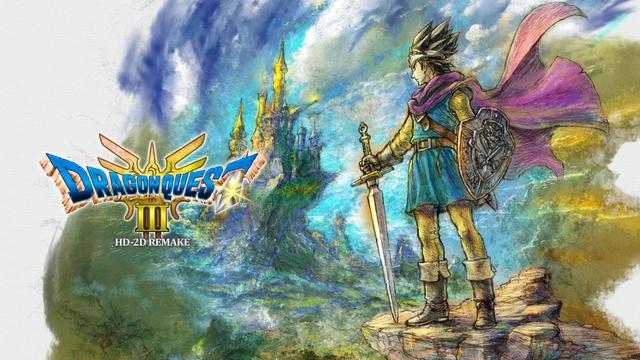
Dragon Quest III was never my favorite entry in the franchise (that honor goes to DQ V), but it’s a game that’s grown on me over the years since I first played the mobile port. In fact, when the HD-2D remake was announced, I found myself unexpectedly hyped. Now that I’ve finally got my hands on the game (three and a half years after said announcement), I thought I’d reflect on my first five hours of playtime.

Note: I will be talking about the Switch and Xbox versions of the game. There are no story spoilers regarding new content.

Performance and Visuals

The Xbox Series X version (and, presumably, the Playstation version) runs flawlessly at 60 FPS with stunning visuals, while the Switch version, locked at 30 FPS, has lower graphical fidelity. This is not a surprise, and the difference is largely negligible, being most noticeable when comparing both platforms side-by-side. However, if buttery smooth gameplay and crisp visuals are your priority, you’re going to want to play on something other than the Switch.

Xbox Series X Gameplay

New Quality of Life Features

A few changes stood out immediately, such as an optional objective tracker on the map, quest markers placed above important NPCs and triggers, configurable battle speed (although, it feels like the default speed is slower than every DQ game that has come before), and an abundance of items.

So very many items. Every interactive container houses gold, medicinal herbs, or moonwort bulbs. The overworld abounds with sparkly spots that give items as well—often more than one per spot. Chimaera Wings are plentiful in the early game, making travel quite accessible.

Fast travel is now available within buildings and dungeons, sans the usual head-bonking from past games. Even landmarks like Dreamer Tower and Promontory Cave can be zoomed to once discovered.

If this all sounds a bit too easy for you, you might be pleased to learn that Draconian Quest from DQ XI returns, but in my first five hours, it feels toned down. There’s no configuration—just a flat difficulty boost with harder-hitting monsters and reduced experience gains. Call me crazy, but I’ve also noticed fewer sparkle spots on the world map In Draconian Quest as well–but still enough to fill my bags with more herbs and wings than I need.

It might be things ramp up later, but so far, it’s been manageable, even during my first excursions around Romaria and Khoryv.

The World

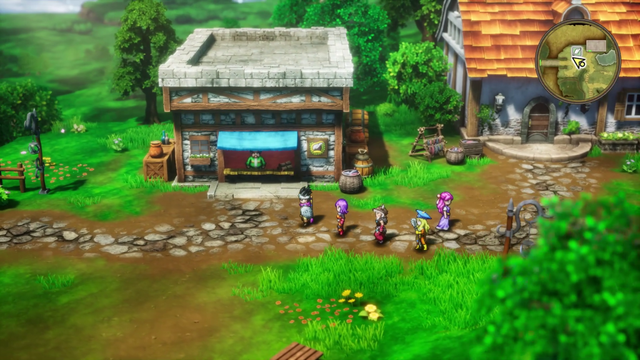
The game feels slightly bigger overall, making the starting town, Aliahan, give off that “big town” feel early on. Everything is laid out the same as previous takes on DQ III, but the scale feels more authentic for a fantasy world. Aliahan Castle alone feels fully realized and the town itself took me forty-five minutes to finish up checking every nook and cranny, talking to everyone, and set up my party members at Patty’s Party Planning Committee.

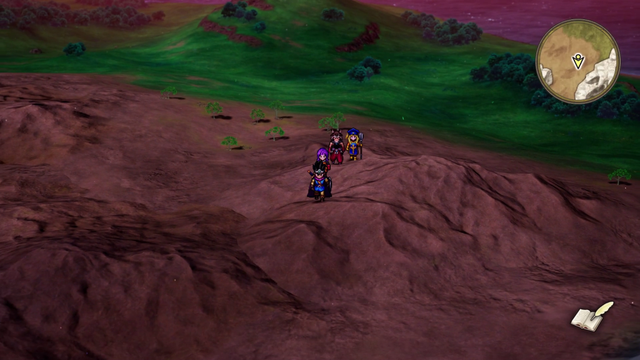
The environment design is a highlight, blending the original layouts with new geometry. Cavern tunnels, once boxy corridors, now feature craggy walls, uneven slopes, and background effects that do well to immerse the player.

The ambient sound design is simply superb. Subtle sounds of water, wind, and nature create an atmosphere that wasn’t possible in the original version. Paired with the new visuals, the world feels more alive than ever before.

Personal Observations

Added cut-scenes and dialogue are a pleasant treat for returning players. I can’t say the early game’s story has been altered significantly (though there are minor insights provided that weren’t present before), but it offers extra flavor and context. Also, a a petty nitpick–I wish there was the option to select my pronouns. It feels like a missed opportunity in a remake that’s modernized in so many other respects.

Finally, another anecdote–the game pointed me toward Reeve right away, after leaving Aliahan. It’s funny, but after all these years I have not once gone directly to Reeve, instead making a beeline for the Promontory Cave.

If you have objective markers on, in Reev you will learn about the secret shortcut to bypass the initial section of Promontory Cave and jump straight to Dreamers Tower (forgoing the treasure found in the cave proper).

It’s a trivial change–just one I found odd. The original game gave very little direction. It’s probably a positive thing that HD-2D is offering a bit more help for modern gamers, leaving things like the Promontory Cave treasure for explorers. But it makes me wonder if this version will lose some of its flexibility, with newcomers following the games instruction a little too closely.

Final Thoughts

Dragon Quest III HD-2D is shaping up to be a must-play for fans and newcomers alike. It’s DQ III to the core, really, with some modern dressing and quality of life improvements that newcomers might expect. Whether you’re here for the nostalgia or experiencing it for the first time, there’s a lot to love about this release.

Perhaps I’ll do an actual review when I’ve finished the game. But for now, these are my initial thoughts on my experience.

#DQ3 #DragonQuest #JRPG

Story of Seasons: A Wonderful Life Review – Proquest #016 • Aust's Proquestinations

This is a video game blog, right? It’s been a while since I’ve reviewed a game (My DQ3 First Impressions doesn’t really count), and I recently wrapped up my playthrough of Story of Seasons: A Wonderful Life remake. What better opportunity to cover something than one of my favorite game series? Story of Seasons (titled

Aust's Proquestinations • Why save the world today, when you can put it off until tomorrow?
Dragon Quest III HD-2D First Impressions – Proquest #015 • Aust's Proquestinations

Dragon Quest III was never my favorite entry in the franchise (that honor goes to DQ V), but it’s a game that’s grown on me over the years since I first played the mobile port. In fact, when the HD-2D remake was announced, I found myself unexpectedly hyped. Now that I’ve finally got my hands

Aust's Proquestinations • Why save the world today, when you can put it off until tomorrow?

Just finished chapter 3 of my #DragonQuest inspired #fantasy story. After this, I should be moving on to a more episodic, town-of-the-week style format. Yes, I realize my art is awful. #Gamelit

https://www.royalroad.com/fiction/94785/fatebound-journey/chapter/1894741/ch-3-clash-on-the-crags

Ch. 3 - Clash on the Crags - Fatebound Journey

The echo of the gloomling’s demand hung heavily in the air. Élrick’s grip tightened around his sword hilt as he glanced at the slain fellow. Blood pooled (...)

Royal Road