Andrea McMahon

482 Followers
69 Following
49 Posts

Geospatial data, remote sensing, global change, environment and health | PhD | Research scientist @SIG_GIS

Born at 351 ppm.
she/her
🇩🇪 in 🇺🇸

#EOchat #GISchat #RemoteSensing #EarthEngine #GeoHealth

@waeiski you're giving me hope. 🙌
@GeoDon 😭
@nickm_tor
Cool cool. So maybe in 5 - ish years? 😭

Sent the little one to daycare for the first time. He went there for 3 days and we all spent the following 7 days sick at home.
Please tell me it gets better!

#workingmoms #Momademia #womeninSTEM

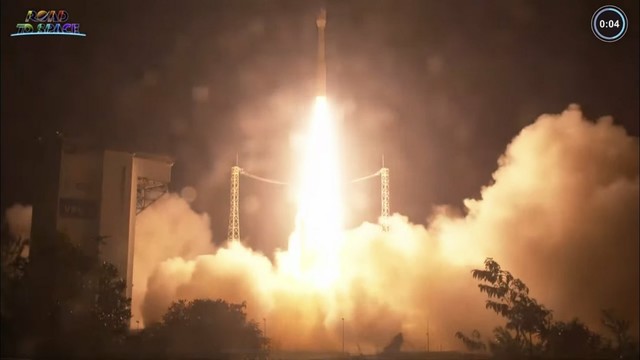
Vega-C: Erster kommerzieller Start von Europas neuer Trägerrakete gescheitert

Beim ersten kommerziellen Start der Vega-C sollten zwei hochauflösende Erdbeobachtungssatelliten ins All gebracht werden. Das hat nicht geklappt.

https://www.heise.de/news/Vega-C-Erster-kommerzieller-Start-von-Europas-neuer-Traegerrakete-gescheitert-7434500.html?wt_mc=sm.red.ho.mastodon.mastodon.-.-

#Arianespace #Erdbeobachtungssatellit #Pleiades #Raumfahrt #Satellit #Trägerrakete #VegaC #News

Vega-C: Erster kommerzieller Start von Europas neuer Trägerrakete gescheitert

Beim ersten kommerziellen Start der Vega-C sollten zwei hochauflösende Erdbeobachtungssatelliten ins All gebracht werden. Das hat nicht geklappt.

heise online

New info on #Landsat next mission that's expected to launch in 2030. https://svs.gsfc.nasa.gov/cgi-bin/details.cgi?aid=5003&button=recent#:~:text=Landsat%20Next%20which%20will%20provide,consist%20of%203%20separate%20spacecraft.

I'm absolutely excited about a gazillion bands at 10-20 m resolution. 🎉🛰️🙌

#EOchat #EarthObservation #RemoteSensing

SVS: Landsat Next Planned Orbits and Swath Coverage

Landsat Next is the follow on mission to Landsat-9. Landsat Next which will provide data continuity to the decades long data record of the Earth’s land from space. It is still in the planning stages and is targeted for launch around 2030. Landsat Next is planned to have more than twice the number of bands as Landsat 8 and 9 and will consist of 3 separate spacecraft. This reduces amount of time needed for full Earth coverage to around 6 days. These visualizations show example orbits and swaths of Landsat Next. The orbit swath widths shown are 164km wide. There are 2 versions: one is more equatorial, the other is more polar. The equatorial view shows the spacecraft orbits and swaths slowly appearing, revealing the colored Earth tiles. The orbits speed up showing the distances between orbits. The speed increases showing several days quickly. Finally, the orbits slow down as the last few orbits complete the full coverage of the Earth about 6 days from when it started. The polar view shows the same thing from a different camera view. The polar view highlights the approximate 10:10am crossing time of the daytime (descending) orbits. It also shows how the swaths have more overlap near the poles than near the equator. The yellow arrow is the where the sun shines directly down onto the Earth.

@juca I don't even understand it. They flagged me for violating rules against hateful conduct. Doesn't even make sense to me.
It finally happened. The bird app booted me. #twittermigration

Here's some more info on the #VegaC rocket fail that led to the loss of two of Airbus' #PléiadesNeo satellites:
https://www.space.com/arianespace-vega-c-launch-failure-december-2022

#EOchat #EarthObservation #RemoteSensing

Europe's Vega C rocket fails on 2nd-ever mission, 2 satellites lost

The Vega C was carrying two spacecraft for Airbus' Pléiades Neo Earth-imaging constellation.

Space

Oof. Two #Airbus #Pléiades neo satellites were lost during unsuccessful launch. 😬😱

#EOchat