7/ Take-home message:
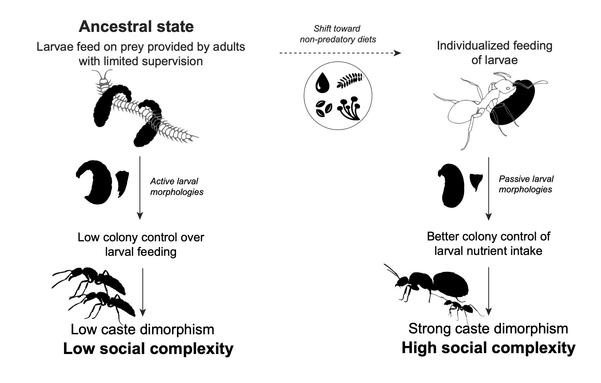
The evolution of strong caste differences and complex ant societies wasn’t just about colony size or genetics—it was about who fed the larvae and how.
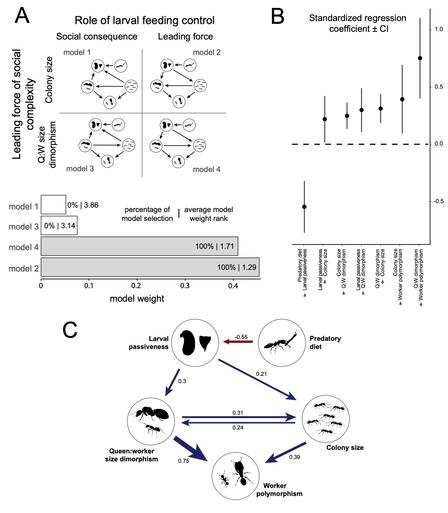
5/ Our causal models suggest:
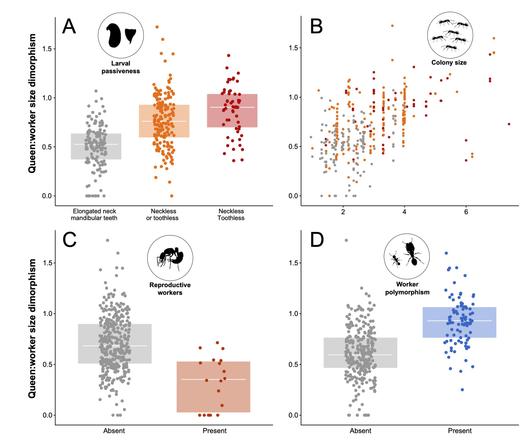
🔹 More controlled feeding of larvae = More morphological specialization
🔹 Adult-controlled feeding enabled extreme caste differences, which in turn reinforced colony-level social complexity.
4/ Why does larval feeding matter?
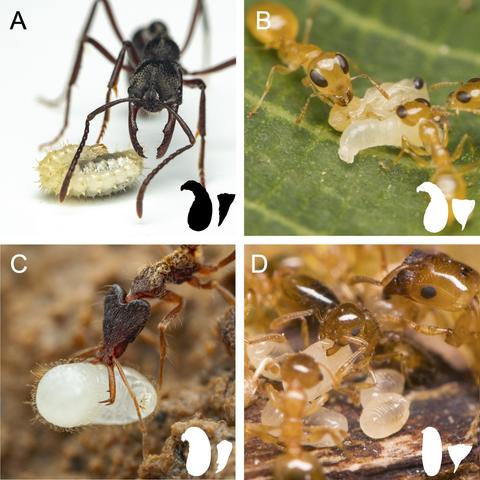
Larvae are inherently *unruly*, always trying to secure as much food as possible from the colony. By taking full control of larval nutrition, adult ants were able to sculpt extreme queen-worker differences, fueling social complexity.
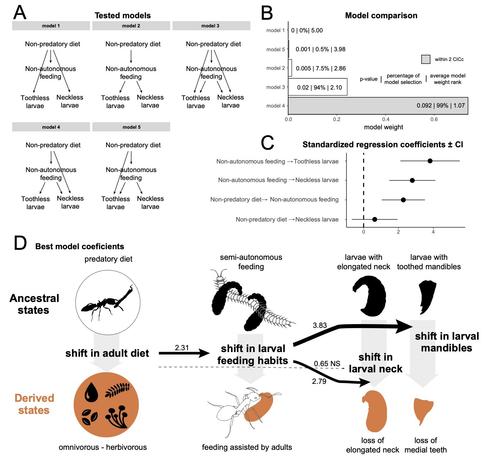
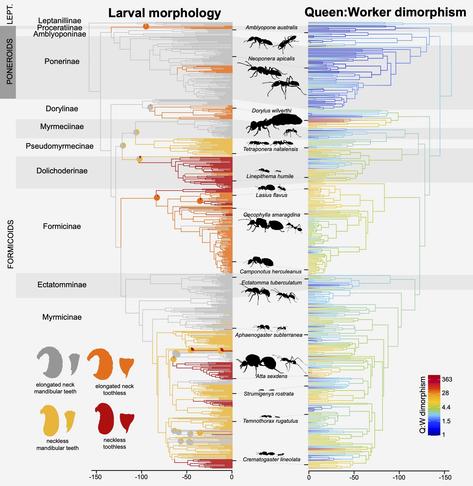
3/Using comparative phylogenetics, we identified a major evolutionary shift:
The transition from self-feeding larvae to passive larvae receiving processed food by adults facilitated greater queen-worker differentiation, larger colonies, and increased social complexity.
1/ Ant colonies function as superorganisms—queens reproduce while workers handle all other tasks. But why do some ants have highly specialized castes, while others have queens and workers that look nearly identical? 🤔 We figured that the key had to be in larvae!
🚨 New Paper Alert! 🚨
🐜 How did ants evolve their highly specialized queens and workers?
With Arthur Matte, we reveal a key evolutionary innovation: adult control over larval feeding unlocked extreme caste dimorphism and complex societies. 🧵👇
🔗 Read in @pnas.org:
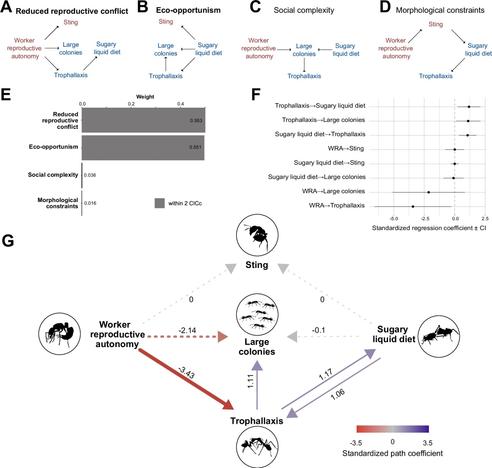
https://doi.org/10.1073/pnas.2413742122This ecological opportunity could *only* be seized in lineages where workers had given up their ability to reproduce independently, reducing social conflict within colonies.
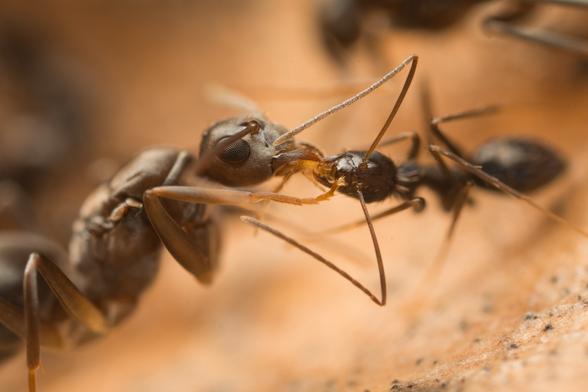
The evolution of trophallaxis enabled ants to develop larger colonies and it accelerated net diversification, paralleling how resource sharing drove other major evolutionary innovations like the emergence of complex multicellular life.
How do complex social behaviors evolve and shape species' success? Here
https://doi.org/10.1038/s42003-025-07688-7 we reveal how a key social behavior in ants - mouth-to-mouth food sharing
#trophallaxis - emerged as ants opportunistically exploited new ecological niches as terrestrial environments changed.
Using Bayesian neural networks and evolutionary modelling, we show that trophallaxis evolved twice in ants: 130 million years ago when flowering plants became more abundant and ants began harvesting sugary liquids from plants and their insect partners, and again in others ~90 million years ago.
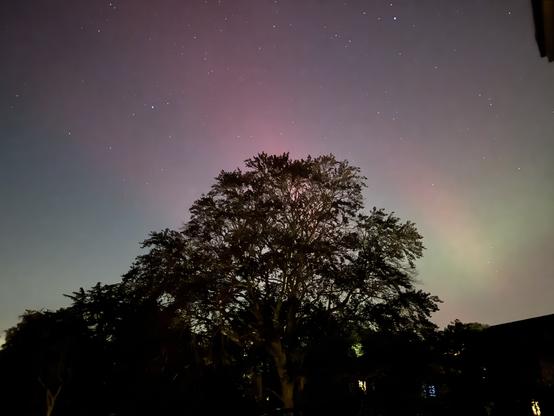
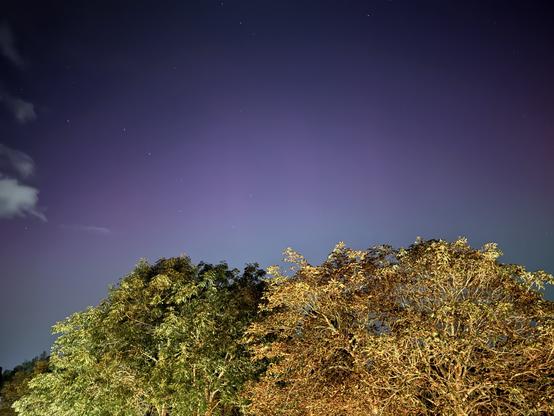
Aurora in Cambridge UK! Even with notable light pollution(!)