 Elio Campitelli
 Technology Connections
this video will blow you away

this video will blow you away
@TechConnectify this one will be a fan favorite….
I’ll show myself out
@TechConnectify Do a retrospective on attic fans (I think people call these “whole house” fans these days). These were super common in the South in 1950–70s construction:
https://www.energy.gov/energysaver/cooling-whole-house-fan
I haven’t seen one of these in decades.
@matt This would be a welcome thing in Oregon, I would think...since everyone leaves windows open all night blasting fans because a/c is uncommon.
@matt @TechConnectify Pretty sure a relative of mine still has a working whole house fan for a garage building that's now used as an office and storage. They're quite good at keeping temperatures more bearable and also at sucking bugs in through the cracks under poorly fitted window screens.
The whole house fan for the main building is, as far as I know, still there...but disconnected because (if I remember correctly what I was told) the ducting for the air conditioner obstructs its operation.
I had one of these growing up. I'll vouch they work.

@jackeric @TechConnectify I also recommend


@TechConnectify OK, I'll bite based on that thumbnail. Oh hey, it's the person who did that fascinating solar panel video. Wait... this is an hour long. Oh, it's one of *those* videos!
Yeah, I'll be watching this tonight.
@TechConnectify Great video. Thank you!
I’ve got 8 ceiling fans in my house, and it’s…fantastic.
I’ll show myself out.
@TechConnectify I'm a real fan of this video. This video is like a breath of fresh air. Finally a creator not full of hot air...
I'll stop.
@[email protected] Hi Alec, I noticed you just released a fantastic video on how usa keep messing up ceiling fans! Given your love for residential energy efficiency and motor design, I think you should do a deep-dive episode on the electronic wizardry inside "BLDC Ceiling Fans." They are incredibly popular in India right now (pioneered by a company called Atomberg), and they represent a massive leap over the traditional single-phase AC induction fans usa use in the West. Here is why they are a perfect fit for a Technology Connections episode: 1. The Efficiency Leap: A standard AC induction fan draws about 75 Watts at peak speed. A BLDC fan delivers the exact same airflow (around 220–235 CMM / 8,000 CFM) while drawing only 28 to 35 Watts. At low speeds, they run on an unbelievable 2 to 3 Watts. 2. Hidden Inverters: Inside the fan canopy is a sophisticated circuit board. It takes incoming AC wall power, rectifies it to DC via an internal SMPS, and then a microcontroller uses Pulse Width Modulation (PWM) to step it back into a simulated 3-phase AC wave to spin a permanent magnet rotor. It ties perfectly into your older video on how induction motors and 3-phase power work! 3. Absolute Silence: Because they don't use old capacitor-drop or resistive wall regulators to chop the AC voltage waveform, they never experience that annoying low-speed electrical motor hum. They run completely silent. 4. The Engineering Trade-offs: Traditional fans are "dumb" copper and iron machines that can survive a lightning strike and last 40 years. BLDC fans put an entire computer motherboard into a hot, humid ceiling environment. If a power surge fries the PCB, the fan is bricked. Furthermore, they are native to 220V grids—running one on a standard 110V North American outlet requires a step-up transformer, or the internal chip throws an under-voltage error. They cost around $37 to $59 USD in India (though shipping them over to the US pushes it past $220 due to freight). Seeing you tear down the internal circuitry, explain the electronic commutation, and benchmark the power draw using your power meters would make an incredible video. It represents the exact kind of "invisible engineering" that makes household appliances so fascinating. Thanks for the great content!
Hi Alec,
I noticed you just released a fantastic video on how usa keep messing up ceiling fans! Given your love for residential energy efficiency and motor design, I think you should do a deep-dive episode on the electronic wizardry inside "BLDC Ceiling Fans."
They are incredibly popular in India right now (pioneered by a company called Atomberg), and they represent a massive leap over the traditional single-phase AC induction fans usa use in the West.
Here is why they are a perfect fit for a Technology Connections episode:
1. The Efficiency Leap: A standard AC induction fan draws about 75 Watts at peak speed. A BLDC fan delivers the exact same airflow (around 220–235 CMM / 8,000 CFM) while drawing only 28 to 35 Watts. At low speeds, they run on an unbelievable 2 to 3 Watts.
2. Hidden Inverters: Inside the fan canopy is a sophisticated circuit board. It takes incoming AC wall power, rectifies it to DC via an internal SMPS, and then a microcontroller uses Pulse Width Modulation (PWM) to step it back into a simulated 3-phase AC wave to spin a permanent magnet rotor. It ties perfectly into your older video on how induction motors and 3-phase power work!
3. Absolute Silence: Because they don't use old capacitor-drop or resistive wall regulators to chop the AC voltage waveform, they never experience that annoying low-speed electrical motor hum. They run completely silent.
4. The Engineering Trade-offs: Traditional fans are "dumb" copper and iron machines that can survive a lightning strike and last 40 years. BLDC fans put an entire computer motherboard into a hot, humid ceiling environment. If a power surge fries the PCB, the fan is bricked. Furthermore, they are native to 220V grids—running one on a standard 110V North American outlet requires a step-up transformer, or the internal chip throws an under-voltage error.
They cost around $37 to $59 USD in India (though shipping them over to the US pushes it past $220 due to freight).
Seeing you tear down the internal circuitry, explain the electronic commutation, and benchmark the power draw using your power meters would make an incredible video. It represents the exact kind of "invisible engineering" that makes household appliances so fascinating.
Thanks for the great content!
Because these fans are controlled by a built-in computer board rather than simple electrical coils, the higher-end models include fully integrated Wi-Fi and Bluetooth chips directly on the main motor PCB.
This means you can connect the fan straight to a home network to control it via a smartphone app, Google Assistant, or Alexa, entirely bypassing traditional wall switches. It allows you to set up automated routines—like programming the fan speed to change automatically based on the temperature readings from a smart thermostat.
Adding these IoT smart chips shifts the price up slightly, bringing the local cost in India to around $45 to $75 USD depending on the model.
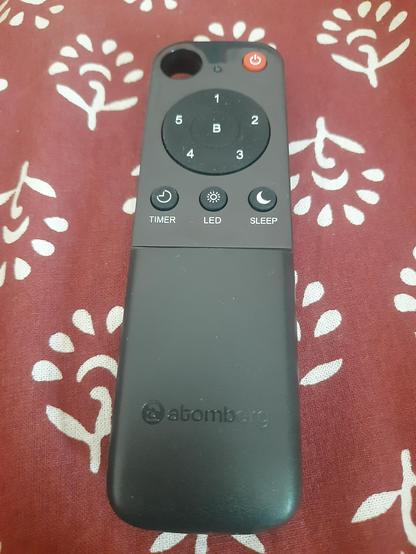
@TechConnectify The Standard Atomberg Remote Control & Functions:
Unlike traditional fans that rely on a wall regulator to physically alter voltage, an Atomberg fan runs its speed control entirely through software. The standard model uses a dedicated wireless remote control that communicates directly with the microprocessor on the fan's internal PCB.
Because the fan's motherboard handles the heavy lifting, the remote introduces several clever functions that are mechanically impossible on a standard induction fan:
1. ON/OFF Button: Completely toggles power to the internal motor control circuit, allowing you to leave your physical wall switch flipped "on" permanently.
2. Speed Control (Keys 1 to 5): Directly alters the Pulse Width Modulation (PWM) duty cycle sent to the stator coils. Speed 1 spins the fan at a dead-silent crawl using only 2 to 3 Watts of power, while Speed 5 ramps it up to its full 28-35 Watt peak capacity.
3. Boost Mode: Acts as an "overclock" button. It bypasses standard speed curves to immediately push the motor to its absolute maximum rated RPM and airflow delivery (up to 360 RPM depending on the model size).
4. Sleep Mode: A highly efficient comfort feature. When activated, the microprocessor automatically reduces the fan speed by one level every two hours. This prevents you from freezing in the middle of the night as ambient temperatures drop, while steadily scaling down the fan's power consumption.
5. Timer Mode: Offers dedicated buttons for 1, 2, 3, or 6 hours. The onboard chip counts down the duration and cuts power to the motor automatically when the time elapses—ideal for falling asleep or regulating room air without running the fan all day.
6. LED Toggle (On Select Models): If the fan includes an integrated LED under-light or speed indicator, the remote allows you to dim, brighten, or turn off the indicator lights so they don't disturb you in a dark room.
You can look at that in 3D In this website
Take a look at this Renesa with 3 Year Warranty BLDC Motor with Remote 1200 mm Ceiling Fan on Flipkart
https://dl.flipkart.com/dl/atomberg-renesa-3-year-warranty-bldc-motor-remote-1200-mm-ceiling-fan/p/itmea71f80992825?_refId=&_appId=CL
It is a fascinating case study in how different regions engineer appliances based on their unique climates and architectural needs.
In the United States, classic brands like Hunter perfected heavy, beautifully crafted fans with thick blades designed to run at a lower, gentler RPM. Because American homes often rely on centralized HVAC systems, these fans are primarily meant to quietly circulate conditioned air and add to the room's aesthetic, meaning their 75-watt power draw isn't a primary concern.
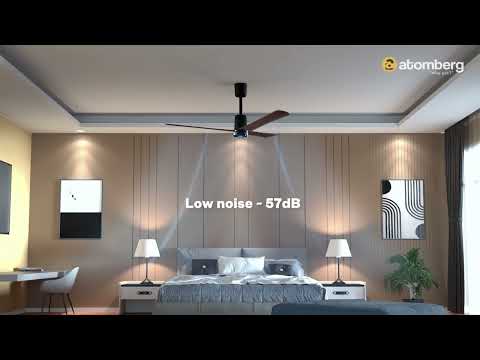
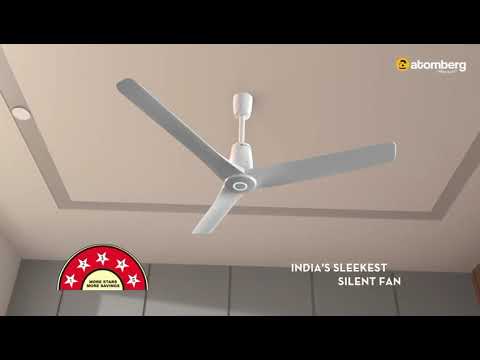
By contrast, in tropical climates like India, fans are the primary cooling source and run continuously. Because many homes rely on backup battery inverters during power outages, efficiency is everything. Companies like Atomberg engineered these ultra-lightweight BLDC fans to maximize every single watt, delivering high-velocity airflow at 350 RPM while cutting energy footprints by over 50%. It is a perfect example of two completely different, brilliant approaches to solving the exact same comfort problem based on local context.
@kp_rider
Why bother with Google or Alexa if there's the Open Source Home Assistant 😉
https://en.wikipedia.org/wiki/Home_Assistant
Speaking seriously, I don't like stuff which depends on a cloud service that may shut down or change it's API at any time, turning a piece of hardware into junk. Local solutions based on Home Assistant (or similar) are so much more made for long-term-use.
(you can still make Home Assistant available over the Internet if you really want that)
@TechConnectify
#HomeAssistant
No the basic models are dumb and only work with remote. They give you choices with higher models with IOT. It's not forced on you.
@TechConnectify as a short person living in a house with 3 m¹ ceilings I sort of resent the description of remotes as gimmicky :)
Although I guess that they mean that our 15-ish year old fans probably have a processor that is more powerful than the apollo guidance computer (and we had to replace some components, iirc capacitors, at least once).
¹ almost 10 freedom units
Did I miss it or did you get through 1:11 without mentioning the word punkhawallah?
The punkha (or pankha) was the predecessor to the ceiling fan and was often operated by a punkha wallah, who was paid to keep the punkha moving. It dates back to 8th century Arabia.
Because ceiling fans replaced the punkha and the wallah they were sometimes called punkhawallahs. The word lives on in the 'Punkah Louvre', the kind of device you'll find above your head directing air towards you.
Nice episode - explained a lot.
In 2012 I was struggling in a small office with low ceilings in a suburban Chicago home. I ran three computers and a laptop, and my wife (in the same office) ran a mac book with a large monitor. Existing fan was low enough, that if we turned it on to have a reasonable effect, papers start flying off of both of our desks. I also hated the choppy blows of air which that three-blader delivered.
When searching for other options, I came across the Indiegogo campaign for Exhale fans (https://www.indiegogo.com/en/projects/nikhiner/tesla-inspired-bladeless-ceiling-fan), which billed themselves as Tesla-inspired. Backed it up in November 2012, reserving two fans, for which I paid $250 as an early bird. It did arrive in early February 2014. It was all that it promised in marketing. It created smooth circulation in the room without noise or choppiness. It was enough flow without papers flying. Later I've added a light and upgraded a motor.
We ordered two more of these fans when moved to downtown at the cost of about $550-$600 (different colors), which I think was a very fair price for what they delivered, being a small-batch production. And I recommended it to anyone who would ask (which was everyone who stopped by, it looks cool).
The management seemed to have changed since and I do not know where Nik Hiner is now. But If I see his name on a Kickstarter again - I am in.
I'm saving this for teaching.
@TechConnectify I'm something of a Big Ass Fan myself.

 Ryan Emmett
 Tom Fakes (he/him)
 Zeiros Lion
 mtp
mtp
 kobra
kobra adamrice
 Kay Ohtie
 Baloo Uriza
 㬋
㬋 Poloniousmonk
 jack
jack mjc0961
 Daniel Borges
 Crazypedia won't Comply 🧿
 WOMUMP
 Stu
Stu 🐝🐝🐝
🐝🐝🐝 Alex
Alex Cegorach
 Baudouin Feildel

 Dario Zanette
 Jernej Simončič �
 stodarahodan
 Alex
Alex Veviser
 67guanacos89llamas181alpacas
 Dror Bedrack
 Ko Simon toku ingoa
 kolAflash
 Mitchi
 Miakoda
 bubbajet
 Elizabeth

 Kp_rider
 TransitBiker
 Tobias
 Michael 🇺🇦
 Raffael1000
 Elena ``of Valhalla''
 groff 🇺🇦
 Justin ⏚
 Shadow Obsta
 Vlad Didenko
 gudenau
 Chung-chieh Shan 單中杰