 dag
dagNEW at the Empty City
Some preliminary thoughts on the Court of Appeal decision on Palestine Action
Why it is important to understand how (bad) law is structured
NEW at the Empty City
Some preliminary thoughts on the Court of Appeal decision on Palestine Action
Why it is important to understand how (bad) law is structured
@davidallengreen a bit of a tangent but it's interesting that the Court of Appeal’s decision on a case related to restrictions on free expression is on YouTube when the government is currently planning to ban YouTube...
"The ban will therefore include platforms like Snapchat, TikTok, YouTube,"
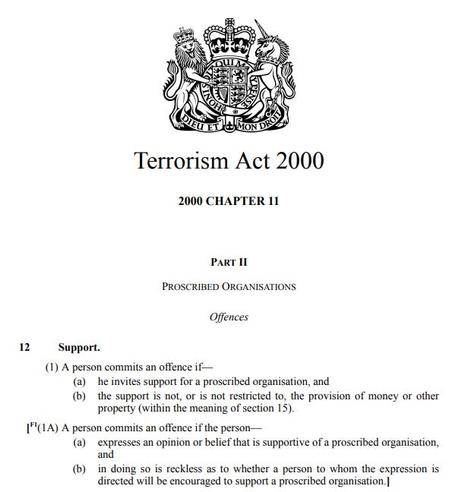
@davidallengreen I do agree with you wrt how the judges are going to feel about their historically inaccurate comments about the Suffragettes. I also think that it reveals something that is problematic about the proscription. The judges, both here and below, took it as read that a ban on expressing support for terrorism, as defined in s. 1, was not speech really worth protecting.
The real issue for them was that a large cohort of people might be silenced because they were unsure of the limits of the ban and another cohort might wish to express support for the larger subset of minor property damage and blockades undertaken by PA whilst distancing themselves from the terrorist actions. That was speech worth protecting.
The logic of such a position is that terrorism is unacceptable political violence. It attempts to coerce rather than persuade and so cannot be advocated for by a democrat. Article 10 is important because it protects minority, unpopular opinions, but it does not protect anti-democratic speech.
That logic seems okay, until you remember that we do not live in some whig utopia. The state is coercive. Parliament is not a forum where all views are debated equally and some consensus position determines what the Government of the day does. Instead it mediates some conflicts, and provides some measure of control. Another, larger, measure of control is confrontation with the wider population. There is a limit to what different groups will accept. Militancy, as shown by the WSPU (or the IRA), is part of the democratic process. Freedom of speech and freedom of opinion, as well as the ordinary procedural protections of the criminal law as applied to militants are part of the democratic process. They prevent the state from being overly coercive and require it to be responsive to outsider voices.
A minority group, women for suffrage, forced both the Government's and Parliament's hand. It is possible that the militant subsection's tactics of letter bombing, arson and murder hindered their cause. I don't know, but it was certainly part of the struggle.
Had the judges done some cursory research into the WSPU, they would not have been so keen to hold them up as a model of civil disobedience. But that they are shows that militancy, even extreme militancy, is part of the democratic process. We do need to protect expressions of support for such groups and such tactics. We should also, as far as possible, maintain the ordinary protections of the criminal law in dealing with the violence inherent to the democratic process
 jtonline
 Simon newslttrs.com
 Flippin' 'eck, Tucker!
 Roberto von Archimboldi