Over the weekend, I did an interview about my forthcoming book *The Reverse Centaur's Guide to Life After AI* (a book about being a better AI critic), and the interviewer said she was surprised that I wasn't an AI booster, based on my demographics and work history:

https://us.macmillan.com/books/9780374621568/thereversecentaursguidetolifeafterai/

--

If you'd like an essay-formatted version of this thread to read or share, here's a link to it on pluralistic.net, my surveillance-free, ad-free, tracker-free blog:

https://pluralistic.net/2026/06/15/vernacular/#hypercardian

1/

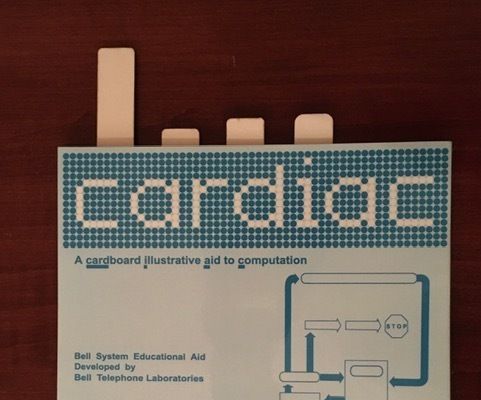
I could see where she was coming from. I encountered computers in the mid-seventies, as a small child. My first computer was a CARDIAC, a working, Turing-complete, mechanical computer made entirely of cardboard, that I spent endless hours with:

https://www.instructables.com/CARDIAC-CARDboard-Illustrative-Aid-to-Computation-/

2/

CARDIAC (CARDboard Illustrative Aid to Computation) Replica

CARDIAC (CARDboard Illustrative Aid to Computation) Replica: Back in the 1960's and early 70's Bell Labs made some very sophisticated educational kits available to high schools and colleges. Designed for classroom use, they included wonderful manuals written by some of Bell Labs best minds. One of these kits…

Instructables

Then I graduated to a teletype terminal and acoustic coupler connected to a minicomputer at the University of Toronto. My mom, a kindergarten teacher, used to smuggle home 1,000' rolls of paper towel from the kids' bathroom. I'd get 1,000' feet of computing up one side, then another 1,000' down the other side, then I'd carefully re-roll the paper towel so she could put it back in the bathroom for the kids to dry their hands on.

3/

After that, I got an Apple ][+ in 1979, and shortly thereafter acquired a modem, and that was it: I was hooked for life. I became an amateur programmer, then a professional programmer. I hosted forums on dial-up BBSes where I distributed software and offered support to strangers who wanted to connect their computers to the internet. I got a job as a gopher developer, then a web developer, then a CIO-for-hire, helping wire up small businesses and connect them to the net.

4/

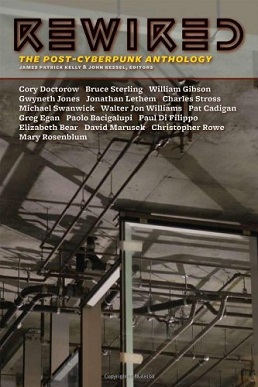
Eventually, I co-founded a free/open source software startup, before transitioning to 25 years as a digital rights activist with the Electronic Frontier Foundation. And for most of that time, I was energetically writing science fiction, eventually becoming associated with a school sometimes called "post-cyberpunk":

https://en.wikipedia.org/wiki/Rewired:_The_Post-Cyberpunk_Anthology

5/

Rewired: The Post-Cyberpunk Anthology - Wikipedia

The force that energized all this work was a dialectical one, the contradiction that powered cyberpunk literature itself. For all that cyberpunk was undeniably enamored with the coolness and combustibility of new technology, it was also terrified of how technology could be a force for oppression, surveillance and control. As William Gibson says, "cyberpunk was a warning, not a suggestion."

6/

Gibson's more famous quote, of course, is "the street finds its own use for things." In Gibson's novels (and in my own life in technology) all the most interesting things happen when users of technology (often without formal training or credentials) find ways to adapt the technology they use to suit their needs:

https://pluralistic.net/2026/03/17/technopolitics/#original-sin

7/

Pluralistic: William Gibson vs Margaret Thatcher (17 Mar 2026) – Pluralistic: Daily links from Cory Doctorow

This is why I remain an ardent fan of Hypercard, Scratch and other meta-tools that are designed to allow non-programmers to write software that exactly conforms to their desires. Whatever the apps produced by these tools lack in sophistication and efficiency is more than offset by the fact that they give everyday people the power to directly control the tools they rely upon.

8/

If "epistemic humility" means anything, it means acknowledging that no amount of "requirements gathering" can capture the needs of people totally unlike yourself as faithfully as those users can capture their own needs. Giving people the tools to produce their own software is always going to make tools - vernacular, idiosyncratic, homespun - that are more suited to their own hands and minds than anything a technologist working on their behalf could make.

9/

The ancient dictum of "nothing about us without us" - born in 16th century Poland and taken up by the modern disability rights movement - asserts the right of people to control their own living conditions, and also the unique capacity of people to understand their own needs. You know what's even better than being *consulted* on the design of the technology you use? Having *direct control* over that technology!

10/

This is why I was so suspicious of the iPad. The iPad's much-lauded "ease of use" was entirely about how easy it was to use an iPad to *consume* technology. But the iPad remains the single most user-innovation-hostile technology in modern history, a device *designed* to make it impossible to *produce* technology without permission from a remorseless multinational corporation. This is cyberpunk as a *demand*, not a *warning*:

https://memex.craphound.com/2010/04/01/why-i-wont-buy-an-ipad-and-think-you-shouldnt-either/

11/

Why I won’t buy an iPad (and think you shouldn’t, either) – Cory Doctorow's MEMEX

The technology I've championed all my life is technology that gives more control to its users. One of my immutable precepts is that people who are different from me know things I can't know, and the only way I can get the benefit of their unique knowledge and perspective is if they are free to make and share things that matter to them. As Dan Gillmor said, back when he was inventing the study of citizen journalism, "My readers know more than I do":

https://www.oreilly.com/openbook/wemedia/book/ch00.pdf
12/

And while I am broadly very skeptical of AI, and deeply alarmed by the proliferation of "vibe coded" software in production environments, vibe coding for personal projects is a useful and exciting addition to the lineage of tools that let computer users decide how their computers will work. For people making personal projects, vibe coding extends the power of shell scripting, cron jobs, Applescript, and other desktop automation tools to a wider audience.

13/

One of the journalists I spoke to last week about my book described how he had vibe coded an app that showed him an alert every time a plane flew over his house, giving the tail number and other details of the flight.

14/

This is information that I have no need for, no interest in, and that I'm therefore excited to learn about, because its very existence affirms that the world is full of people who are delightfully, irreducibly, amazingly different from me, and moreover, that their unique needs can be directly met using their imaginations and their personal computers.

15/

I recently sat down with my colleague Naomi Novik, a brilliant author who also co-founded Archive of Our Own. Naomi demoed her followup to AO3 for me: Wreccer, a system to help you find small groups of people with taste similar to your own, in order to facilitate media recommendations within that group - a kind of personal, relationship-driven alternative to massive, centralized, monolithic algorithmic recommendation systems:

https://github.com/wreccer

16/

Wreccer

Tell me something good. Wreccer has 3 repositories available. Follow their code on GitHub.

GitHub

Naomi told me that Wreccer was being built using the same design ethos that the original Twitter embraced. When Twitter launched, it was an API first, and the official Twitter front end was built on that API - but anyone could build their own front end for Twitter that worked in the way *they* wanted it to.

17/

Now, the word "anyone" is doing a lot of work in that sentence, because most people don't even know what an API is, and of the people who do, most of them were not capable of writing their own software front end for Twitter.

18/

But Wreccer is being designed for the age of vibe coding, and the API will *really* allow anyone who uses the service to design their own interface to the system, one that elevates and centers the features they find useful and tucks away the ones they're not interested in. Your personal, custom front end could also bring in other data-sources - pulling in your Mastodon messages, for example, or even showing you an alert with the tail-number of any plane flying over your home.

19/

This is the part of vibe coding that I'm quite excited about, but it's not the part the industry focuses on. Instead of hearing about how personal, homemade software utilities can be an end unto themselves, we hear about vibe coded projects as prototypes for commercial production code.

20/

We hear about clueless bosses vibe coding software products and services that run fine for one user on a siloed desktop computer, and then demanding to know why it takes 50 engineers a year to make the same thing work for millions of users on the public internet. We hear about people who vibe code and submit patches to free/open-source software projects with millions of users, overwhelming project maintainers with slop code that is riddled with security vulnerabilities.

21/

Of course, there's an obvious reason why the industry wants to focus on the potential for vibe coded software to replace production code. The AI bubble has burned up $1.4t to date, while bringing in mere tens of billions of dollars per year, even as its unit economics grow steadily worse:

https://www.telegraph.co.uk/news/2026/06/04/ai-is-the-greatest-money-wasting-scheme-humanity-has-ever-i/

22/

To keep the bubble inflated, AI hucksters must promise massive economic returns to the technology. They want investors to believe that vibe code is about to replace working programmers, who are skilled, high-waged, high-demand workers. Their pitch is that for every million dollars' worth of programmers that an AI salesman and a boss conspire to fire, half a million dollars will go to the AI company whose bots shit out that vibe code.

23/

That's par for the course with the AI bubble, whose focus is entirely on how AI can centralize, control and homogenize our lives. Whereas early desktop publishing, web publishing and social media gave us a glorious higgledy-piggledy of chaotic, weird and transgressive hobbyist media and retina-searing designs, AI art and design are instantly recognizable at a thousand yards, and it all looks the same, boring, and *washed*:

https://pluralistic.net/2024/07/20/ransom-note-force-field/#antilibraries

24/

Pluralistic: AI art has no anti-cooption immune system (20 Jul 2024) – Pluralistic: Daily links from Cory Doctorow

AI companies have released open weight/open source models that can run on your own computer, but these are treated as side-shows and toys and demos. The real action, we're told, is in "frontier models," which is industry-speak for "a piece of software whose running costs exceed the GDP of most countries":

https://pluralistic.net/2026/02/19/now-we-are-six/#stock-buyback

25/

Pluralistic: Six Years of Pluralistic (19 Feb 2026) – Pluralistic: Daily links from Cory Doctorow

@pluralistic Not sure. With earlier tools for the enthused amateur, it remained clearer (I guess) that something is a rough, unpolished, for personal use only thing. With vibe coding, I see examples of people actually believing that all those overpaid developers are not needed anymore, that what they have prompted out of an LLM is practically as good as a professional product. And it leaves so depressingly few ways to improve, to become more than a vibe coder. Your later point “you and a chatbot team up to reinforce your delusions” can totally happen while vibe coding and I think it does happen a lot.
@pluralistic wait ... Was the super computer in Hackers named after this author??
@pluralistic 🤯. Hack the planet!!
@pluralistic Neuromancer on hold at the library. I gotta get in on this.
@fullywoolly @pluralistic I was once asked if I had ever hacked a Gibson.... I quietly checked out of the conversation.
@nuintari @fullywoolly @pluralistic if they weren't testing you i'm sad
@ssfckdt @fullywoolly @pluralistic They seemed to be dead serious. They reaked of posuer.
@nuintari @ssfckdt @pluralistic wow that's special. I wouldn't guess someone would bring that seriously.
@fullywoolly @ssfckdt @pluralistic They didnt know any better. I _still_ meet people who think "Hackers," is real.
@nuintari @ssfckdt how? I guess if nation states can make stuxnet to target a PLC used in Iran's Nuke development and all the trickery it used, doing some oil tankers could be plausible? I still don't get how anyone could take the movie seriously. Type "Cookie" you idiot!
@fullywoolly @ssfckdt I dunno where you live, but in the USA, people still support trump, believe in angels, and think trickle down economics is gonna happen any day now.
@nuintari @ssfckdt oh I'm very aware. Unfortunate family relations, quite strained. I also remember growing up having them praise Reagan so ...
@fullywoolly @nuintari Honestly? If anything, technical literacy has gotten much much worse. It's been downhill since the iPhone. Nobody barely even knows how to use a proper computer anymore.
@nuintari @pluralistic no one has ever asked me. But I absolutely adore the movie and pretty much watch it whenever I see it available. For whatever reason I never bought it though.

@fullywoolly @pluralistic My HS girlfriend acted like it was a guidebook on, "how to be a hacker," while ignoring her actual hacker boyfriend's input on the subject. She wanted to watch it constantly, to study it.

I fucking HATE that movie to this day.

She also did this with "The Craft" and a so-called Wiccan phase.

God she was annoying.

@nuintari @pluralistic 😂 I once dressed up as Cereal Killer for Halloween. Not like the movie, but got a box of cereal cut a hole in the middle, put a plastic butcher knife through the hole, and glued a cereal bits to the outside.

I always knew the righteous hacks were laughable. But I like it because of the nostalgia I guess. When computer users were outcasts but did it anyway because they loved it. I feel like the movie captures that. I can't imagine taking it seriously.

@fullywoolly @pluralistic That aspect is fairly accurate.

The technical aspects and the rollerblades? Yeah, less accurate.

@nuintari @pluralistic Phreaking was the most realistic hack. It still blows me away the original did it by whistling.

@fullywoolly @pluralistic Yes, the phone booth scene was accurate.....

But not when the movie came out. SS7 did away with that shit years before the movie came out.

@nuintari @pluralistic oh I didn't know about SS7. Gonna have to read a bit about it.

@fullywoolly @pluralistic Short version: SS6 was the golden age of phone phreaking because of all the in-band signaling involved.

Like "whistler," you could blow tones onto the phone system to do cool shit like open up trunk lines.

SS7 introduced elementary out of band signaling to POTS lines(among other things).

This is why a T1 was 1.5 Mb in bandwidth, which was 24 channels of 64k data, but dialup was restricted to 56k. That 8 k was reserved for per channel signaling.

Channeled for pure data, a T1 delivered 1536 Kb. Channeled for voice or dialup banks, it delivered more like 1288Kb best case, and that was absolutely BEST FUCKING POSSIBLE case. Because each voice channel was 56 voice + 8 in band, and the 24th channel of the PRI(basically digital T1) was for out of band signaling.

@nuintari @pluralistic wow that's super cool and super cool that you know it
@daycoder @nuintari @fullywoolly @pluralistic instructions unclear have root on my guitar now
@pluralistic @fullywoolly @daycoder @nuintari Perhaps not, but *everyone* has hacked a Fender…
@jbohn @pluralistic @fullywoolly @daycoder @nuintari and then you get a nastigram from Fender...
@hub @jbohn @pluralistic @fullywoolly @daycoder @nuintari Especially if the guitar just *looked* like a Fender, but was from another company.
@michaelgemar @hub @jbohn @pluralistic @fullywoolly @daycoder @nuintari Which makes a lot of sense, Fender and Gibsons make for bad bases for mods due to horrible build quality.
@nuintari @fullywoolly @pluralistic I'm sure lot of guitar techs and luthiers have hacked a Gibson.
@hub @pluralistic @nuintari @fullywoolly I owned a hacked Gibson back in the 80s… (It was adjusted to be strung upside down so I could play it left handed).
Yes. And I know everyone has to learn something at some point. But… ow. I aged a LOT from this q.