 Russell Garner
There once was an X from place B
Who satisfied predicate P
The X did thing A
In a specified way
Resulting in circumstance C.
Who satisfied predicate P
The X did thing A
In a specified way
Resulting in circumstance C.
There once was a [person] from [place]
Whose [body part] was [special case].
When [event] would occur,
It would cause [him or her]
To violate [law of time/space]!
@matildalove @rgarner We've clearly read the same bash.org thread...
It's always a marvel to me,
For a pendulum hanging quite free,
Each tick and each tock of a grandfather clock
Is 2Pi(sqrt(L/g)).
I still mention this to students at that level (even though it's an approximation).
A mosquito was heard to exclaim,
"A chemist has poisoned my brain!"
The cause of its sorrow
Was paradichloro-
Diphenyltrichloroethane
[EDIT: Corrected bracketing on 2Pi(sqrt(L/g)), thanks Anton]
@_thegeoff @matildalove @rgarner Here is a classic my mom taught me.
Johnny was a chemist, but Johnny is no more,
for what he thought was H2O was H2SO4!
@Extra_Special_Carbon @matildalove @rgarner
There once was a lady named Fisk,
Who's fencing was exceedingly brisk.
So swift was her action
Lorentz contraction
Reduced her Rapier to a disc
(This was on the wall of my high school physics lab in the 80s, a teacher who was there at the time, and a colleague today, retires next month.)
Another variant (unattributed in my source):
A fencing instructor named Fisk
In duels was terribly brisk.
So fast was his action,
The Fitzgerald contraction
Foreshortened his foil to a disk.
The next one (also unattributed):
A rocket explorer named Wright
Once travelled much faster than light.
He set out one day
In a relative way,
And returned on the previous night.
_________
Both from a collection published in 1978.
@_thegeoff @matildalove @rgarner
I archived the top 50(?) or so on limerickdb before it was lost.
I think my fave is
A woman in liquor production
Owns a still of exquisite construction
The alcohol boils
Through magnetic coils
She says that it’s “proof by induction”
@_thegeoff @matildalove @rgarner
Uploaded my archive: https://files.heath.cc/limerickdb.txt
Wait, I think g needs to be under the square root too...
@donlamb_1 @_thegeoff @matildalove @rgarner
Here you go @donlamb_1 -
The math I'm afraid is in tangles
It's tough for us mortals to wrangle
But here where the angle is small
We can use the approximate law
That tan(x) is x for small angles
@aadmaa2 @donlamb_1 @_thegeoff @matildalove @rgarner
If your need for precision is keen
It is quite readily seen
That it takes the direction
Of a proportional correction
By squared theta divided by sixteen
 Scoobadood
 Matilda Love
 Geoff 🏴
 Extra_Special_Carbon
 Vassil Nikolov | Васил Николов
 Alex is Adjusting
 knack
knack Fish Id Wardrobe ⁂
 Virginicus
 Anton
Anton don
don Return of Aadmaa
 David Nash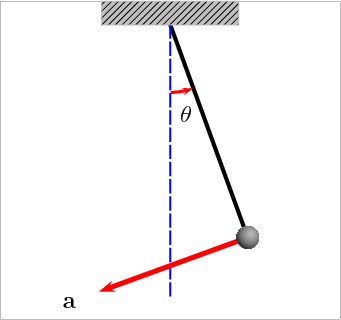
 Petrichor ᚄᚔᚅᚐᚁᚆᚃᚒᚔᚂ
 cognitively accessible math