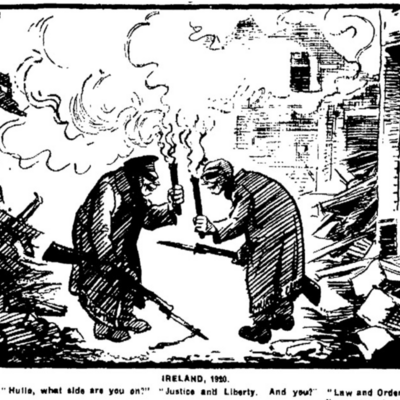

In 1865, the guns of the Civil War fell silent. Many Northerners believed the nation had been remade. Good over evil. Right over wrong. But they underestimated the determination of those who had lost. The Civil War ended 161 years ago. Yet Americans are still arguing over the same questions: who counts as a citizen, who can vote, and whose America this is.

1/14

Image: Two Black American Union soldiers, Gladstone Collection of African American Photographs, ca 1860s. Universal History Archive.
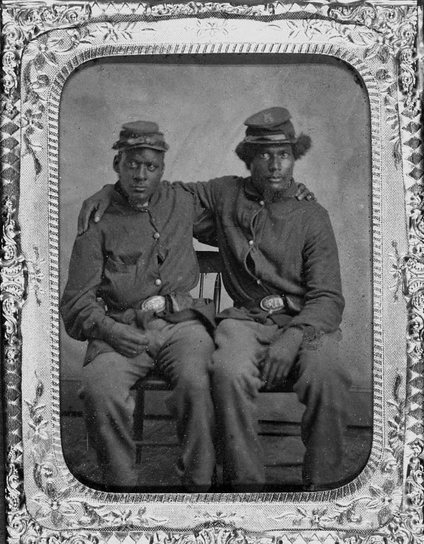
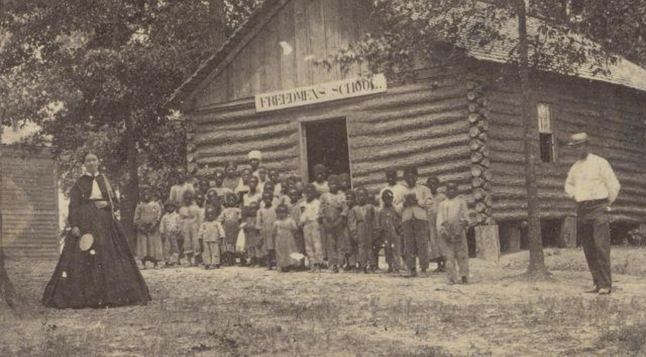
Four million formerly enslaved people answered that question for themselves. They built schools, churches, political organizations, newspapers, and voting blocs. Congress rewrote the Constitution. Black men entered public office across the South.

For a brief moment, American democracy expanded as never before.

2/14

Image: The Freedmen's Schoolhouse in Smithfield is the last-of-its-kind in North Carolina. Collection of the Smithsonian’s National Museum of African American History and Culture.

The backlash was immediate.
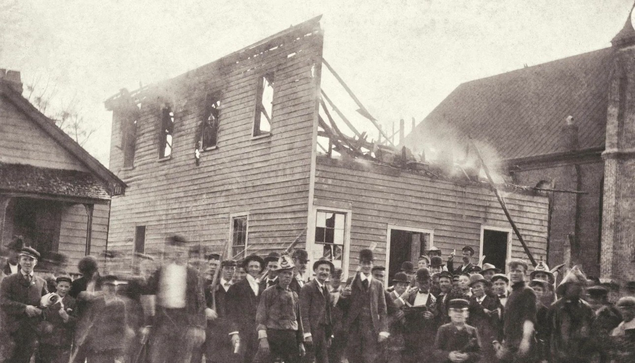
Terrorists rode at night. Teachers were beaten. Voters were threatened and murdered. Elections were overturned. A new story had to be told: that democracy itself had become a threat, that Black citizenship meant corruption, and that freedom had gone too far.

3/14

Image 1: White crowd gathered before the burned offices of the Daily Record, Wilmington, NC, November 10, 1898. Photograph. North Carolina Room, New Hanover County Public Library, Wilmington, NC.

By 1900, much of what Reconstruction had built lay in ruins. Voting rights vanished. Segregation hardened. White supremacy became law.

The South did not overturn Reconstruction by defeating the Union Army.

It overturned Reconstruction by winning the argument about what freedom, citizenship, and democracy were supposed to mean.

4/14

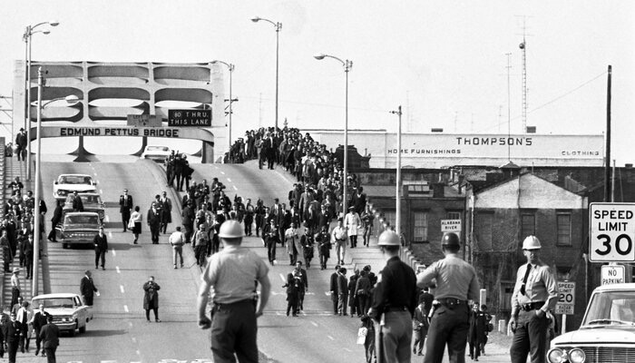
Image:,State troopers watch as marchers cross the Edmund Pettus Bridge in Selma, Alabama as part of a civil rights march on March 9, 1965. Bettmann Archive.

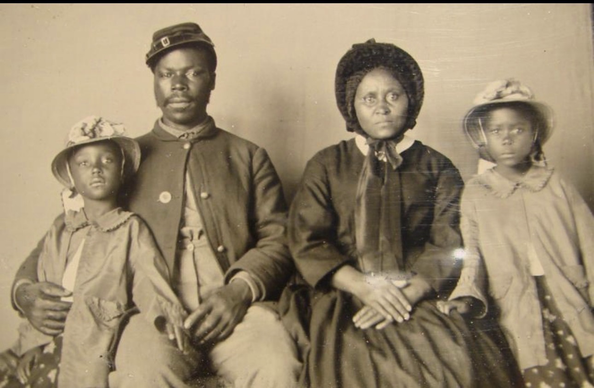
Image: African American soldier in Union uniform with his wife and two daughters, 1863-1865. Liljenquist Collection. http://hdl.loc.gov/loc.pnp/ppss.00400

Intellectual Map

Primary Sources

Congressional Globe. 39th Cong., 1st sess. Washington, DC: Government Printing Office, 1866.
https://digital.library.unt.edu/ark:/67531/metadc30867/

Douglass, Frederick. The Life and Writings of Frederick Douglass. Reconstruction and After. Edited by Philip S. Foner. Vol IV. New York: International Publishers, 1950–1975.
https://archive.org/details/lifewritingsoffr0000unse/page/n5/mode/1up

5/14

More Primary Sources

Records of the Bureau of Refugees, Freedmen, and Abandoned Lands. National Archives.
https://catalog.archives.gov/search?q=%22SIL!mig%2Ffb%22

Herbert, Hilary A., et al., eds. Why the Solid South? or Reconstruction and Its Results. Baltimore: R. H. Woodward, 1890.
https://archive.org/details/WhyTheSolidSouth/page/n1/mode/1up

Lynch, John Roy. The Facts of Reconstruction. New York: Neale Publishing, 1913.
https://archive.org/details/factsofreconstruc00lync/page/n10/mode/1up

Manly, Alexander. “The Daily Record Editorial.” August 18, 1898..
https://exhibits.lib.unc.edu/exhibits/show/1898/editorial

6/14

Still More Primary Sources

Mississippi Constitutional Convention. Journal of the Proceedings of the Constitutional Convention of the State of Mississippi, Begun at the City of Jackson on August 12, 1890, Concluded November 1, 1890. Jackson, MS: E. L. Martin, 1890.
https://babel.hathitrust.org/cgi/pt?id=uiug.30112059675287&seq=8

U.S. Congress. An Act to Enforce Provisions of the Fourteenth Amendment to the Constitution of the United States, and Other Purposes (Ku Klux Klan Act). 17 Stat. 13 (1871).
https://teachingamericanhistory.org/document/the-enforcement-acts/

7/14

Journal of the proceedings in the Constitutional Convention of the state of Mississippi / begun at the city of Jackson on August 12, 1890, and concluded November ...

HathiTrust

Even More Primary Sources

United States Congress. Report of the Joint Select Committee to Inquire into the Condition of Affairs in the Late Insurrectionary States. 13 vols. Washington, DC, 1872.
https://archive.org/details/reportofjointsel02unit

“White Declaration of Independence.” Wilmington, North Carolina, November 1898.
https://people.uncw.edu/schmidt/Misc/1898/1898WhiteDec.html

Wells, Ida B. The Red Record: Tabulated Statistics and Alleged Causes of Lynching in the United States. Chicago: Donohue & Henneberry, 1895.
https://www.gutenberg.org/files/14977/14977-h/14977-h.htm

8/14

Report of the Joint Select Committee to Inquire into the Condition of Affairs in the Late Insurrectionary States, made to the two Houses of Congress February 19, 1872 : United States. Congress. Joint Select Committee on the Condition of Affairs in the Late Insurrectionary States : Free Download, Borrow, and Streaming : Internet Archive

v. 1. Report. Minority report. Journal of the Joint Select Committee -- v. 2. Testimony, North Carolina -- v. 3-5. Testimony, South Carolina -- v. 6-7....

Internet Archive

Some More Primary Sources

Voting Rights Act of 1965. Pub. L. No. 89–110, 79 Stat. 437 (1965). U.S. Department of Justice.
https://www.congress.gov/bill/89th-congress/senate-bill/1564/text

Nast, Thomas. Colored Rule in a Reconstructed(?) State (The Members Call Each Other Thieves, Liars, Rascals, and Cowards). Wood engraving. Harper’s Weekly, March 14, 1874. Library of Congress Prints and Photographs Division. Library of Congress https://www.loc.gov/pictures/item/91705051/

9/14

Secondary Sources

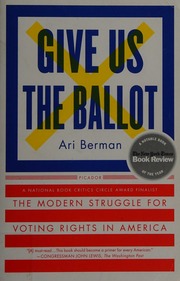
Berman, Ari. Give Us the Ballot: The Modern Struggle for Voting Rights in America. New York: Farrar, Straus and Giroux, 2015.
https://archive.org/details/giveusballotmode0000berm

Blight, David W. Race and Reunion: The Civil War in American Memory. Cambridge, MA: Harvard University Press, 2001.
https://archive.org/details/racereunion00davi

Branch, Taylor. Parting the Waters: America in the King Years, 1954–63. New York: Simon & Schuster, 1988.
https://archive.org/details/partingwatersame0000bran

10/14

Give us the ballot : the modern struggle for voting rights in America : Berman, Ari : Free Download, Borrow, and Streaming : Internet Archive

372 pages ; 24 cm

Internet Archive

More Secondary Sources

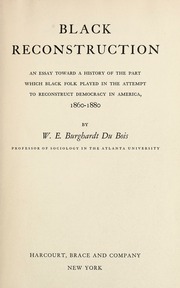
Du Bois, W. E. B. Black Reconstruction in America, 1860–1880. New York: Harcourt, Brace, and Company, 1935.
https://archive.org/details/blackreconstruc00dubo/page/n6/mode/1up

Foner, Eric. Freedom’s Lawmakers: A Directory of Black Officeholders During Reconstruction. Baton Rouge: Louisiana State University Press, 1996.

Foner, Eric. Reconstruction: America’s Unfinished Revolution, 1863–1877. New York: Harper & Row, 1988.
https://archive.org/details/isbn_9780060158514

11/14

Black reconstruction; an essay toward a history of the part which black folk played in the attempt to reconstruct democracy in America, 1860-1880 : Du Bois, W. E. B. (William Edward Burghardt), 1868-1963 : Free Download, Borrow, and Streaming : Internet Archive

First edition.

Internet Archive

Still More Secondary Sources

Franklin, John Hope. Reconstruction After the Civil War. University of Chicago Press, 1961.
https://archive.org/details/reconstructionaf0000fran/page/n10/mode/1up

Goodwyn, Lawrence. The Populist Moment: A Short History of the Agrarian Revolt in America. New York: Oxford University Press, 1978.
https://archive.org/details/populistmomentsh0000good

Hahn, Steven. A Nation Under Our Feet: Black Political Struggles in the Rural South from Slavery to the Great Migration. Harvard University Press, 2003.
https://archive.org/details/nationunderourfe00hahn

12/14

Reconstruction: after the Civil War : Franklin, John Hope, 1915-2009 : Free Download, Borrow, and Streaming : Internet Archive

258 pages 21 cm

Internet Archive

Even More Secondary Sources

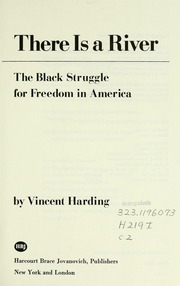
Harding, Vincent. There Is a River: The Black Struggle for Freedom in America. New York: Harcourt Brace Jovanovich, 1981.
https://archive.org/details/thereisriverbla00hard/page/n6/mode/1up

Kousser, J. Morgan. The Shaping of Southern Politics: Suffrage Restriction and the Establishment of the One-Party South, 1880–1910. New Haven: Yale University Press, 1974.
https://archive.org/details/shapingofsouther0000kous

Litwack, Leon F. Been in the Storm So Long: The Aftermath of Slavery. New York: Knopf, 1979.
https://archive.org/details/beeninstormsolon0000unse

13/14

There is a river : the Black struggle for freedom in America : Harding, Vincent : Free Download, Borrow, and Streaming : Internet Archive

Includes bibliographical references (p. [385]-401) and index

Internet Archive

Still More

Prather, H. Leon Jr. We Have Taken a City: Wilmington Racial Massacre and Coup of 1898. Fairleigh Dickinson University Press, 1984.

Trelease, Allen W. White Terror: The Ku Klux Klan Conspiracy and Southern Reconstruction. Louisiana State University Press, 1971.
https://archive.org/details/whiteterrorkuklu0000trel

White, Richard. The Republic for Which It Stands: The United States During Reconstruction and the Gilded Age, 1865–1896. Oxford University Press, 2017.
https://archive.org/details/republicforwhich0000whit

14/14

White terror : the Ku Klux Klan conspiracy and Southern Reconstruction : Trelease, Allen W : Free Download, Borrow, and Streaming : Internet Archive

xlviii, 557 p. ; 23 cm

Internet Archive

And Some More Secondary Sources

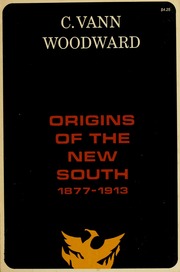
Woodward, C. Vann. Origins of the New South, 1877–1913. Baton Rouge: Louisiana State University Press, 1971.
https://archive.org/details/originsofnewsout00wood

Woodward, C. Vann. The Strange Career of Jim Crow. New York: Oxford University Press, 1968.
https://archive.org/details/strangecareerofj0000unse

Wright, Gavin. Old South, New South: Revolutions in the Southern Economy Since the Civil War. New York: Basic Books, 1986.
https://archive.org/details/oldsouthnewsouth00gavi_0

14A/14

Origins of the new South, 1877-1913 : Woodward, C. Vann (Comer Vann), 1908-1999 : Free Download, Borrow, and Streaming : Internet Archive

Bibliography: p. 482-628

Internet Archive

@Deglassco today I listened to this family’s story about finding out who were their ancestors and what they did during the war: it really moved me.

https://overcast.fm/+AAyIOyttEx0

100 Objects #3: The Pension Files — 99% Invisible

Unearthing a remarkable slave rebellion through dusty Civil War paperwork.

@Deglassco
Are their names known. I love genealogy.

@Deglassco

Whenever I see pictures like this I feel a tremendous sense of responsibility, not for their troubles, but for their hopes and dreams - for any oppressed and exploited people that lived in the hope that their children, or somebody's children some day, would live in a better world. Mostly, people have lived without seeing much progress - our responsibility is to continue working for it, for them.

@Deglassco failure to properly punish the Confederacy is exactly why we are in the current fascist moment
@Deglassco
A parallel. Approx 1975, record number of Trade Union members in the UK. Then 1979,Thatcher, and the rest is history, written by victors.
@Deglassco @benroyce The US won the war, but lost Reconstruction.

@michaelgemar
The US won the first phase of the war.

And then they made the mistake traditional American mistake of declaring the war prematurely as won.

Without consideration of any of the fulfillment criteria for "declaring victory" were even checked.

The Northern states had no real plan for after the civil war. Oops.

Bush did declare Iraq won on a carrier of the US coast.

And Trump declared Iran won without even having an idea how winning might be defined.
@Deglassco @benroyce

@Deglassco

Thank you for this thread

And oh! The picture frame around those two soldiers. Someone treasured that photo

@Deglassco look at that thousand-yard stare

@sinabhfuil I doubt that the facial affect you refer to is really present on this photo. It resembles more the result of having the shutter open as long as cameras of those days required.

I would wonder where those fellows served, though.

@bugjar go in close to the lads’ faces
@sinabhfuil interesting. I don't see it in either soldier.
@bugjar Look at photos of people returned from Vietnam for reference
@bugjar it might be possible to find out with an image search

@Deglassco Really, it's seems it is the rich arguing against the poor. Maybe socialism or communism isn't the way, but the longer the idiots at te top push their putrid status quo, the sooner we will see a pathway open up to eithrmer or both - to the "leaders":

For hating communism, something you've never experienced or seen, only heard about from your "superiors"; You're doing a damned fine job of ushering it in at every bigoted turn of your sordid "conquests"