John Finnemore on the French horn/cor anglais:

"I was idly wondering why the cor anglais has a French name meaning ‘English horn’, and the French horn has an English name meaning… well, ‘French horn’. I looked it up, even though I knew there would just be some reasonable but rather dull explanation.

"There isn’t. There is a completely bonkers explanation, in both cases. Here’s the first.

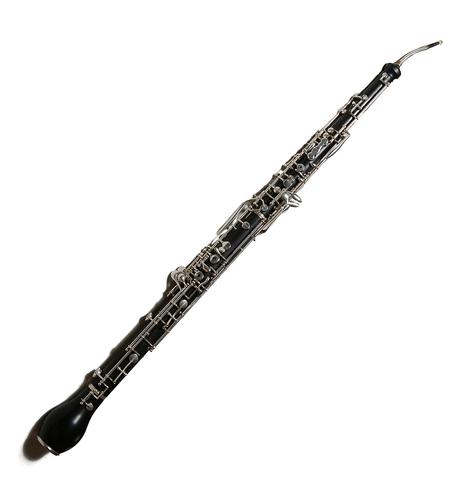
"So. The cor anglais isn’t English, or French. But that’s nothing, because another thing it isn’t is… a horn. It’s basically an overgrown oboe, and it’s from Silesia. But being thin with a bulb on the end, it looks a little like the trumpets angels are shown playing in medieval art.

"Or at least it did to the Germans, who started calling it the Engellisches Horn, or angel’s horn. Can you see the hilarious misunderstanding that’s about to happen? Well, that happened. The Italians thought the Germans called it the English Horn, so they translated it to corno inglese. The French got it from the Italians, and called it the cor anglais. The British got it from the French, and presumably stared at it, thought ‘We can’t call that an English horn! It’s nothing to do with us, we’ve only just this minute seen one!’ …and I suppose decided just to keep the French name to save embarrassment.

"But that is rationality itself compared to what happened with the “French” horn.

"Right. The French horn. It isn’t French, or English… but it is a horn. So that’s something. (In fact, horn players just call it ‘the horn’, and they wish you would too, but they can’t make you.) This story is simpler than the cor anglais one, but even more gloriously stupid.

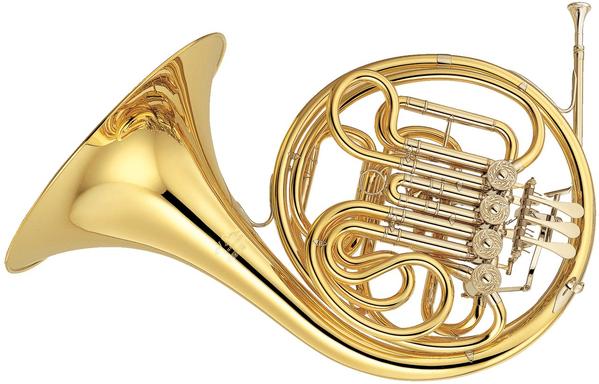
"The French were famous for making beautiful hunting-horn type horns: curly tubes that made a nice noise when you blew through them. Then the Germans came up with a more complicated horn with slides and crooks and valves and what-have-you. So British horn players started calling the horns they played in orchestras French Horns, to make it clear they were having nothing to do with those funny looking new German horns with all the bits hanging off them. But the thing is… slides and crooks and valves and what-have-you are a really good idea. You can play tunes with them and everything. So, before long, in a brilliantly British combination of ruthless pragmatism and equally ruthless face-saving, British horn players were playing German horns… but still calling them French horns.

"In summary then: the cor anglais, or English horn, is a Silesian oboe that the Italians thought the Germans thought was English, but the Germans actually thought looked angelic. Whereas the French horn is a German horn that the British called the French horn to distinguish it from the German horn… which is what it is.

"All clear? Good. Carry on."

@davep Cor blimey.

@theplaguedoc @davep No, that's the Cockney Horn, also known as the "How's your morn?"

;-)

@davep Thank you. I love this kind of stuff.

This is only vaguely related, but I told my dad, who's in his 90's and a bit deaf, that I'd been to a viola de gamba concert. As you probably know, this is a large viol that's played between the legs (gamba) like a cello.

Anyway, he assumed Viola da Gamba was a musician's name, and that she must be from Gambia. Which was kind of cute, although the conversation was very confusing until I figured out why he'd suddenly started talking about Africa.

@davep

I needed this today!

Thank you.

@davep im probably going to have nightmares about horns now.
@davep
Après tout ça, je vais filer à l'Anglaise!
...*takes a French leave*
@davep
Years ago, a music teacher told me that the French call it “cor angleé” (angled horn). The English (being English) mistranslated it.
@davep I've worked as an arranger/orchestrator, we just write "Horn in F" for "French" Horns because of this.
@earwigplanet @davep nope. that's not the reason for the F :-)

@zzoo
@earwigplanet @davep
It's because of how you hold it 😁

But seriously F is the key, since original horns didn't have valves composers would have two sets of two horns and they would fill in the gaps that each key couldn't play. Mozart had some exceptional pieces where this takes place.

@rethnor @zzoo @earwigplanet @davep
How can an instrument without valves not allow playing any of the 12 notes ? Or does that apply to the lower/higher range of each instrument ?
@undeuxtrois @rethnor @zzoo @earwigplanet @davep my understanding (as a non-player - any actual brass players out there please point out if I'm wrong) is that a brass instrument can only play its base note and a series of harmonics which don't cover every possible note. The valves change the length of the tube slightly so that a player has a range of different base notes and series of harmonics that they can pick their notes from giving them a much larger range of playable notes.
@Daveosaurus @undeuxtrois @zzoo @earwigplanet @davep pretty much, the horn can also change notes by about a half-step by stopping the bell with their hand.
@rethnor @Daveosaurus @undeuxtrois @earwigplanet @davep which is the pre-valve way of doing it. still learned today, but only ever used by professionals in certain situations. the hand in the bell serves a multitude of functions.

@undeuxtrois

@zzoo @earwigplanet @davep

I played horn from middle school through college, although it had been over 20 years since I played...

Since Brass only has 3 valves (half-step, whole-step, and one and a half) you keep adjusting your lips to change the pitch. The higher the octave the closer the notes when changing Embouchure, ie the pitch at the lips.

At lower octave all combinations of valves are required to get all the notes, at high octaves they can be as close as a quarter-step.

The horn is frequently played in the upper register so the harmonics are closer together. This plus when blocking the bell with the hand the pitch changes about a half step. So with two horns in two different keys a full range of notes can be played without the use of valves.

Here is an example of a horn with no valves and how they change notes

https://youtube.com/shorts/BeQ-kw3Yh6s?si=dq9Um0OkmWlhpDB3

Mozart’s Horn

YouTube
@zzoo
Not to mention they appear in keys other than F. Although just Bb and occasionally Eb, historical instruments aside.
@earwigplanet @davep

@davep

Now let's talk about the French letter and le capote Anglais!

@AdrianRiskin
*La* capote anglaise, s'il vous plaît 😁
@davep
This is the reason I use Mastodon. Fantastic stuff!

@davep

Ah geeze I wish John would write more Cabin Pressure!

@ClintonAnderson @davep Just checking - you saw his Youtube diary series over lockdown?

@GlasWolf @davep

I don't think I did!

Can you sling a link at me???

@GlasWolf @ClintonAnderson @davep No, but I did save all of his Souvenir Programmes alongside the Cabin Pressures. Carmela Vitale's name will live on 😂
Cabin Fever - Episode 1: Fitton

YouTube
@GlasWolf @ClintonAnderson @davep Well, I know what I'm watching for the next while then 😄
@davep The folks in my symphonic band call them `F horns' which, IMO, can have quite another meaning. Then again, our English horn player is a colorectal surgeon so no one has any jokes about his instrument.
@davep @Su_G Great stories. And silly enough to believe!
@davep Interesting. Now, the thing is called Englischhorn in German, which means English Horn, not Angels'. Which probably brings the story full circle.
@davep There must be a name for this phenomenon, a bit like how the genus Meleagris, native to Mesoamerica, is "Turkey" in English but comes from "India" in French... Or the historical site in Helsinki that's called "Finnish fort" in Finnish and "Swedish fort" in Swedish 😀

@davep Wait, I have questions about the oboe thing.

Unless I'm wrong, the oboe is a woodwind, and works like a clarinet or saxophone. The horn is a brass that works more like a tuba or trumpet. H ow does the horn descend from the oboe?

That aside, thank you for the informative post, that was a good read 😁

@renardboy The cor anglais is woodwind. https://en.wikipedia.org/wiki/Cor_anglais

No, me neither ¯\_ (ツ)_/¯

Cor anglais - Wikipedia

@davep @renardboy

*Looking at all those people insisting on calling it an English Horn*

@davep Oh dang, that explains it hahaha. I was thinking of this guy: https://en.wikipedia.org/wiki/French_horn

When I was in school and had music classes (in french, I'm in Québec), the name we used for this instrument was "cor" (no adjectives), so I'd always figured this was what the anglophones referred to as a french horn.

French horn - Wikipedia

@renardboy
Yes, that's true generally. Cor=French Horn. Which makes the English Horn such wonky nomenclature.
@davep
@davep
Yet the op keeps referring to it as a French horn
@renardboy

@rethnor @renardboy

I might want to change the OP to be more precise in explaining that they're two entirely different instruments. 🤔

Nah, can't be bothered 😁

@renardboy @davep I was confused by this too, because a French horn is a horn and does look like a baby tuba, and has no reed. My error was I thought the "cor" (no anglais), a word I heard just this morning in a discussion, meant a French horn.

@davep absolutely brilliant!

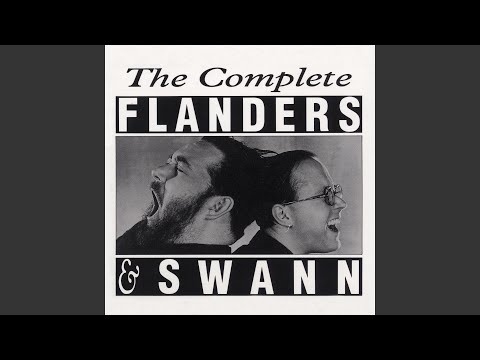
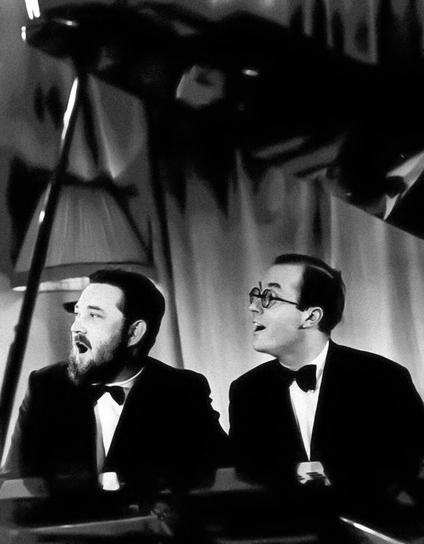
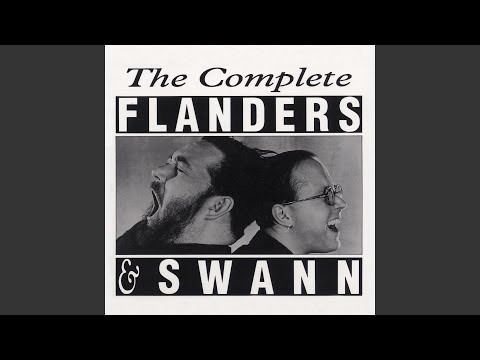
And it immediately brings to mind the Flanders and Swann song Ill Wind.

https://youtu.be/kKuKvieNGKo

#FlandersAndSwann

Ill Wind

YouTube

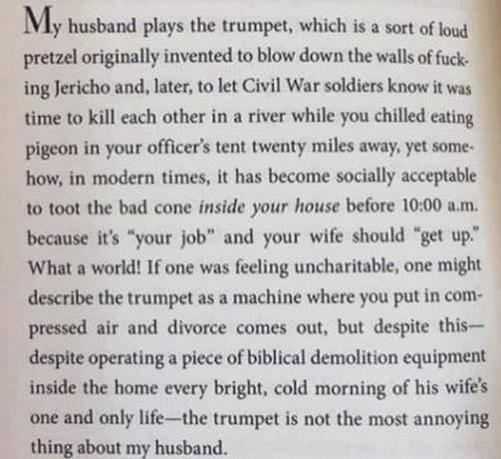
@davep @pelicangut Which reminds me of "If one was feeling uncharitable, one might describe the trumpet as a machine where you put in compressed air and divorce comes out".

https://mastodon.gamedev.place/@shanecelis/111994206711261437

Shane Celis (@[email protected])

Attached: 1 image It's trumpet time. Excerpt from The Witches are Coming, by Lindy West

Gamedev Mastodon

@pelicangut "Ill Wind"—Flanders's words sung to a slightly cut version, with cadenza, of the rondo finale of Mozart's Horn Concerto No. 4 in E flat major, K. 495. It has to be sung since Flanders's French horn was apparently stolen."

https://en.wikipedia.org/wiki/Flanders_and_Swann

Flanders and Swann - Wikipedia

@Axomamma @pelicangut But he took up the tuba instead!

@pelicangut @davep Trying to remember the sign off ... "I'll soon make them wish they were dead. / I'll take up the tuba instead."

"I.... once had a whim and I had to obey it /
To buy a French Horn in a second-hand shop/
I polished it up and I started to play it /
In spite of the neighbours who begged me to stop ..."

@WellsiteGeo @davep Michael Flanders himself mentioned the confusion about French Horn / German Horn / Cor Anglais in the intro to Ill Wind, found at the end of In The Desert on the album At The Drop Of Another Hat. Marvellous stuff.

https://youtu.be/fEcZxYLXES0?t=170

In the Desert

YouTube
@davep isn’t it a horn played by angels like in the old paintings? Nothing to do with nationality
@davep I hope it will delight you more to learn that Germans don’t call it German horn either. It’s a Waldhorn here. Literally, „forest horn“ 😅
@felixf @davep and Polish borrowed German name, but instead of translating it, just spelled it phonetically, then added -ia suffix, making it "waltornia". Why? Probably because -ia suffix denotes plural for Latin words ending in -ium in singular (fascium - fascia etc.), so it probably first was waltornium, then the horn section in the orchestra became waltornia, and then the name became singular… Another possibility is the name wasn't taken directly from German, but rather from Russian, Ukrainian or Lithuanian – in those languages the name is "valtorna"; but I find the former hypothesis more likely.