
RE: https://eupolicy.social/@Akshay/116397375680946291

A reminder that storms are thermodynamic heat engines. They use temperature difference to generate “work” (ie wind and motion). So hot seas amplify their intensity.

@sellathechemist this is exactly how I teach thermo in my gen ed environmental chem course
@GetzlerChem Have you got the video showing the cold wake in the ocean behind Atlantic hurricanes?
@sellathechemist I don’t, but would love to have it. The cooling is due to more than water drawn up from below?
@GetzlerChem Let me hunt. I'd love to see the structure of your env chem course.
@sellathechemist it is bizarrely chaotic. I do a few weeks of background lectures and then themed weeks based on student interest. Monday is a topical lecture, Wednesday we look at topical general audience media, and on Friday we look at a figure from a recent paper. Semester wraps up with student projects. Due to this, it differs each time around. We almost always have something significant about GHGs or oceans, at which point I teach ocean heat (Carnot & Clausius)
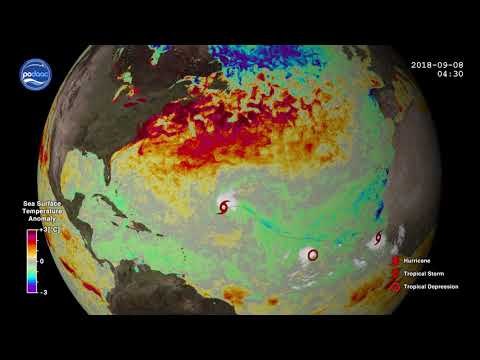
@GetzlerChem Here it is - search for "cold wake". Mesmerising demonstration of the First Law linked to the Second. #hurricane #thermodynamics https://www.youtube.com/watch?v=QD8R3fX8hSg
Cold Wake Signatures from 2018 Atlantic Hurricanes

YouTube