Artemis II crew splashes down near San Diego after historic moon mission

NASA's Artemis II astronauts returned to Earth with a splashdown landing in the Pacific Ocean after making a high-speed reentry through the atmosphere.

Glad that they're safe and sound.

It's worth pointing out that this is the first extremely public, widely acknowledged high risk mission NASA has done in over 50 years. The Shuttle was risky, but it wasn't thought of or acknowledged by NASA as being risky until very late in its lifecycle.

According to NASA's OIG, Artemis acceptable crew mortality rate is 1 in 30. Roughly 3x riskier than the shuttle. There genuinely is a world where they don't make it back home.

I am grateful that they did. And I'm grateful that we're going to go even further. I can't wait to see what Jared's cooking up (for those who don't know, he made his own version of the Gemini program in Polaris and funded it out of pocket).

I’d bet a million dollars that Orion will win every safety metric compared to the shuttle once it is retired. NASA deluded itself in thinking the Shuttle was safe. The reality is that the Shuttle was the most dangerous spaceship anyone ever built.

That's physically not possible due to the distances and energies involved. Even with the Commercial Cargo and Crew Program (C3P), NASA has set the acceptable mortality threshold at 1 in 270 over the entire mission and 1 in 1000 on ascent / descent. If they could set it higher by gaming the math, they would. They can't.

We're a very primitive species, and the forces involved here are genuinely new. And no, Apollo wasn't much better either, at least 10 astronauts were killed in training or burned alive (8 NASA, 2 sister MIL programs), as well as (far worse, because astronauts sign up for the risk) one member of ground staff.

People love to hate the Shuttle, and it ended up being subpar / fail expectations due to the political constraints NASA was under, but the Shuttle was a genuine advance for its time – a nonsensical, economically insane advance, but still an advance. If you look at the Shuttle alternative proposals / initial proposals as well as stuff like Dynasoar and Star Raker, you'll see NASA iterating through Starship style ideas. But those were rejected due to higher up front capital investment at the time.

The Shuttle is an odd franken-turduckling, because it was designed for one mission and one mission only. And that mission never happened. That cargo bay existed to capture certain Soviet assets and deploy + task certain American space assets and then bring them back to Earth.

And that's the bit that's hard to emphasize. The fact that the Shuttle could put a satellite up there, watch it fail, then go back up, grab it, bring it back, repair it, then launch again was an insane capability.

Was the program a giant fuck up at the end? Yes. But does that mean Artemis will be safer than the Shuttle? No. That's not how the energetics, time from civilization, acceptable risk profiles etc. work out.

Shameless plug, wrote a bit about the Apollo hagiography, Artemis and risk here – https://1517.substack.com/p/1-in-30-artemis-greatness-and-ri...

1 in 30 – Artemis, Greatness, and Risk.

Or, why they launched Artemis II anyway.

1517 Fund
How could a comparison between such dissimilar programs ever be meaningful? NASA flew 135 Shuttle missions over the course of 30 years; Orion will be doing well to approach a tenth of that number.
Artemis rides on extended versions of the same SRBs that made the Shuttle ascent so dangerous.
Was any shuttle lost to the SRBs?
Yes, 50% of shuttle losses were due to SRB failures (Challenger)
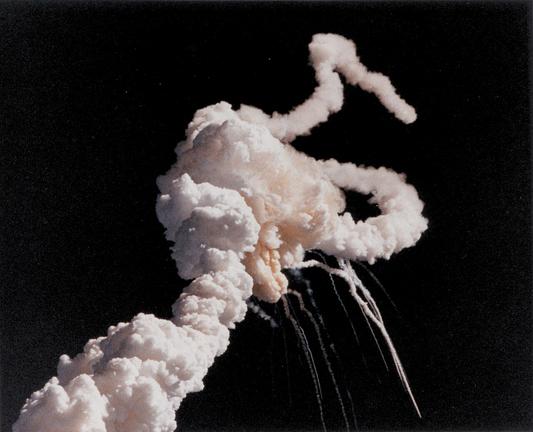
That's exactly how Challenger was lost.

Yes, Challenger - although program management knew they were violating a launch constraint (temperature), and it was the low temperature that produced the conditions necessary for SRB failure.

As with any aerospace mishap, it's a chain of events, not just one cause.

Yes, challenger. The O-ring failed, creating a gas exhaust that almost instantly destroyed the main propellant tank.
The Artemis SRBs incorporate design changes to address the causes of the Challenger failure. Specifically they changed the joint design, added another o-ring, and they have electric joint heaters to keep the seals warm.

It’s statistically unsound to compare results of low probability events like this.

https://en.wikipedia.org/wiki/Texas_sharpshooter_fallacy

Texas sharpshooter fallacy - Wikipedia

An error in any of the orbital math may have seen them flung out into space with no chance of recovery.
Orbits do not work that way

The craft has aerodynamics and speed. It might be figuratively true "unrecoverable" but if it takes e.g. 2 weeks to complete a return, their oxygen and food and batteries ran out. Alternatively if it enters too fast they return ... in pieces.

I think you're being a pedant, if your point is a grazing entry causing rebound skip ultimately returns to some orbital path downward.

You seem to intentionally be ignoring the original quote that any error may have caused them to be flung into space. This is patently false unless the one math error is pumping in hundreds of pounds more propellant and burning far longer than the scheduled burns. NASA would need to make a significant series of mistakes beyond orbital math for the "flung out into space" statement to be true.

They certainly could've gotten the return wrong but with a perigee of 119 miles they arent even in a stable orbit and likely could deorbit themselves using only rcs thrusters at apogee, or by just waiting a few orbits.

This is underselling the risks. On top of the many trajectories which push them into unrecoverable situations, leaving them stranded in orbit, there can be trajectories where the moon gives a gravity assist strong enough to fling the spacecraft into escape velocity, fulfilling the OP.

In fact, the trajectory they chose for this mission exploited the opposite effect to yield a free return without propellant expense.

In the modern day, the chance of a math error being the root cause behind this failure mode are vanishingly small, but minor burn execution mistakes that do not require hundreds of extra pounds of propellant are definitely plausible. They were extremely common in the early days of spaceflight and plagued most of the very first moon exploration attempts. Again, with modern RCS this is unlikely. But reentry is still incredibly tight and dangerous. Apollo famously had a +-1° safe entry corridor, and Orion is way heavier and coming in even faster. If their perigee was off they could’ve easily burned up or doubled their mission time, which they may not have been able to survive.

Anyone who has had hit period key once too many during Munar free-return in KSP knows it's exactly how orbits work...

Hilarious the the intellectual forum downvoted you for being absolutely right.

Artemis II never escaped Earth’s pull.

That video that NASA put out where the craft did a sling shop around the moon is extremely deceptive. The pull of the moon had very little effect.

If they had missed, they would have eventually crashed back to earth in the worst case, and best case just re-adjusted and returned a little bummed.

> Artemis acceptable crew mortality rate is 1 in 30.

This seems insane to me. That X decades later we accept, with all our advancements in tech, a weaker system than ever before. That if we send 30 people we _accept_ that one is possible to die.

That's the starting point? That's what we document as acceptable?

Yes, and the memories of Apollo are made rosy by hagiography. I even wrote an entire thing to explain why, https://1517.substack.com/p/1-in-30-artemis-greatness-and-ri... (yeah, shameless plug, sorry - it's more for the citations than not. You can read the standards and reports I've linked to)

But if I'm allowed to repeat myself from elsewhere in the thread and the meat of the above thing,

It's physically not possible at our current level of technology to make this "safer" due to the distances and energies involved. Even with the Commercial Cargo and Crew Program (C3P), NASA has set the acceptable mortality threshold at 1 in 270 over the entire mission and 1 in 1000 on ascent / descent. If they could set it higher by gaming the math, they would. They can't.

We're a very primitive species, and the forces involved here are genuinely new. And no, Apollo wasn't much better either, at least 10 astronauts were killed in training or burned alive, as well as (far worse, because astronauts sign up for the risk) one member of ground staff.

People love to hate the Shuttle, and it ended up being subpar / fail expectations due to the political constraints NASA was under, but the Shuttle was a genuine advance for its time – a nonsensical, economically insane advance, but still an advance. If you look at the Shuttle alternative proposals / initial proposals as well as stuff like Dynasoar and Star Raker, you'll see NASA iterating through Starship style ideas. But those were rejected due to higher up front capital investment at the time.

The Shuttle is an odd franken-turduckling, because it was designed for one mission and one mission only. And that mission never happened. That cargo bay existed to capture certain Soviet assets and deploy + task certain American space assets and then bring them back to Earth.

And that's the bit that's hard to emphasize. The fact that the Shuttle could put a satellite up there, watch it fail, then go back up, grab it, bring it back, repair it, then launch again was an insane capability.

Was the program a giant fuck up at the end? Yes. But does that mean Artemis will be safer than the Shuttle? No. That's not how the energetics, time from civilization, acceptable risk profiles etc. work out.

1 in 30 – Artemis, Greatness, and Risk.

Or, why they launched Artemis II anyway.

1517 Fund

That was a great article.

Adding to it - Apollo 13 was a mission where 3 men should have died, but somehow didn't. If it had happened while the LM was on the moon, you would have had the CSM lose power, and then two men on the moon would have had no way to return home.

(And for the shuttle design mission - my understanding is it was likely the ability to do a HEXAGON-style film return mission in a single orbit, before the Soviets knew what was happeneing.)

Thanks!

note - I can't verify any of the following, it's more - for lack of a better term - aerospace nerd fan theory at this point.

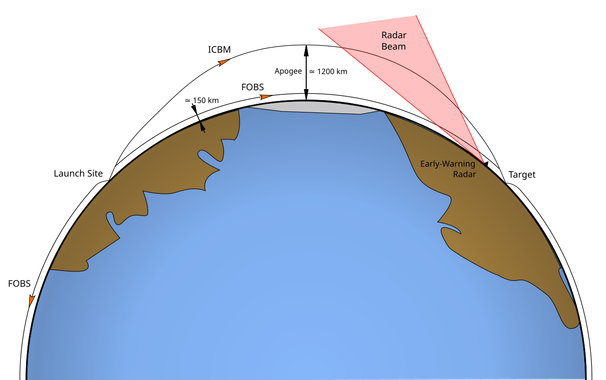
Post-collapse, people think that the Buran justification was paranoia. But based on what I've read / seen (though this is getting hard to source, so I might be just good ol' hallucinating here), they weren't entirely wrong. The subtext around that large payload bay had to do with the Soviet pursuit of systems like Fractional Orbital Bombardment System (FOBS) https://en.wikipedia.org/wiki/Fractional_Orbital_Bombardment... that weaponized space.

Again, there's a reason for those ASAT tests. There's a reason for the weird specifications set in the early 1970s for the Shuttle. And I don't think deploying a spy satellite alone is it. But this is speculation. AFAICT, nothing was put on paper.

It would have been an incendiary WW3 starting act to capture a Soviet asset. But I think it is understandable if certain people within the American blob wanted that capability at hand.

I wish I was immortal. I'd drop everything for a decade and try to find people from the time who're still alive (and some still are!) and ask them these questions directly - on the record – for posterity's sake. I suspect, we came much closer to war via space than most people think. And because we didn't, we'll eventually repeat these mistakes.

---

Oh and then there was the documented attempt to capture Salyut-7 https://www.thespacereview.com/article/2554/1

Somehow all the numbers just happened to line right up. :)

Fractional Orbital Bombardment System - Wikipedia

The only people who took seriously the idea of a Shuttle FOBS were the Soviets, and frankly not even all of them; as far as I've ever seen credible evidence to substantiate, it never went much past a single position paper from the early 80s. The idea that Buran was meant as a MAD-restoring FOBS has, so far as I know, not even that much support. (If you know of primary sources, in translation or otherwise, please link them.)

Read Payne Harrison's 1989 novel Storming Intrepid, followed by NASA publication SP-4221, "The Space Shuttle Decision," from 1999. [1] The first is a pretty good depiction of what you're imagining, and the second explains why the imagination of a technothriller author is where that idea went to die. Then maybe give your head a shake. If Reagan had violated the Outer Space Treaty - via NASA of all agencies! - how do you imagine it'd have stayed secret over these forty years just past?

[1] https://web.archive.org/web/20241229052235/https://ntrs.nasa...

Wayback Machine

Nice article, although I'm not so sure about this part:

> There’s a reason why there wasn’t an Apollo 18, or 19 and 20. Even though funding had been secured, an executive decision was made to kill the program early, because LoC was inevitable.

Was funding really secure? I believe that was the main sticking point; a quick search [0] seems to confirm this, and the John Young quote below backs it up: "Even if they’d had the money..." Not to say the risk wasn't a factor too of course, but it doesn't look like funding was otherwise guaranteed.

Anyway, I think what sets the risk of the Shuttle apart from Apollo is summed up nicely in one of the quotes (in reference to the Apollo program): "The awareness of risk led to intense focus on reducing risk." In the Apollo program, there was a pattern of rigorously hunting down and eliminating any possible known risks, leaving unknowns as the primary source of risk; on the other hand, the Shuttle program let known risks accumulate continuously until crews paid the price for a bad draw.

When debris hit Atlantis on STS-27 [1] and the shuttle only survived on a one in a million stroke of luck -- the completely broken tile happened to be over an aluminum mounting plate -- it should have been taken as a free lesson on one more known source of risk to eliminate. Instead, it led to seven people dying completely preventable and unnecessary deaths a few years later.

Spaceflight is inherently risky, it's true. That's why things like the Orion heat shield are so worrisome; because it is physically possible at our current level of technology to make it safer, and yet for political / funding / etc. reasons we're not doing the best we can.

[0] https://airandspace.si.edu/stories/editorial/why-did-we-stop...

[1] https://en.wikipedia.org/wiki/STS-27

Ending Apollo: Why Did We Stop Going to the Moon?

When the Apollo 17 spacecraft carrying U.S. astronauts Gene Cernan, Harrison Schmitt, and Ron Evans returned to Earth on December 19, 1972, the Apollo lunar landing program came to its end. No human has set foot on the Moon’s surface since.

The Smithsonian article on John Young that you linked to is a good one. The only John Young quote they didn't include that I wish they had was his response to the proposal to make STS-1 an on purpose RTLS abort: "Let's not practice Russian roulette."

I often think about the shuttle program in relation to all these crazy complicated, wildly expensive, and incredibly fragile space telescopes we're sending to LEO or the Earth-Sun L2. Would be damn useful to be able to repair/upgrade these things like with Hubble.

Obviously I realise the shuttle program was pretty far away from being able to head out to the Earth-Sun L2(AB, and wasn't even working towards it. But man, it would be nice to have that ability.

Thanks for sharing your article - very well written.

I am stunned to see that LoC risk assessment.

I kept wondering to myself over the past week, “will this be the last USA-supported human space travel if these astronauts don’t survive?”

I’d have a hard time imagining the general public would support any future missions if they hadn’t survived.

These astronauts are some elite humans. My respect for them is even greater now that I’ve seen the risk quantified.

You are comparing orbiting earth in a shuttle to a lunar flyby in a pod. Very different risk profiles.

First couple of crews to orbit the earth at 0’ AGL had mortality rate of 9 in 10.

I’d say we’re doing better!

"As of 1 April 2026, there have been five incidents in which a spacecraft in flight suffered crew fatalities, killing a total of 15 astronauts and 4 cosmonauts.[2][how?] Of these, two had reached the internationally recognized edge of space (100 km or 62mi above sea level) when or before the incident occurred, one had reached the U.S. definition of space at 266,000 ft, and one was planned to do so. In each of these accidents, the entire crew was killed. As of April 2026, a total of 791 people have flown into space and 19 of them have died in related incidents. This sets the current statistical fatality rate at 2.4 percent."

[wiki link](https://en.wikipedia.org/wiki/List_of_spaceflight-related_ac...).-,During%20spaceflight,fatality%20rate%20at%202.4%20percent.)

List of spaceflight-related accidents and incidents - Wikipedia

2.4% is not bad given how new this still is and how extreme the speeds and energies are.

Note that all the fatalities have been launch or landing related, not in space itself. Clawing out of this gravity well is tough. Make Earth a bit larger and you’d never get off it without something like NERVA or nuclear pulse Orion.

I wonder sometimes if that’s another thing to toss in the Fermi paradox bucket. Many rocky planets might be much more massive than Earth. On one with 3X our gravity a space program might never get going.

I suspect that it is NOT a weaker system than before, it is more accurate about the mortality rate. In other words, there are fewer "unknown unknowns" than there were in the 60s and 80s, partially because of explosions that took out previous astronauts.

(Some would snidely say as long as they don't put seven people on the rocket they'll be fine.)

1 out of the 12 crewed Apollo missions resulted in the death of the crew, so a 1 in 12 effective mortality rate.

Apollo 13 was a very close call. If that had ended in failure the mortality rate would have been 1 in 6.

So 1 in 30 would be a pretty clear improvement from Apollo, and we are a lot better and more thorough at modeling those risks and testing systems than we were during the Apollo program.

Astronauts are, as a group, extremely risk loving. Every single person who signs up to go into space knows what they’re signing up for - they’ve spent their entire life working for the opportunity to be put in a tin can and shot into orbit atop a million pounds of explosives. There’s a very valid critique that NASA has become far too risk averse - we owe it to the astronauts to give them the best possible chance to complete the mission and make it back safely, but every single person who signs up for a space mission wants to take that risk, and we don’t do anyone any favors by pretending that space can be safe, that accidents are avoidable, or that the astronauts themselves don’t know what they’re signing up for. A mission that fails should not be considered a failure unless it fails because we didn’t try hard enough.
My father, who flew combat missions for the Navy in Vietnam and then became a test pilot, told me after the loss of Columbia that if he had had a chance to make that flight and spend 7 days in Earth orbit, even knowing that he'd burn up on reentry, he'd have done it.
Wild that they manage to fly to the moon but still seem to be having those comms problems. Asking the astronauts if they’re really pressing the PTT button is wild.
Cellphone coverage notoriously flaky in the Pacific.
Umm it's a satellite phone.
...and informing them which button was the PTT button. She had to say it, but it'd be hard not to react to that.
i was thinking maybe astronauts can be disoriented when splashing down and that's why they figured they should ask if the right buttons were being pushed?

My friends and I have been deriving much amusement from the comms issues. We can fly people around the moon, talk with them, send back high res video, but talk to the boat that’s close enough to swim to? Forget about it!

Note: next time, pack a walkie talkie. ;-)

They missed the chance to reply "Main screen turn on."
No joke, VHF has been saving sailors' lives for a long time now.
Just like in the year 3000, we will still ask "Can you hear me?" in video meetings.
And the printer will be perpetually broken
I can see your comment, can you see mine?

"Can you see my screen?"

grrr

It’s been amazing - and inspirational - watching the live stream of Mission Control and the capsule over the last ten days. Or at least having it as background audio. I’m going to miss all these folks I’ve grown to know.

Bring on Artemis III and IV!

As an American I feel like I've been going through a bit of an identity crisis from what I remember growing up.

Probably the rose tinted glasses of being a child but being from Florida I always had a sense of amazement and wonder as I heard the sonic boom of the shuttle returning to earth.

Really felt like I was coexisting in this incredible scientific powerhouse of a country full of bright and enabled peoples that knew how to prioritize curiosity and innovation.

Feeling like a bit of a "vibe" post which is everything wrong lately but I can't help but feel some satisfaction that we're still able to accomplish something like this in our space endeavors.

I think especially online there's a lot of emphasis on "everything is wrong". A mission like this is hard to ignore and highlights the bias. On the whole, despite setbacks, we continue.

There's a lot of money/hay/political power/etc to be made from "everything is wrong" - it's hard for "good news" to really get into your bones.

Not to say it's the best of times, nor to say it's the worst of times, mind you. Just that it's really hard to objectively compare.

If you want to dispel a bit more of the ever-pervasive online pessimism bias, read up on global rates of hunger the last time we flew to the moon (1972) vs now. The reality is, for all the problems we face today, there's no sane answer other than today to the question "when would you prefer to be born as a random person on earth"

It is about trends and perceptions - 70s were very hopeful, now with global problems - wars, climate, AI, uncertainty, what is growing is desperation.

I definitely don’t envy kids that are born nowadays.

The '70s were not hopeful. Economy was terrible, Vietnam ended but still hung over the culture, Watergate, Three Mile Island, cold war threatening to turn hot at any moment.... and Disco.

I had to explain to my wife and kids (not that I'm in this field, but I also have to remind myself) that we are able to pinpoint where the craft will land, when it will land down to the minute, because of ... just ... math. And we're able to get them there and back because of science.

It all boils down to equations that describe the world accurately, and a way of experimentation, iteration, thinking that gets us all the way to do something this unbelievably complex.

The analogies for these things like "hitting a golf ball into a hole in one 5,000 miles away" are always fun.

I like starting from the fact that Ptolemy was able to get the accuracy of the "motions of the heavens" down so well that it took more than a thousand years to get observations that showed discrepancies. The math, it maths.

I feel like it’s “easier” with space math because there’s so little to interfere with the course. With a golf ball, the basic math is easy, but the slightest bit of wind throws it off way beyond the acceptable error, and you can’t model all the wind perfectly.

Agreed.

Fun info: The NASA orbital codes include things like photon pressure... from sunlight reflected off of other planets in the solar system. At some point, I think they are just showing off :)