Artemis II crew splashes down near San Diego after historic moon mission

NASA's Artemis II astronauts returned to Earth with a splashdown landing in the Pacific Ocean after making a high-speed reentry through the atmosphere.

Glad that they're safe and sound.

It's worth pointing out that this is the first extremely public, widely acknowledged high risk mission NASA has done in over 50 years. The Shuttle was risky, but it wasn't thought of or acknowledged by NASA as being risky until very late in its lifecycle.

According to NASA's OIG, Artemis acceptable crew mortality rate is 1 in 30. Roughly 3x riskier than the shuttle. There genuinely is a world where they don't make it back home.

I am grateful that they did. And I'm grateful that we're going to go even further. I can't wait to see what Jared's cooking up (for those who don't know, he made his own version of the Gemini program in Polaris and funded it out of pocket).

> Artemis acceptable crew mortality rate is 1 in 30.

This seems insane to me. That X decades later we accept, with all our advancements in tech, a weaker system than ever before. That if we send 30 people we _accept_ that one is possible to die.

That's the starting point? That's what we document as acceptable?

Yes, and the memories of Apollo are made rosy by hagiography. I even wrote an entire thing to explain why, https://1517.substack.com/p/1-in-30-artemis-greatness-and-ri... (yeah, shameless plug, sorry - it's more for the citations than not. You can read the standards and reports I've linked to)

But if I'm allowed to repeat myself from elsewhere in the thread and the meat of the above thing,

It's physically not possible at our current level of technology to make this "safer" due to the distances and energies involved. Even with the Commercial Cargo and Crew Program (C3P), NASA has set the acceptable mortality threshold at 1 in 270 over the entire mission and 1 in 1000 on ascent / descent. If they could set it higher by gaming the math, they would. They can't.

We're a very primitive species, and the forces involved here are genuinely new. And no, Apollo wasn't much better either, at least 10 astronauts were killed in training or burned alive, as well as (far worse, because astronauts sign up for the risk) one member of ground staff.

People love to hate the Shuttle, and it ended up being subpar / fail expectations due to the political constraints NASA was under, but the Shuttle was a genuine advance for its time – a nonsensical, economically insane advance, but still an advance. If you look at the Shuttle alternative proposals / initial proposals as well as stuff like Dynasoar and Star Raker, you'll see NASA iterating through Starship style ideas. But those were rejected due to higher up front capital investment at the time.

The Shuttle is an odd franken-turduckling, because it was designed for one mission and one mission only. And that mission never happened. That cargo bay existed to capture certain Soviet assets and deploy + task certain American space assets and then bring them back to Earth.

And that's the bit that's hard to emphasize. The fact that the Shuttle could put a satellite up there, watch it fail, then go back up, grab it, bring it back, repair it, then launch again was an insane capability.

Was the program a giant fuck up at the end? Yes. But does that mean Artemis will be safer than the Shuttle? No. That's not how the energetics, time from civilization, acceptable risk profiles etc. work out.

1 in 30 – Artemis, Greatness, and Risk.

Or, why they launched Artemis II anyway.

1517 Fund

That was a great article.

Adding to it - Apollo 13 was a mission where 3 men should have died, but somehow didn't. If it had happened while the LM was on the moon, you would have had the CSM lose power, and then two men on the moon would have had no way to return home.

(And for the shuttle design mission - my understanding is it was likely the ability to do a HEXAGON-style film return mission in a single orbit, before the Soviets knew what was happeneing.)

Thanks!

note - I can't verify any of the following, it's more - for lack of a better term - aerospace nerd fan theory at this point.

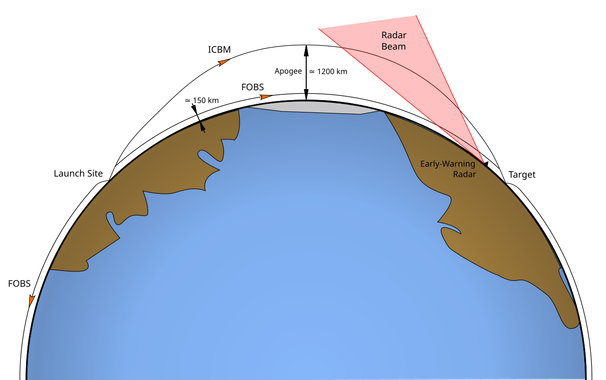
Post-collapse, people think that the Buran justification was paranoia. But based on what I've read / seen (though this is getting hard to source, so I might be just good ol' hallucinating here), they weren't entirely wrong. The subtext around that large payload bay had to do with the Soviet pursuit of systems like Fractional Orbital Bombardment System (FOBS) https://en.wikipedia.org/wiki/Fractional_Orbital_Bombardment... that weaponized space.

Again, there's a reason for those ASAT tests. There's a reason for the weird specifications set in the early 1970s for the Shuttle. And I don't think deploying a spy satellite alone is it. But this is speculation. AFAICT, nothing was put on paper.

It would have been an incendiary WW3 starting act to capture a Soviet asset. But I think it is understandable if certain people within the American blob wanted that capability at hand.

I wish I was immortal. I'd drop everything for a decade and try to find people from the time who're still alive (and some still are!) and ask them these questions directly - on the record – for posterity's sake. I suspect, we came much closer to war via space than most people think. And because we didn't, we'll eventually repeat these mistakes.

---

Oh and then there was the documented attempt to capture Salyut-7 https://www.thespacereview.com/article/2554/1

Somehow all the numbers just happened to line right up. :)

Fractional Orbital Bombardment System - Wikipedia

The only people who took seriously the idea of a Shuttle FOBS were the Soviets, and frankly not even all of them; as far as I've ever seen credible evidence to substantiate, it never went much past a single position paper from the early 80s. The idea that Buran was meant as a MAD-restoring FOBS has, so far as I know, not even that much support. (If you know of primary sources, in translation or otherwise, please link them.)

Read Payne Harrison's 1989 novel Storming Intrepid, followed by NASA publication SP-4221, "The Space Shuttle Decision," from 1999. [1] The first is a pretty good depiction of what you're imagining, and the second explains why the imagination of a technothriller author is where that idea went to die. Then maybe give your head a shake. If Reagan had violated the Outer Space Treaty - via NASA of all agencies! - how do you imagine it'd have stayed secret over these forty years just past?

[1] https://web.archive.org/web/20241229052235/https://ntrs.nasa...

Wayback Machine