 Cory Doctorow
Today's threads (a thread)
Inside: Process knowledge; and more!
Archived at: https://pluralistic.net/2026/04/08/process-knowledge-vs-bosses/
1/

Today's threads (a thread)
Inside: Process knowledge; and more!
Archived at: https://pluralistic.net/2026/04/08/process-knowledge-vs-bosses/
1/
@pluralistic There's an excellent point at the end here that I never really considered before:
"And of course, the people who value process knowledge the least are the AI bros who think you can replace skilled workers with a chatbot trained on the things they say and write down, as though that somehow captured everything they know."Online posts and chats and documentation and everything else a chatbot might train off of are generally written to explain the output and structure of a thing to someone else. And while that generally means they'll be on the simpler side, easier to digest, it also is usually a very lossy process. I'm most familiar with how it works with programming, but I'm sure it applies to anything technical enough. And by "technical" I mean basically anything which involves process knowledge. So most positions outside the Board and the C-Suite.I agree and think this has always been the case. The process is one thing, the skills and knowledge to apply it can only be learned through experience.
Example- I have some reprints of 19th blacksmithing manuals. And although they might describe the process of welding an axle, or forging a wrench, it always assumes that, as the reader, you know what a welding heat is, about the correct temperature for drawing down, how to make the tools required to make the tool (first forge an eye punch of 1 inch) and so forth.
If you have never got your hands dirty doing the work, whether smithing, working front line support or deep in the code base (something I cannot do but admire), you simply don’t know.
And as you say, from that lack of knowledge comes the ignorance that leads to a misunderstanding of value and need.
@j_bertolotti
heh
&
those of us whose mild dyslexia neatly transposes tsp & tbs without blinking
& a mind that screams: "oz? weight or volume? help!" and so on.
usually edible results tho, so '>shrug<
@j_bertolotti @tempusfelix @syntaxxor @pluralistic
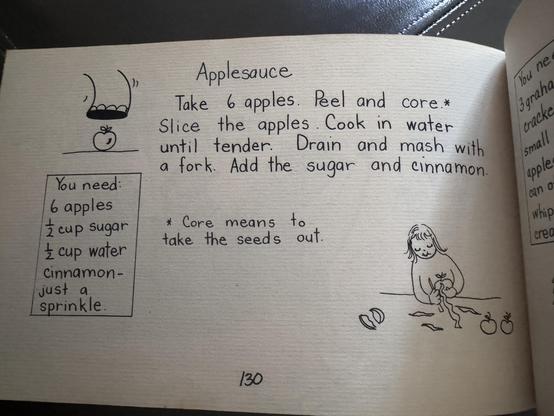
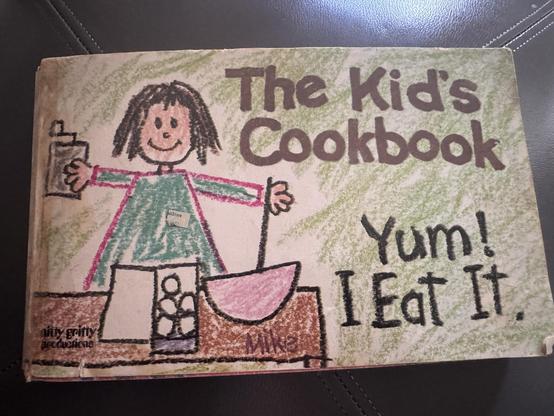
There are specific cookbooks for children, which include detailed instructions on how to do all the steps (with photos). The recipes there go on for several pages.
This confirms your point about the implied knowledge in ordinary cookbooks.
@HighlandLawyer @j_bertolotti @tempusfelix @syntaxxor @pluralistic
I can only imagine today's kid cookbooks are better than what I had as a kid in the 1970s, lol. Still, I love to cook today, and perhaps the mystery of how its done compelled me to learn more...
@j_bertolotti @tempusfelix @syntaxxor @pluralistic
It's like the Roman concrete mystery. It took us 2,000 years to re-learn to use saltwater. All their recipes just assumed we'd know.
@j_bertolotti @tempusfelix @syntaxxor @pluralistic
My half-brothers would never eat tapioca pudding.
That's because our father, at that point in time a single dad, bought a box of tapioca pudding mix. The recipe on the box said "scald 2 cups of milk" - he knew that scald was another word for "burn", so he cooked the milk until it was black, and proceeded with the rest of the recipe (although he did have to add some water to get everything to dissolve.)
Life-long memories of horrid, black pudding...
@j_bertolotti @syntaxxor @pluralistic
Tea is a big thing in the UK. We use tea for all sorts of root examples (consent is like a cup of tea….) but we also used it for learning how to program a computer at college (1980s). The sequence is vital and almost always osmotically observed. I hadn’t thought of cooking as I’ve “always just done it” but you’re correct. Implicit and implied knowledge are almost the core of human information transfer.
@j_bertolotti @tempusfelix @syntaxxor @pluralistic
I've said for many years that I don't fully understand something until I've taught a computer to do it.
During the tedious process of writing my thesis I suggested to my supervisor that, because I had coded the algorithm and proved it correct within itself, a write up was redundant and only invited error and misunderstanding.
🤔
Amusing, sure, but that didn't fly...
@j_bertolotti That's the stuff you can in principle write down.
Writing down how bread dough feels when it has been sufficiently kneaded exceeds the capacity of writing.
Bunches of stuff like that exists; texture, mass, and tension are nearly always both important and significantly experiential.
Or you can look at the reproduction of FOGBANK, where something important and thoroughly documented didn't work when following the recipe.
@etchedpixels @graydon @j_bertolotti @syntaxxor @pluralistic
Another example from the UK recently is sheep shearing. Our government, on one of their no immigrants policies decided that we wouldn’t provide visas for sheep shearers. We have quite a large national flock and nowhere near enough shearers to do the job in the time. Why? It’s hard work, it’s remarkably difficult to learn and it’s very seasonal so you can’t make an income from it. I’ve tried it. You can’t teach it from books, the dance is complex, and you sure as heck can’t teach a computer.
Eventually the government caved and let in the kiwis and Aussies who are world class. But we are going to have the same issue next year cos British jobs for British people. Even if they don’t want to do them.
@tempusfelix @etchedpixels @graydon @j_bertolotti @syntaxxor @pluralistic
What happens to a society when a job is unpaid, undervalued, and disparaged, yet the government is orchestrating laws to coerce people into doing it?
Things like parenting.
Lots of process knowledge required to raise children successfully, and yet the GOP is defunding prenatal care, school lunches, vaccination programs, public education & health.
Republicans & their war on parenting children to adulthood successfully
@Npars01 And they *wonder* why so many people are choosing not to have children. @tempusfelix @etchedpixels @graydon @j_bertolotti @syntaxxor @pluralistic
Edited because apparently I can no longer spell.
@dperkins "No one knows how to do anything because people who don't know anything except displaying status have been making education system decisions for generations" and "there's a capitalist class who want all the money in a pile so it will love them" are orthogonal problems.
Not unrelated because nothing is unrelated to mistaking money for the love of god once the mammonism becomes the state religion, but distinct.
@tempusfelix @etchedpixels @j_bertolotti @syntaxxor @pluralistic
@dperkins "Learn by doing" is distinct from "live by doing"; the second is impossible if there's no way to do the first, but that's not the only reason it's impossible. (as you note! correctly!)
Having the entire notion of teaching collapse into "we can stuff this into words before we stuff the words into a plagiarism machine" breaks "learn by doing" completely. People actively prevent their kids from doing, out of love.
@tempusfelix @etchedpixels @j_bertolotti @syntaxxor @pluralistic
@graydon @j_bertolotti @tempusfelix @syntaxxor @pluralistic
I have another example a solid state physics professor once shared: a semiconductor product stopped working when the producer changed material supplier and got better material
(turns out the impurities were load bearing for the band structure)
@mmby In the "Strange Case of Dr Jekyll and Mr Hyde" Jekyll is unable to reproduce his serum because the new batch of salts lack the impurities that made the first batch work 😉
@j_bertolotti @tempusfelix @syntaxxor @pluralistic
A friend was learning to cook. He read the instructions on o packet of pasta: “Bring a pot of water to boil”
He filled it to the brim!
A relatively harmless lesson, but a perfect example of assumed knowledge. (And yes, he’s much better now)
Hey, could've been worse. At least he didn't start off by looking up the boiling point of stainless steel. 😄
@spaceinvader @j_bertolotti @tempusfelix @syntaxxor @pluralistic
This reminds me of the grade school project to write the instructions down for making a peanut butter and jelly sandwhich, followed by a very literal interpretation of those instructions.
I learned to ride horses and I read a lot of books related to it. My friend said I'd never learn to ride from the book. My conclusions after becoming a fairly accomplished horseman, 1) is that the horse (and time on task) is the best teacher, however, the books were what allowed me to expand well beyond anything that I would have discovered myself in my lifetime, 2) there was so much missing from every book though not the same parts, so important to read lots of them from lots of perspectives, 3) and at the beginning, I thought I'd write the book that had all the important pieces in it, but realized that it was impossible and that actually, the books did a pretty good job covering the basis after all.
@j_bertolotti @tempusfelix @syntaxxor @pluralistic This is one of the things grade school should be *for* - ensuring adults have basic process knowledge across a range of disciplines. Cooking, woodworking, sewing and mending, visual art, dance, cleaning, music, sculpture, managing one's finances, gardening, household repair and maintenance, metalworking....
(I'm still salty that as a girl, I had to take cooking and sewing and wasn't allowed to take woodworking and metalworking. I eventually learned woodworking, but metalworking seems so *cool*!)
There was a quote from an old science fiction book about the true skills of a (who)man are to care, build, invent, defend and share but due to the internet being filled with Ai slop, I can’t find it! I agree, school should teach you how to be a functioning human in a supportive society not a consuming cog. And yes, metalwork is very cool. I recommend having a go at blacksmithing. It’s accessible for most and gives you an insight to an old skill! School metal shop was more machining and bending for us.
@HodgesC @tempusfelix Really not at all comfortable with Heinlein. As always, his stuff comes with a heaping side of militaristic "manly man" vibes. (Sometimes I enjoy it, but like E.E. "Doc" Smith's Lensmen, there are times when I just can't take the stereotypes and propaganda.)
For example, he includes "plan an invasion" and "fight efficiently" and "die gallantly" (all of which are most useful in conflict) but leaves out "teach" (which is fundamental in both times of conflict and times of peace).
There is no universe in which I would put "butcher a hog" on a list of generalist skills (in part because there is no universe in which I am strong enough to maneuver something that heavy without hurting myself).
While I did design a backyard shed (which was very satisfying), I like experts to check for things like "sensibly integrated plumbing and heating/cooling" and "have we actually thought through the implications of the design with respect to fire safety and water resistance".
Agree that generalization is good, and process knowledge is essential, but whew, that list is very much not the things that I would choose!
@Robotistry @HodgesC @tempusfelix
Context is important, Heinlein was an ex- Navy officer who lived during the Great Depression and both world wars.
He wrote this in 1973.
https://en.wikipedia.org/wiki/Time_Enough_for_Love
The necessary skills of today & the future are likely to be very different.
https://en.wikipedia.org/wiki/Robert_A._Heinlein
Being human means having scope to explore skills beyond what's useful to the Epstein Class
@Stevenheywood @Robotistry @j_bertolotti @syntaxxor @pluralistic
Heavens. A farriers rasp is hardcore. My favourite file name is a number 1 bastard.
Our metal class was make your own hammer. Lathe work, drills and lots and lots of filing.
@Robotistry @j_bertolotti @tempusfelix @syntaxxor @pluralistic
My state used to be kind of progressive. When I stated junior high in 1980 (7th grade), everyone had to take all of them! These were all fun!
Woodworking, metalworking, cooking, sewing, drafting.
I think there was one more?
@Robotistry @j_bertolotti @tempusfelix @syntaxxor @pluralistic
But not just grade school - everything up to grad school!
Or at least most people should revisit most of these things most of the way through their compulsory education.
The really nice thing about having some skills, is that learning related ones becomes easier - with basic woodworking and metalworking, learning enough sewing for repairs and upcycling wasn't hard.
@HodgesC @j_bertolotti @tempusfelix @syntaxxor @pluralistic Most of the process knowledge I was thinking of is less about needing regular reinforcement so you'll always be able to do it well and more about achieving "ride a bicycle" levels of not being scared to try it or likely to put yourself in unsafe situations while relearning it.
If you haven't ridden a bike for a couple of decades, that first 5-10 minutes will be *rough*, but it'll come back to you. Same with reading a recipe, using a sewing machine or power tool, drawing.
The stuff you need every day or week or month like budgeting and buying groceries will stay smooth, and you'll have enough background information and residual knowledge to relearn the rest from youtube or wikis or manuals or practice as needed.
@Robotistry @j_bertolotti @tempusfelix @syntaxxor @pluralistic
A human being should be able to change a diaper, plan an invasion, butcher a hog, conn a ship, design a building, write a sonnet, balance accounts, build a wall, set a bone, comfort the dying, take orders, give orders, cooperate, act alone, solve equations, analyze a new problem, pitch manure, program a computer, cook a tasty meal, fight efficiently, die gallantly. Specialization is for insects.
-Robert A. Heinlein
@Npars01 @Robotistry @j_bertolotti @syntaxxor @pluralistic
Thank you! That’s the one.
@[email protected] @[email protected] Really not at all comfortable with Heinlein. As always, his stuff comes with a heaping side of militaristic "manly man" vibes. (Sometimes I enjoy it, but like E.E. "Doc" Smith's Lensmen, there are times when I just can't take the stereotypes and propaganda.) For example, he includes "plan an invasion" and "fight efficiently" and "die gallantly" (all of which are most useful in conflict) but leaves out "teach" (which is fundamental in both times of conflict and times of peace). There is no universe in which I would put "butcher a hog" on a list of generalist skills (in part because there is no universe in which I am strong enough to maneuver something that heavy without hurting myself). While I did design a backyard shed (which was very satisfying), I like experts to check for things like "sensibly integrated plumbing and heating/cooling" and "have we actually thought through the implications of the design with respect to fire safety and water resistance". Agree that generalization is good, and process knowledge is essential, but whew, that list is very much not the things that I would choose!
 Syntaxxor 🏳️⚧️
 Aethon
 j_bertolotti
 cpm
cpm Steven Heywood
 HighlandLawyer
 Victor
 Phosphenes
 PhilSalkie
 U.Lancier
 Tall Simon
 Graydon
 The Penguin of Evil
 Nicole Parsons
 Deb Nam-Krane
 Jeff McNeill
 dperkins
 mmby
mmby Space Invader
 Steve DeGroof 📚🛸
 Robotistry
 Duck Marshall 🚲
 Chris Hodges

 markc568
 John-Paul Flintoff