 Stories From Indonesia
Comment: Iran and an Islamic World Without a Political Center, Islami.co
Iran and an Islamic World Without a Political Center
By Virdika Rizky Utama, Islami.co, April 7, 2026
War often reveals things not apparent during peacetime. The conflict threatening Iran today not only highlights the tensions between Washington and Tehran. This development also makes apparent a more fundamental reality about the political state of the Islamic world. A region with a population of over one and a half billion people is facing a major geopolitical crisis without having a center of power capable of speaking on behalf of its common interest.
U.S. President Donald Trump’s ultimatum to Iran to open the Strait of Hormuz immediately has many observers beginning to imagine the possibility of a broader military escalation. The narrow strait in the Persian Gulf is one of the world’s most crucial energy routes. Nearly one-fifth of the world’s oil passes through these waters daily. Threats to the stability of this route immediately sparked international concern. Oil prices rose, and energy importing countries in Asia began to assess the potential economic risks that could arise.
World attention normally goes no further than the issue of energy and market stability. While this perspective is of course important, more interesting developments have become apparent about the political landscape of the region. The threat of major conflict in the heart of the Middle East has not resulted in meaningful political coordination among Muslim nations. Some governments have expressed concern through diplomatic statements, but these responses have not developed into more serious collective action.
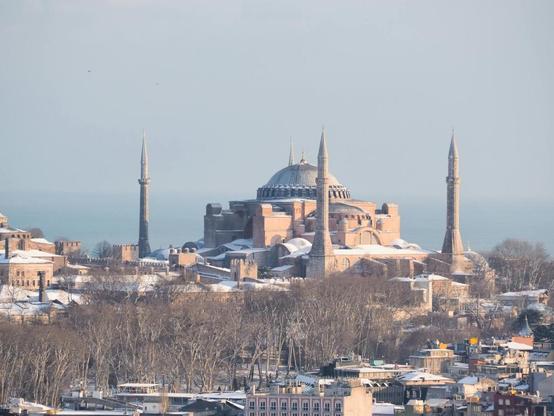
This situation is no coincidence. The Islamic world is indeed experiencing a historical phase marked by profound political fragmentation. For centuries, there were power structures that provided a coordinating framework for vast areas with relatively similar civilizational identities. The Abbasid Caliphate played this role during the classical period. A similar role reappeared in the form of the Ottoman Caliphate which lasted until the early 20th century.
The collapse of the last caliphate in 1924 opened a new chapter in the region’s political history. The nation-state emerged as the dominant form of political organization in the Middle East and the Islamic world in general. This transformation gave birth to dozens of states with differing political orientations. The national interests of each country began to replace the framework of political solidarity that had previously existed.
Since then, the Islamic world has developed into a highly fragmented geopolitical space. Regional rivalries have shaped regional dynamics at different times. Relations between Iran and Saudi Arabia, for example, have often been fraught with prolonged tension. Over the past decade, Turkey has also pursued its own geopolitical agenda through an increasingly active foreign policy. Other Gulf states find themselves in a security configuration that relies heavily on the U.S.
This configuration makes a collective response to regional crises extremely difficult. Conflicts involving one Muslim country rarely generate broad strategic coordination among other states in the region. The solidarity of the Muslim community more often manifests itself in public sentiment and moral discussions. Political structures capable of translating this solidarity into shared policies are almost nonexistent.
This situation has been described in the international relations literature. Samuel Huntington in The Clash of Civilizations and the Remaking of World Order describes the Islamic world as a civilization lacking a single core state. Unlike other civilizations with a dominant center of power, the Muslim region comprises numerous states with their own regional ambitions. This image often sparks lengthy debate in the study of global politics, but the geopolitical reality of the Middle East in recent decades demonstrates that this description is not entirely inaccurate.
The absence of a political center makes the Middle East a frequent arena for global power struggles. The U.S. maintains a vast network of security alliances with a variety of Gulf states. Russia expands its influence through military involvement in the Syrian conflict. China also deepens economic ties with many countries in the region through investment and energy trade.
This great power competition is closely related to the region’s strategic value. The Middle East controls a significant portion of global energy reserves. Shipping lanes such as the Strait of Hormuz are crucial nodes in the global economic system. In his book Chokepoints, Edward Fishman explains that modern great powers often seek to control the global infrastructure hubs that determine trade and energy flows. Control over these hubs provides the ability to influence other countries’ economies without directly controlling territory.
Tensions between the U.S. and Iran demonstrate this geopolitical logic. Threats to the Strait of Hormuz immediately triggered a global response because the waterway determines the stability of the world’s energy supply. Asian countries, heavily dependent on oil from the Middle East, immediately felt the impact of any military developments in the region.
The Muslim world finds itself at the center of these dynamics without a political mechanism able to guide a collective response. Large populations and resource wealth do not automatically translate into collective political power. Muslim countries remain focused on their own national interests. Regional rivalries often deepen existing fragmentation.
The Iran crisis vividly demonstrates this reality. The threat of major conflict in the Muslim region has not generated significant political coordination among countries sharing a common civilizational identity. The Muslim world has witnessed the crisis unfolding from a relatively divided position.
This situation raises important questions about the future of regional politics. Without the ability to build stronger political coordination, any geopolitical crisis in the Middle East will continue to be influenced by the calculations of powers outside the Islamic world. Conflicts in Muslim regions will continue to be part of a broader global geopolitical game.
Wars often reveal layers of reality not visible during peacetime. The crisis threatening Iran today reveals more than just tensions between two countries. The developments reveal more fundamental questions about the political position of the Islamic world in the 21st-century global order.
Virdika Rizky Utama (x.com/virdikaa) is the Executive Director of PARA Syndicate (parasyndicate.org), a graduate of the Postgraduate Program in Political Science at Shanghai Jiao Tong University.
This post is based on https://islami.co/iran-dan-dunia-islam-yang-kehilangan-pusat-politik/.
Rate this:
#AmerikaSerikat #ForeignPolicy #Hegemony #InternationalLaw #Islam #OpEd #Palestine #Politics #Religion #UnitedStates