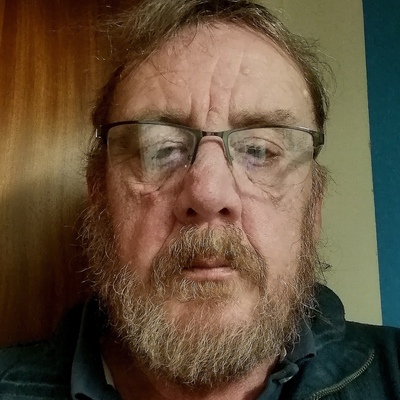
 Kevin Davy
Last night I had a very broken night's sleep, culminating in waking early and not being able to get back to sleep. I tried to make up for it with an afternoon nap, but that too wasn't great. But then, for a while now my sleep has been disturbed, well, even more so than normal. Not the dreams themselves, more the feel of them. They have been like endless scenes from a film, of some perfectly normal and every day activity, but with the background music being all suspenseful and foreboding. Although, without any clear reason why.
Well, today I realised why. I don't know how common this is for autistic's, or whether it is more of a late realised thing, brought about by decades of our experience and ways of understanding something, especially of a deeply personal, or emotional nature, being denied and in many ways gaslit as inappropriate, or just plain wrong. But when I am dealing with things like this I tend to do a lot of the processing in my mind behind closed doors, so to speak. Only when certain conclusions and consequences become obvious do they begin to creep out into my conscious mind, often, at first, into my dreams.
In this case it has been the understanding that I am far more disabled now, than I was before Christmas and my back collapse and that this isn't going to improve. I have accepted, for some time now, that I am disabled. Both by simply being autistic in this world, but also because of the physical limitations of my back and chest (asthma/COPD, if you are unaware). But, to have to face the fact that it could suddenly get worse, especially without any apparent cause, as my back did over Christmas, is somewhat of a bitter pill to take. It introduces a level of uncertainty and lack of control, which is difficult for me as an autistic.
But, I also know that it is the nature of being a spoonie and what my mind has been trying to get me to accept. That if a good day is suddenly reduced to being able to do a load of washing and because I could actually get dressed, sitting in the sun for a while, as mine was today, because that's all my spoons would manage. As opposed to being so much more active, as I was used to being. Then that is the nature of the beast and that is what I'll have to get used to and begin to think about, as I plan my days and time spent.
It may not be ideal, or preferred. But, anyone can become disabled, at any time and it's rarely a stable, or static, condition. Ignoring that, or judging yourself by the standards of yesterday, does no one any good, least of all yourself. Or, at least, that is what I'm trying to tell myself (through writing this, as much as anything). That this is the new normal of my life now and I have to come to terms with that.
 César Pose
 Looking for explanations…