 CryptoLek 🍉🌻
 Tube🌿Time
this is a Nuvistor! it's a super-advanced vacuum tube that could have beaten the transistor.
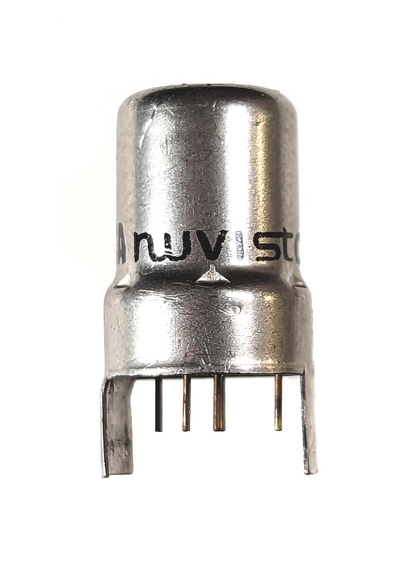
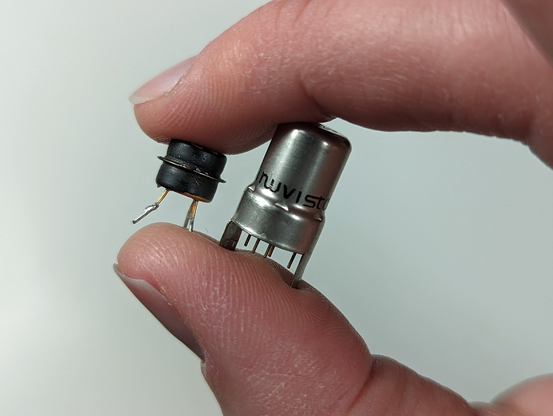
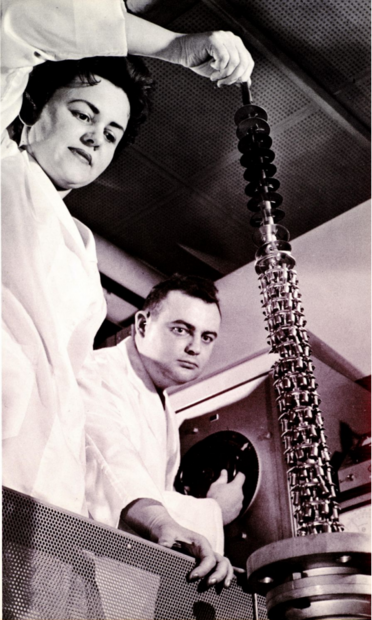
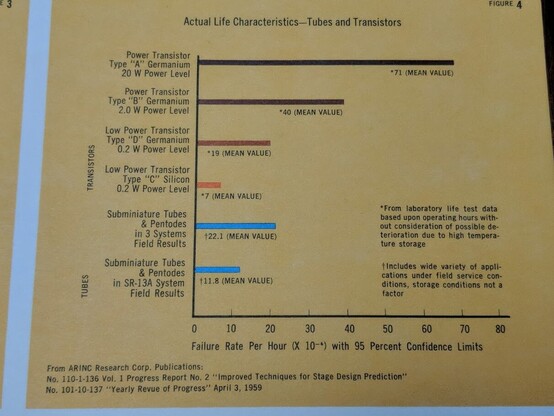
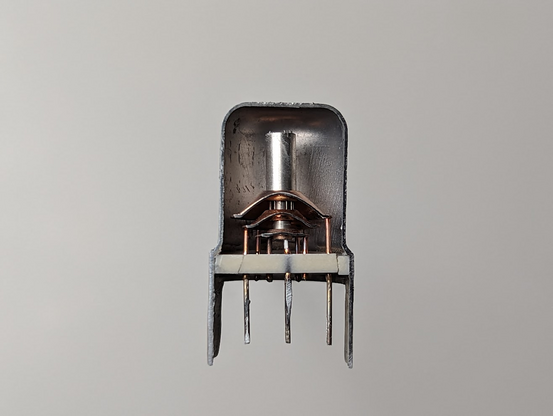
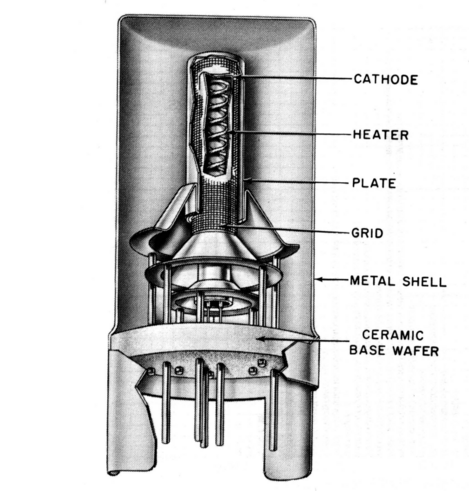
@tubetime What #AdobeFirefly thinks it would look like. #GenerativeAI
Prompt: long shot of thousands 1 millimeter tall nuvistors lying on huge printed circuit boards.

@th @tubetime The article is from ~10 years ago.
I did a search after reading and it seems like these two scientists at Ames are doing most of the publishing on the subject.
Fascinating stuff, especially for TeraHertz radios. Would love to see this commercialized.
Side note: at my first job, we used vacuum tube RF supplies in plasma etchers, to make 0.9 um CMOS. Metal can triodes.

Attached: 1 image @[email protected] the Vacuum Transistor allows fabrication of chip-scale vacuum tubes on normal CMOS process. These devices switch in the terrahertz range and require neither a heated filament nor a vacuum, since the source-to-drain distance is shorter than the mean free path (which means electrons won't hit any other atoms along the way): https://spectrum.ieee.org/introducing-the-vacuum-transistor-a-device-made-of-nothing

The newly developed nanoscale vacuum devices have basic functions similar to traditional vacuum tubes, but can be manufactured by existing silicon-based process lines to achieve small size, light weight, and high integration, which makes them attractive, especially in the recent decade. The historic development and the state-of-the-art of the nanoscale vacuum devices are reviewed. It is found that the devices with lateral, vertical, and gate-all-around structures all have their own advantages and drawbacks. Silicon has the most mature process, but the silicon nanoscale vacuum devices show poor electrical properties and low endurance to harsh conditions when compared with their metal or wide bandgap semiconductor competitors. Even though the most developed nanoscale vacuum devices today still cannot cope with the solid-state devices or integrated circuits (ICs) in most normal applications, they are expected to be first employed in environments with high temperatures or strong radiation.
@tubetime There is progress on the latter, sort of:
https://spectrum.ieee.org/introducing-the-vacuum-transistor-a-device-made-of-nothing
In my science-fiction universe, I call this technology "electron plumbing".
(While semiconductors did come to be there, electron plumbing still owns the high-power applications.)
@tubetime reminds me of the Robert Symons quote in this piece on cold-cathode traveling wave tubes:
“If the transistor had been invented first, the vacuum tube would have been invented immediately afterwards.”
https://spectrum.ieee.org/the-quest-for-the-ultimate-vacuum-tube#toggle-gdpr
@tubetime Very cool.
This is textbook Christensen Innovator's Dilemma case study.
@tubetime oh that's hella cute. I always used to think Nuvistors were external plate tubes, but it looks like the metal shell is floating and can be grounded on this one.
Otherwise, the construction style used inside the Nuvistor is identical to that used in large RF power tubes... just... unembiggened.
Is that anything near a TO-5 package?
I worked for Teledyne Relays and we had DPDT 1A relays in a TO-5 can.
Still seriously small!
That's a lot of little widgets that I imagine are desired to be concentric....
@tubetime The lovely HP 3400a RMS voltmeter (1964) uses one of these in the input amplifier!
Also, don't tubes generate more heat? Seems like a serious problem if you want to make a fast computer.
 David Fox 🌻🥸
 Glen Akins
 Brian Danger Hicks
 Matt
Matt Rachel Greenham
 Winchell Chung ⚛🚀
 Neko May
 SuperIlu
 SpeakerToManagers
 Trammell Hudson
 Gerbrand van Dieyen
 48kRAM
 Norman Wilson
 Wilmhit until peace prevails
 Account: Computers
 void_ptr
 benjohn
 Marc Jacobs
 Dave Irving
 Jazz Rabbit 🐇🏳️⚧️
 Nick Poole
 JamesAkers
 Stephen Bannasch (316 ppm)
 Mike Spooner
 scrottie (he/him/them)
 Ove Gram Nipen
 bhtooefr
 Alistair Young
 Greg Smith
 jack the nonabrasive
 pcbeard
 Django
 Eric Carroll
 Ursine
 vxo
vxo Nick 'The Viking'
 Joe Pasqua
 Joe
Joe DrScriptt
 Chris Petrilli
 oisin
oisin recursive 🏳️🌈
 Thomas H Jones II
 James Brooke
 ARGVMI~1.PIF
 oldfartjmb says FREE PALESTINE
 Alex Ball