 Spaceflight 🚀
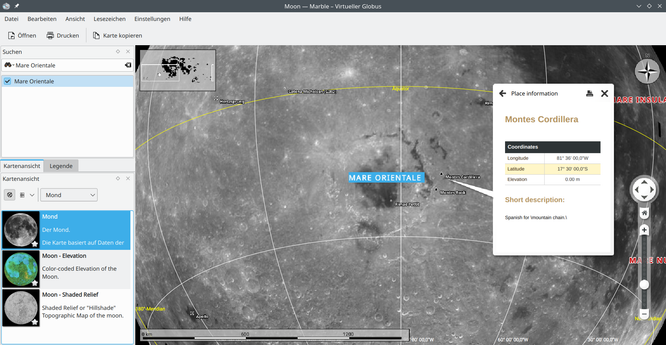
Top of many researchers’ lists is the Orientale basin — a 930-kilometre-wide, multi-ringed impact basin https://commons.wikimedia.org/wiki/Category:Mare_Orientale
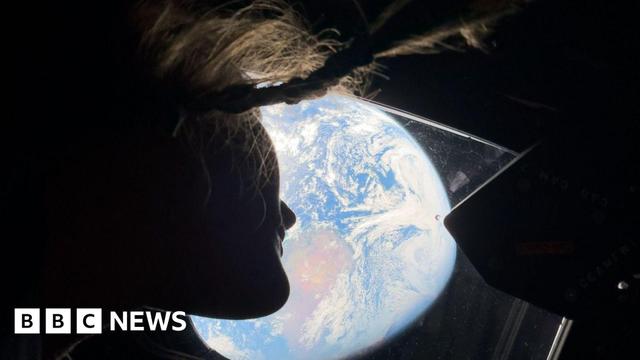
"The value of the images coming back from #Artemis and its crew is artistic, not #scientific. Unless something very unusual happens, there will be nothing for the #astronauts to discover"
When releasing images, #Nasa is pushing the scientific importance of this mission, but as journalists, we are asked to look at all the #facts around a story. Since the #Apollo program in the 1960s and 1970s, #robotic explorers have mapped the far side of the #Moon https://www.bbc.com/news/articles/clye6j0g840o
 Galaxy Map
@spaceflight I think it would be useful for journalists to report on the actual goals of the Artemis program and why the Trump administration is so keen about it.
@galaxy_map something like this ? https://spacey.space/@spaceflight/112112633772129706
@spaceflight Isn't this sort of article effectively advertising for Elon Musk? I think the real issue is why there is an Artemis program at all, not the details on how it is achieved.
@galaxy_map It criticizes government-funded, pork-barrel projects for wasting large public funds through politically motivated decisions instead of efficiently advancing technology
Five Lunar Orbiter missions were launched in 📆 1966 through 1967 with the purpose of #mapping the lunar surface before the #Apollo landings. All five missions were successful, and 99% of the #Moon was photographed with a resolution of 60 m or better https://lpl.arizona.edu/missions/lunar-orbiter
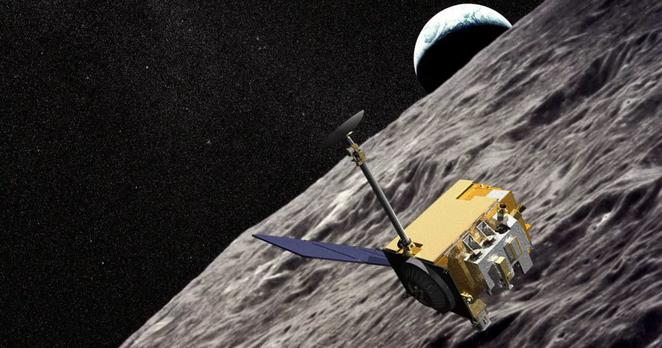
#LRO launched in 📆 2009 on a mission to create high-resolution 🔍 topography #maps for future #NASA astronauts. The telescope 🔭 and camera system can see details up to 2.5 meters across. The cameras have captured views of the #Apollo sites so detailed you can see astronauts’ footprints 👣 https://www.planetary.org/space-missions/lunar-reconnaissance-orbiter