
#solarPower

Today I learned, that weather stations for the #Arctic are powered by #solar panels, installed vertically to minimize snow accumulation. During the ~100 days of arctic night solely powered by #solarBatteries, which, due to the cold temperatures, only have ~50% capacity. Besides the whole thing having continuous satellite communication AND being polarbear-proof.

So tell me more about how off-grid solar power is not feasible in the cold, and when the sun is not shining?!
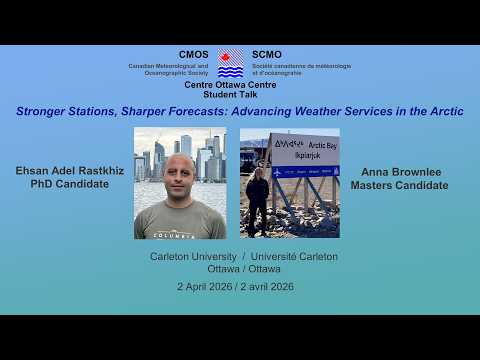

#CMOS Meteorological and Oceanographic Society #meteorology #weatherForecast

Two lectures on the Silanniarviit #weather station project, which was established to provide real time weather information for community members across Inuit Nunangat

https://www.youtube.com/watch?v=ZCzPc3EsDBY

Stronger Stations, Sharper Forecasts: Advancing Weather Services in the Arctic –Brownlee & Rastkhiz

YouTube

@IviChoc Sure, it’s doable. A house though needs orders of magnitude more power through the winter. My house in the warmest winter climate in Canada uses 10 MWh per year. Yes, that could be reduced, maybe by half, with a modern building etc. I doubt the weather stations use even 100s of kWh.

Arctic sun is on a daily average as intense as at the equator for a while in summer.

@edwiebe Yes, good insulation and well-planned electrification of a house with appliances low in energy consumption (and knowing when to use them :) are a must. I'm off-grid solar in Germany since 2018 in a fully electrified house, and now also in Portugal since 2023. The latter is of course easier to manage due to being further south. Both systems run on 10kW LiFePO4 batteries. (Needed a bit of behavior training, but I learned quickly after provoking a few inadvertent system shutdowns :)