Home #3dprinting is fun. I like making fun things like #ttrpg minis, and useful things, like a spice rack organizer.

I like how they fit into #solarpunk story telling.

But until/unless one can recycle and more importantly, produce filament, it's still a centralized technology based on plastic.

I've only worked with basic PLA, and read a bit about PETG & the differences.

Are there any filament technologies that are recyclable / reusable or that can be produced locally from raw materials?

@pseudonym

Most thermo-plastics are recyclable into filament to an extent, but quality degrades too much after a few cycles.

PLA is a plant-based plastic. It's possible to produce from local materials, but the chemistry and infrastructure to get from growing plants to a consistent 1.75mm filament you can use takes some real dedication. Even the last step of transformation from good quality pellets and colorant to filament has factories dedicated to it.

That's all to say, it's not really feasible for an individual to do, but it could make a good sci-fi story. Get enough people together and they could probably make a try at small scale PLA production, but it would be guaranteed uneconomical unless global supply chains are effectively gone.

@matt5sean3

Today I learned.

Thanks. That's great background, that fits with my general sense. I didn't know PLA was plant based.

Wish there were more readily accessible recycling options. Good to know it is ultimately biodegradable. I've been throwing away supports from prints, as it can't go into the usual home recycling stream, and I don't have a melter/extruder to reuse it.

@pseudonym

The biodegradability, as you note, isn't really home biodegradable, so it's another case where you'd need some dedication to make it happen.

Supposedly PHA is the really good alternative that can break down easily, but it's presently expensive. It's probably the one I'd shoot for if I were to get a group together to make local filament.

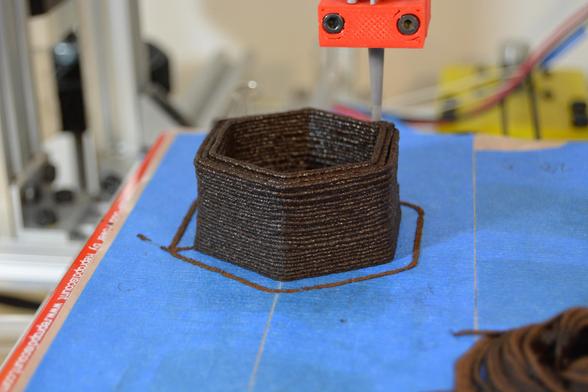
On the other hand, I've kept this paper in the back of my head for years and really want to experiment with slurry printers. Coffee may not be local, but I'd bet I could find local plants that would work or revisit what printing with clay slip takes.

3D printing with coffee: Turning used grounds into caffeinated creations

Coffee could be the key to reducing 3D printing waste, according to a new study. Researchers with the ATLAS Institute and Department of Computer Science

CU Boulder Today