 AkaSci 🛰️
A crescent Earth as seen from the Artemis II Orion Integrity spacecraft, now over 46,000 km away. The spacecraft is located above the north-east coast of Brazil, where it is night-time
22/n
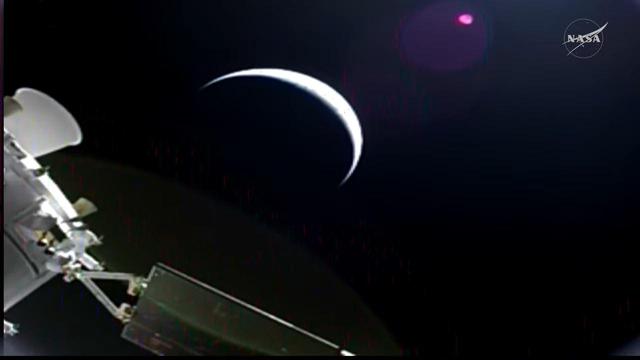
A crescent Earth as seen from the Artemis II Orion Integrity spacecraft, now over 46,000 km away. The spacecraft is located above the north-east coast of Brazil, where it is night-time
22/n
The serene view of the Pale Blue Crescent from the Artemis II Orion Integrity spacecraft this morning, now located 70,920 km away in its elliptical orbit, high above the Pacific Ocean, west of Peru, as the astronauts grab some sleep after a hectic day yesterday.
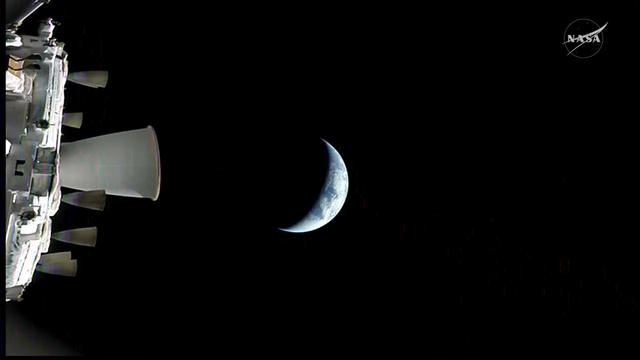
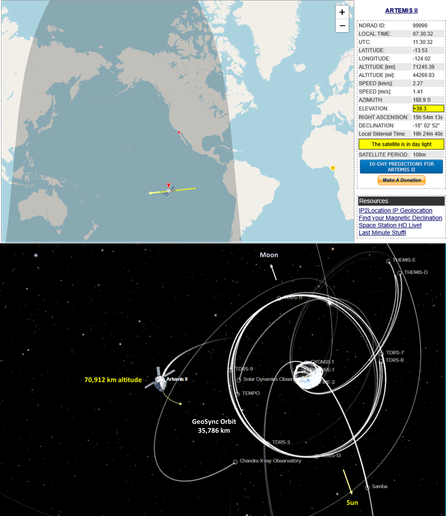
Integrity, the Artemis II Orion Integrity spacecraft, is located 71,245 km away, almost 2x the alt. of GSO, in a highly elliptical orbit, above the Pacific Ocean, west of Peru.
After reaching Apogee, it will turn around and execute a Perigee Raising Burn at around 8:15 a.m. EDT (12:15 UTC) and head back towards Earth.
12 hours later, at Perigee, it will execute the Translunar Injection Burn and shoot for the Moon.
https://www.n2yo.com/?s=99999&live=1
https://eyes.nasa.gov/apps/solar-system/#/sc_artemis_2
https://www.nasa.gov/artemis-ii-press-kit/
24/n
RE: https://f.cz/@xChaos/116333479114503737
@photovince
There is some energy optimization related reason for this orbit and trajectory. Also, unlike uncrewed missions, this spacecraft needs to head for the moon within a day or two after launch.
See post by @xChaos for some more info -
 MidgePhoto
 Vincent 🌻🇪🇺 en 🌹☘️
 ClaudioM
 Bill Zaumen
 Tamara Lisbeth Cazorla