As usual pretty dumb coverage by the BBC!
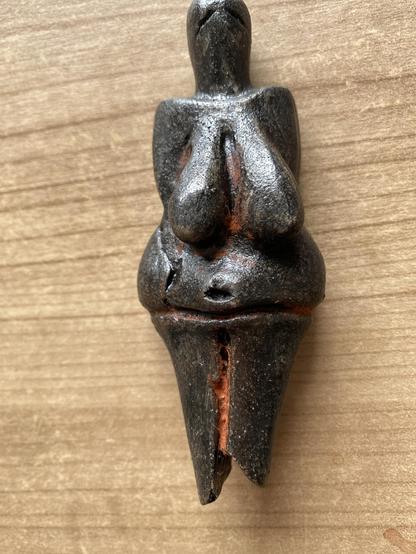
Ice Age 'queen' theory, nah sorry. These are ritual artefacts, belonging especially to women's rituals in relation to reproduction and social reproduction, notably blood symbolism--menarcheal, childbirth. Not goddesses, not queens. Women with blood potency

https://www.bbc.co.uk/future/article/20240307-the-160-year-mystery-of-the-stone-age-venus-figurines
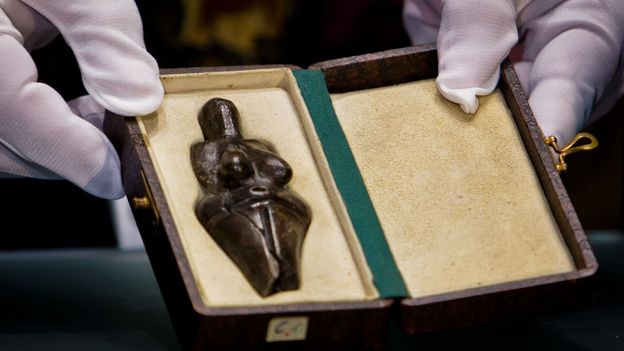
The 160-year mystery of Europe's Ice Age 'queens'

Despite more than a century and a half of speculation, these nude, faceless sculptures remain utterly enigmatic. Who made them? And what might they have been for?

BBC

And 'fatness' potency -- that is fat as 'phat'! The idea these are realistic depictions should be measured up to southern African hunter-gatherer rock art where women's phatness is an idiom of power, especially in first #menstruation ritual.

Why don't archaeologists bother to put these into contexts of hunter-gatherers?

This was written before Hohle Fels was unearthed but that will not change the arguments

https://www.researchgate.net/publication/263469131_Women_in_Prehistoric_Art

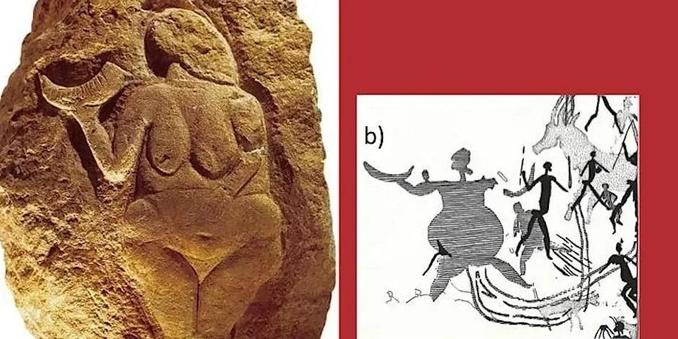
These ritual icons thousands of years and thousands of miles apart show the structural similarity of grammar, phat woman holding up crescent icon/animal horn ochred with blood from her genitals. These are the 'venus' of Laussel (France, >25,000 years) and Bushman art from Matapos hills, Zimbabwe >2000 years?
@RadicalAnthro, but you are refering to the argument of the professor of renal medicine.
The archaeologist, Katherina Rebay-Salisbury, contextualised the figurines in a hunter-gatherer lifestyle - as archaeologists usually do. Btw, we do not believe in "one fits them all" across millenia, especially without evidence of a continuous tradition as we are aware of the dangers of analogies robbing two human groups of their traditions' history & relying on disputable ideas of universal human truths.
@SonjaBGrimm I really did like the quote there from Rebay-Salisbury on the astonishing similarities across time. Best bit of the article actually! With our specific model of symbolic origins we have a strong argument on what gives similarity through time or time-resistant syntax as we call it. The signal of ritual power doesn't change much. It's incredibly conservative. What changes is who is in control of the signal.

@SonjaBGrimm this is my take, yeah taking shameless liberties with instruction from African h-gs on interpretation in European Ice Ages. BUT we do not do this as mere analogy but with tight constraints of a Darwinian model.

https://www.researchgate.net/publication/263469131_Women_in_Prehistoric_Art

@SonjaBGrimm and here is the very scholarly work of my colleague Ian Watts (world expert on MSA ochre) on the fundamental symbolism of humanity.

https://c.im/@RadicalAnthro/114624267331809711

Radical Anthropology (@[email protected])

To learn on this subject, here is the wonderful scholarly work by #IanWatts https://www.sciencedirect.com/science/article/pii/S0278416524000588

C.IM
@RadicalAnthro Ice age queens… Argh! I also personally rather dislike how the name “Venus figurines” has stuck. It always sets the wrong tone when talking about them. I wrote this thread some time ago, and I don’t think my thoughts have shifted much since. https://the-crossroads-inn.com/@cassana/113985250665627580
Cassana 🍻 (@[email protected])

Attached: 1 image Venus figurines are a cultural or religious mystery from the upper #palaeolithic. There are countless interpretations, so I wanted to explore and consider things from my POV as an ethnomusicologist with specialisms in cultural exchange and migration, who also loves #history and experimental #Archaeology. Photo: reconstruction Venus of Dolní Věstonice (see alt text for more info). #Anthropology #Prehistory… (1/12)

The Crossroads Inn
@cassana strongly agree, quite wrong tone. These require contexts of hunter-gatherer ritual. And the porno stuff is messing with our heads by importing capitalistic relations onto Ice Age hunter-gatherers
@cassana very nice thoughtful thread
@RadicalAnthro Thanks. I agree that a hunter-gatherer interpretation framework is going to be much better for things like this, but at the same time we’re stuck with outdated names making that nearly impossible. I’ve tried calling them mother/woman figurines, but usually Venus comes up in any conversation anyway.
@cassana @RadicalAnthro I'm totally with you as are increasing numbers of archaeologists working with the figurines. Mostly we refer to them as female figurines/ Frauenfiguren, especially as the term "venus" also has a colonial and racist taste to it (see e.g. Randall White's 2006 article on "The women of Brassempouy: A century of research and interpretation" - available via academia.edu).

@SonjaBGrimm @cassana
Thanks for that ref!

The figurines which really interest us are the 'phalliform' ones combining male/female aspects, egs Kostienki, Dolni Vestonice, Mezin, plus Italian sites? Not to mention Lespugue. Several such cases, and our models predict this. That comes from the spectacular complexity of gendering during African h-g initiation ritual.

@SonjaBGrimm @RadicalAnthro Good to hear. Funnily enough, I found that article after someone recently gave me a replica of la Dame Ă  la capuche, which is a great reason to go read up on stuff.

@RadicalAnthro

I had the rather painful realisation yesterday that historians (of whom I am one) are just scribes and chroniclers of patriarchy.

It will be very hard for us as a profession to start thinking outside that box…

@avuko this is why hunter-gatherers can really guide us with oral/ritual transmission in pre-patriarchal mode.

@RadicalAnthro Corporate media's core brief is to ensure the enduring position of Whiteness + Maleness = power and control.

Mischaracterisation of the nature and history of the alternatives is key to their project's success.🖤✊