 mcc
mccA thing that never stops being funny to me is that electoral reform is stymied by the fact there are separate camps who want instant-runoff voting, Condorcet ranked voting, and proportional representation, and they don't cooperate. Seriously one of the funniest things to happen in human history. First Past the Post has a plurality of support so it wins every engagement. First Past the Post wins by First Past the Post rules.
 Proto Himbo European
@mcc This is painful and hilarious. It raises the prospect of perhaps getting all these people together and forming a coalition of some kind, and pushing forward, getting commitments to push on reform while waiting until later to decide precisely which reform method gets advocated for. Like a primary process. Then when, IDK, Condorcet or Preference voting or whatever wins, everyone else can grit their teeth and support it, kind of like I did when Kamala got the nomination.
 World Basement Classic
@guyjantic @mcc What happens in practice is that's the exact point the coalition of support breaks down and the whole thing fails. See the Alternative Vote referendum in the UK for an example.
 James T Monkey
@diffrentcolours @guyjantic @mcc Choosing AV as an alternative to FPTP was a deliberate move to see it fail.
I think the problem is appealing to the ‘one person one vote’ crowd. Approval voting makes sense in these terms (everyone says yes or no to each candidate), as does ranked voting (everyone lists their preferences in order), as does PR (if 10% of people want a party, that’s the proportion of seats they get) - all fair in layman’s terms.
But AV is weird, unintuitive, hard to explain.
@teamonkey @diffrentcolours @guyjantic I'm really confused by people using "AV" and sometimes it means "approval voting" and sometimes it means "alternative voting" which I think is what the British call instant runoff voting for some reason I don't understand. Why not call it instant runoff voting. Or just ask for "ranked voting" and decide later if you want IRV or some fancier math
@mcc @diffrentcolours @guyjantic True. I meant Alternative Vote (aka Instant Runoff Voting), which was commonly called ‘AV’ during the UK referendum.
@teamonkey @diffrentcolours @guyjantic Last week the NDP in Canada held a ranked vote with IRV and the way they explained it is they just didn't explain it. They said "rank the candidates in the order you prefer them" and stuffed the resolution mechanism on a side page. Everybody seemed happy with this.
@teamonkey @diffrentcolours @guyjantic Now, if Britain had a campaign where people tried to look at IRV closely and it confused them, maybe that means we should use Condorcet! (That's the "mathematically correct" way to do ranked voting). But what I'd ask is, was IRV confusing because it's confusing. Or was it confusing because an ad campaign by opponents tried to make it seem confusing. What if an ad campaign tries to make Condorcet sound confusing too. You have to make a matrix—is this simple?
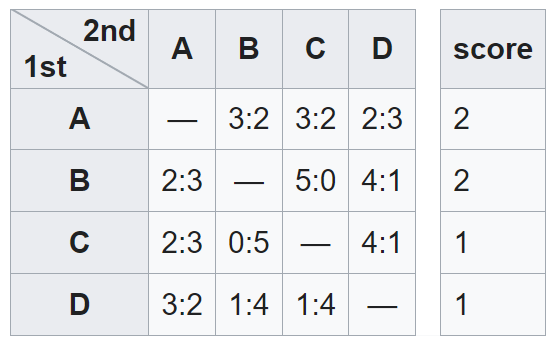
@teamonkey @diffrentcolours @guyjantic Usually the reason I prefer IRV over "the mathematically correct way" is most people aren't good at math, and I thought IRV was simpler to explain ("your first choice gets your vote, if they can't win it's your second choice"). But maybe that's because I have programmer brain and I find discrete algorithms intuitively easy to understand. I don't know!
@mcc @diffrentcolours @guyjantic My feeling is that ranking all the choices in order is simpler for people to understand, and more likely to seem fair. Everyone knows how to rank things in order. The math isn’t really important.
Approval Voting is another one that makes intuitive sense to people. Easy sell.
But having a vote, and then “having another vote if you lose” seems inherently unfair and open to misinformation, IRV encourages that, even if it’s more similar to the above than not.
@teamonkey @mcc @diffrentcolours The USA has a long history of runoff votes and the like. Many elections use them now. I think, as others have mentioned, there are multiple motivations under this. When it suits us, tens of millions of citizens spend hours learning some basics of immunology, international relations, tariff policy, etc. but usually to justify our own prejudices or help us fit in with our ingroups. I think a lot of the resistance to reforms like this is on that level.