Today in news which will not shock you:
https://www.bbc.com/news/articles/cpwjxx5eyn1o

Survey which claimed evangelical Christianity was on the rise in UK found to have been fraudulently manipulated by Evangelical Christians.

I know. My surprise was unconstrained.
😑

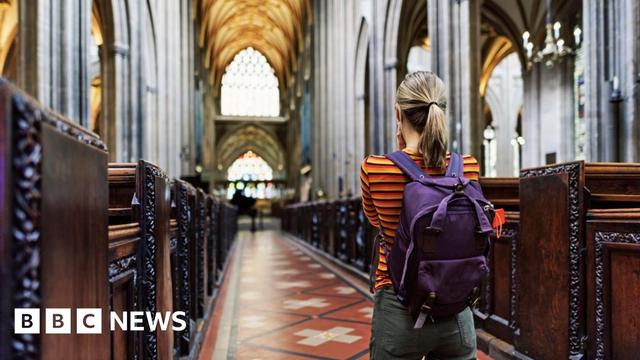
Church attendance report pulled after YouGov finds 'fraudulent' responses

The original report claimed a rise in young people attending church in England and Wales.

@CrypticMirror @cstross Christians lie to benefit themselves, why I never.
@CrypticMirror Someone has been taking lessons from theUS Evangelical Christian zionists haven’t they
@CrypticMirror Where does this article say it was fraudulently manipulated by evangelical Christians? YouGov carried out the research, they're a reputable secular polling company. People paid by YouGov to fill in the survey misrepresented themselves. Unless you've got evidence those people were somehow selected or manipulated by evangelicals, you should correct your claim.
@jdonoghue @CrypticMirror the evangelical Christians were happy to go along with the idea that attendances were dramatically up even though they must have known that they were actually declining. That sounds pretty deceptive.
@jdonoghue @CrypticMirror it looks like the survey was flawed by people completing it for money by just ticking random answers rather then deliberately pretending to be attending church
@satsuma @CrypticMirror The Christians questioned the results because they thought they looked unlikely, YouGov repeatedly insisted they were accurate. Understandably, the Christians got quite excited about that. Very awkward and deflating for them to find out they were misled.
@jdonoghue @CrypticMirror you’d think that they would have a pretty good idea of how many people were turning up for services on an average Sunday in their own churches though. Don’t they take attendance or count the weekly collection? Did they all just think that every other church was busy and theirs was the quiet one?
@satsuma @CrypticMirror They're not a church? And you'd assume one is a representative sample, rather than a (they were informed) actual representative sample by a respected polling company?
@jdonoghue @CrypticMirror a better metric would be the number of people who donate regularly, no matter the amount, as that would show they were committed to the church.
@satsuma @CrypticMirror Perhaps. Hard to get the number though. "Should have done a different survey" is a very different criticism to "You falsified that survey"
@jdonoghue @CrypticMirror the churches (especially the Church of England) should already have that information available at a national level without relying on a third party survey though. Claiming that there are huge numbers of young people attending church when they should know that the true picture is different is the dodgy part of this. Were they hoping it would be a self fulfilling prophecy and make youngsters think that the church was the place to be?

@jdonoghue @CrypticMirror according to this report there were just over 400,000 regular givers in 2021 down by 30% over the previous decade. This is published and publicly available data, so why were they so eager to think the opposite was happening?

https://premierchristian.news/en/news/article/cofe-giving-falls-by-a-third-in-a-decade

CofE giving falls by a third in a decade

Church giving falls by a third in a decadeThe number of people regularly giving to the Church of England (CofE) has fallen by almost a third (30 per cent) in the last decade, according to the latest

Premier Christian News

@satsuma @jdonoghue @CrypticMirror Very few people have much of a sense of what might be happening in places beyond their local area. If you're a regular churchgoer, you might be very aware of trends in numbers in your own congregation, might be vaguely aware of what numbers are like in a few other churches nearby or which your congregation has links to, but would likely have little idea of what trends might be happening nationally. For this, you need national level data gathering organisations, like YouGov, which is where fault seems to lie in this case.

The only ones within the church who might have access to national-level figures to question the data would be national denominational bodies, but even then, they would only have access to (often pretty patchy/poor quality) data from their own denomination, rather than across denominations (lots of silo-ing happens in churches, with relatively little co-ordination between denominational bodies).

And then there are cross-denominational parachurch organisations that might also have a bit of a sense of what is happening more broadly, though without much granular data, who might have had anecdotal reasons to question the data. And in this case, one of the most relevant bodies did precisely that.
@jdonoghue

But if you read to the end of the article you'll see that the Bible Society (which I assume is an evangelical christian body) has in fact been complicit : ""We've been telling them (the Bible Society) for the better part of a year that there were serious problems with the data - and even what those problems were likely to be - and they refused to engage with us."

Sounds to me like YouGov were careless, and have apologised, but the Bible Society was more actively dishonest.

@CrypticMirror

@GeofCox @CrypticMirror I disagree. Another party was telling them they thought the numbers were wrong. The Bible Society had asked YouGov the same questions, and had received repeated assurances. The failure was trusting YouGov, not being dishonest.

@jdonoghue

Innocently 'trusting YouGov' ? - or choosing to uncritically accept a source that seemed to support their agenda, while refusing to engage with experts pointing out that source must be flawed ?

@CrypticMirror

@GeofCox @CrypticMirror Repeatedly asking for assurances doesn't seem like "uncritically"

@jdonoghue

On the contrary - what that seems like to me is that they were well aware the data was flawed - they were after all being told so by other experts for months - but instead of dealing honestly with the problem they merely sought to 'cover their backs'.

@CrypticMirror

@GeofCox @CrypticMirror Interesting. Where did they attempt to cover their backs?
@CrypticMirror Polling bots again, are we?
@CrypticMirror wouldn't be surprised.
@CrypticMirror Sounds like there were skewed figures, but this article attributes those figures to the participation of paid survey respondents giving 'random' answers, rather than a deliberate campaign to create disinformation by an organised group.
@CrypticMirror Religions continue centuries of public manipulation, piggy-backing on a supreme deity to give them a huge count of 'respect' points.
@CrypticMirror i am so.suprised my jaw dropped to the floor...i then had to get a replacement jaw...that also dropped to the floor... and i can't get another new one as i might keep.dropping them to the floor...
@CrypticMirror evangelical christians, bearing false witness, in this economy?
@CrypticMirror Actually, you can't necessarily determine who skewed the data, or why. The failing organisation here isn't the organisation that commissioned the report, but the polling organisation. So many people reported uncritically on it, including people who should have known better (BBC and MPs). There were a few voices questioning it, as it clearly contradicted the CofE's own figures and The British social attitudes survey. As a Christian myself, I didn't really pay much attention.