 Cy
Cy Light
Light Strypey
(1/?)
@cy Ok, now I've calmed down a bit, let me flesh out my point and see if it clarifies anything for you.
This turns on how we're defining "business". Does a subsistence farmer selling surplus veges in a bazaar-inspired medieval market, or a baker selling bread there, count as "business"? In the broadest sense, sure, but not in the sense that I think concerns you here.
For this explanation, I'll use 'bazaar' instead of 'market' to avoid confusion with other uses of 'market'.
(2/?)
Were medieval bazaars free from central government interference (ie the King and the Crown)? Yes, as most governance functions in the Middle Ages were more localised. Nation-state scale government didn't become practical until the emergence of tech like national train networks and reliable postal system, which were originally inseparable from them.
Were bazaars unregulated? certainly not. For a start they existed by the grace of the local landlord and church authorities.
(3/?)
Within that, a bazaar was a commons, run by and for the community that bought and sold in it. Like any sustainable commons, this required regulation, eg to avoid having stallholders selling poisonous food or faulty goods, or people stealing from stallholders, or anything else that would threaten the market's reputation.
The modern equivalent would be a supermarket run as a multi-stakeholder co-op, where workers, producers and customers all have a stake in ownership and decision-making.
(4/?)
Is a bazaar or a co-op supermarket the ideal model for food exchange in a community too large to do it by trading veges over the back fence? The question makes no sense to me. There are no 'ideal' models, only what makes the most sense as a response to a given situation.
Gaining this understanding this is one thing that makes slogging through the dense prose of situationist writing worthwhile. Revolutionary Self-Theory isn't too hard a read, and is a good intro;
https://theanarchistlibrary.org/library/larry-law-revolutionary-self-theory

(5/5)
Are Farmer's Markets (also inspired by the medieval bazaar) and co-op supermarkets an improvement on corporate supermarkets and their highly centralised, too-big-to-fail supply chains? I think so. Keep in mind that union-driven projects like this were used to build worker self-management in the lead up to the Spanish revolution.
Could there be a place for them in a society run mostly on anarchist principles? On what basis could we suppress them without becoming Stalinists or Red Guards?
 𝓼𝓮𝓻𝓪𝓹𝓪𝓽𝓱【ツ】☮(📍🇨🇦)
while i agree with the goals here and am in favour of street markets and bazaars and farmwrs markets and mutual aid networks and worker co-ops and so on...
...i would step back and wonder what are prerequsites for those?
certainly all of the above have in common that they use money owned by the capitalists and billionaires, who would love all the above and then print money for themselves to buy the most popular ppl and products who are happy to receive lots of money we all work for
What about Thomas Greco's "credit clearing" institutions or perhaps a decentralised equivalent?
h/t @KevinCarson1
@strypey @cy
@light @KevinCarson1 @strypey @cy imho that has been tried by a project called "Ripple" and it didnt scale so that turned into XRP.
The best or closest system to that today is imho bitcoin lightning and its amazing.
Maybe theres a way to scale the original idea, but it requires imho open supply chain and a massive amount of people keen to try hard to work with this and even then its unclear. if it works we can still switch to it, but bitcoin lightning with open supply chains could get us there
 Kevin Carson
@KevinCarson1 @light @strypey @cy
i think that is a misunderstanding
1. bitcoin is not backed by something and "proof of work" is just a mechanism to defend the network against attackers trying to rob everyone
2. money is never scarce. the wording is misleading - i agree. only goods and services can be scarce. a limited money supply does not make it scarce, it just standardizes it - is 1kg or 1m as a standard measurement unit scarce? ...would you want constant change in what 1m or 1kg means?
@KevinCarson1 @light @strypey @cy
i am saying this, because if you had more or less money in circulation and everything else stays the same (e.g. demand and supply of services and goods) then prices just adapt and you keep the same buying power.
nothing here is scarce and therr is no problem.
problems appear under fiat where the epstein class constantly prints money to defraud us, hence the growing divide between poor and rich. bitcoin inverts this by ending money printing to pay for upkeep
@KevinCarson1 @light @strypey @cy
nah, the measurement are prices.
you measure prices in a currency, but if the denominator changes, its a futile exeecise.
the money is just what you measure with.
price stability is a ridiculous concept invented by mad men, it shields ppl from feedback about growth or decline of the economy by seeing prices around them.
@serapath
> price stability is a ridiculous concept invented by mad men
Theoretically defensible, but politically sociopathic. As monetary policy, it says;
Keeping the value of a $ stable, as an objective measure of the value of things sold in markets, is more important than whether people can afford enough food to stay alive.
This is '#neoliberalism' and its hands-off central banking in a nutshell. Obsessed with controlling inflation, regardless of the effects.
@strypey @KevinCarson1 @light @cy
I think this is just absolutely idiotic or even borderline evil.
If there is fixed monetary supply in an economy then price changes will give real feedback to people. Price changes will tell people whether the economy grows or shrinks or stays the same.
If ppl start hoarding, then prices will deflate, good for everyone, if ppl stop hoarding prices will inflate temporarily until nobody hoards and the maximum is in circulation.
@KevinCarson1 @strypey @light @cy
i dont really understand what you are saying or what problem you are referring to.
are you saying you want to work for money which others print to becoke billionaires and you watch house prices explode? ...it that a fetish you have?
also -goldbugs and bitcoin share little to nothing. some goldbugs converted to bitcoin, many others didnt, but also ppl from all other backgrounds like bitcoin. its not a goldbug thing and there is little in common
@KevinCarson1 @strypey @light @cy
yes they can.
bitcoin is just a social contrqct you can opt into buy using it.
it allows anyone to sell for bitcoin and have a guarantee from all others in the network they will sell to you for bitcoin.
if you dont have bitcoin you should start out by earning some first, but ...it doesnt prevent you by buying from somebody who trusts you to pay back later - thats always possible .... can even be a group, but its a individuals/group based special agreement
@KevinCarson1 @strypey @light @cy
???
i mean what i just said is true for all money.
That is the essence of money.
This is also reality for almost all people. They can only buy something after they got money - usually by earning it
But of course, maybe you get donations or inherited or receive welfare or stole it or found it on the street. This is the same for bitcoin as it is for all other money ...But some monies also allow some billionaire clas to print it - which imho is bad for all of us
@KevinCarson1 @strypey @light @cy
if you spend without having it first, you have a negative balance (a debt). i am talking about fiat money (e.g. USD, EUR, etc...)
I am not familiar with any working system that works differently. What you talk about seems something exotic and negative balances (pay before you have it) sounds like a "loan" that is expected to be paid eventually 🤷♀️
@KevinCarson1 @strypey @light @cy
what is your system called?
where can i read more.
it seems you are describing something that doesnt exist right now or at least isnt mainstream enough to be widely known
https://docs.google.com/document/d/1l14XHKKGTASuW9H6gtL-2IsaE8k4xB6v0uTGyVAivpI/edit?usp=sharing
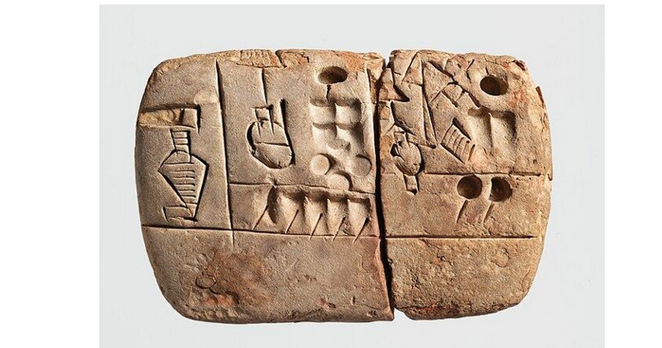
The second part includes both a history of money systems going back to the Sumerians and a survey of non-scarcity-based systems like Greco's; the footnotes in the latter section should direct you to anything you want to know.
https://docs.google.com/document/d/1wROsZOs_DkTYMMSXSInHwgokFo18SuLIEDpbA09tf_k/edit?usp=sharing
@KevinCarson1 @strypey @light @cy
alright, so that is why we talked past each other, because you werent talking about fiat money (usd,eur,yen,..) as we have it today
i will take a look.
But from what you say, its in the name: mutual credit...it requires trust between participants and risks ppl just take and dont give
...requires trust and reputation.
to me, a core property of any money is that it settles debt by paying and anything that doesnt i wouldnt call money - its redefining the term
imho that kind of system seems fine in a local community with high trust were ppl and business know each other, but i dont see it scale.
all the trumps in the world would just go around and take and never give
okay xhecked your links in more depth.
i see its meant to allow closing loops... so in theory it scales.
is there an implementation?
it seems to require a global ledger... either centralized or maybe a blockchain.
are you aware how it compares to the origj al `Ripple` idea?
its definitely an interesting system, but it depends how its implemented 🙂
i am happy to discuss more, because i think its a good idea - it just has nothing to do woth our current fiat system so you could just have said that you are talking about a very different kind of money than the mainstream fiat we use - and we could have skipped all the confusion 😁
also checked your other link and i agree, but also as good as the mutual credit idea is in theory, in practice you might need to figure out trust/reputation and "credit limits" to make this work and protect against free riders who just drive by and take.
bitcoin & co. solve this.
...but you need good answers to make mutual credit work.
a global ledger where ppl can see everyrhing can help but bears the question who has write access to it.
whats your take on how to do it?
i think mutual credit is great and can work within trusted communities that governes and only lets trusted folks participate and excludes those that go deeply negative in their balance, but its also the reason why it cant scale to arbitrarily long supply chains, where ppl dont and cant know each other and no single group should govern - it needs something else here and imho bitcoin is better than fiat.
bitcoin needs positive balance and if everyone involved has that works just like mutual credit (because you cant eat bitcoin and its backed by nothing) ...but introducing the global limit means ppl cant mint new tokens and thus need positive balances. this is how it solved the problem of ppl just going to negatice (freeriding) or creating plenty of sock puppet accounts.
to prevent both attack vectors which trumps and putins will immediately abuse at scale, you need ...
@KevinCarson1 ... identity verification to avoid sock puppets and global visibility into transactions one person did before you interact.
these seem to be unsolvable problems unless you create totalitarian surveillance system.
it can still work in smaller communities, but imho bitcoin/lightning solves it at scale and among anonymous peers with sock puppets.
this is very powerful and i wonder what downsides do you see here despite the problems with mutual credit