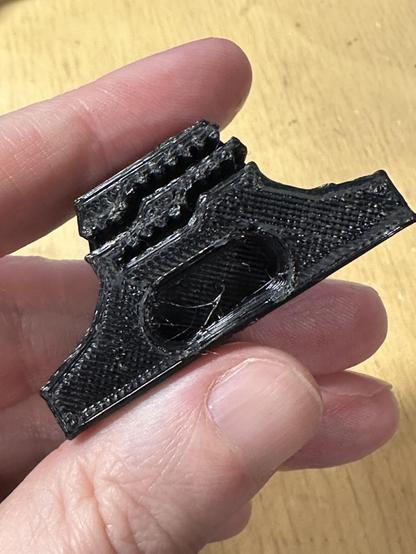
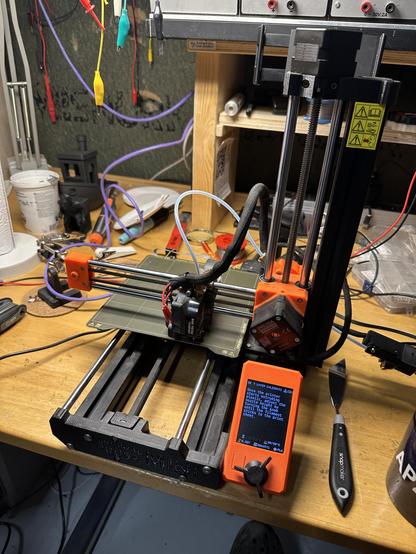
Today's #repair project was a Prusa Mini+ 3D printer. A friend's 14 years old son had indicated interest towards 3D printing and the friend wanted to give him a 3D printer as a birthday present. They're on a tight budget, so they ended up looking for a used one. I recommended a Prusa for their longevity and repairability.

The device was sold as "100% working" but when the friends asked me to check it, I instantly noticed the Y axis had a huge play in it. The part that holds the Y axis belt couldn't hold onto the belt's teeth any more and it was impossible to tighten it correctly. With no time to spare fighting with the seller and thanks to Prusa's mentality of 3D printing as much as possible of the parts, the model for the new part was freely available and it was just a matter for me to download and print a new one. After replacing it, the belt tightened as it should. After factory reset and calibrations later the device was ready to be wrapped for a young lad to just start printing out of the box.

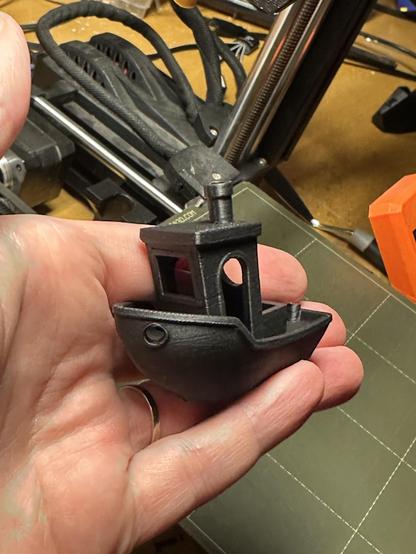
Edit: I was sent a picture today (day later from this post) of the now 15 year old dude's first print, the printer had worked right out of the box!
#3dprinting #prusa #3dprinter

@apzpins Isn't that just awesome?

Hurray for repairability!

@LegoPink This is exactly why I can see myself supporting the brand in the future too. I have also one of theirs.

I also have other brands with less flattering experiences when it comes to how problems are solved.

@apzpins @LegoPink
Although I'm not thrilled with some of the decisions coming out Prusa recently in terms of keeping their machines as open as they were previously, there's no question that they're still the best choice in terms of support, repairability, and modification potential.

Admittedly, you pay a premium for that. But I'd rather spend a little more and have a machine that can be fixed years down the line rather than something cheaper and disposable.

@tomnardi Compared to how strong anti-repairability and proprietary software mentality Bambu labs has for example, I still consider Prusa among the most open ones out there. I also understand the predicament they have with the openness; they do the R&D and then a Chinese company just incorporates all that for free and at the same time the freedom to use the designs is the main feature.

I also love the Prusa's mentality that you can upgrade the existing machines, sometimes to a completely new generation if you want. A lot of mk3's gain a lot of more usable years when upgraded to 3.5 or 3.9.

@apzpins
Oh for sure, they are still more open than 90% of what else is out there.

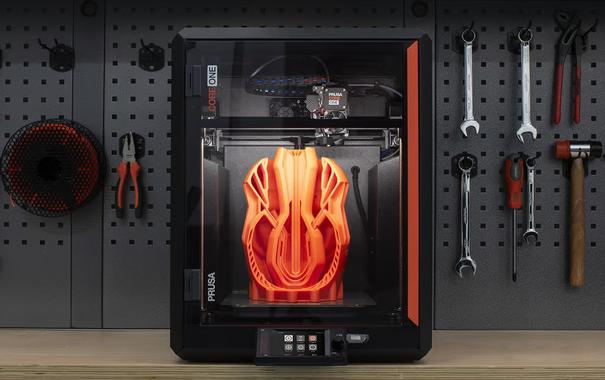
My concern is the pattern of each printer being a little less open than its predecessor. The MK3 is damn near a proper "open hardware" project, while the MK4 and Core One have less of their actual source code out there.

Just makes me wonder what things will look like in 5 or 10 years...

I went on a bit of rant about this when Core One was announced:

https://hackaday.com/2024/11/20/with-core-one-prusas-open-source-hardware-dream-quietly-dies/

With Core ONE, Prusa’s Open Source Hardware Dream Quietly Dies

Yesterday, Prusa Research officially unveiled their next printer, the Core ONE. Going over the features and capabilities of this new machine, it’s clear that Prusa has kept a close eye on the…

Hackaday
@tomnardi This was discussed a lot back when those models came out. I doubt the company pulled this kind of a move lightly, knowing perfectly well the reception. Looking at the Core's license, it's very obvious they've been put under a lot of pressure by the cheap stuff that has graduated from the more traditional hobbyists buy cheap - pro users buy expensive -split to a point where the low effort printers are now good enough for pro user as well. It's a topic where it's easy to project Prusa as 100% closed company after a decade, but I think the real issue is that they'd like to still exist after a decade and the market has put a doubt on that matter.