This is an excellent a-political explainer about why the actual act of Alberta, or any province, "separating" from Canada is a very difficult, maybe impossible, prospect.

It's worth the time (14 minutes) Including if you're not Canadian and want a relatively quick summary of some of the very Canadian history and processes.
#Canada #Separatism #Alberta #USA #CanPoli #CdnPoli #TheAmericanFascist #USA #CBC
https://www.cbc.ca/player/play/video/9.7136155

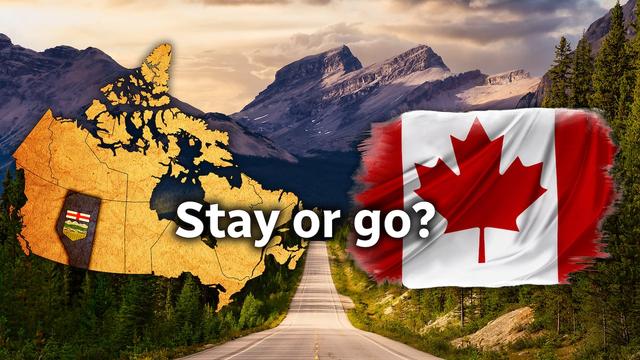
Why Alberta’s separation from Canada is almost impossible | About That

Alberta's separatist sentiment has resurged in recent months amid the Trump administration's comments about the province's future, coupled with economic and political tensions with the Canadian government. Andrew Chang explains what it would actually take to grant sovereignty to a Canadian province, and why it's so difficult to achieve. Images provided by The Canadian Press, Reuters, Adobe Stock and Getty Images

CBC
@chris When Canada became a country, the first nation treaties signed with the crown were transfered to Canada who has to honour them. One would assume that a separating Alberta would also have to inherit and honour the portions of the treaties that pertain to Alberta. I don't think this would be a big issue, and Donald J Smoth would likely even promise better trearment of first nations under separate AB to gain votes.
@jfmezei this is all part of the video! It's well done. And makes that point that while all of this is technically possible, the actual likelihood of everything lining up resulting in separation is very slim in indeed. The indigenous question in particular I think is a show stopper because the treaties were signed with the Crown before Alberta was even a province.
@chris @jfmezei If Alberta attempts to separate they would have to negotiate with the First Nations treaty holders. That would be a very interesting negotiation as the separatists have nothing but ignorance and outrage to bargain with.

@pinhman @chris Not necessarily. Alberta can simply take on existing first nation treaties and honour the portions that pertain to its territory.

In fact, it would be likely that Alberta would inherit all federal govt laws at time of separation and then decide what to do with them over time.

What is not automatic are international trade deals between Canada and other countries. Can't be just transfered to AB without OK from the other country.

@jfmezei @pinhman i dont think First Nations see that as that simple at all.

@chris @pinhman Did first nations object to Canada repatriating constitition and the treaties effectively becoming between Canada and first nations instead of UK and first nations?

Same would happen when portions related to Alberta are transfered to the new country of Alberta. Now, if Alberta becomes a US state, this become more problematic because lacking the autonomy of a free standing country, it can't necessarily honour those treaties.

@jfmezei @pinhman the question is much more clear now. They believe that the law is clear. They did not make treaties with Canada or the UK governments but the Crown itself.

@chris @pinhman You need to remember that "crown" referes to a neutral owner. And its management was passed from UL to Canadian government in 1931. So first nations negotiate with Canadian government , not the Queen/King.

So it is quite possible that management of those treaties is simply devolved to Alberta who would then engage to honour them.

Today, when you step into first nations reserve, you don't go through UK customs.

@jfmezei @pinhman with respect, I think First Nations disagree. As far as they are concerned, they decide who they talk to because they are the original signers of the treaty, not the Canadian gov.