 Eugene

Whoops, #ImageMagick was updated in the #FreeBSD repos 
Sadly, it is a #slopware version — time to make "pkg lock".
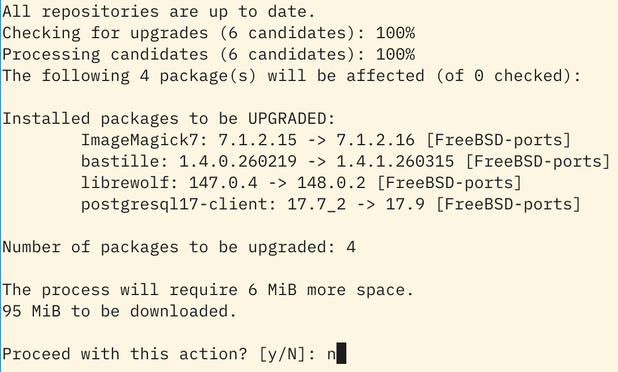
Whoops, #ImageMagick was updated in the #FreeBSD repos
Sadly, it is a #slopware version — time to make "pkg lock".
@dvl Ah, then I misunderstood your toot — English is not my first language.
#Slopware is a term for software made with use of LLM(s). And I'm trying to avoid possible decline in quality of such software — while it may be without critical bugs in the next releases, I'm afraid of stupidly stupid bugs which will broke my habits and routines in the future. Because I already saw decline in quality like this with Windows 11 updates, or with Cloudflare outages, caused by "AI" "programming".
But the main problem for me lies not in the future bugs — people could make dangerous bugs too. The much more important thing for me — the intent of programmer who made some changes. If programmer make something fully with it's own mind — then I presume that this programmer had some fun from making things and I fully understand this intent: "have fun and make something useful meanwhile".
But, if programmer used #LLM while making a commits to #opensource program — I become extremely suspicious — why it was done this way? Programmer doesn't care about modified software? Or programmer is a "passer-by commiter" and don't want to look into the codebase at a necessary level? Or mentality "move fast and break things" deeply rooted in his mind? All of these are precursors for badly made software with bad UI and UX, as I think.
Obviously I'm a big fan of "move slow and make things" mentality and don't like programs made with "make fast and break things" mentality, which is the main reason to use LLMs in programming, as I see (e.g. in corporate world) 
 Dan Langille