
In the past I've mentioned that my wife (of 40 years) suffers from Functional Neurological Disorder.... now in a meeting of two aspects of my private life, my friend's daughter (who is a GP & blogger) has written an excellent guide to FND for those unaware or only vaguely aware, of the condition (which I usually describe as a software problem not a hardware one).

If you're interested in knowing more about FND then I can heartily recommend Charlotte's blog.

#FND #health
https://thehealthandhealingnarrative.com/2026/03/09/what-is-functional-neurological-disorder/
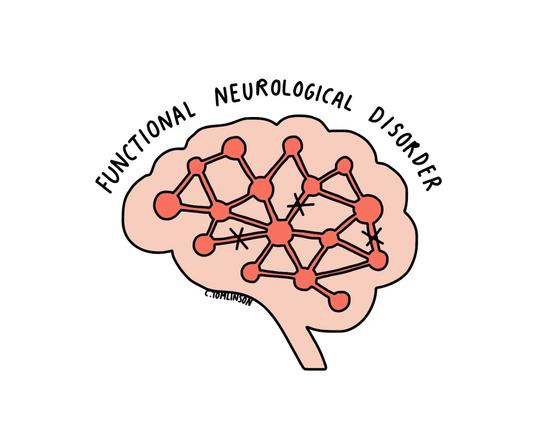
Understanding Functional Neurological Disorder (FND): A Complete Guide

Functional Neurological Disorder (FND) is a common neurological condition — yet many people have never even heard of it. Even more concerning, it is still widely misunderstood. I was reminded of th…

The Health and Healing Narrative
@ChrisMayLA6 Unfortunately blog page is behind "agree to share your habits with 127 our partners and thousands more down the chain - or go away" moniker. Is this avalable in some cleaner corner of teh nets?

@ohir

err... OK, I'm a subscriber so I didn't see that, as far as I was aware it was free-to-view

@ChrisMayLA6 It is "free" as it does not call for money. Site wants an "informed consent" to sell reader's data to 127 "partners". Likely they do not even bother to ask if they see non-EU address coming.

PS. Readable with js-off and trackers cut off by the Privacy Badger. Thank you.

@ChrisMayLA6
thanks for sharing that, good to notice it 's no longer being discarded as "all in yr head", always a strange dismissal coming from braincentered medics anyways, I was wondering, are you aware of any research into overlap with hyperesthesia, emfsensitivity, adhd, autism ...

@Beatpoet13

Sorry, no; have been too busy dealing with the effects to track down further research....

@ChrisMayLA6 ok best of courage to ya ...
@Beatpoet13 @ChrisMayLA6 three of those things are real, EMF sensitivity? Not so much I'm afraid. It makes zero biological or physical sense. Electromagnetism is literally everywhere.
https://pubmed.ncbi.nlm.nih.gov/15784787/
Electromagnetic hypersensitivity: a systematic review of provocation studies - PubMed

The symptoms described by "electromagnetic hypersensitivity" sufferers can be severe and are sometimes disabling. However, it has proved difficult to show under blind conditions that exposure to EMF can trigger these symptoms. This suggests that "electromagnetic hypersensitivity" is unrelated to the …

PubMed
@noodlemaz @ChrisMayLA6 claiming emf sensitivity doesn't make sense because emf are "evrywhere" is a rather nonsensical position to take, so we 're not sensitive to water or airpressure either ..?
as heredetary nomads a sense of emf direction at least would be evolutionarily logical, while the extreme surge in usage of emf emitting devices does account for people getting overwhelmed by them, meanwhile, I don't care for people trying to deny me my lived experiences, emf sensitivity exists ...
@ChrisMayLA6 very interesting and clearly written article. I know about the expert work neurologists undertake, but, sadly, there are too few of them and often seem to specialise in the more 'mainstream' conditions. It can be a very fragmented support network. Hoping you and your wife have some support - and understanding (the latter being so important imho).

@SCG

Support is non-specialised (other than counselling), but we're managing - not least of all because we had a lift put in the house early on & that means my wife can still use both floors (albeit via wheelchair)

@ChrisMayLA6

Thank you for sharing that. I have a clise family member recently diagnosed with FND and am at the stage of trying to find out more about it, so this was very timely. Thank you

@ChrisMayLA6 @unchartedworlds i wanna be very cautious and respectful in offering my perspective:

im a former microbiology student who did some work in governmental health policy. i advise patients to be on high alert if they receive this dx. in the public health system (not the private one), fnd is a common dx because it saves money. dont test, dont find, dont treat.

fnd is common because public health does not want to find the underlying biomechanisms behind debilitating symptoms, esp in female patients. ive seen patients with cancer, autoimmune diseases, connective tissue diseases, spinal cord injuries, and serious nutritional deficiencies have their access to care taken away because someone gave up, shrugged, and called them functional. once its in your chart, its not coming out.

scientists will go out of their way to find the cellular mechanisms in patients who have been labeled functional. their papers get published and theyre beautiful to read. the researchers advocate for patients and ask physicians to do comprehensive workups instead of settling for "functional".

when i caught up on the latest literature on fnd (by researchers who believe that it is a legitimate disorder), i started to understand why other researchers look down on those authors. im not saying one is right and the other is wrong, just that i have empathy for the cellular biologists now.

please be aware that something very dangerous is going on, bigger than "unexplained symptoms." research teaches you to be curious, public health teaches you to cut costs.

@ChrisMayLA6 also, i have zero desire to attack or criticize anyone, ppl are free to ignore me. but if anyone has qs, lmk. its a really interesting subject in the realm of medical history.

@pastelexuvia @unchartedworlds

Hmmm.... maybe so; but my wife has all had an operation for a shunt to treat one symptom that did some but not much good.... but equally, as you say once the diagnosis was confirmed Neurology were happy to sign us off as there was nothing more they believed they could do (saving money, as you point out)

@ChrisMayLA6 a shunt is a big step. im sorry, that must suck for both of you /: (the ongoing symptoms)

@pastelexuvia

Yes, but it did alleviate one small aspect....so not a complete waste of time

@ChrisMayLA6 cool. if you want any advice, lmk. it is possible to get the dx taken off her chart and reduce the implicit bias that tends to dog patients for the rest of their care.

@pastelexuvia

Interestingly, its helped us because I advocate on her behalf when we interact with the heart service, its given me a ground on which to base my interventions - which has actually worked OK for us