Something of a rant, subject: "nation".

A year or so ago I saw a US-citizen referring to "EU-nations", to which I objected to. Later I've seen similar usage in US media several times.

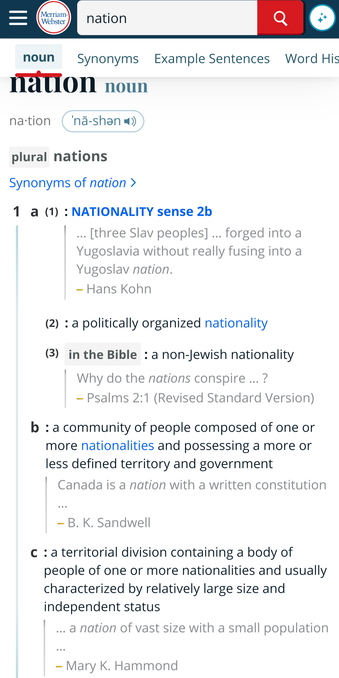
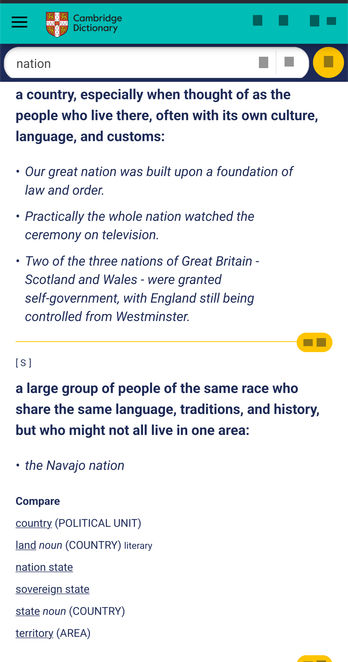
Now did a fast googling and noted that Cambridge (UK) and Webster (US) give completely opposite meanings for the word.

USA = Polity, and its subjects.
UK = Culture, which may have a polity, or representation in one.

½
#rant #nation #language #colonialism

Short historical summary: present states in Europe were often formed by multinational empires fracturing into nation-states. Alternatively, a polity occupying the same area as a nation got turned into a nation-state with the advent of democracy.

Meanwhile USA as a settler-colony needed to deny these associations...

¾

..so we've a situation where the indigenous people are Indians and the colonists Americans¹; the "Indians" had "tribes" and the "Americans" had "a nation".

In essence what we have is a language which supports colonialism on an intuitive level. Of course America belongs to the Americans!

Further, calling the subjects and the citizens of USA..

_
¹ I did some minor research and stopped to my satisfaction when I saw the phrase from 1970s: something akin to "Indians retired before Americans".

..a nation meant that you could also deny demarcations within the polity. You could even take agency from minorities ("nation watched/demanded/etc") without having to concern yourself that "Indians" and women only got de jure citizenship in the 1920s, and POCs de facto (including "Indians", and also women) during 1960s.

This also in present day... "nation demands expulsion on woke and coloured"; "America is a white nation", and all that. Also indirectly: "American values".

5/5

But in denying domestically the existence of nations without polity, you make it difficult to talk of them in an international setting. When I first heard "EU-nation" I assumed this to exist in opposition to EU-states. So baskis, the sami, etc.

As an appropos of nothing, I've thought also of Pratchett's NATION: a story about refugees creating a common culture. It was translated to Finnish (perhaps with Webster's) as "Valtio" meaning "THE STATE", which I feel missed the point.

Addendum without authority:

NATION = people with shared culture. May or may not have a controlling interest in one or several states.
STATE = a polity, usually in control of some land. Not always sovereign.¹
COUNTRY = area of land. May be independent or have a nation, but can also be uninhabited.
EMPIRE, (CON)FEDERATION = a group of states²

_
¹ But not always: SMO of Malta, governments in exile, etc.
² Sometimes silly: Germany is a federation of states in a continental confederation.

@iju Väsymykseen vedoten vastaan suomeksi.
Joo, amerikkalaisilla on se harha et one great nation ja siirtolaistaustat ja juuret on sellanen glorifioitu tarina. Esim et kuinka suuri osa on sitä ja tätä ja sit haetaan sen genetiikan perusteella kulttuurista sisältöä omaan elämään.

Euroopassa kai on vaan niin paljon kasuaalimpaa et on eri maita ja valtioita ja eri paikoissa on eri kieliä ja eri alueita ja historiaa. Barcelonassa ei puhuta espanjaa vaan kataloniaa jne.

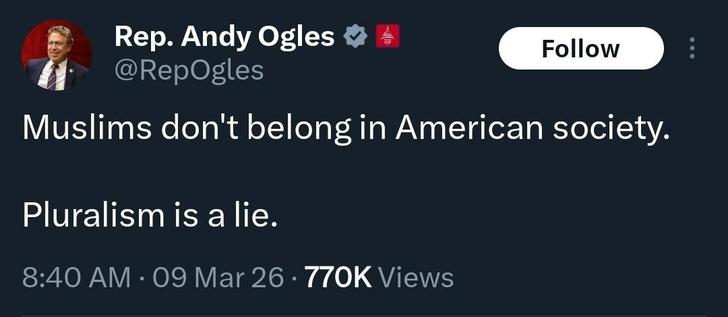
And this came out just to reinforce my point: