 Spaceflight 🚀
🔭 #PlanetNine is likely to be the fifth largest 📏 #planet 🪐 in the #SolarSystem 🌌 https://www.independent.co.uk/space/nine-planet-solar-system-b2500389.html

An advanced #extraterrestrial civilization could potentially detect 🔭 signs of life on Earth. But the #scale of the #universe 🌌 is incredibly vast. Even at the speed of light, signals 📶 from #Earth 🌏 have only reached a very small portion of our #galaxy. https://newspaceeconomy.ca/2023/07/15/can-extraterrestrial-life-detect-us/

Any civilisation 👽 reading our messages could be billions of years ahead of humans. “If so they will be vastly more powerful and may not see us as any more valuable than we see bacteria” https://www.theguardian.com/science/2016/sep/23/stephen-hawking-warns-against-seeking-out-aliens-in-new-film
👽 “Look at the mess we made when #Covid hit. We’d be like headless chickens 🐓. We cannot afford to be ill-prepared, #scientifically, #socially, and #politically rudderless, for an event that could happen at any time and which we cannot afford to mismanage.” https://www.theguardian.com/science/2022/dec/29/if-aliens-contact-humanity-who-decides-what-we-do-next
Number of #planets 🪐 discovered outside the #SolarSystem (5824) https://ourworldindata.org/grapher/cumulative-exoplanets-by-method

Given the currently 5983 confirmed #planets 🪐 https://exoplanetarchive.ipac.caltech.edu, the 100–400 billion stars in the #MilkyWay 🌌 https://en.wikipedia.org/wiki/Milky_Way and 200 billion to 2 trillion #galaxies https://en.wikipedia.org/wiki/Galaxy in the observable 🔭 #universe, do you expect #intelligent life exists
In the Universe
In the Milky Way
In our Solar System
I know that I know nothing
Poll ended at .
Our so-called #radio bubble, which streams out in all directions—north and south, east and west—thus measures just 200 light years in diameter. That’s a flyspeck in a #galaxy 🌌 that measures 100,000 light years 📏 across and a #universe that is a staggering 94 billion light years https://time.com/6242921/why-extraterrestrials-havent-contacted-earth

#JWST wouldn't be able to detect 🔭 faraway planets as small as #Earth or as close to their parent #stars, because of the glare ☀️ https://www.bbc.com/news/science-environment-66950930

Over 6,000 #exoplanets 🪐 have been found. #Pandora 🔭 will study a star system for up to 24 hours 🕕 at a time to determine if the conditions for #life exist. Pandora will fly for the relative pocket-change amount of $20 million 💵 https://time.com/7335787/pandora-space-telescope-exoplanet-life/
#NASA’s Pandora Mission https://science.nasa.gov/mission/pandora
Launch 🚀 2026 https://nextspaceflight.com/launches/details/8026/

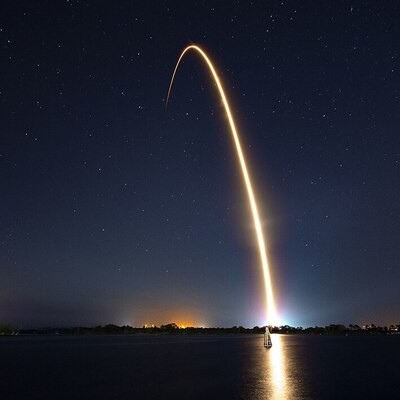
On Jan. 11, the #Pandora SmallSat launched 🚀 atop a #SpaceX rocket. Science observations 🔭 start in February, with the first users being the core working groups across the #UnitedStates and #Canada. Pandora’s main goal is to focus on 20 #exoplanet-host star systems for a long period to disentangle signals coming from exoplanets from the signals coming from their stars https://astro.cornell.edu/news/pandora-satellite-launches-exoplanet-observation
Pandora satellite launches for exoplanet observation | Department of Astronomy
Tasked with studying exoplanet systems around small stars, the refrigerator-sized satellite is the first in NASA’s Astrophysics Pioneers program – small-scale missions designed to train early-career scientists, including Trevor Foote, Ph.D. ’24, a former member of the research group led by faculty member Nikole Lewis.