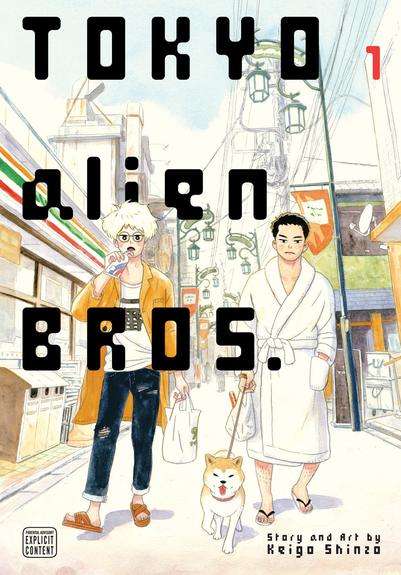
#MangaMonday 55 “Tokyo Alien Bros.” by Keigo Shinzo

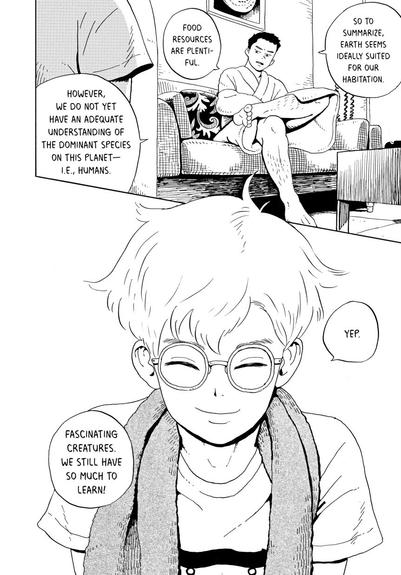
Fuyunosuke Tanaka is a college student living his best life in Tokyo. He’s been there a year when his older brother, Natsutaro, shows up to check on him. He’s concerned that Fuyunosuke has been neglecting his job, scouting the earth for colonization.

This is a fish-out-of-water story, with Natsutaro out of his depth and Fuyunosuke only somewhat less so, but making up for it with his positive attitude. It’s a fun slice-of-life, right up to the end of volume one which leaves us on an ominous cliffhanger.

It bears mentioning that there are some adult situations. It’s not the focus, but the #manga leans hard into it in the first chapter, as if to set the bar.

Complete with one of three volumes available in English (Viz.) The next volume drops tomorrow. A Japanese live-action drama ran in 2018. I recommended Shinzo’s “Hirayasumi” in MM09.
#TokyoAlienBros

#MangaMonday 56 “Shadows House” by Somato

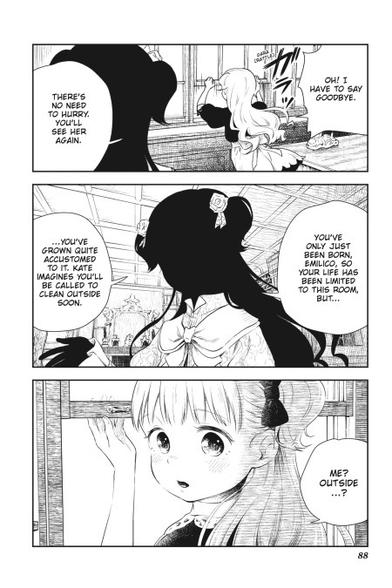
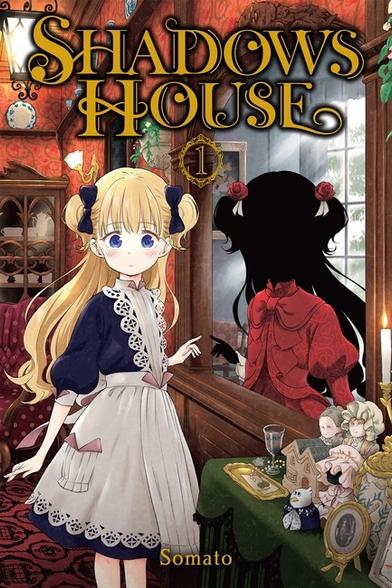
Emilico is a Living Doll, created to serve her young Shadow mistress, Kate. Shadows emit soot when feeling negative emotions, so much of Kate’s time is spent cleaning. Once Kate debuts into Shadow society, one of Emilico’s duties will be to act as Kate’s “face”—expressing emotions on her behalf—since Shadows can only be seen as silhouettes, even by other Shadows.

This is an Age of Steam Fantasy #manga that immediately hits us with questions and then reveals answers (and more questions) slowly. The cast also gradually expands, with each having their own distinctive looks, personalities, and shifting allegiances. The story almost incidentally describes an oppressive system and how that system is bad for both the oppressed and the oppressors.

Ongoing with eight of 19 volumes in English (Yen Press.) An #anime ran for two seasons in 2021-22 (before all but the first of the English editions were released.)

#ShadowsHouse

#MangaMonday 57 “Island in a Puddle” by Kei Sanbe

I’m not sure if “Assassin and child swap bodies” counts as a sub-genre, but it’s weird that there are at least two. #IslandInAPuddle predates “J⇔M” (See MM48) and doesn’t have its humor or action film vibe, opting for a more grounded feel.

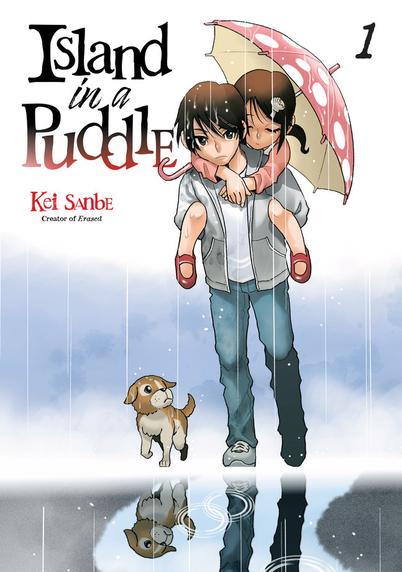
Minato Myojin (Grade 5) and his little sister Nagisa have a difficult life. Their policeman father was killed in the line of duty and their mother disappears for days at a time, leaving them to look after themselves.

Lightning strikes and Minato suddenly finds himself in a grownup body with a corpse at his feet. Meanwhile, professional killer “Kuromatsu” finds himself in the body of a child, with an even younger child at his side. He quickly realizes the advantage of the situation—the perfect disguise—if only he can get back the money he had with him.

This is a nice little action thriller by the author of “Erased” that’s complete in five volumes (all available digitally from Kodansha.)

#Manga

#MangaMonday 58 “They Were 11” by Moto Hagio

This reads like a seventies space opera, unsurprisingly since it was originally published in 1975.

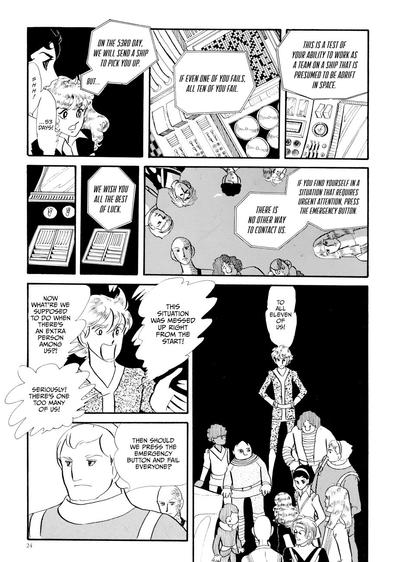
The story revolves around a group of ten candidates for a space academy doing a final practical exam aboard a drifting space ship, only to realize there are eleven of them. Suspicions run high, but they pass or fail as a group. There’s a hidden connection to the past and a subplot about gender identity. (I imagine the last would be written a little differently today, but I think it holds up fairly well.)

It’s a short story, and in the current digital release (Denpa) it has been paired with its sequel, “Horizon of the East, Eternity of the West,” to fill out a standard size volume.

This is an early work by Hagio, an extremely influential #manga creator and a certified Person of Cultural Merit. A ninety minute #anime adaptation was released in 1986. That even got an English dub and a DVD rerelease, but it is hard to find now.

#TheyWere11

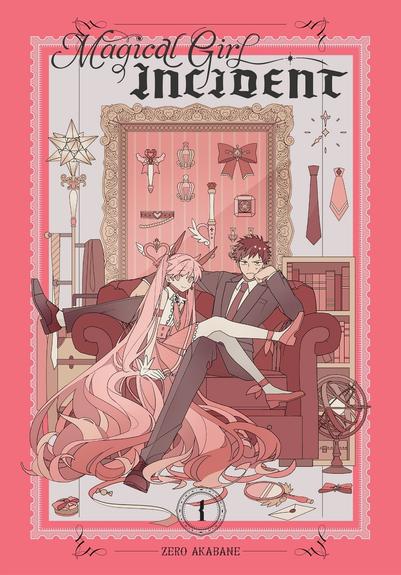
#MangaMonday 59 “Magical Girl Incident” by Zero Akabane

We’ve seen deconstructions of the magical girl pretty much since “Sailor Moon” codified it in its modern form. There’s even a subgenre of boys or men transforming into magical girls. At a glance this #manga is one of those, with an overworked salaryman discovering he can transform into a cute magical girl.

At its heart, #MagicalGirlIncident is a REconstruction of the magical girl. It actually plays things pretty straightforward. Unlike most of these type of stories, the gender bending isn’t a joke but is a result of the world’s magic system. Magic itself is a nice balance of being only partially understood, even by experts.

This is a three-volume story with all available in English (Yen Press.) It appears to be the first original manga from Akabane, who has previously contributed chapters to anthology volumes for established properties.

#MangaMonday 60 “Dragon and Chameleon” by Ryo Ishiyama

Garyo Hanagami is at the top of the #manga world. His series “Dragon Land” is a bestseller with an anime adaptation. Shinobu Miyama is a rookie assistant whose talent is in mimicking the style of others. An accident causes them to swap bodies. Now Garyo has to climb his way back to the top, competing against “himself.”

There’s a few manga about making manga, but this is the first I’ve seen that’s both about, and in the style of, the big “Weekly Shonen Jump” titles. It’s a tall order, since it has to manage art and a story on par. Fortunately, Ishiyama delivers with great images—sometimes giving us splash page worthy art in a single panel—and an evolving plot. Garyo finds that he needs to adapt now that “he” is already dominating the market, and Miyama discovers he can’t sit still at the top of the heap.

Ongoing with three of six volumes available in English (Square Enix.)

#DragonAndChameleon

#MangaMonthly 61 “Monthly Girls’ Nozaki-Kun” by Izumi Tsubaki

High School girl Chiyo Sakura is a fan of Utemarou Nozaki, a boy from another class. When she tries to confess her feelings to him, he gives her an autograph. Turns out he is the creator of a popular monthly girls’ manga and assumed she was a fan of his work. She’s soon roped into working as his assistant.

This is a gag #manga in the 4-panel format. It’s partially a high school comedy, partially a workplace comedy, and partially a sendup of manga tropes. Often it blurs the lines between them; several of Nozaki’s friends work as his assistants and he bases some of the characters in his manga on his schoolmates (invariably gender-swapped.) The load-bearing joke is that Nozaki is clueless about love, although that doesn’t stop his acquaintances from making progress.

Ongoing with 15 of 16 volumes available in English (Square Enix.) The next drops in late July. A 12-episode #anime aired in 2014.

#MonthlyGirlsNozakiKun

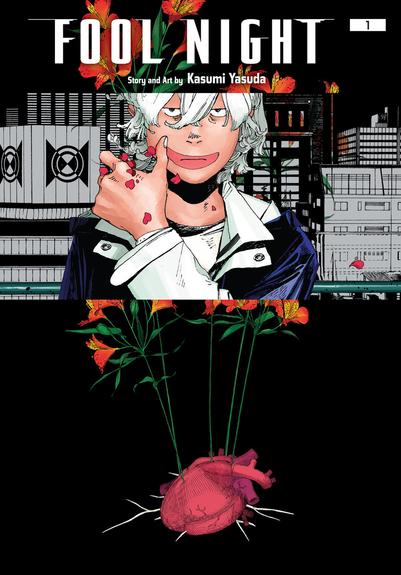
#MangaMonday 62 “Fool Night” by Kasumi Yasuda

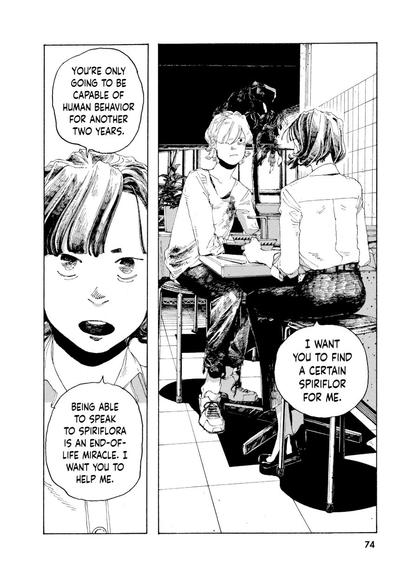
Toshiro Kamiya is desperately poor and his mother is dangerously disturbed. To pay for her treatment, he wrecks his health and volunteers for a procedure. He’s immediately rolled for the bonus; now he’s poor and has months left to live as a human.

For a century, thick clouds have blotted out the sun. Winter never ends and most natural plants have died. Science has created a solution; special seeds that will turn human bodies into hardy plants over a few years. Only the terminally ill are allowed to volunteer, and they are given a government bonus so they can live their remaining time in relative luxury before becoming ‘spiriflora.’

For some reason—possibly because of the industrial runoff he ingested to qualify for the procedure—Toshiro can understand the ‘language’ of spiriflora. This is a talent that he might be able to earn some money with.

Ongoing with four of 10 volumes in English (Viz.)

#Manga #FoolNight

#MangaMonday 63 “Otonari Complex” by Saku Nonomura

Makoto is a boy who sometimes crossdresses. His neighbor Akira is a tomboy. Though frequently mistaken for a couple, they’ve been friends since childhood. But lately Makoto has been thinking he’d like to be more.

This #manga is marketed under “#LGBT+ Topics,” which… it is if you squint. Makoto and Akira are a boy/girl pair of childhood friends obviously destined to be together in the end. Makoto’s crossdressing is treated like a hobby.

Akira’s is the more interesting story. As a kid she was bullied for being tall and boyish. Unfortunately, she internalized that to the point of considering herself unlovable. She doesn’t appear to have ever considered a romantic relationship and has a way to go to meet Makoto’s feelings.

Complete with three of five volumes in English (Seven Seas.) The fourth drops tomorrow. A J-Drama adaptation aired this year.

#OtonariComplex

#MangaMonday 64 “Tropic of the Sea” by Satoshi Kon

Before moving to #anime Kon worked as a #manga artist. This is his first serialized story, and only complete one. It’s a more straightforward than most of his films (closer to “Tokyo Godfathers” than “Perfect Blue.”)

Yosuke Yashiro’s family maintain a shrine near a seaside village. They are tasked with keeping a “Mermaid’s Egg” for sixty years, then returning it to the sea. In return the nearby seas remain calm and bountiful. But times change.

Yosuke’s father, the 23rd head priest, regards the egg as so much superstition and is trying to use it to help turn the small town into a tourist destination. The grandfather is aghast at what his son is up to. Yosuke… is worried about his entrance exams.

There’s a supernatural story and a fair bit of action, but also generational tensions, the pull of city life, and the tension of development in rural areas.

Complete English volume available digitally (Kodansha.)

#TropicOfTheSea

#MangaMonday 65 “Old Boy” by Garon Tsuchiya (story) and Nobuaki Minegishi (art)

Shinichi Goto has been imprisoned in a room with only a TV for company. After ten years he wakes up outside, in a park. Now he must figure out who did this to him, and why.

If this sounds familiar, it’s because this is the #manga the movie “Oldboy” (올드보이) was based on. The movie is excellent in its own right but made some significant changes in adapting eight volumes of manga into a two hour #film. The movie’s protagonist, Oh Dae-su, is a different character than the manga’s more thoughtful Goto. The ending is also very different, so one won’t spoil you on the other.

They both contain sex and violence, but the movie leans heavily into the latter while the manga is more of a psychological thriller in the noir vein.

It originally ran in the late nineties. Dark Horse published an English version in 2006-7. They later released a digital version, but it isn’t on their site as I write this.

#OldBoy

#MangaMonday 66 “Grand Blue Dreaming” by Kenji Inoue (story) and Kimitake Yoshioka (art)

Iori Kitahara is starting college and rooming at his uncle’s place, which is also a dive shop. He’s immediately inducted into the college’s bacchanalian scuba club despite not being able to swim. This leads to him making a bad impression on his cousin, who has blossomed since he last saw her 10 years ago.

This is adult-oriented comedy #manga, but restrained in its presentation. E.g., the scuba club guys get naked at the drop of a hat, but they’re just flashing censor bars. (The women never get undressed enough to need them.) Sex is a frequent objective, but an elusive one. There’s bouts of cartoonish violence and copious amounts of drinking.

They also go diving occasionally, and it’s the one thing that’s treated completely seriously.

Ongoing with 22 of 24 volumes in English (Kodansha.) It got a 12 episode #anime in 2018, with a second season (finally) due July 8th.

#GrandBlueDreaming

#MangaMonday 67 “Nichijou” and “Helvetica Standard” by Keiichi Arawi

If Monty Python made a slice-of-life #manga, it probably would look like “Nichijou” (Everyday Life.) It follows an ensemble cast of high school students, teachers, robots, etc. as they deal with (mostly) everyday problems that take an absurd direction. Despite the bizarre setting, you’ll find the characters very relatable. Ongoing (at a reduced pace lately) with 11 volumes in English (Kodansha.)

“Helvetica Standard” is both a manga in the #Nichijou world, and a collection of Arawi’s shorter works and illustrations, some of which feature Nichijou characters. It appears to be complete, with the two volumes subtitled “Bold” and “Italic” in English. It seems to only have a print edition (Kodansha.)

An excellent #anime titled “Nichijou,” but drawing from both works, was released in 2011. It arranged things to give a through-line centered around the robot girl, Nano.

#MangaMonday 68 "CITY" by Keiichi Arawi

A Keiichi Arawi #manga with an ensemble cast. Naturally, it has a lot in common with "Nichijou" (see last week) but there are also differences. The cast skews older—unsurprisingly—and it is somewhat more grounded (compared to #Nichijou, admittedly.) It also has more in the way of plot points.

An underlying theme is the interconnectedness of everyone. This becomes clearer in later volumes when we get things like the big race and the election. However, a great example happens in volume four, when various people we've seen previously turn up at a garden party. Arawi gives us a sprawling spread illustration of everyone interacting, which is impressive in itself but he then repeats it three more times with each spread acting as a panel, or a collage of panels.

Ongoing with 13 of 14 volumes in English (Vertical/Kodansha.) An #anime just started airing, but looks promising (I can't wait to see how they handle the four-spread sequence.)

#MangaMonday 69 "Grass" by Keum Suk Gendry-Kim

Granny Lee Ok-Sun (sometimes rendered Okseon Lee) has "never known happiness." She grew up in poverty in Busan, Korea. At 15 she was abducted into serving as a 'comfort woman' (a euphemism for military sexual slavery) for the occupying Japanese army. At war's end she wasn't so much "liberated" as "abandoned", so she managed a life in China before finding her way to a rest home for former 'comfort women' in South Korea and advocating for restitution from Japan.

Gendry-Kim tells Lee's story in this powerful #manhwa. She manages the difficult task of conveying some horrific events in a graphic format without being exploitive. #Grass jumps around a bit in its timeline, which feels appropriate for what is essentially a memoir, so a second reading may be rewarding.

Complete volume available in English (Drawn & Quarterly.) It has numerous accolades, including the 2020 Harvey award for Best International Book.

#MangaMonday 70 “The Fragrant Flower Blooms With Dignity” by Saka Mikami

He’s a gentle giant with resting thug face who goes to an infamous high school. She’s a tiny scholarship student from the tony school next door. They fall in love.

This romance #manga is not doing anything new (his family runs a patîsserie, naturally) but it does it well. There’s zero doubt that the pair will get together—no harem hijinks here—and then it becomes a matter of winning over his friends to the fact. Then her friends. Then reconciling the friend sets with each other; the romantic drama in later chapters becomes if/how the friends will sort out. It’s a comforting world where almost everyone is good at heart and most problems can be sorted out by talking (and, usually, apologizing.)

Ongoing with seven of 17 volumes in English (Kodansha.) An #anime is currently airing in Japan, but Netflix has the streaming rights and is sitting on it until September.

#TheFragrantFlowerBloomsWithDignity

#MangaMonday 71 “Dra-Q” by Chiyo

Pako is a high school delinquent. Amelie is a vampire. They fall in love. He makes out with her severed head.

Alas, this sexy, funny, gory #manga only got three volumes (Kodansha) so any more details will spoil a large percentage of it. The story is a bit rushed, but it wraps up well enough. It’s just obvious that, going by the barely introduced characters, we could have easily gotten several more volumes.

Chiyo is no slouch at drawing memorable characters, but the backgrounds really stand out here. They use photographic screentones, which is not uncommon these days. What is unusual is the extent and the framing. Almost every background that’s shown started as a photograph, and a lot of them are unusual angles (bird’s-eye view, worm’s-eye view, etc.) There’s some image manipulation—the moon is shown heart-shaped a few times—but photoshop can only do so much. Someone had to get into odd places to get some of these.

#DraQ

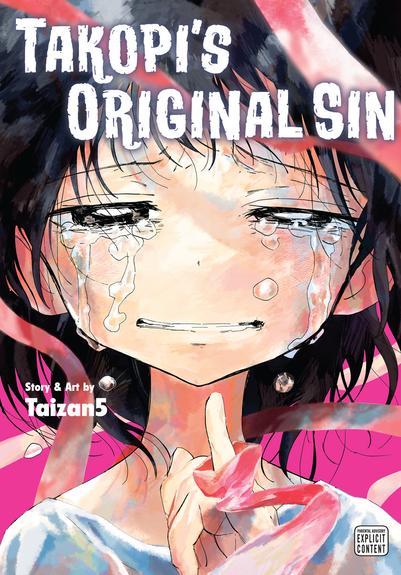
#MangaMonday 72 "Takopi's Original Sin" by Taizan5

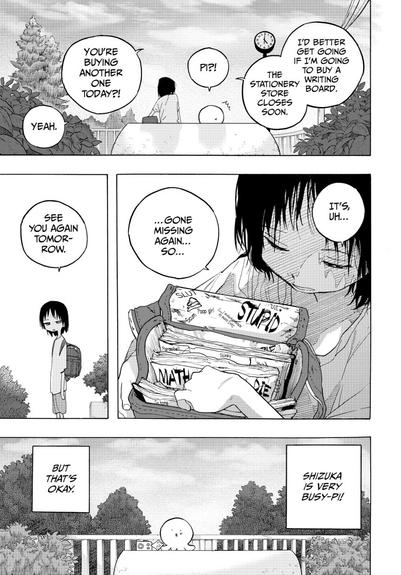
NUEINUkf is a Happian from Planet Happy who has come to earth on a mission to spread happiness. It meets a fourth grade girl named Shizuka who dubs it "Takopi." Takopi tries to make Shizuka happy by showing her its Happy Gadgets, but Shizuka still doesn't seem happy at all.

This #manga sports a "Parental Advisory" for good reason. It gets very dark, very quickly. The real subject is the perpetuation of the cycle of violence and there are plenty of examples of that, including parents mistreating their children in various ways, children bullying each other, and even #suicide. It's a powerful tale with an ending that's a bit of a thinker.

The art really sells the story, with Takopi drawn as the living cartoon it is, but everyone else in looser, sketchy lines.

An single omnibus volume is available in English (Viz.) A short but excellent #anime adaptation aired this season.

#TakopisOriginalSin

#MangaMonday 73 “The Ship of Theseus” by Toshiya Higashimoto

Shin Tamura grew up haunted by the fact that his father, a former police officer, has been on death row for an elementary school massacre that happened just before he was born. His father has maintained his innocence, but his mother doesn’t doubt his guilt. When Shin visits the site of the incident in preparation for confronting his father, he’s engulfed in a white mist and finds himself back in 1989—several months before it took place.

This is a #mystery #manga with a time travel twist. Shin’s actions in the past alter it both directly and as people react to his actions; meaning the basic facts of the mystery can (and do) change. Furthermore, as he learns upon returning, those actions have consequences in the present and the intervening years.

All chapters are available digitally in English on Kodansha’s K-Manga: https://kmanga.kodansha.com/title/10590

#TheShipOfTheseus

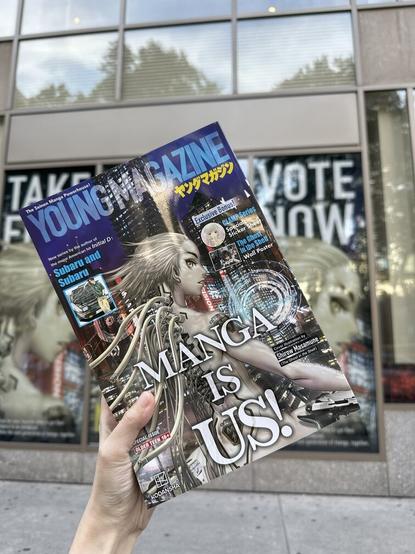
#MangaMonday 73 “Young Magazine USA” by Various Artists

I try to read an entire work (at least the official English releases) before recommending it, but this week is a little different. It’s a single volume anthology #manga containing twenty chapters—over 1,000 pages—and it’s free!

Young Magazine is an established brand in Japan; they ran “Akira” and “Initial D” among others. Now they’ve released an English language sampler so new readers can get a taste of their stories and vote on the ones they want to see more of. I’m about halfway through, and I’m impressed at the variety of offerings (from #SciFi to #Horror to #LGBT) as well as the quality.

If you were at Anime NYC this weekend, or live near one of the 17 US Kinokuniya stores, you might be lucky enough to get your hands on a physical copy. For the rest of us it’s available free for the remainder of 2025 at https://young-magazine-usa.com (or pretty much any digital outlet that offers Kodansha products.)

#YoungMagazineUSA

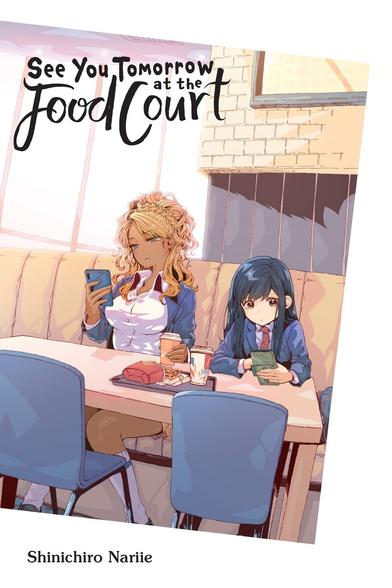
#MangaMonday 74 “See you Tomorrow at the Food Court” by Shinichiro Nariie

Wada and Yamamoto are two high school girls who hang out together after school in the food court of a local mall. That’s pretty much it.

This is slice-of-life sliced very finely, but still manages to be very engaging. Their personalities don’t line up with their appearances, with the flashy Yamamoto being the reserved one while studious-looking Wada is a bundle of energy and complaints. They also play against manga tropes, e.g. the slightly built Wada is comfortable with her body while the curvy Yamamoto is sensitive about hers.

The biggest downside of this #manga is the leisurely release rate. It started in March of 2020 and only two volumes have been released, with only the first having an official English translation.

A short #anime adaptation just aired, adapting about a volume and a half in six episodes. It’s pretty good, although it has some very heavy handed product placement.

#FoodCourtDeMattaAshita

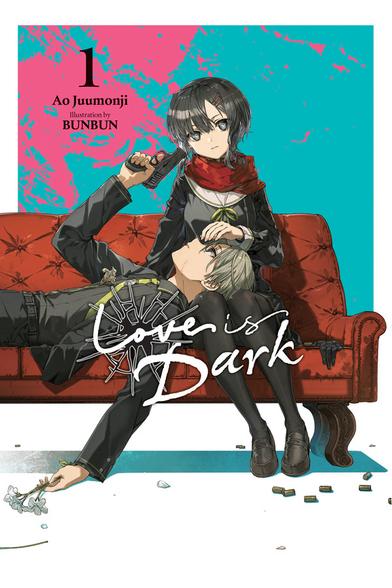
#MangaMonday 75 “Love is Dark” by Ao Juumonji (story) and BUNBUN (art)

If Korean manhwa are fair game, then so is a Japanese #LightNovel. It’s still text and pictures, just skewed more toward the former.

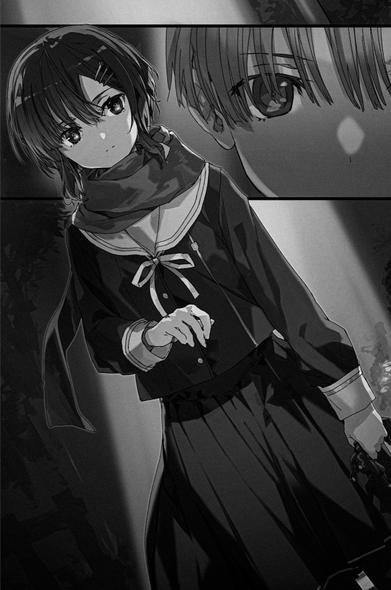
Sousei Takarai is a high school student who’s just trying to fit in. The problem is that he is a trained assassin who doesn’t quite know what “normal” is. Sousei doesn’t like his (explicitly) brutal job, but his handler (and older sister) rides him hard and his desire for a “normal” life is palpable. His success at basic peer interaction is more important to him than his work.

Unfortunately, #LoveIsDark (Yen Press) was cancelled after the third book, and it leaves things on quite a cliffhanger. The author concluded the story as a webnovel. I couldn’t find a translation, but a summary on reddit indicates the story leans into the supernatural aspect (did I mention that?) and leaves the school life behind. So, in a way, the published volumes end at a natural stopping point.

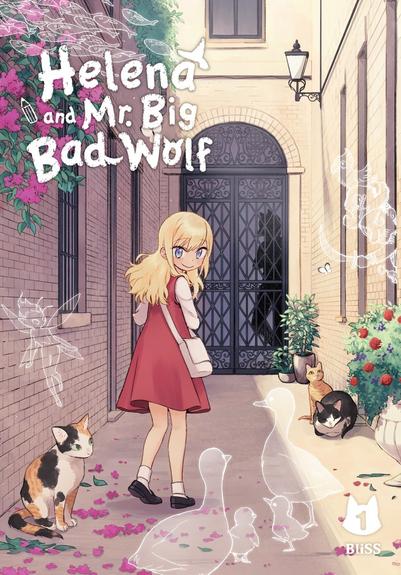
#MangaMonday 76 “Helena and Mr. Big Bad Wolf” by BliSS

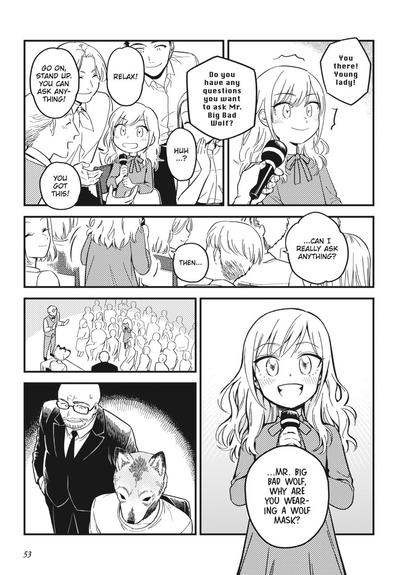
Mr. Big Bad Wolf (pen name) is a curmudgeonly children’s picture book author who wears a wolf mask in public. He’s very popular, but having a crisis because he’s hit an artistic wall.

Helena is a young girl living in an orphanage. Her brother—her only remaining family—lies unresponsive in the hospital following an accident. She unexpectedly gets a ticket to a book signing in a book by her favorite author, Mr. Big Bad Wolf. What follows is a story about art, loss, and moving on.

The art is quite good, as this type of #manga demands. There are several stories within the story and BliSS is adept at switching styles as needed.

This is barely a series, at only two volumes (Kodansha.) However, in this case the length is determined by the story, and not by premature cancellation. It’s really only a volume and a half, with the rest of the second book containing postscript stories, sketches, etc.

#HelenaAndMrBigBadWolf

#MangaMonday 77 “Red Snow” by Susumu Katsumata

A young boy teases a prostitute’s daughter. An itinerant blind musician travels with the bastard daughter of a vengeful spirit. A brewer’s apprentice steals some yeast.

While Katsumata drew from his life in rural Japan in the 1940s/50s to create these stories, they’re almost outside of time. There’s little evidence of modernity, and creatures of legend are accepted as part of life. There’s an obvious affection for these people, and compassion for their often harsh lives. Sex, assault, and the ambiguous ground between them are frequent topics.

These stories were originally published in the seventies. This #manga collection was published by Drawn & Quarterly in 2009, four years after the Japanese edition and three years after Katsumata’s death. The art has been flipped so it reads left-to-right, but the few signs and un-anglicized sound effects have been redrawn so they read correctly.

#RedSnow

#MangaMonday 78 “Cat’s Eye” by Tsukasa Hojo

Detective Toshio is frustrated that he keeps getting outwitted by the infamous art thief known as “Cat’s Eye.” He frequently bemoans this fact to his girlfriend who, along with her sisters, runs a café called “Cat’s Eye.” (He is also annoyed by that nominative coincidence.)

This rom-crime-com #manga originally ran in the eighties, and it’s getting an official English adaptation in omnibus form. This means the first volume, which just dropped (Kana/Abrams,) collects the first three of the Japanese edition’s 18 volume run. This is fortunate, since the real story—the origin and motivations of the sisters—doesn't start until 9 chapters in.

The art is great. Hojo clearly had a lot of fun with this, even putting in little notes occasionally to draw attention to certain things on the page.

#CatsEye got an #anime adaptation during its original run in Weekly Shonen Jump, and a reboot just started airing this week (Hulu/Disney+ in the US.)

#MangaMonday 79 “Sadako-san and Sadako-chan” by Aya Tsutsumi (story & art,) Koji Suzuki (original concept,) and Noriaki Sugihara (film script.)

As the extended credits indicate, this is based on “The Ring” novels and films, although it’s a comedic take on the concept. Sadako stalks a young girl who has been locked away in a closet. It turns out that the reason she’s isolated is that she’s psychic, which is convenient (Sadako doesn’t speak in the original works, and she continues to be mute here.) Sadako-chan, as the young girl is dubbed, introduces Sadako-san to the concept of streaming video and they set out to create a channel.

This is a fun horror-comedy #manga in a gag-a-page format (mostly.) The sole volume is available from Seven Seas.

#SadakoSanAndSadakoChan

#MangaMonday 80 “Sadako at the End of the World” by Koma Natsumi (Art & Story,) Koji Suzuki (Supervision,) and Kadokawa (Character Provision)

Sadako emerges from a television… to the delight of two young girls.

At first this seems similar to “Sadako-san and Sadako-chan” (MM79); Sadako finds herself in unusual circumstances with a pair of cute young girls who aren’t afraid of her. However, this isn’t really a comedic take (although there’s humor in it.) The girls are some of the last people left on earth after an unspecified apocalypse. From Sadako’s perspective, the prospect of an end to the curse is at hand.

This single volume #manga is available from Yen Press (which explains the Kadokawa ‘Character Provision’ credit.) It, like “Sadako-san and Sadako-chan,” was first published in 2019, coincidentally the same year as the Japanese film “Sadako.” A bonus chapter relates Natsumi’s visit to the film's set.

#SadakoAtTheEndOfTheWorld

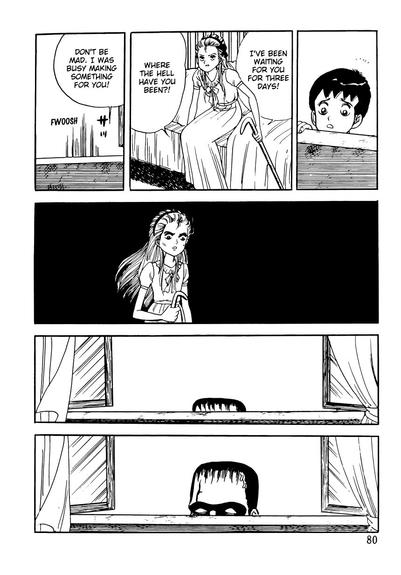
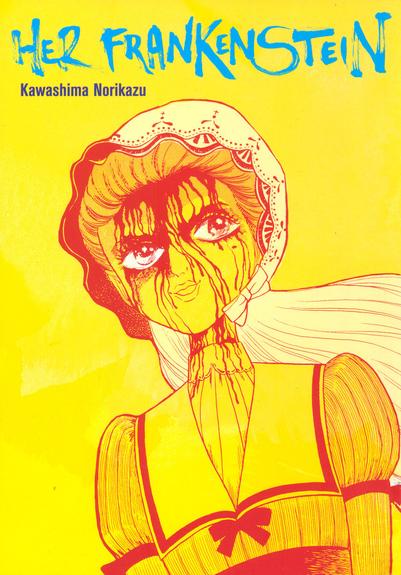
#MangaMonday 81 “Her Frankenstein” by Kawashima Norikazu

Tetsuo Utsugi is a haunted man. After talking to a doctor, he remembers his childhood encounter with a strange young girl who was obsessed with the movie “Frankenstein.”

First released in 1986 to no great acclaim, this #manga holds up very well. It starts with an apparent haunting and then takes an extended flashback to a formative year while turning into a character study/psychological horror.

This was one of Norikazu’s last works, and the English edition was the first release from the Smudge imprint of Living the Line Books. It’s only available in print, but it’s a handsome edition with a nice essay by Kawakatsu Tokushige that puts the work into context.

One thing not addressed is that the Frankenstein referenced is clearly the (litigious) Universal Pictures version. It probably flew under the radar in eighties Japan, but Smudge is in twenties Minnesota.

#HerFrankenstein

#MangaMonday 82 “Otaku Vampire’s Love Bite” by Julietta Suzuki

Hina is a Romanian girl who was a shut-in until she discovered the anime “Vampire Cross.” Naturally, she then moved to Japan. Oh, she’s also a vampire.

Her new nextdoor neighbor, Kyuta Amanatsu, is one of those people who smells really tasty to vampires. Hina doesn’t much care about that—she’s a blood bag girl—but he IS a dead ringer for her favorite “Vampire Cross” (supporting) character.

This is partly a romcom that plays with Hina’s seemingly disparate natures as a vampire and an anime-obsesive otaku and with Kyuta’s animosity towards both of those. It’s also partly a dramedy about the vampires, particularly after Hina’s family servant Viktor shows up.

Ongoing, with five of eight volumes available in English (Viz.) Suzuki is best known for the #manga (and anime) “Kamisama Kiss,” which also crossed the ordinary and the extraordinary.

#OtakuVampiresLoveBites

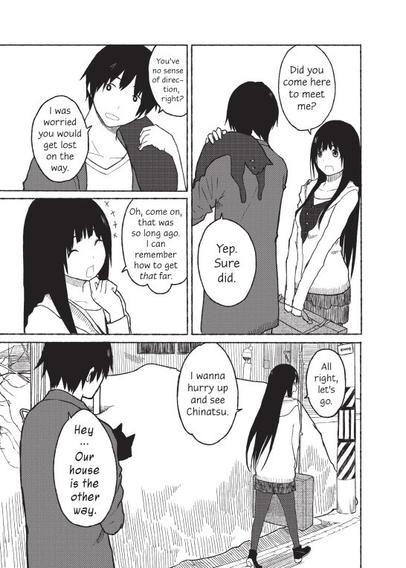
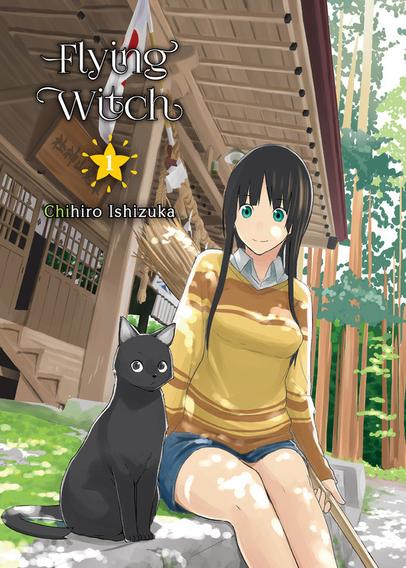
#MangaMonday 83 “Flying Witch” by Chihiro Ishizuka

“Gibblets with a side of fantasy.”

That line is said by a neighbor as she witnesses a group of witches enjoying a cook-out while showing each other the first spells they learned. It’s also a fair summary of this slice-of-life modern-fantasy comedy #manga.

The titular witch, Makoto Kowata, is still in training. To be closer to nature, she’s moved out to the country to live with her aunt, uncle, and two cousins. The cousins, Kei, a boy about Makota’s age, and the younger Chinatsu, who soon aspires to become a witch herself, introduce her to the countryside and their network of friends. Makoto, helped by a couple of the local witches and especially her frequently-visiting free-spirited sister, shows them the supernatural elements of this world. It’s a (usually) relaxing story with a low-key sense of humor.

Ongoing with 13 of 14 volumes available in English (Kodansha.) A twelve episode #anime aired in 2016.

#FlyingWitch

#MangaMonday 84 “Gene Bride” by Hitomi Takano

This is a science fiction #manga. I say that because it’s easy to forget once you start reading.

Isahaya Ichi is a woman at a small company trying to navigate the sexist corporate world. She’s surprised when a former classmate, Masaki Makuhito, shows up to thank her for an inadvertent act of kindness many years ago. He’s quite annoying, and probably autistic, but he doesn’t seem like a bad guy, so she ropes him into coming along to a meeting as silent backup. She doesn’t explain why, but he picks up on it in his unique way.

Again, this is a science fiction story. There’s an early hint of that when Isahaya remembers the event Makuhito referenced, a school-administered DNA test for compatibility. There are others, but they’re the kind that you might chalk up to an awkward translation choice, or some odd factoid about Japan… until the end of the first volume.

Complete with two of four volumes available in English (Seven Seas.)

#GeneBride

#MangaMonday 85 “Okinawa” by Susumu Higa

Three guesses what this #manga is about.

More specifically, this is a series of vignettes of island life from World War II up to the present (as of the 1990s) day. The first half is mainly life under the Japanese military and the subsequent fighting. The second is largely about life under American occupation. The stories are almost all from the point of view of civilians (except for one about Higa’s father’s experience during the war.)

The stories that compose the first half were collected into a volume, “Sword of Sand,” in the nineties. The remainder weren’t collected until 2010, when they were published as “Mabui” (an Okinawan concept of one’s essence.) This edition (Fantagraphics/MSX) collects the two together. It includes an interview with Higa about the stories and their publication history, and I encourage you to read/listen to the podcast it was taken from: https://www.mangasplaining.com/blog/ep-100-okinawa-by-susumu-higa/

#MangaMonday 86 “Before you go Extinct” by Takashi Ushiroyato (story) & Kanato Abiko (art)

You say you prefer your talking animal comics with a heavy dose of #existentialism? Then you’re going to love this #manga.

This story starts with a bang. Literally. Pen is a penguin intent on hastening their extinction. Merle is warming a stone, in place of an egg. They’re partners, but they don’t understand each others’ actions. Subsequent chapters follow the pair as they reincarnate as different endangered species. They don’t usually carry over their memories, but each time they end up disagreeing about how to react to an uncaring world. Violence figures into many of the stories, usually by humans (the penguin chapters are something of an exception, although even there the tools were the products of humans.)

These stories were serialized in Japan in May of last year. They were collected into a single volume that’s now available in English (Kodansha.)

#BeforeYouGoExtinct

#MangaMonday 87 “My Life in 24 Frames per Second” by Rintarō

He was in the color department when Tohei produced the first color anime film. He worked for Osamu Tezuka when “Astroboy” was adapted to TV—and where he got his first directing credit. Shigeyuki Hayashi, better known professionally as Rintarō, went on to direct many notable #anime, including “Space Captain Harlock” and “Metropolis.”

This is his story. At 250 pages, it’s necessarily abbreviated. That does make the choice of what to include interesting. There’s a lot about his childhood but barely a mention of his marriage and divorce. (The focus on his career in later chapters may obliquely explain that.)

Surprisingly, this graphic story of a famed Japanese director reads left-to-right. The original is actually the French edition, which came out last year. It won the Manga Grand Prix at the Tezuka Osamu Cultural Prize, so it’s definitely a #manga. This English edition was just recently released (Kana/Abrams.)

#MangaMonday 88 “Black Night Parade” by Hikaru Nakamura

Hino Miharu is a tireless worker at terrible convenience store. One night, after committing a minor infraction of the rules, he’s confronted by the “Black Santa” (Santa Claus’ counterpart in charge of the Naughty end of things,) kidnapped, and put to work. If you’re familiar with the Japanese concept of a “Black Company,” you might guess where this is heading.

This is the kind of #manga that’s silly on its face, but underneath it still has a high stakes story—one that can get fairly gruesome. Later volumes play with bouncing between the two at fairly tight intervals. It’s also packed with a lot of twists and turns of both plot and characters.

Nakamura mined some deep Saint Nicolas lore for this world, which is unsurprising given the work she did previously in “Saint Young Men” (future recommendation alert.)

Ongoing, with eight of 10 volumes in English (Seven Seas.)

#BlackNightParade

#MangaMonday 89 “Maid to Skate” by Suzushiro

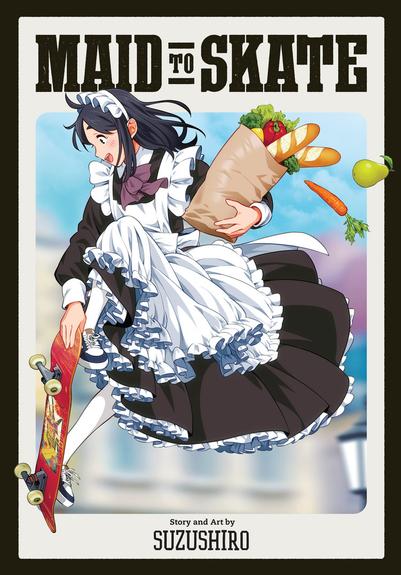
Sometimes you CAN judge a book by its cover.

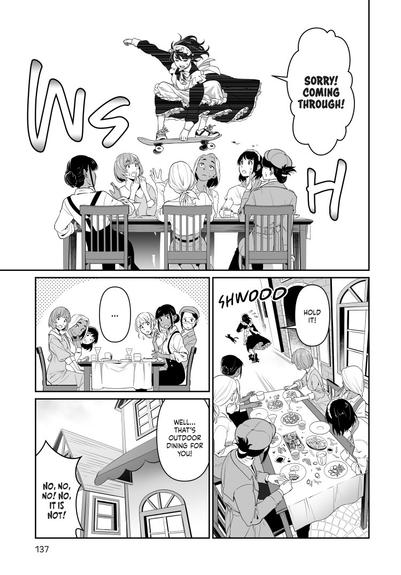
This started off as a series of illustrations that went viral on social media and then was adapted into a #manga. It barely has a story, at least so far, mostly introducing us to the cast of maids and the world where time and geography are ambiguous, but the architecture is skate-friendly. The “maid” part is a bit hand-wavey (I’m still not sure if the main setting is a house or a school) but the skating is taken very seriously both in and out of the story. One of the characters provides interstitial pages of #skateboarding basics.

This is really all about the art. Suzushiro has a keen grasp of both Victorian maid outfits and the mechanics of skateboarding. I have never seen a maid do a handstand in a skate park, but I have no doubt it would look the way it’s shown here.

Ongoing with one of two(?) volumes released in English (Viz.)

#MaidToSkate

#MangaMonday 90 “My Picture Diary” by Fujiwara Maki

This is a haunting work of a cancer survivor struggling with raising a small child while married to a husband who is usually emotionally absent and occasionally abusive.

But is it even a #manga? Not in the traditional sense, although this edition (Drawn and Quarterly, print only) did win an Eisner. This is what it says on the tin; a diary, with pictures on the facing pages, of a year (1981) in the life of Fujiwara Maki and her family.

Of particular interest to manga readers is that Fujiwara’s husband was Tsuge Yoshiharu (all names are rendered Given Name last) an important manga creator from the fifties to the eighties. If you don’t know who that is translator Ryan Holmberg has your back, contributing 21 pages of text and pictures that place this diary into context. Learning that Fujiwara had been a major actress in Japan’s avant garde theater scene only makes this domestic story that much more poignant.

#MyPictureDiary

#MangaMonday 91 “Girl Crush” by Midori Tayama

Tenka Momose is smart, pretty, and athletic. She has a crush on childhood friend Harumi, but he has eyes only for the adorkable Erian. This seems pretty predictable, except that we’re following Tenka and not Erian. And then they both head off to Korea in an attempt to become K-Pop idols. (Nice knowing you, Harumi.) And then they end up at different agencies. (See ya, Erian.)

The bulk of the story is Tenka’s personal growth and the competitive nature of the idol business. With Tayama’s stylish designs, it sometimes reads like a sports #manga drawn by a fashion illustrator.

#GirlCrush is #KPop slang for a cool girl admired by other girls, in case you were expecting a different kind of manga.

This was originally released online, so the English chapters (currently at ch. 99) are at ComicKey.com while print and digital Volumes are being put out by Viz (currently up to vol. 4/ch. 50) at a fairly quick pace.

#MangaMonday 92 “Chainsmoker Cat” by Nyan Nyan Factory

I’m not a big fan of gross-out humor, but I do have a soft spot for heroines that are a complete mess. This #manga has both.

Yani is a catgirl who is utterly addicted to nicotine. Her apartment is filled with loaded ashtrays, trash, and scorch marks. She can’t hold down a job, because she needs constant smoke breaks. When her water is shut off she relieves herself outside.

Her sister is relatively normal and wants her to quit smoking. Her drug fiend neighbor looks up to her, and is frequently disappointed. Her landlord is long suffering, but secretly into her.

It’s fertile ground for low-brow humor, and Nyan Nyan Factory has mined it for ten volumes so far. The first volume was just released in English (Seven Seas.)

“Nyan Nyan Factory” is a group pen name, and the art shift from chapter to chapter reflects that. Additional artists contribute pages to a “Nyanthology” at the end.

#ChainsmokerCat

#MangaMonday 93 “Cats With Jobs” by Pandania

Pandania was recommended earlier for “Cthulhu Cat” (MM34.) This time around we have a slightly more grounded concept; #cats doing people jobs. I say “slightly” because the jobs range from the ordinary (fishmonger, programmer) to the extraordinary (phantom thief, mad scientist) to the fantastic (magical girl, superhero.)

It’s a cute concept, and Pandania’s art style is well suited for it. The cats are recognizably cats, but anthropomorphized to varying degrees. Basically, whatever is required for a particular joke. The format is a simple four panel gag #manga style, usually with one sequence per page per job.

Ongoing(?) with one of two volumes in English (Seven Seas.) The second drops tomorrow. Note: the print edition of volume one comes with a sticker sheet!

#CatsWithJobs

#MangaMonday 94 “Mechanical Buddy Universe” & “Mechanical Buddy Universe 1.0” by Takuji Kato

A mercenary boy raised by a battlefield droid. A vigilante girl whose gun is in love with her. A combat maid devoted to her mistress. An aging captain of an all-female squadron. A gender-queer ex-soldier. A world recovering from war but plagued by self-replicating weapons.

This #manga started as a series of vignettes—uploaded to social media while Kato worked on another project—that were turned into the book #MechanicalBuddyUniverse. “Mechanical Buddy Universe 1.0” is a soft reboot, mostly taking place after MBU but revisiting events when they are important for the characters. There’s plenty of action, but the heart of the story is the interactions between characters.

MBU and the first volume of 1.0 are available in English (Square Enix) while up to date chapters are online at Manga Up!. Oddly, they appear to be using different translations (most noticeable in No Face’s speech.)

#MangaMonday 95 “Smile!” (sometimes rendered Smiley) by Mitei Hattori

Two years after the death of his daughter and the disappearance of his wife, Yuushi Kamome is trying to hold down a job as a freelance journalist. When a pair of proselytizers for the “Smiling Hearts Society” appear at his door Kamome is dismissive, but when he recognizes his wife in the flyer they left he decides to infiltrate the group. Meanwhile, his buddy the cop is called in to investigate three mutilated bodies.

#Smile is a psychological horror mystery thriller #manga. As far as I can tell this is Hattori’s first work, but you would never guess it from the exceptional art. It’s mostly realistic, but he goes slightly off-model at times to give an uncanny effect. There is some gore, although (so far) the emphasis is on the idea of what happened rather than trying to shock you with viscera.

Completed with the first of 11 volumes just released in English (Kodama) and the next due in March.

#MangaMonday 96 “Easygoing Daddy” by Asō Yutaka (with “Hineko, Their Only Child” by Nagasaki Batten)

In the early 20th century manga was just finding its form. Unsurprisingly, it looked to western sources. Surprisingly, one of those was the American newspaper strip “Bringing Up Father” by George McManus.

This short book (Breakdown Press) begins with a nine page foreward by editor and translator Eike Exner that puts these two manga into context. “Easygoing Daddy” was inspired by “Bringing Up Father,” down to using a Left-to-Right reading order. Flip the book over and it’s “Hineko” (one of the first female protagonists in manga) reading Right-to-Left. There’s even a reversed table of contents.

Unfortunately, there’s only a taste of these two manga; the entire book is about 60 pages. Worse, it appears to be out of print and without official digital release. However, if you’re interested in the #history of #manga this is worth seeking out.

#EasygoingDaddy

#MangaMonday 97 “Love’s in Sight” by Uoyama

A cute romantic comedy about a high school girl, Yukiko, and a delinquent, Mori. The twist in this one is that Yukiko is blind. The REAL twist is that this is also an exploration of how society treats people who don’t fit expectations.

On one level this is a typical high school romcom. The delinquents all have hearts of gold and everyone gets embarrassed about everything. It uses the 4-panel gag #manga format frequently. But Yukiko’s blindness isn’t cartoonish (she has a degree of sight) and the obstacles she faces are realistic, from infrastructure to people.

Mori starts as a cartoonish delinquent character, but proves to be pretty empathetic. He quickly realizes that Yukiko’s difficulties also apply to some degree to older people and finds a niche for himself revamping a local video store.

Complete with all eight volumes in English (Viz.)

#LovesInSight