The trash panda is being domesticated

What?

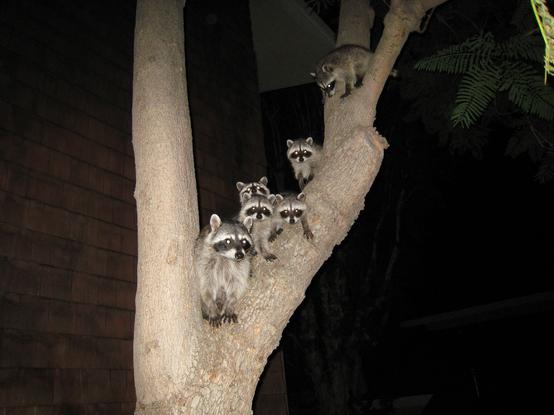
Urban #raccoons have shorter snout length than rural raccoons

This is due to #neoteny: the retention of juvenile characteristics in adulthood

An aggressive adult #raccoon won't live long near us. So their genes aren't passed on. But the more docile and childlike breed more successfully in cities

Dogs are basically wolf puppies after all

Give it a millennia or two and we'll have raccoons on our sofas

https://phys.org/news/2025-12-city-raccoons-domestication.html

#Evolution #Science

City raccoons showing signs of domestication

That resourceful "trash panda" digging through your garbage may be more than just a nuisance—it could be a living example of evolution in progress.

@benroyce Maybe less than that. A research project in Russia produced domesticated foxes in under thirty years.
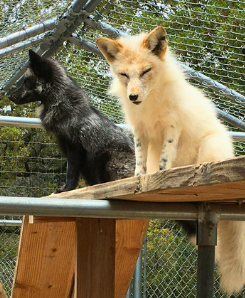
Of course, they'd lost the distinctive fox coloration, which somewhat reduces the appeal...

@zakalwe

that's part of the constellation of changes in domestication: patches of white fur and other colorations

so in the future we'll have white colored raccoons on our sofas

@benroyce I find it interesting that the behavioral and coloration changes seem to consistently go hand in hand, at least in canids. One has to wonder why.

@zakalwe

guessing:

it's all about the route to the easiest/ smallest number of changes in the genes to produce the desired infantilization changes that increase survival

and switching off the genes that control a vast number of other genes that lead to adulthood is that easiest route

so you get this constellation of other genes like facial features, hair coloration, etc along for the ride

@zakalwe @benroyce wild adaptation. I heard polar bears are losing the whitnes because ice melting, they have a challenge to hunt seals and there white fur helped them in ice. No ice, no need for white fur

@benroyce

I was watching a video about urban raccoons that mentioned that raccoons who were more shy/calm showed higher intelligence than those that were more bold/aggressive, which totally supports the domestication process!

I was under the impression that something similar is happening in Britain with urban foxes.

@grendel84 @benroyce They're pretty relentless when they want something and raccoons have very adept hands. I imagine a domesticated trash panda raiding kitchen cabinets. Forget privacy after they master opening the bathroom door. Before long they will learn to use a computer keyboard and mouse. Then they can leverage AI to get whatever they want shipped to the house.

@royterdw

Perhaps we should redirect all the money/resources being put toward AI into training raccoons.

It would probably yield better results (and they don't drink whole lakes).

@benroyce

@grendel84 @royterdw

if a million monkeys typing can reproduce shakespeare, a million raccoons typing can replace chatGPT!

@benroyce
@royterdw

If we could calculate the calories used by a raccoon typing we could figure how much more efficient they are than LLMs.

@grendel84 @royterdw

establish the raccoon-llm facility at a garbage dump, they will just eat that!

@benroyce @grendel84 Wait. What if raccoons have influenced our domestic life over the past 300 years? Our development of agriculture, markets, and mass production of goods - was it all in service to trash panda? They have bent our ingenuity to their will. We are the raccoons' AI. And if we generate slop, it's more food for the raccoon! 🦝
@benroyce the urban fox of England is surprisingly tame these days, where I live it often coexists with cats in the same street (as outright fighting would get it shooed away, and cats stand their ground), and it has gained a lot more road sense and even learned to use pedestrian crossings (both the pedestrian refuge, and even the traditional zebra crossing you might associate with images of Britain (which is generally located in a well lit and fairly busy location)
@benroyce Yes they are cute. Is there anything we can do about the brain-eating parasites they carry?

@mike805

yes:

co-evolution of parasite and new host (us)

like we have cats and are (mostly, it's still connected to increases in schizophrenia) immune to the parasite they carry

because humans who weren't, died

https://en.wikipedia.org/wiki/Toxoplasma_gondii

Toxoplasma gondii - Wikipedia

@benroyce @mike805 so we're gonna see a mass die-off among the non-immune who choose to keep raccoons as pets?

or are we gonna see a mass die-off because non-immune raccoon keepers are gonna keep being appointed hhs secretary?

@benroyce domesticating foxes, I think it was kind of 10th generation... at least they started to have coloration that more like dogs than foxes.

@aho

that's right. so raccoons should also start coming in strange new colorations as they further domesticate

@benroyce in a way they start to look a bit as a medium size dog, less like a traditional fox and that just when they have changed color, wait till they change size too, then the variations will increase. So what about a pocket sized raccoon 😺

@benroyce This has been debunked, mostly indicating that you can't definitively connect the shorter snout to any particular cause.

The capacity to grab better be accompanied by the willingness to help around the house. I'm not sure what people are talking about when they mean "domesticated." Freeloading inside the house doesn't seem to me like it qualifies. I have plenty of critters that do that with and without my permission.

@janisf

well what do you think about genes that control maturation, and if those genes are turned off, leaving the organism in a more childlike state, and this leads to better survival.. then that means that other characteristics those genes control come along for the ride to infantilization/ domestication (like facial features, hair coloration, etc)

@benroyce In the end, I'm not so sure geneticists know what they're doing, particularly when it comes to multi-factor changes over time, or if that kind of thing can even be truly accurately assessed.

I'm just glad we're not arguing about whether or not it's ethical to use stem cells at all for research/treatment anymore. Wasn't that a G.W.-era thing?

@janisf

now they are going after IVF 😩

@benroyce yes, white "Christian" women will go after whatever reduces the value of their horizontal kowtowing to their husbands, as long a RW media subtly presents it that way. 53%-odd percent. Just trust me on this, it's where I live. It's insidious.
@benroyce maybe short noses give them better visibility for avoiding traffic.

@johnefrancis

since they're always in trash bins, shorter snouts mean less odor? 🤔

@benroyce I think they are looking for MOAR trash odour.

My most recent encounter was standing up a tipped organics bin to discover the 60lb raccoon was still in there. So maybe less fear is helping. It shot out of the bin when I started moving it, but it didn't bolt earlier when I was nearby.

@benroyce

Not sure about that.

Dogs & cats were domesticated because they were useful in spite of limited edibility.

(Or to be accurate, historically, the resource cost of feeding an edible carnivore is impractically high, so if you intend to eat them, you usually do so when weaned.)

Various herbivores & birds have been domesticated because useful+edible.

Raccoons may be fun if you can deal with them, but afaik they're less keen on e.g. providing pest control services than even foxes.

...

@benroyce

And while they have historically been a source of furs, they didn't have to be domesticated for that.

There is no guarantee that the "pets" phenomenon will persist if humans have to return to subsistence rather than the (globally) wealthy few having the resources to devote to expensive fluffballs. They may still be tolerated but that's not domesticated.

Of course, they may learn to become useful, but I'm not sure how.

@electropict

absolutely spot on about cats and dogs (and horses, falcons, etc): usefulness

however we still keep pets "just because." parrots for example

and since we now have cats and dogs less for usefulness and more for companionship, the path for raccoons to become pets is viable in today's day and age

it's already a trend, there's tiktok videos about pet raccoons that are popular (a miserable trend, it's like living with crack addict):

https://ktla.com/news/raccoons-as-household-pets-becoming-more-popular-in-america-report/

@benroyce

Indeed; people keep spiders and even ants. Not to mention tigers and other more destructive creatures ... FENNECS.

But it's a habit of an affluent culture. In the long term (sufficient for real domestication) there's no guarantee affluence will persist. If you don't have water you can't keep an octopus, however impressively intelligent. If raccoons could have been domesticated (and sometimes eaten in hard times, like pet monkeys) in less affluent conditions, why weren't they?

@electropict

the slow evolutionary changes where domestication becomes easier are only happening now

nevermind that people already do keep raccoons as pets, and have so for a long time

judging by tiktok, it's becoming more popular (if not merely just trendy algorithmic bs, people like to watch pet raccoon videos)

this is probably the most famous pet raccoon:

rebecca, the white house raccoon, kept as a pet there by president calvin coolidge and his wife grace

https://en.wikipedia.org/wiki/Rebecca_(raccoon)

Rebecca (raccoon) - Wikipedia

@benroyce

Pets. Just for comparison:

Isn't it nice to talk about mischievous bundles of fur (without having to have personal contact) on occasion, rather than evil politicians & agents thereof (while trying desperately to avoid personal contact)?

@benroyce About as domesticated as I am, it would appear:
https://journa.host/@w7voa/115651979086607238
Steve Herman (@[email protected])

Sometimes you just need to sleep it off. https://www.wtvr.com/news/local-news/raccoon-virginia-abc-store-dec-2-2025

Journa.host

@flipper

right by the toilet for the inevitable emergency

smart