
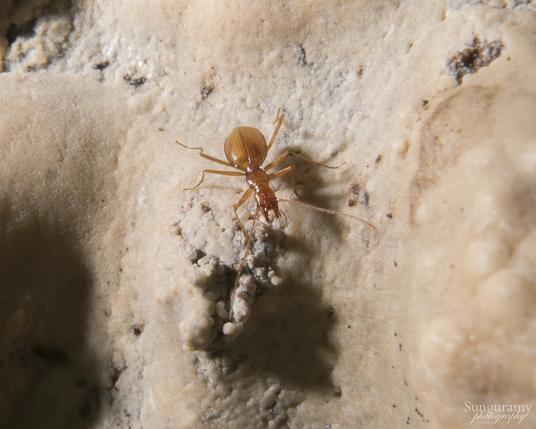
Still waiting on confirmation to what this cave beetle is, but if it is what we think it is, 'tis a new site! And maybe a bit of a range extension? Or range confirmation? Essentially, the location is on the edge or right off the edge of the range...one of those things.

People still care about even the little critters. Don't let governments - anywhere - fool you as to what the actual people want. Most people are genuine, helpful, kind, and caring. We want the world to be a better place for everyone! ❤️

#beetle #beetles #cave #caves #biology #ecology #science #caving #STEAM #photography #macro #macroPhotography #coleoptera #invertebrates
@sunguramy

If it helps, iNaturalist thinks it's a Rhadine perlevis...

@deirdrebeth @sunguramy Yeah, I’m not super knowledgeable about bugs, but at first glance, I thought some sort of rhadine as well.

@Devils_Rancher @deirdrebeth not in the least. iNat is shit with most invertebrates, and most of these species need at least microscope work to ID. Also… you may be interested in my long thread under pinned post about iNats enshitification this past year.

Anyways…Closest relation to Rhadine is at Carabidae. 😏

@sunguramy @deirdrebeth I gotta get better at bugs. My knowledge is limited to those I’ve seen in Texas when in the company of someone who knew what they were talking about.
@Devils_Rancher @deirdrebeth Id not know much about whats in Texas underground; thats really normal to not know whats outside your area. And generally, the more expertise the more localised you get. Surface flora and fauna is easier in that sense, theres some gradient from north to south and whatnot, but otherwise its just general ecosystems or maybe mountains block movement (lot of east/west divides in the US thanks to Rockies for example). Caves are so much more localised thanks to more isolation.
@sunguramy @deirdrebeth Very true. A lot of the invertebrate cave species around here are limited to maybe 3-5 known locations.