 Nina Kalinina
There was a brief period of time when upgrade modules for computers looked like upgrade modules for computers.
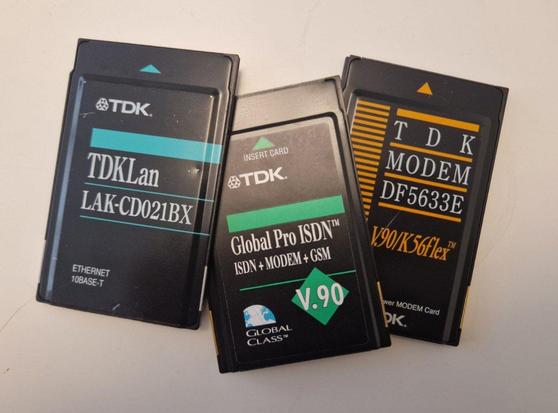
@spacehobo @nina_kali_nina Gilfoyle Voice "Kinda like that one?"
points at #VAIO #P11Z
https://de.wikipedia.org/wiki/Sony_Vaio_P11Z
@spacehobo @nina_kali_nina I still think the 3,5" FDD has the supreme handling of any removeable media, which is why I advocate to copy it's design for hot-swappable SSDs
Tho granted if it were to help I'd accept increasing THICC-ness from 3,3mm to 5mm since that could increase mechanical stiffness and prevent idiots.from shoving it into a real 3,5" FDD drive…

@kkarhan @spacehobo @nina_kali_nina https://github.com/KBtechnologies/NeoFloppy/blob/main/documentation/neofloppy.specification.md
For the record, the Helium isn't used for cooling, it's used because it's physically smaller than the atoms used in the makeup of air, and that's required due to how close the heads are to the platters.
@krutonium @spacehobo @nina_kali_nina To be precise, Helium is an excellent thermal contuctor and has way less friction compared to air or plain nitrogen, and high-capacity drives have both problems with the platters getting hot at their packaging density and having to transfer that heat away.
If it was mere atom size, the use of Hydrogen would be even better but like Helium that too leaks very well through tanks and enclosed metal containers and on top of that can quickly form explosive atmospheres, so it wasn't an option.
Liquid-filled HDDs were abandoned for similar reasons on top of the incompatibility with existing drive heads.
@volemo @spacehobo @krutonium @nina_kali_nina point taken!
Air and espechally nitrogen being a good insulator and the effects of both laminar and turbulent flow forces acting on the heads due to the spacial density and the heat concentration make it necessary to use some sort of coolant/thermal conductor with negligible resistance. Most liquid coolants would have way too much force so unless extremely slow access and transfer speeds (i.e. a 600rpm instead of 5400rpm drive) were to be accepted.
Instead, the use and development of #Flash and #NVRAM, espechally #FeRAM and #NvSRAM should be prioritized.
@nina_kali_nina
> LTO-10 packs 15104 tracks
... woah, thanks for dropping that one into my consciousness! 😱
I've always loved tape, but never been very hands on with it... 😢
 Space Hobo
 Kevin Karhan

 Krutonium://
 Savely
 Attie Grande