 Nina Kalinina
There was a brief period of time when upgrade modules for computers looked like upgrade modules for computers.
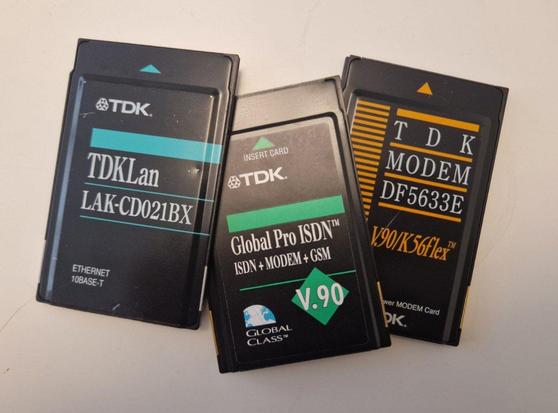
@spacehobo @nina_kali_nina Gilfoyle Voice "Kinda like that one?"
points at #VAIO #P11Z
https://de.wikipedia.org/wiki/Sony_Vaio_P11Z
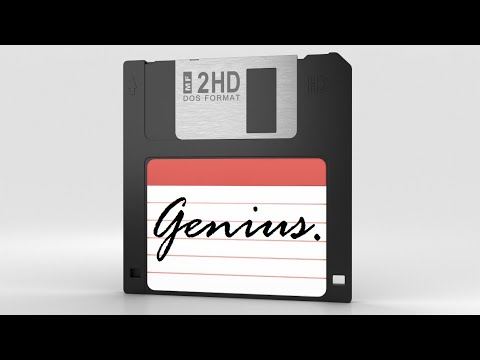
@spacehobo @nina_kali_nina I still think the 3,5" FDD has the supreme handling of any removeable media, which is why I advocate to copy it's design for hot-swappable SSDs
Tho granted if it were to help I'd accept increasing THICC-ness from 3,3mm to 5mm since that could increase mechanical stiffness and prevent idiots.from shoving it into a real 3,5" FDD drive…
@eckes @spacehobo @nina_kali_nina They do work great for servers, but only doing PCIe makes them quite expensive to support.
@[email protected] @[email protected] @[email protected] granted I am aware of [CFexpress](https://en.wikipedia.org/wiki/CFexpress#Form_factors) and whilst #PCIe / #NVMe provides excellent performance, I'm confident it would be best to offer a [*"Quad-Mode"* storage solution](https://github.com/KBtechnologies/NeoFloppy/blob/main/documentation/neofloppy.specification.md#pinout) that offers #USB, #SD, #SATA & #PCIe to serve all the needs from low-power SBCs to bootable drives to high-performance storage. - Not to mention the benefits of a [bigger surface area](https://github.com/KBtechnologies/NeoFloppy/blob/main/documentation/neofloppy.specification.md#mechanical-dimensions) medium with space for labelling, NFC/RFID tags (similar to [MAM](https://en.wikipedia.org/wiki/Media_Auxiliary_Memory) on Tapes) and barcode at the rear for ease of [media identification](https://en.wikipedia.org/wiki/Linear_Tape-Open#Labels) as well as automated media handling in [Autoloaders](https://en.wikipedia.org/wiki/Tape_library#Autoloaders) and espechally given the shortcomings of #Tape and #HDD|s that are way less capable to expand with growing needs, as [speed doesn't increase with capacity](https://en.wikipedia.org/wiki/Linear_Tape-Open#Tape_specifications)... The idea is closer to making a universal yet affordable standard for removeable media.
@eckes @spacehobo @nina_kali_nina granted CXL will likely never come to Consumer Devices and PCIe whilst being fast will really make things expensive.
@kkarhan @eckes @spacehobo @nina_kali_nina
AMD has talked about bringing CXL to Consumer platforms for a while, and there are a couple of TRX50 boards that unofficially support it today. Still HEDT but not far from consumer.
@krutonium @eckes @spacehobo @nina_kali_nina granted I don't consider #Threadripper a "consumer platform" but rather #Enterprise / #Enthusiast / #Workstation-grade.
Still, #CXL's ability to offer basically "#SlowRAM" expansion is nifty and will make #Database applications and #caching significantly faster whilst reducing wear on regular #SSD|s in high-#IOPS scenarios...
@kkarhan @eckes @spacehobo @nina_kali_nina Even if it is "slow" ram, it's still faster than older standards like DDR2/3 - Honestly most scenarios don't need more.
My big want for CXL Ram on a Card would be to attach an 18650 to it and use it as my root filesystem/boot drive.
(And this is just steps to get it closer to consumer viable)
 Space Hobo
 Kevin Karhan

 Eckes
Eckes 
 Krutonium://