 It's FOSS
Comment 🐧
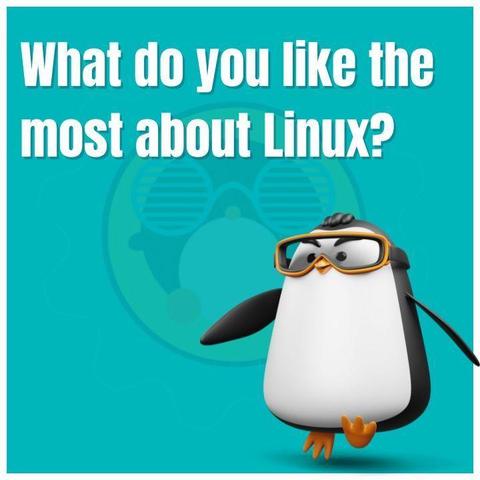
@johnny101 hahahaha you haven't used later versions of Windows 10 where their updates undo changes you make to the settings.
Don't even get me started on Windows 11
Windows 7 was the last 'good' version they released
@itsfoss MUCH less fan noise and extraneous CPU usage in general.
Me: *walks away from my computer*
Windows Update: "It's free real estate!"
@johnny101 Windows Update is CPU intensive for performance reasons, because it's usually designed to run only when you step away from your computer. I have heard that this is due in part to Windows compiling .NET components from source directly on your computer. It could also be poorly written file syncing code, like the problems that Google Drive has. Meanwhile rsync runs relatively performantly on a native Windows system (i.e. a file sync operation that would take weeks on Google Drive would take 1-2 hours with rsync, with a fraction of the CPU utilization).
Regarding power usage in general: Assuming you do basic stuff like local account only, uninstall OneDrive, remove the weather widget, etc: I would argue that the bottleneck still isn't NTFS. Windows is simply doing more "stuff" in the background, and the issue is compounded by OEM background services. These services are already loaded into memory, so they don't have to read from the filesystem that much. Even assuming these background services are doing mostly nothing, they probably aren't optimized very well.
@itsfoss No slowing down after subsequent updates. Every Windows machine slows down to a point where it is unusable.
Freedom from adverts being pushed to the desktop.
Being able to install and uninstall what I want (ie not having Edge forced on me)
Freedom to customise my desktop. Make it look and feel the way I want.
Knowing that the OS is working for me not a corporation whose sole interest is its share holders, not its customers.
Knowing I am not in walled garden.
10 yes now as main OS.
Freedom
And the only thing it costs to fully utilize that freedom is a bit of time to learn.
Open source applications are pretty incredible. But it truly is extraordinary when you look at things like Linux and freebsd. Complete operating systems developed mostly by volunteers. And then look at the amount of free resources to help you learn about these things, also developed by volunteers. Truly shows the best of what humanity can accomplish when people work together.
no bloatware n goatdamn login account with email
@itsfoss What do I like most about Linux?
What I like most about Linux is what it DOESN’T do:
It doesn’t spy on me. It doesn’t force me to spend money. It doesn’t deny me access to my hardware or my software. It doesn’t dictate when, where, or HOW I can use my computer.
That’s what they mean when they use the term “free.”
Not “free” as in money, because one should always support the development of the software they use whenever possible, but free as in FREEDOM.
@RockyC @itsfoss This is such a critical point for me. While I love, appreciate, and do care about FOSS from a philosophical perspective, I'll never be able to fully understand the Linux kernel and a lot of the components used to build the overall OS.
But most of all, I enjoy that my computer does what I *want it to*. It doesn't pester me to sign into cloud services, it doesn't force reboots on me, nor does it deny me permission to tinker as I so please.
 JavAlps
 Johnny101
 Hugo
Hugo kwayk42
 ALF
ALF Bryan (he/him) 🇺🇸 🏳️🌈
 tho
tho Marián Kyral
 abstractsun
 Tofu Musubi
 kyub
kyub HisVirusness
 Graham C
 Harald 哈拉德
 circumspicio
 Jörg
Jörg 
 dabu
dabu Tailkinker
 Sanjay Naker UK
 Mario
Mario |~hamu_sandowicz~|
 melvin1888
 Maximilian Resdefault
 Pablo Majster
 metasystem
 Gery Teguh Prabowo
 P.Vin.san
 SP⟁CED GO⟁T
 (Moved to @
 Thomas Traynor
 Gary Dale
 Otis
Otis Ponali
 𝕄𝕚𝕔𝕜𝕖𝕥
 Fauzi
Fauzi Doug 🌈🇨🇦
 Moss da Bard 🇨🇦🇧🇧🇲🇽🇬🇱
 Riley Celeus
 liberloebi 💉💉💉💉🦠
 Das Arun
 RockyC
 Russ
Russ