ETA: GOOD NEWS!

https://mastodon.social/@Mastodon/114709820512537821

In reading an important discussion of the IP assignment in the new Mastodon.social ToS:

https://github.com/mastodon/mastodon/issues/35086

I was GOBSMACKED to discover the new ToS has a "binding arbitration waiver," which takes away your right to sue, no matter how badly the service abuses you.

These are profoundly unethical, terrible clauses. They should never, ever appear in "adhesion contracts" (that is, contracts that you merely click through, rather than negotiating.)

New Terms of Service IP clause cannot be terminated or revoked, not even by deleting content · Issue #35086 · mastodon/mastodon

Summary Since it first opened, mastodon.social has operated without any sort of explicit IP grant from the users to the service, which is unusual for a social networking service. Today Mastodon ann...

GitHub

No one, and I do mean NO ONE, should ever, ever, EVER agree to a binding arbitration waiver.

These are the most grotesquely unfair contractual terms in routine use today. The potential for abuse is literally unlimited.

Remember when a Disney World visitor died of an allergic reaction after being assured that her food order was allergen-free? Disney argued that her family couldn't sue because her husband had clicked through an arbitration waiver when signing up for a free trial of Disney Plus.

I am very shocked to see this in the ToS for the flagship Mastodon instance, promulgated by the Mastodon nonprofit.

To be clear, I think this is *much* worse than, say, requiring users of mastodon.social to agree to have their posts used to train LLMs. The harms of having your work fed to an AI are mostly hypothetical and relate to moral qualms.

By contrast, a binding arbitration waiver would literally allow the management of mastodon.social to cause your DEATH and face no consequences.

I am trying not to be dramatic here, but this is a deal-breaker for me - literally. I changed dentists because I wouldn't sign binding arbitration. I changed solar installers because I wouldn't sign binding arbitration.

I could never, in good conscience, recommend that someone use a service that required binding arbitration as a condition of use - which means that as of July 1, I would no longer be able to recommend that people get an account on mastodon.social.

And since mastodon.social is the flagship instance, which sets the moral example - and the workaday template - for most instances in the Fediverse, this catastrophically bad clause is likely to proliferate far and wide throughout the Fediverse, rendering most of this new, better internet unfit for use.

Please, @Gargron, reconsider this. It is a very bad look - and worse still, it's a very, very bad example.

@Gargron Also, I saw your note on the Github issue about using pro-bono counsel. If you'd like me to ask EFF's lawyers about helping Mastodon come up with fair and user-rights-preserving ToS, please email me at [email protected]

@pluralistic
There's an enormous potential for abuse in binding arbitration clauses, absolutely. But the legal system is also easy for people (with money) to abuse, as, e.g., patent trolls show.

Is there a better way to resolve disputes with some sort of arbitration? Or are the law courts as good as it gets?

@mpjgregoire narrow, fair indemnity clauses and insurance
@pluralistic @Gargron "Pro-bono" in the sense that Facebook's lawyers "donated" their time to Mastodon gGmbH to write a ToS that covers Facebook's ass for syndicating posts from Mastodon onto Threads.
@Gargron you failed as a leader to take charge and understand the ToS you were enacting and all you can respond is “No” to things like this?

Dont bother replying, work on fixing the issues that got you to this point

@Gargron @pluralistic I realize the allegation has no evidence behind it, but my point was that this is exactly the *perception* that the unforced ToS self-own has created for Mastodon.

I do suspect there is at least some truth to the aspect that the root cause for "needing" more explicit terms was assuring Facebook that it's legally safe for them to syndicate.

@pluralistic @Gargron yow. i hope the tos gets a tune up

@pluralistic @Gargron

I assume you'll be blogging about this shortly?

@funcrunch @Gargron Probably not, though nothing's impossible. I've also reached out to @mmasnick to see about getting the arbitration clause in the Bluesky ToS (which I didn't know about until just now) removed.

@pluralistic @Gargron @mmasnick

Even if they do remove it I think it would be useful to blog about why you believe binding arbitration is so dangerous, unless you already have done so recently.

@funcrunch @Gargron @mmasnick

Here's the "binding arbitration" tag on my blog:

https://pluralistic.net/tag/binding-arbitration/

binding arbitration – Pluralistic: Daily links from Cory Doctorow

Mr. Doctorow:

I see in the Github issue that, moving forward, the new language will be the default based on its inclusion in the Mastodon #ToS templates. This isn't ideal.

If #Pleroma is better in this regard, one option would be to encourage the adoption of Pleroma and its forks. Pleroma is much lighter anyway. FWIW: I've run my own Pleroma instance for 4 years and this is being posted from it.

However, realistically, Mastodon is likely to remain a dominant force in the Fediverse. The ToS issue is therefore significant.

I have nothing against the Mastodon core group's likely desire to be bought out for $1B due in part to its creation of "birdsites" that own piles of content. But the Fediverse might well be one of the few things that is still standing between the boot and the human face in "1984".

You're a "name" that's associated with rights. If you do the following, it might gain some traction. Work with your circle to set up a light automated fork of Mastodon. The fork could also be thought of as a spoon.

The fork or spoon would be identical to upstream except for changes made by automation scripts. Such as replacement of the ToS templates with versions that your group would select. It would be a simple matter.

Forks usually die quickly. However, there's little to prevent semi-automated spoons from lasting indefinitely. Sometimes, too, forks end up with both superior features and momentum. See: angie, a full fork of nginx.

Mastodon gGmbH has trademarked the term "Mastodon" as a software mark. However, a spoon could certainly refer to itself as Mastodon (tm) compatible. If "Xnet" isn't trademarked, that term could be trademarked and used as the repo name. Or perhaps "Little Brother" would work.

One nice thing about the spoon approach, aside from the fact that it might be relatively low effort, is that other people would have different concerns about Mastodon that could be addressed at the same time as the stated issue.

Creative Commons people would, for example, like to see increased promotion of Creative Commons in the default Mastodon setup.

So, you might be able to assemble a group of 5 to 10 people. That would be more than enough. Or the prospect of a spoon might offer some leverage in discussions with @Gargron.

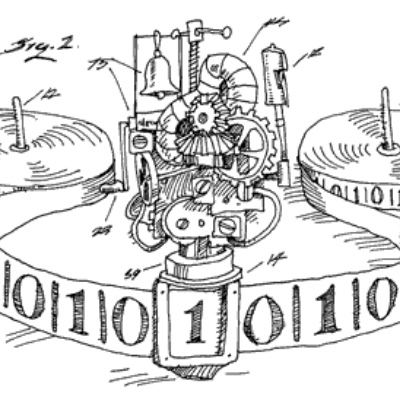
Illustration: A #Mastodon is facing a fork by somebody who has a better known name than he does. The Mastodon reconsiders his position on intellectual property issues.

The illustration is partly LLM, though I have concerns related to LLM, and partly GIMP.

@mastodon has commented as follows:

"We've heard your feedback on the Terms of Service updates for mastodon.social and mastodon.online, and we're pausing the implementation date (previously announced to users via email as 1st July 2025) so we can take further advice and make improvements."
Mastodon

A newer server operated by the Mastodon gGmbH non-profit

Mastodon hosted on mastodon.online
As there is interest, I've attached the full original post from mastodon.social as a screenshot. The link, as a more formal citation than I offered before, is:

https://mastodon.social/@Mastodon/114709820512537821

Subsequent to reading the linked thread, it seems likely that the problematic changes are an ex-parrot.

@pluralistic

Thank you, Cory. Very much appreciated.

@pluralistic @Gargron Who would be willing to bet that they hired a lawyer that specialises in stuff like drafting TOS for online services and they just went with what the lawyer recommended. With the lawyer probably having all kinds of convincing arguments about how this was "industry standard" and why the terms were necessary if they wanted the project and/or the not for profit to not be sued.
@addressforbots @pluralistic I mean… yeah, that’s pretty much it.
@Gargron @addressforbots @pluralistic Also, that lawyer may be from outside the EU or is unaware of consumer laws in the EU. Such a binding arbitration clause only works in a B2B environment in Europe.
@Gargron @[email protected] @pluralistic
So, rather than going for lawyers used to working for the surveillance capitalism sector, try reaching out to the lawyers used to working for the FLOSS sector or the digital rights sector. See the FSFE's Legal Network for some FLOSS lawyers or EDRi for digital rights lawyers.
@pluralistic
Isn't that sort of thing non-applicable in the EU (where m.s is hosted) anyway?
@Gargron
@dheadshot @pluralistic @Gargron in Germany, "arbitration agreements with consumers are only considered valid if they are signed, and if the signed document does not bear any other content than the arbitration agreement", per https://en.wikipedia.org/wiki/Arbitration_clause
Arbitration clause - Wikipedia

@dheadshot @pluralistic I also think so, the text of the ToS (unnecessarily) looks like written by US lawyers, which always reads like alien language to Europeans. It is annoying that this particular jurisdiction has been chosen as the standard. There's an open issue pointing this out: https://github.com/mastodon/mastodon/issues/33307
Avoid USA-centric text in ToS generator for non-USA hosts · Issue #33307 · mastodon/mastodon

Steps to reproduce the problem Set up a new instance Expected behaviour Sensible defaults useful for most admins Actual behaviour Heavily USA-centric ToS text is generated Detailed description http...

GitHub
@pluralistic @Gargron When I see things like this, I immediately ask, "What's your threat model?" What is it that this clause is intended to defend against? And how else might that end be achieved? You can't really defend _anything_ until you define what threats you're defending *against*.
@pluralistic i was like WAIT THERE'S A MARMOT.FR!?
@pluralistic marmots that go honhonhon

@pluralistic @Gargron

Hope these forms to be modified to a better form. I left Facebook for it's abusing potential I'd be sad to be compelled to do it again with Mastodon

@pluralistic @Gargron always when something so facepalming like this happens I can't help but think "What the hell were they thinking?"
@pluralistic Binding arbitration should just be illegal.

What's the point of being a citizen if some random contract can completely cut off one from the local legal system?
@lispi314 This was the way until Antonin Scalia overturned settled contract law.

@lispi314 @pluralistic This is such a tough issue.

If someone sued some of the smaller (fully non-profit) projects I'm involved in, they (and I, having separate no legal fiction for them) would simply be destroyed.

We know arbitration is bad, but how do we balance the existence and survival of projects intended for civic good with the potential harms they could cause, when even a basic legal defense can bankrupt the person behind the project?

@lispi314 @pluralistic I'm wondering if anyone has addressed this issue in a comprehensive way.

@sekka @lispi314

With reasonable indemnity clauses and liability insurance, which every nonprofit should carry (and which every nonprofit whose board I've ever served on DOES carry).

@sekka @lispi314 If your org can structure itself as a 501(c)3, it can also get insurance (and any good board member would make this the first order of business for any (c)3).

Cory

@pluralistic
From what I've seen of posts from #MastoAdmin asking for help paying their monthly hosting bills, I don't think every instance has non-profit status nor funds to pay liability insurance. Isn't that the *point* of Mastodon? Anybody can run an instance?
@sekka @lispi314
@juliewebgirl @sekka @pluralistic It's a wonderful example of decentralized failing to provide the advantages of distributed.

Hosting other people as a service is always a major source of liability. Doubly so without proper anonymization.

Sometimes the legal system permits throwing money at the problem to mitigate the liability, but not always.

@pluralistic @lispi314 Certainly in the case of a 501(c)3,, but what about a private or charitable organization that doesn't earn income? Liability insurance could easily be too much of a burden, and certain jurisdictions like EU have laws that pose risk to them.

This is a hypothetical, but not a big stretch. Think open source liability, for a simple case. We tend to assume that our licenses with the big fat disclaimers protect us, but claims against them still can be litigated.

@pluralistic @lispi314 I'm not breaking new ground here, and I'm not trying to pose questions nobody's ever thought of before as major points. I'm just curious, because the world is turning in dangerous directions for free software and free services*, two things I'm passionate about protecting into the future.

(* - Specifically, free services that have no monetization strategy whatsoever, not "free" services that are just alternatively monetized, like most on the commercial internet.)

@sekka @pluralistic There is no safety at the mercy of states and the legal systems they use to prop-up structures conducive the maintenance of their dominant status quo. Particularly not safety from them.

This other post (https://udongein.xyz/notice/AvGuEyiHKAmuOkVA80) could be used as hinting that there are no currently viable social/legal/political options.

Use of technical means/patches to mitigate societal flaws (such as by making targeting implausible/too-costly) is inevitably awkward and brittle though, since it is addressing the symptom rather than the root cause.
LisPi (@[email protected])

@juliewebgirl @sekka @pluralistic It's a wonderful example of decentralized failing to provide the advantages of distributed. Hosting other people as a service is always a major source of liabilit...

@sekka @lispi314 that's not a non-profit or a charity. It's just a project. Individuals involved in such a project may have some liability but it's very rare for people who eg submit a pr to a GitHub project to attract a legal claim

@pluralistic @lispi314 Apologies, I was careless in my terminology; I didn't specifically mean to refer only to IRS-recognized entities. I was thinking of a lot of the harsh EU-style regulations and how they can generate what looks, on the surface, like strict liability for entirely charitable works.

There are many examples I can think of from the BBS days, but also several instances where services like beloved MUSHes—run entirely from the pockets of the owner—died under legal pressure.

@pluralistic @lispi314 In the context of Mastodon, I was specifically thinking of the many burdens of liability assumed by every individual owner/admin, even if they pay out of pocket for associated costs, and how they could reasonably consider an agreement of arbitration to be a possible hedge against astronomical legal costs.

Obviously when there's commercial interest, strict liability makes much more sense, and I know there are definitional constraints that further clarify the question.

((Full disclosure: My current day job doesn't leave me with many braincells to rub together in my off time, so I recognize that I might be stating my concerns rather incoherently. TL;DR, I suppose, is that I wonder if smaller players turn to binding arbitration for different reasons than the big evil ones—a naive effort to try and avoid the incredible cost and vagary of the legal system in favor of a simple dispute resolution process when they have only positive intent.))

@sekka @lispi314 @pluralistic

“Stop trying to do good outside of the corpo-legal system.”

The people defining the bounds of what is legal separate from “people just doing good little things in their community” are 100% aware of this effect.

They spend a lifetime strategising reinforcing cycles of rulings and precedent - this is no accident.

@sekka @lispi314 @pluralistic
The nonprofit i worked at survived grant cuts but was mostly destroyed by this. (Free safe place for free food art supplies etc for all- incl: houseless people- #OurSpaceArts- in the houseless capital of California- Arcata- has no homeless shelters). The nimby lawyer neighbor threatened lawsuit against our hosts- a church, maintained by poor senior citizens- wonderful people with no resources- because he knew they were more vulnerable- less likely/ able to resist.

@pluralistic

Oh man... Does this mean I HAVE TO CHANGE INSTANCES??? IT DOES DOESN't IT!

Blast!

@oscarfalcon

I think that's premature - in the Github discussion, Eugen says that the lawyers they used were unfamiliar with this kind of community-oriented project. It's not too late to amend the ToS, and I am reasonably certain that this represents a misstep, not a deliberate attempt to foist bad terms on Mastodon users. I think we should expect that Eugen and the org will do the right thing here.

@pluralistic

Boy I hope they change and amend soon, otherwise I saw a new server for México I think looks interesting...

@oscarfalcon @pluralistic A new instance in Mexico? What's it called?
MaSToDoN.MX

Primera instancia de Mastodon de México, desde Abr 2017. Aquí hablamos de tecnología, literatura, ciencia, cultura, música, anime, series, películas, el acontecer diario y lo que te nazca del corazón

Mastodon alojado en mstdn.mx

@pluralistic

Let us HOPE they DO the right thing here...

@pluralistic @oscarfalcon They had better, because I'm not in the mood to roll my own - which I will do if this nonsense keeps up. Stop making me work, people!