 Tristan Colgate-McFarlane
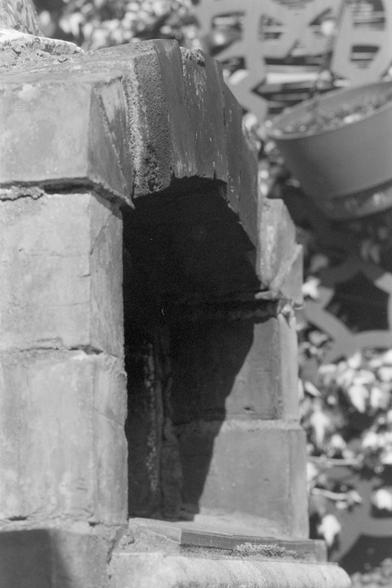
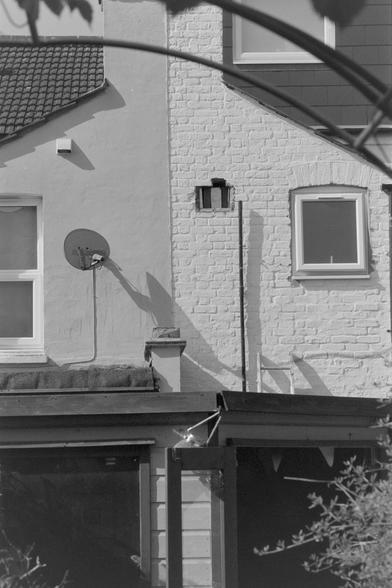
I had a go at guessing a time for #Kentmere200 in #PyrocatHD (actually #PyrocatHDC). Based on my hp5 and fp4 times being near the id11 1+1 time, I went for a base time of 9 mins (they list id11 1+1 as 8m45s). Decided to try minimal agitation so my first attempt was 13m30s, inversion for 1m at start, then 10s every 3m. For a starting point the negs look great!
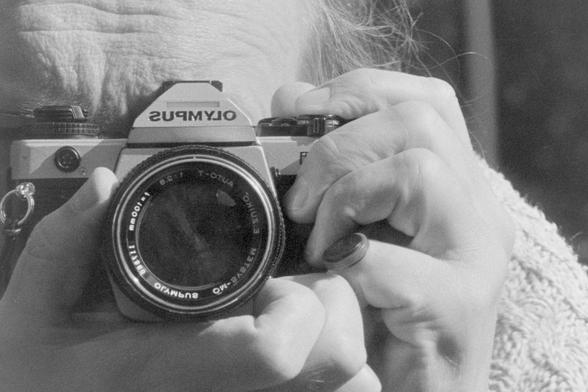
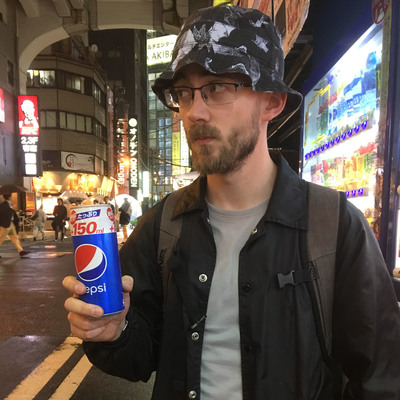
I think I've got a ci range of 1.3 (4.33 stops) so a little high, might need to drop that time a bit. Otherwise things look OK. The selfie is a close up scan to show the grain
 Tony
Tony@tmcfarlane Yeah, looks a tad bit overexposed or overdeveloped. The joy of dialling in new film/dev combinations, eh?
@coldkennels yeah, I also used an reduced agitation which is supposed to give compensation which I guess may have blocked up the highlights. Need to find the pictorial planet video which talks about estimating dev reduction. I think it's something like 10% per grade
@coldkennels by looking at the leader, it didn't seem super baked (can read through it on my lightpad)
@tmcfarlane Less agitation usually reduces contrast - it should have the opposite effect. Adding fresh developer on the highlights increases development and would make them more dense/bright, after all.
My guess is your dev time is too long for the EI you're using, and yeah, I'd go down by 10% - but I think doing it based on a more "standard" agitation routine first might be a good idea.
This is the point where having a bulk roll to do short 12 exp tests would really help!
@coldkennels I'll do another step wedge but half frame. I can always cut test out of the camera. I used the reduced agitation because its supposed to give a speed boost with pyrocat. Maybe I'll go back to standard (so 9m) and knock 10% off that.
@tmcfarlane reduced agitation would reduce contrast, so you could lower the exposure, extend the development time, reduce the agitation, and as a result, you'd have push-processed the film without increasing the contrast too much (in theory).
It shouldn't give a speed boost alone... unless there's something special about pyro developers that I'm missing!
@coldkennels it's mentioned in the unblinking eye on staining devs (see Minimal Agitation in the linked article). The reduced agitation is supposed to increase adjacency effects, give a bit of compensation, and a speed boost. That said, I think I'm supposed to reduce the dilution too. It's not mentioned here, but elsewhere.
I'll go back to regular agitation until I've had a bit more success with the testing procedure
@tmcfarlane I just read that whole thing and it seems to contradict itself. Towards the top, it mentions Pyrocat HD causes a general increase in film speed, and less agitation just increases the adjacency effects. Then, right at the bottom, it adds in a claim about less agitation = more speed, despite that not being mentioned in any of the other sections regarding agitation.
@tmcfarlane Also, as an extra bonus, the section re. "less agitation = more speed" also states that "with minimal agitation you should extend development time about 50% over the normal time required for intermittent agitation", which makes me think whoever wrote this is inadvertently pushing the film without realising (a one stop push with a regular developer is exactly 1.5x the regular dev time)!
@coldkennels the article is by Sandy King (the inventor of Pyrocat HD and co.). Now, on one hand, that makes me think he should know what he's talking about, but, on the other hand, he always says Pyrocat gives box speed or a boost, yet almost everyone else suggest it loses about a stop.
Honestly i do think a lot of these dev creators can get a bit evangelical and markety.
I'm kind of resigned to not believing a word of anything and just testing the hell out of everything myself.
Honestly i do think a lot of these dev creators can get a bit evangelical and markety.
I'm kind of resigned to not believing a word of anything and just testing the hell out of everything myself.
@tmcfarlane I think that's the only sane option.
I used to similarly see a LOT of rhapsodical nonsense about stand developing back in the early 2010s... so I tested it. It was all bullshit. (For instance, stand developing does not magically mean you can shoot different frames at "different ISOs" on the same film and they magically all come out okay: https://flickr.com/photos/coldkennels/albums/72157632642379219/)

Eastman Fine Grain 5302 Test
I bought a bulk-loader from eBay and it happened to come with a half-used 100ft roll of this film inside. Knowing nothing about it, I spooled up a short roll and took it out for some exposure testing. It seems to work best at about 6ISO, stand developed in Rodinal 1:100 for an hour, with 30sec initial agitation. Overall, I'm amazed by how good this film is. I know it's called "fine grain" but it's almost grainless. Add in the lack of an anti-halation layer (at least, as far as I can tell), it's orthochromaticism and the super-slow speed, and you end up with a beautiful and high-character film. I don't know what to use it for but I do know I want more. (I should also point out that all of these are straight out of the scanner - no sharpening, no levels adjustment, no dust removal, no nothing. Just straight 1600 DPI scans with all automation turned off.)
@coldkennels I did some second "test strips" with FP4 and k200. Using normal agitation, at 8:15, k200 gave me .1 above base fog at 3 stops under, which would be about a stop of speed lost. my +4 exposure came out 3 stops above that, which is OK for printing, but means dev could go longer. I really need to test it under the enlarger though.
@tmcfarlane How are you measuring this? Do you have a proper densitometer?
I'm with you: I hate trying to judge things by the output of a scanner. Too much automatic interpretation... give me a darkroom print any day.
@coldkennels close up lens on my Pentax Spot V. Using a blue filter (recommended for pyro). All over my scanning light. Far from perfect but good enough to judge .1 over base.
I'm tempted by the printalyzer. I've got a step wedge I could contact print to film. Probably taking it all a bit seriously though.
I'm tempted by the printalyzer. I've got a step wedge I could contact print to film. Probably taking it all a bit seriously though.
@coldkennels re the "accidental push", AIUI, when we talk about pushing film, shadow density isn't usually increased (the shadows end up developed out, I guess grain can grow a bit, but it doesn't hugely impact density), the increase is really just in the highlights. My guess is that Pyro/staining devs behave a bit differently, possible by increasing the staining activity more than the silver developement, but that's just a guess).
I'l try the minimal agitation again at some point.
I'l try the minimal agitation again at some point.