 Dominik Steiger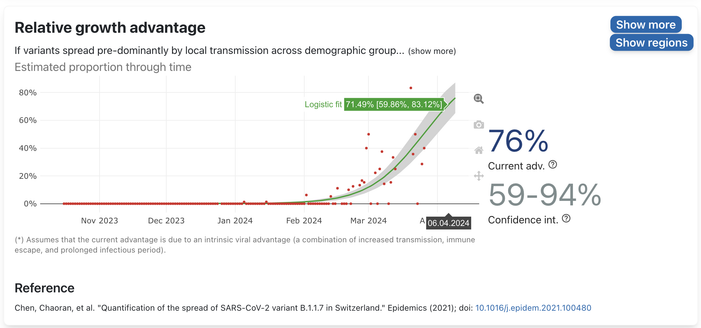
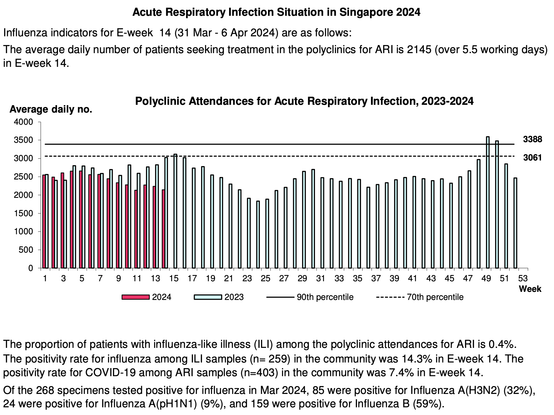
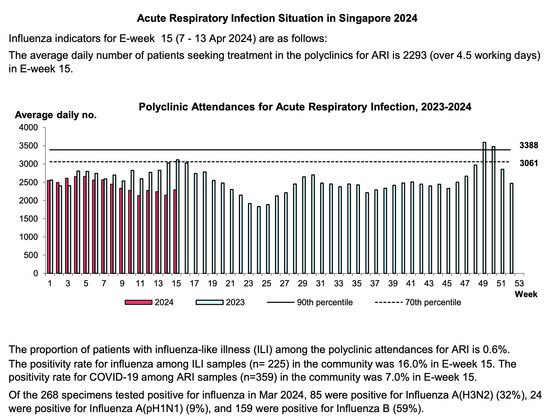
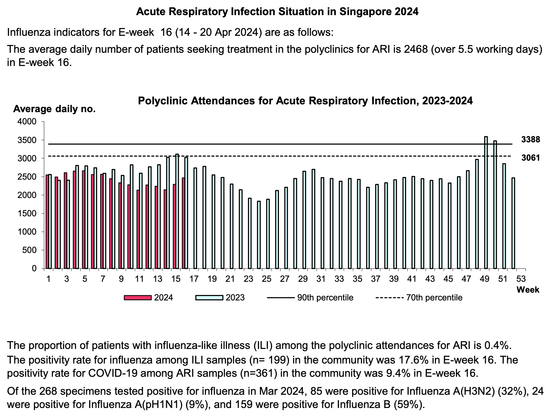
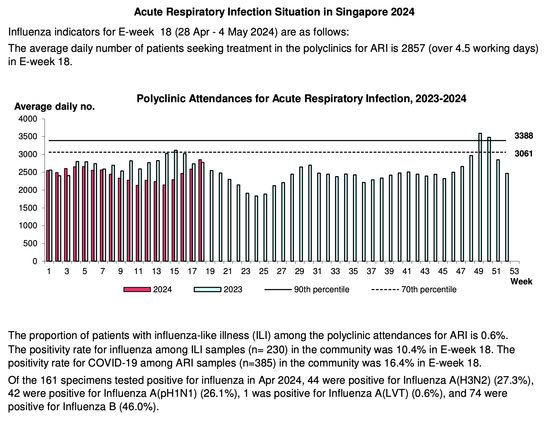
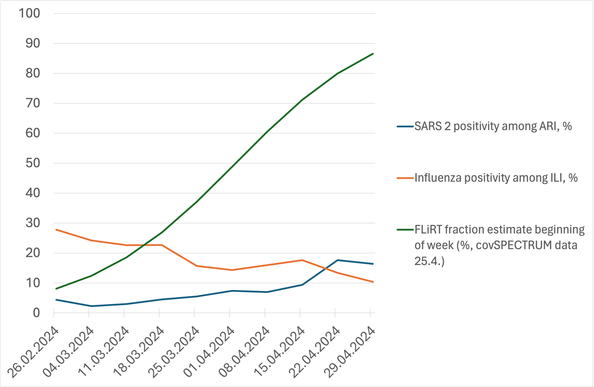
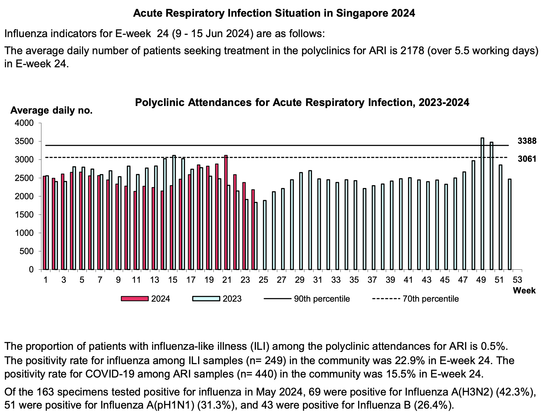
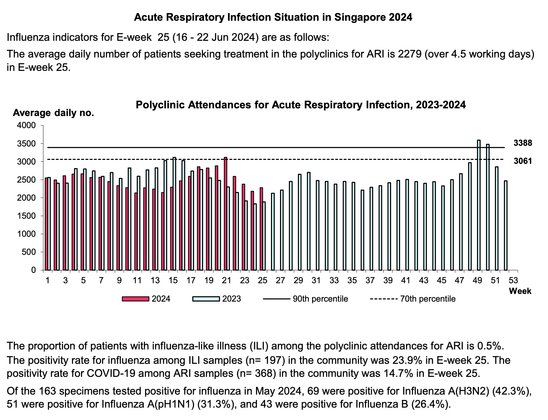
Clear signs of a Covid wave (albeit still below last year's May wave) in week 17, with SARS2 positivity among ARI samples at 18%.
No new sequences since weeks in covSPECTRUM.
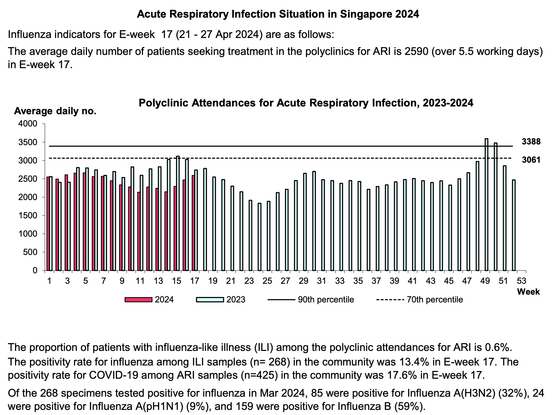
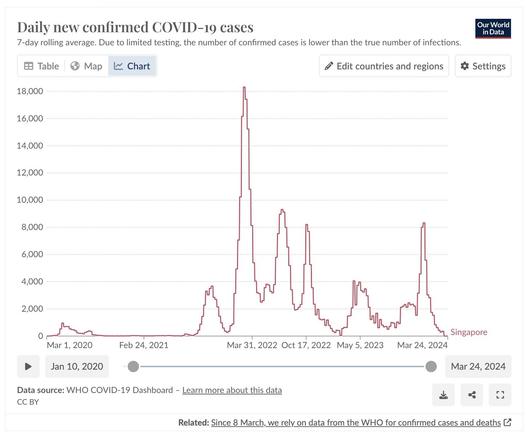
Update wk 18 (29.4.-5.5):
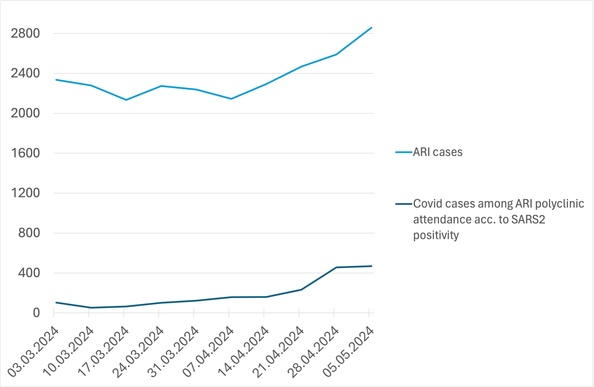
Still rising ARI numbers, SARS2 positivity has plateaued at 16%, while flu positivity went down to 10%. It looks like a minor Covid wave.
Updated seqs on covSPECTRUM:
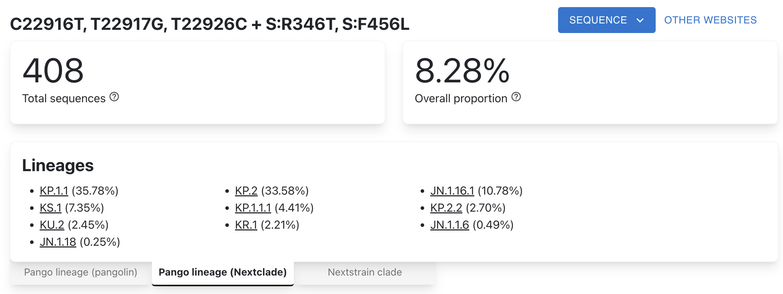
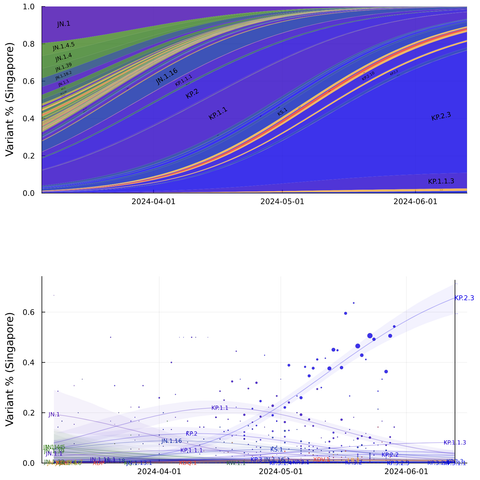
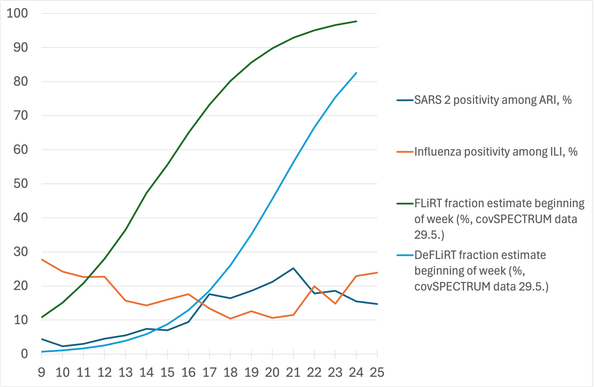
FLiRT variants are highly dominant as per April 24 (50% beginning of April, wk 14).
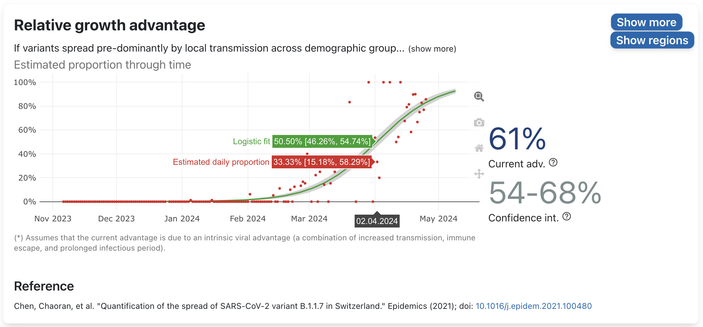
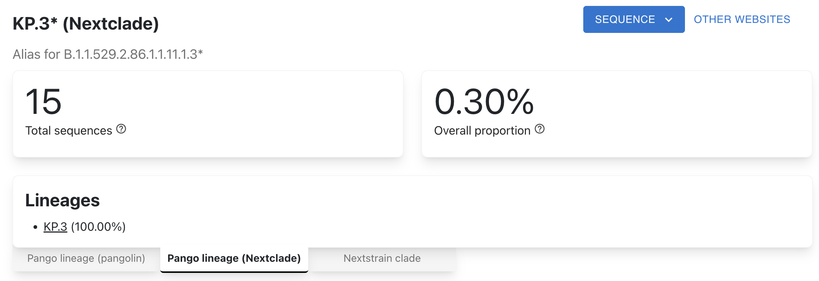
Of note, there are almost no KP.3 sequences (15 as compared to 408 FLiRT).
covSPECTRUM queries:
Multilineage JN.1 Spike with S:R346T and S:F456L (FLiRT):
KP.3:
(can't share the link properly, add the star manually)

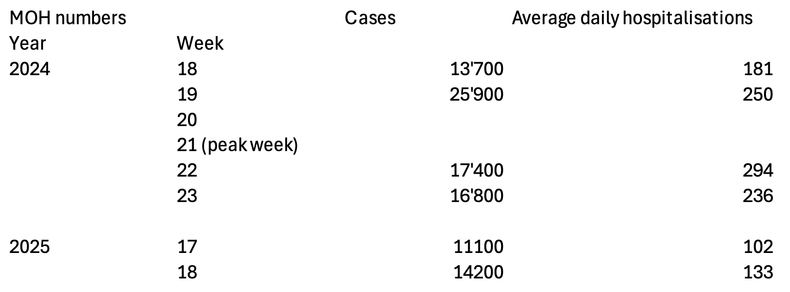
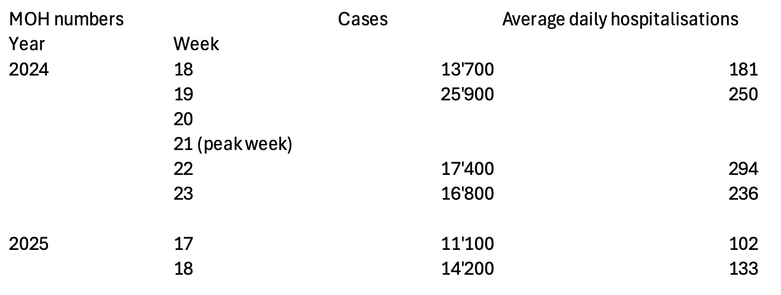
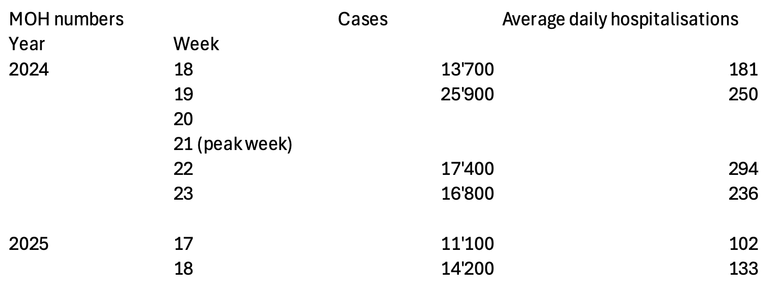
Development so far, tabulated.
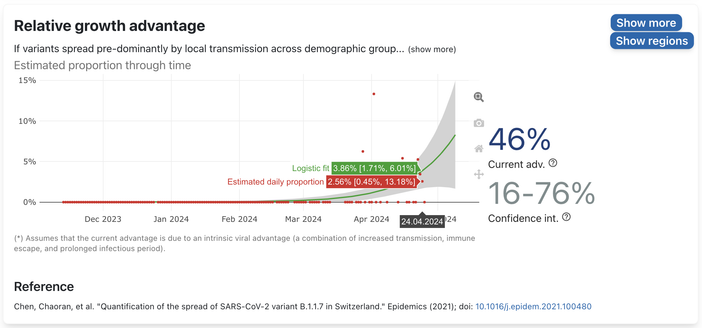
Note that the covSPECTRUM growth extrapolation, with much fewer seqs, was predicting dominance for wk 14, as the current estimate now shows too.

Dominik Steiger (@[email protected])
Attached: 2 images Extrapolation with new sequences (last available in covSPECTRUM 26.03.) would see JN.1 Spike + S:R346T, S:F456L (FLiRT) dominant in wk 14.
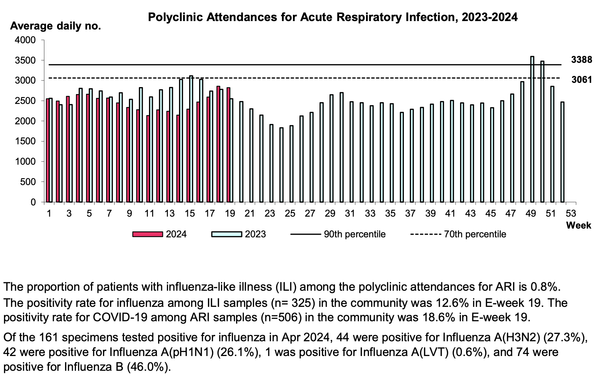
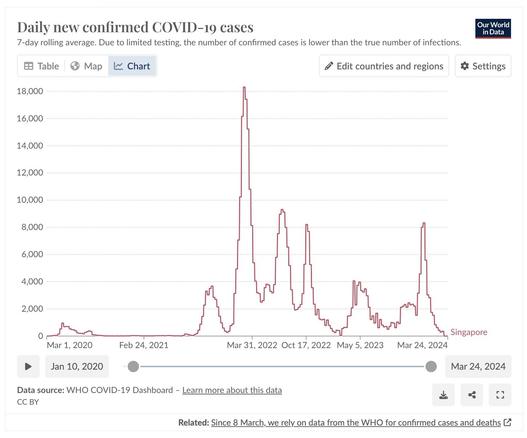
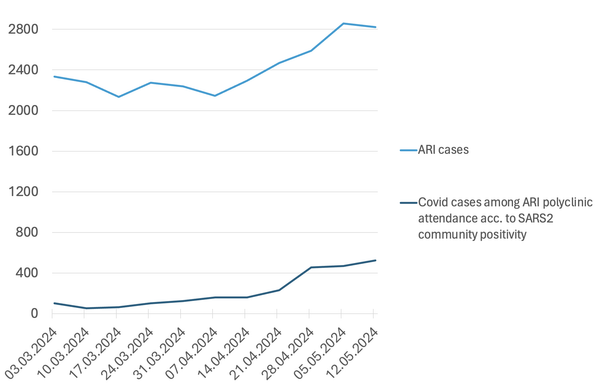
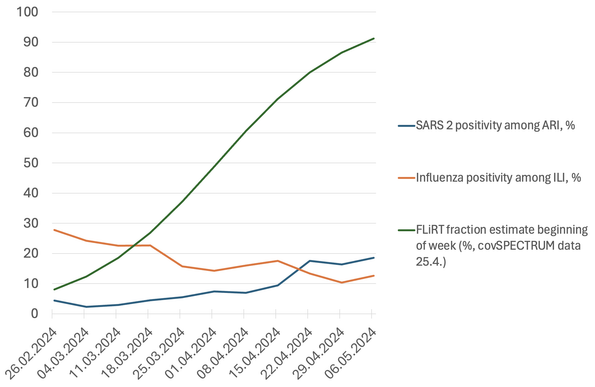
Interesting, the MOH itself is seeing a wave now. They even have case numbers. Did I overlook publication of these numbers?

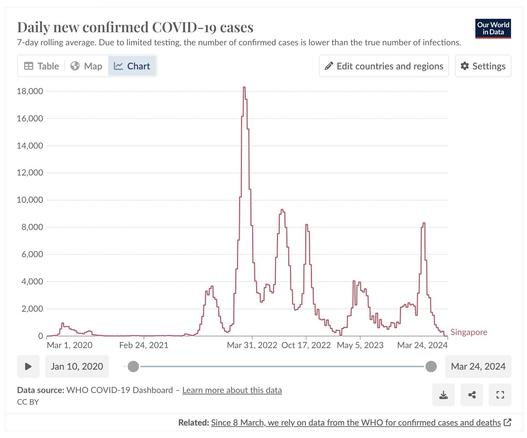
https://www.moh.gov.sg/news-highlights/details/update-on-covid-19-situation
Covid wave in Singapore, update wk. 20: Highest SARS2 positivity among ARI since wk.9, 21%. I wonder if they are at peak yet.
No new seqs in covSPECTRUM since April 25. FLiRT highly dominant with the last data, KP.3 <10%.
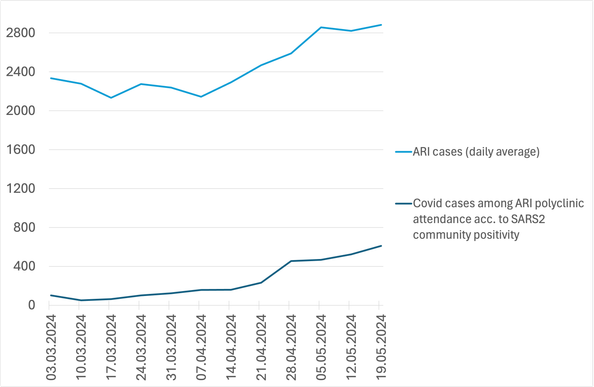
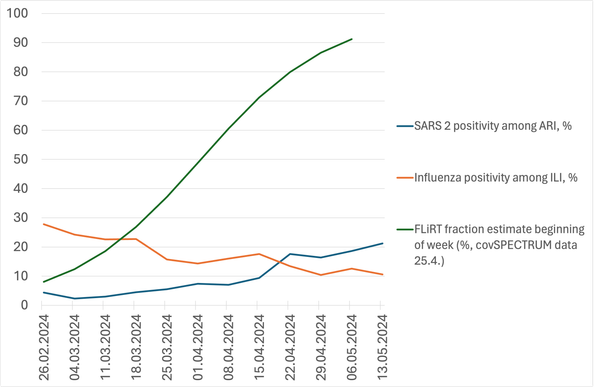
Covid wave in Singapore, update wk. 22 (wk. 21 missing): The wave might have peaked in wk. 21, ARI numbers and SARS2 positivity markedly lower.
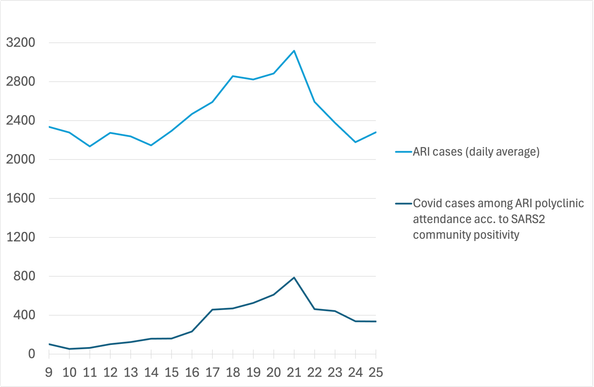
In terms of ARI, May 2023 wave magnitude. In case numbers and hospitalisations, who knows.
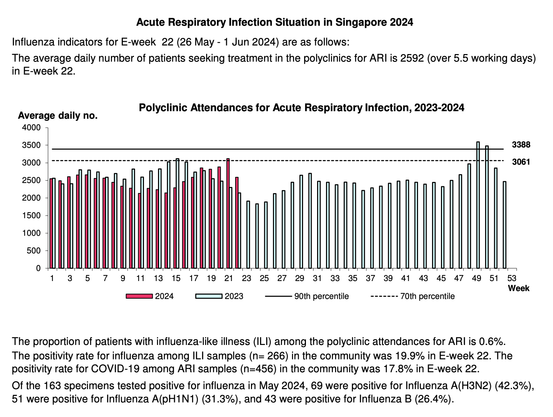
Covid wave in Singapore, update wk. 23 (wk. 21 still missing): Further reduction of ARI cases, stable SARS2 positivity.
In terms of ARI, April/May 2023 wave magnitude. Case numbers and hospitalisations: Who knows, maybe these secrets will be revealed in another press release.
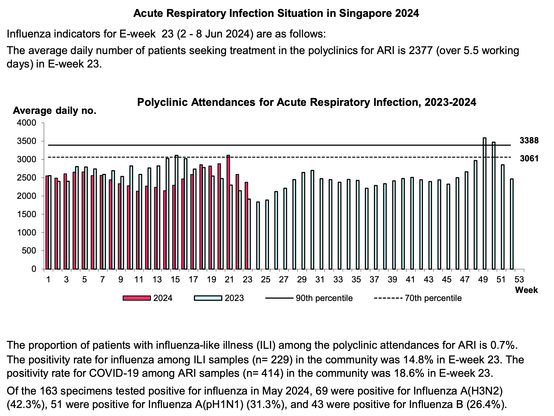
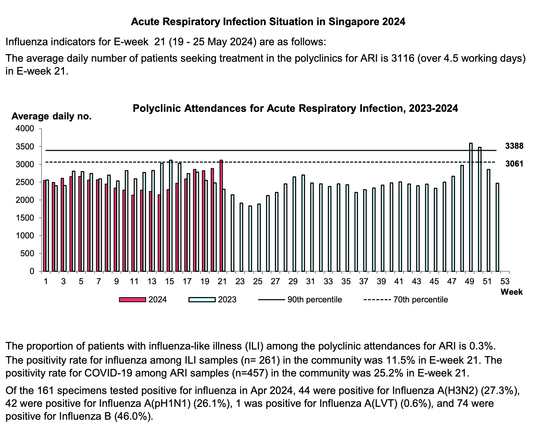
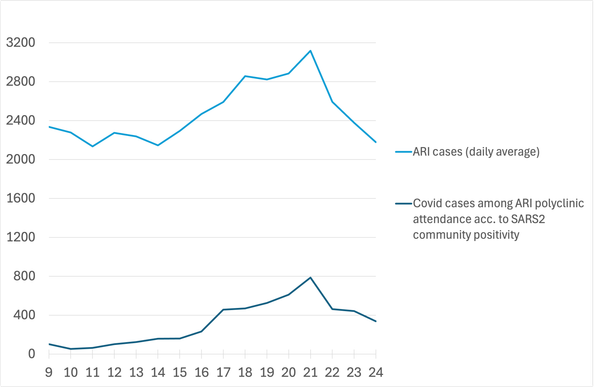
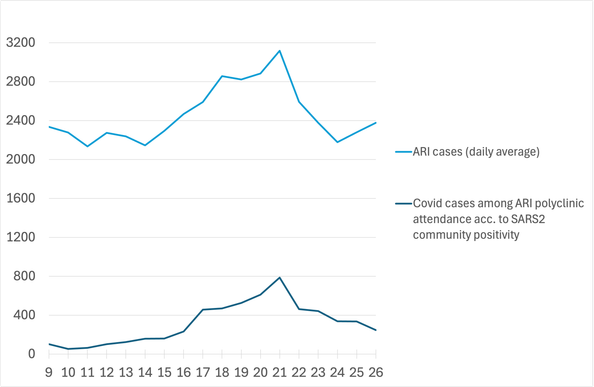
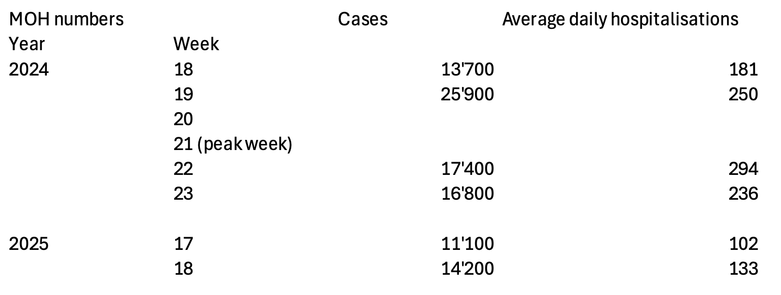
Peaked Singapore Covid wave: The MOH now supplied the missing peak week 21 ARI data and promulgated case estimates and hospitalisation data.
SARS2 positivity reached 25% in the peak week 21.
I could not find cases and hospitalisations for the weeks 20 and 21.
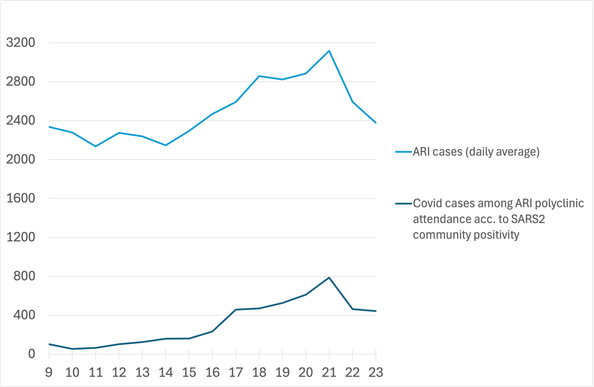
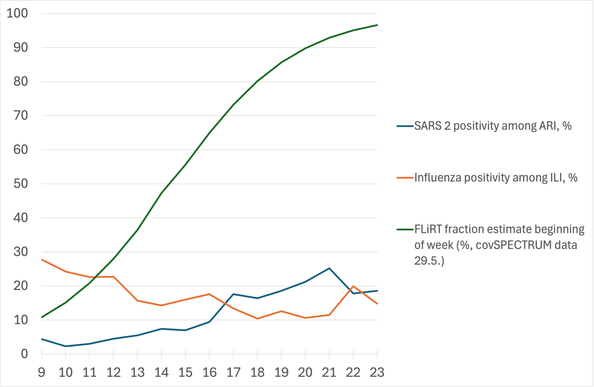
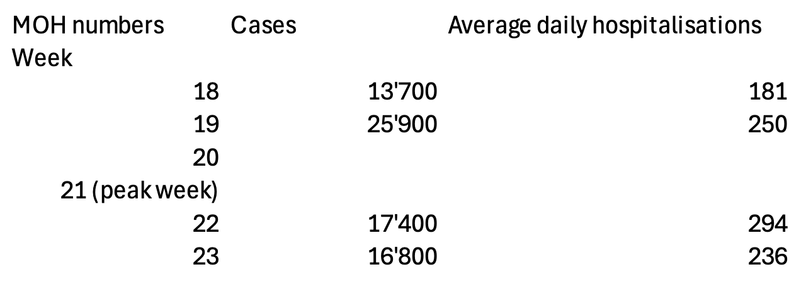

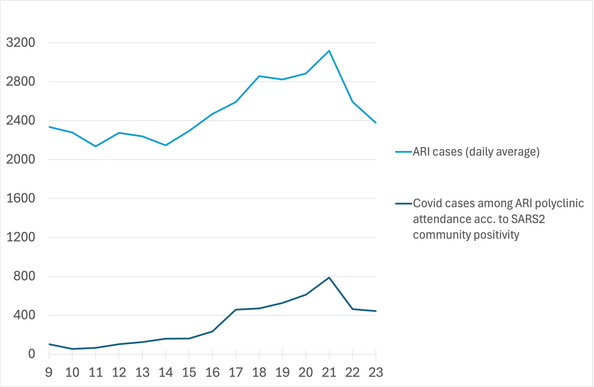
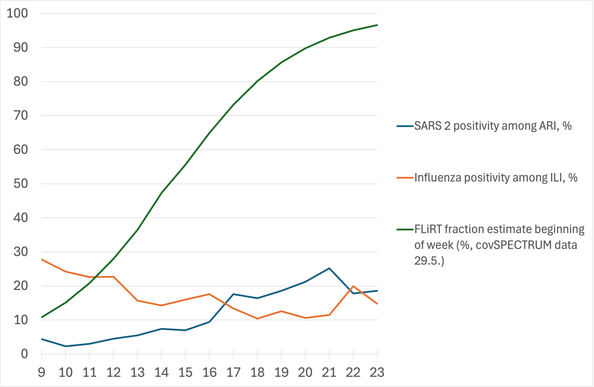
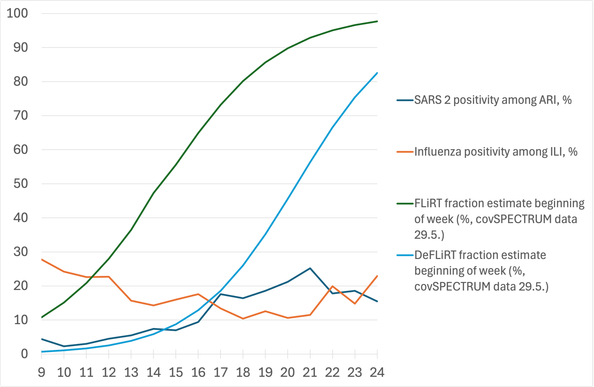
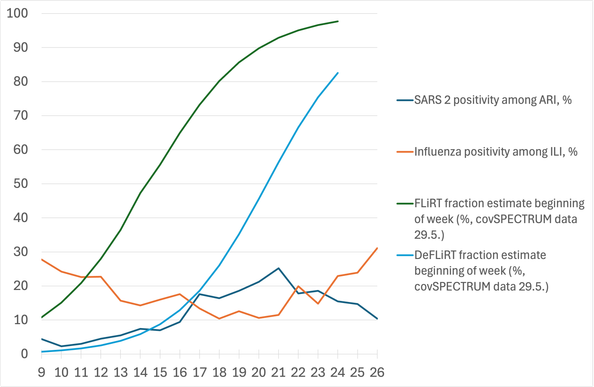
Peaked Singapore Covid wave: Update wk. 24, SARS2 positivity thankfully continued to go down. This was a FLiRT and (S:S31del + FLiRT) wave, and large. No KP.3* contribution.
KP.2.3 reached dominance around when the wave peaked in wk 21.
Sources:
https://moh.gov.sg/resources-statistics/infectious-disease-statistics/2024/weekly-infectious-diseases-bulletin
https://github.com/MurrellGroup/lineages?tab=readme-ov-file
Development so far:
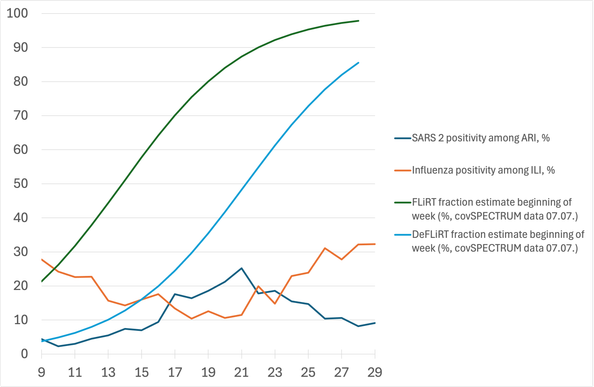
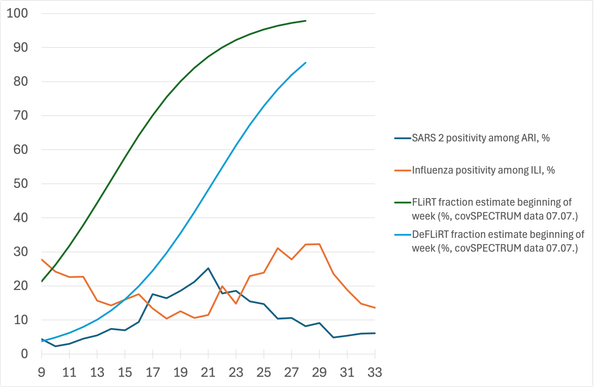
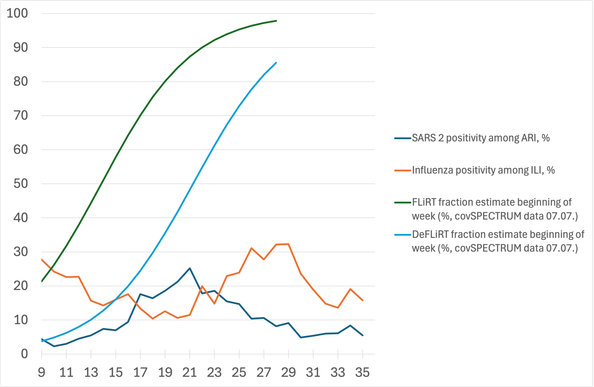
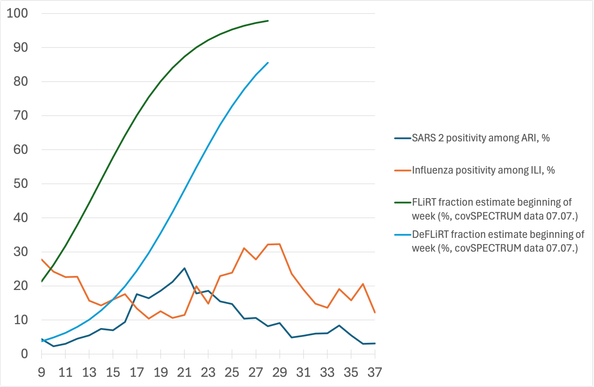
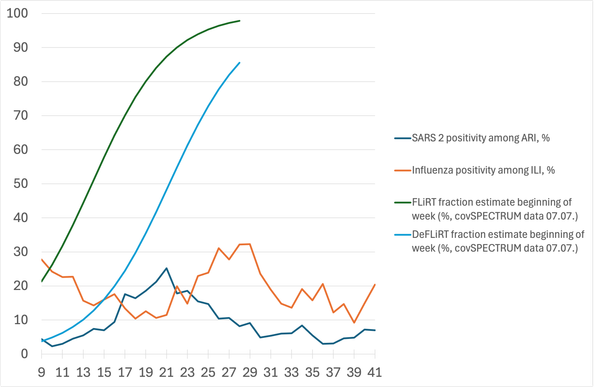
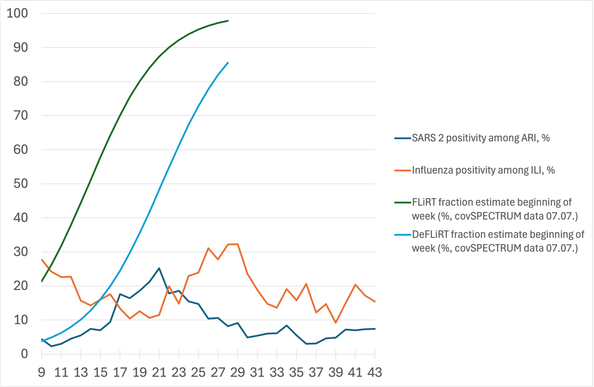
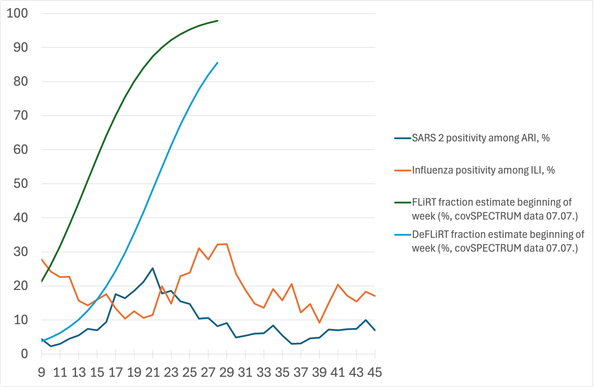
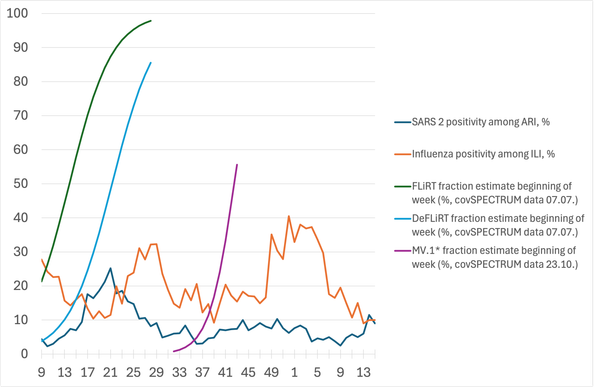
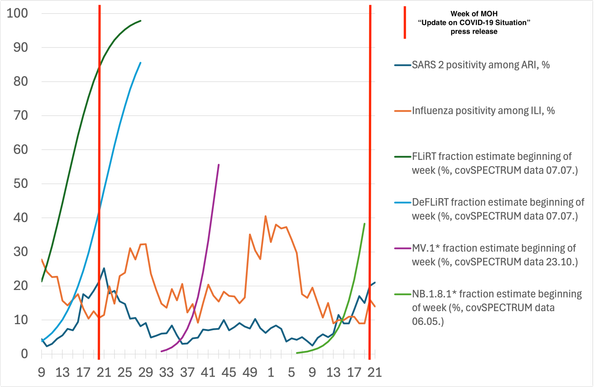
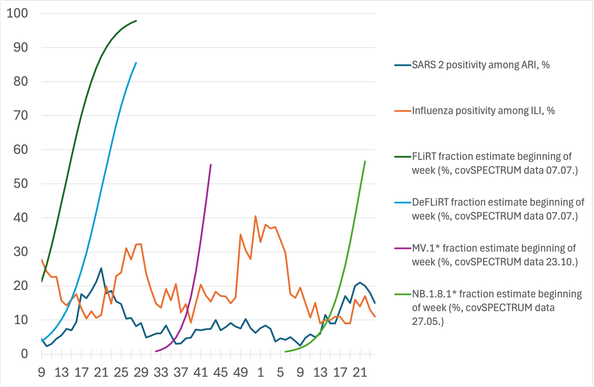
Variant fraction estimates from the covSPECTRUM tool, using Collection 42 query, last data point 29.05.
FLiRT: Multilineage JN.1 Spike with S:R346T and S:F456L
DeFLiRT: Multilineage JN.1 Spike with S:S31del, S:R346T, S:F456L
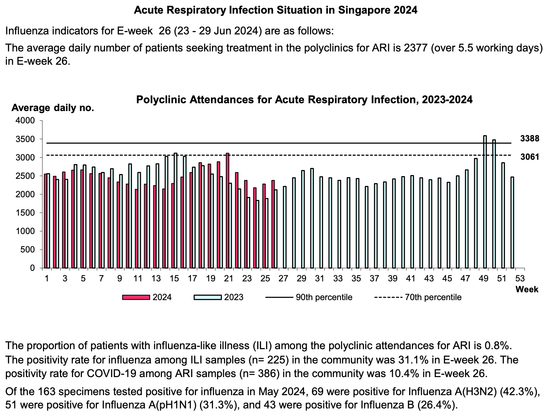
Peaked Covid wave in Singapore, update wk. 26:
Lowest SARS2 positivity among ARI since wk. 16, at the beginning of the wave.
Highest flu positivity among ILI since before wk. 9.
So rising ARI numbers are likely due to (southern hemisphere) flu, at the moment.
Peaked Covid wave in Singapore, update wk. 27:
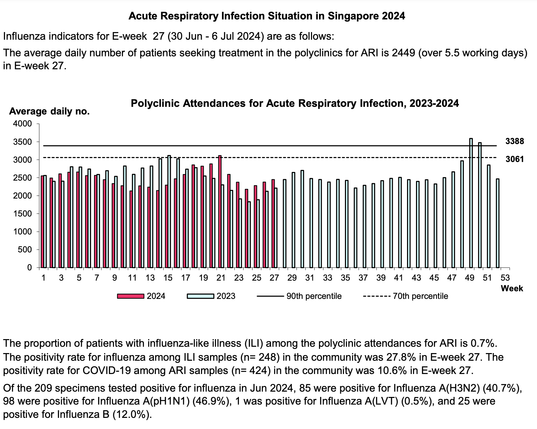
Practically no change in SARS2 ARI positivities, slightly lower influenza ILI positivity.
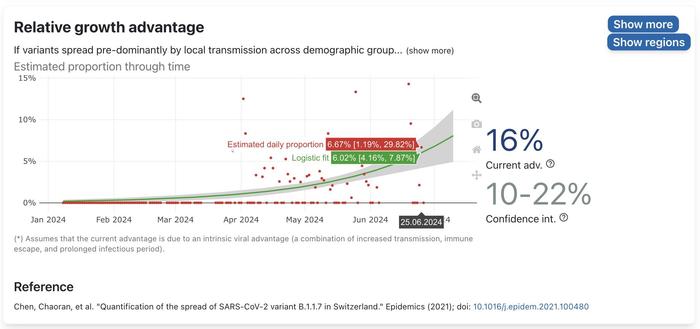
KP.3* still not much of a factor (latest data point in covSPECTRUM: 25.6.).
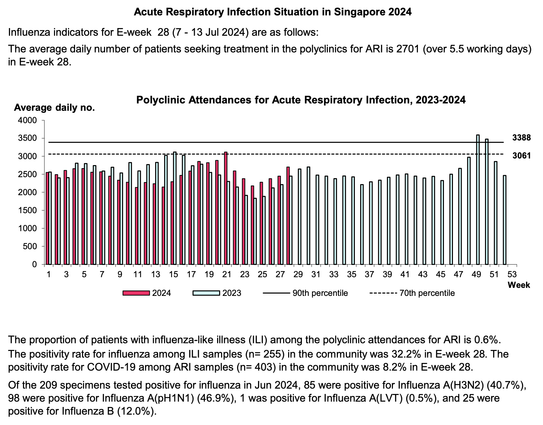
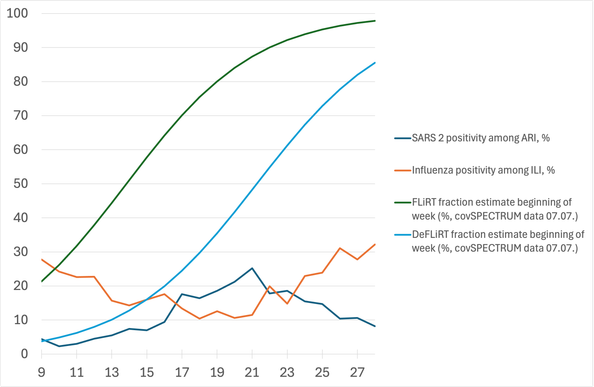
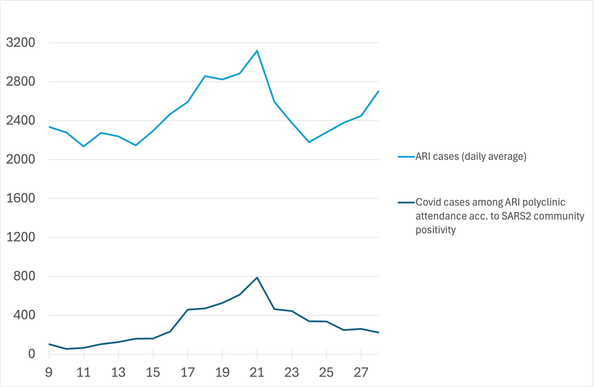
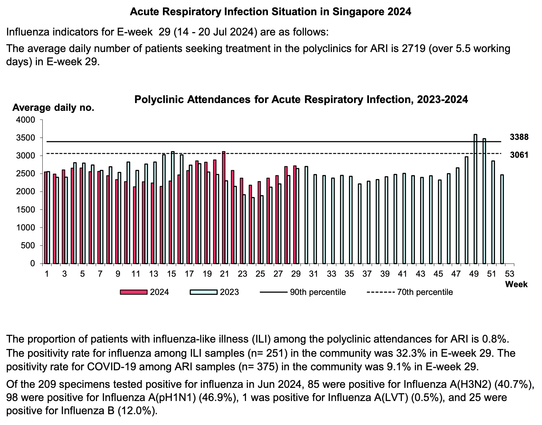
Peaked Covid wave in Singapore, update wk. 28:
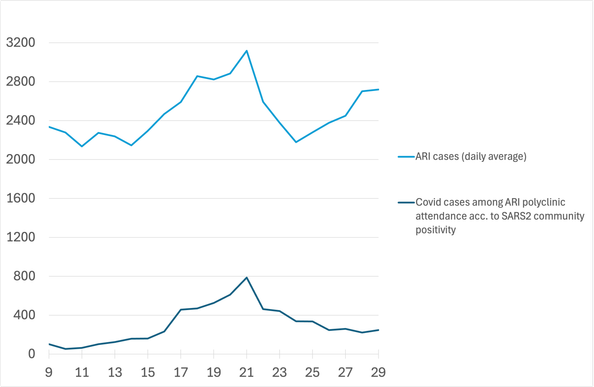
Lowest SARS2 positivity among ARI since wk. 15.
Influenza positivity among ILI >30%. Rising ARI are likely due to influenza.
KP.3* still not much of a factor (latest data point in covSPECTRUM from 07.07.)
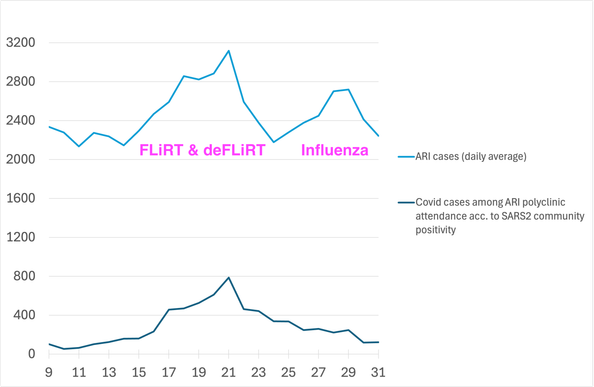
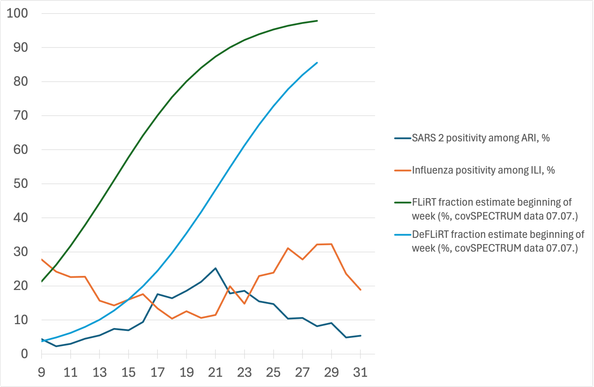
Peaked Covid wave in Singapore, update until wk. 31:
Lowest SARS2 positivities among ARI since March.
The recent influenza wave has also peaked.
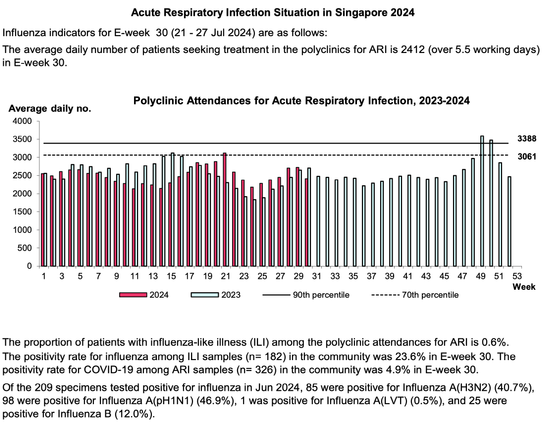
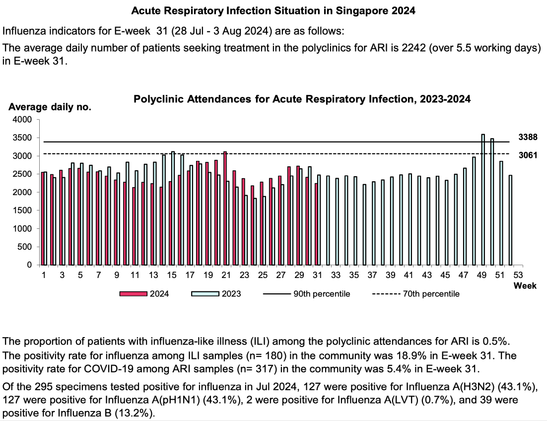
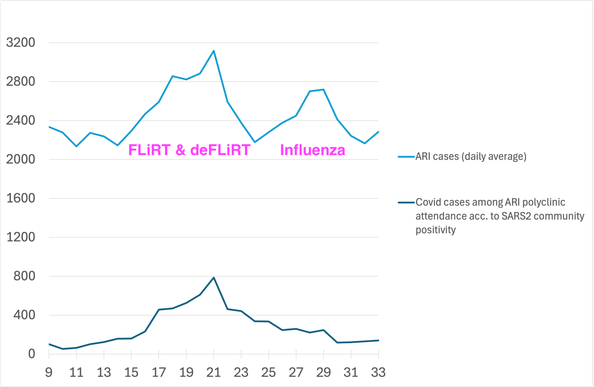
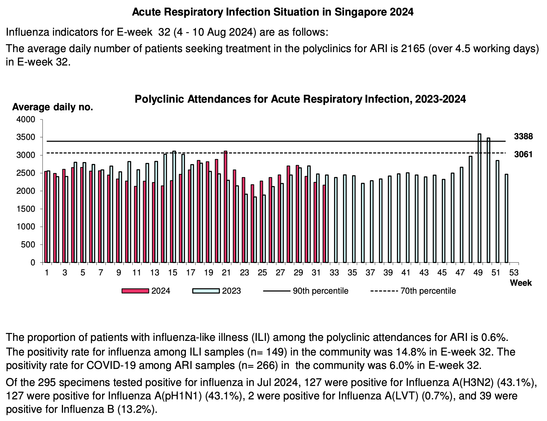
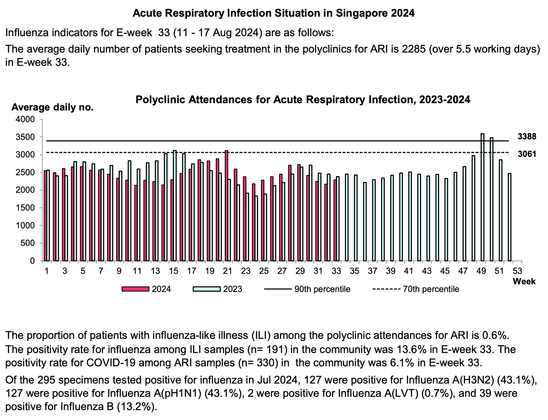
Peaked Covid wave in Singapore, update until wk. 33:
These data are now at three months since the peak of the Covid wave.
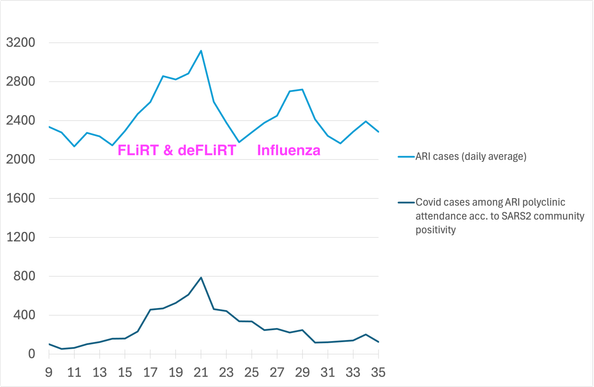
Peaked Covid wave in Singapore (wk. 21), update until wk. 35:
Still no new Covid wave, 14 weeks after the last peak. SARS2 positivity among ARI at 6%.
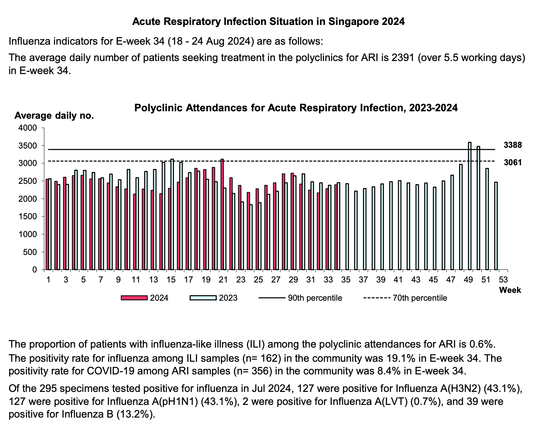
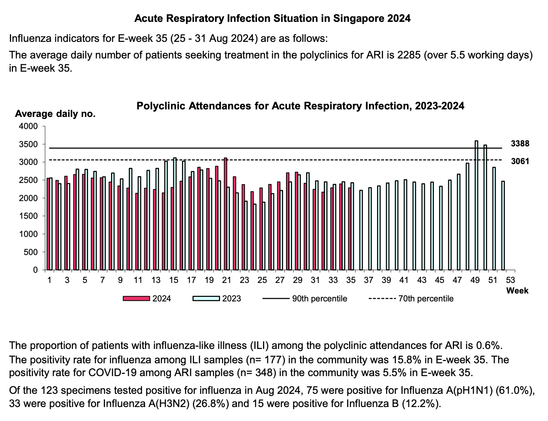
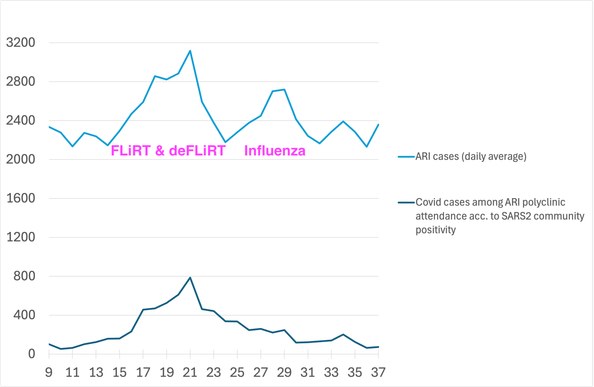
Peaked Covid wave in Singapore (wk. 21), update until wk. 37:
Still no new Covid wave, 16 weeks after the last peak.
SARS2 positivity among ARI at 3%, lowest since March.
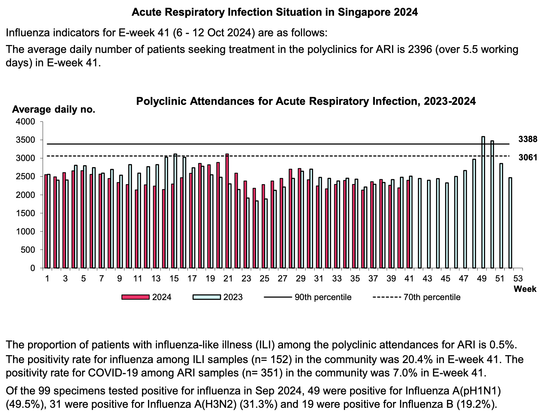
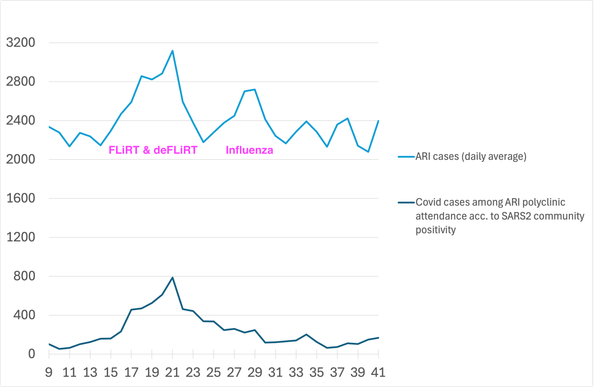
Peaked Covid wave in Singapore (wk. 21), update until wk. 41:
Still no new Covid wave, 20 weeks after the last peak.
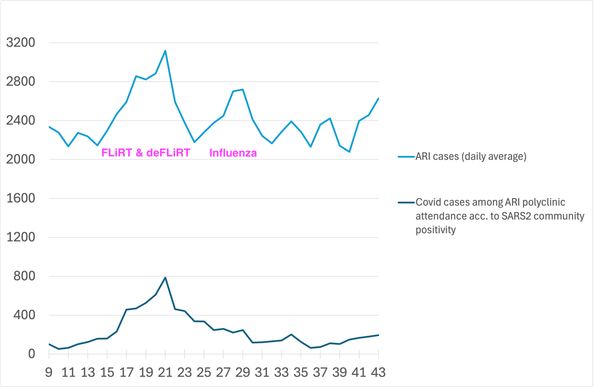
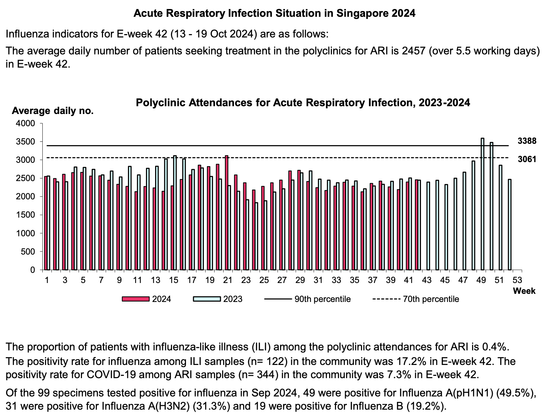
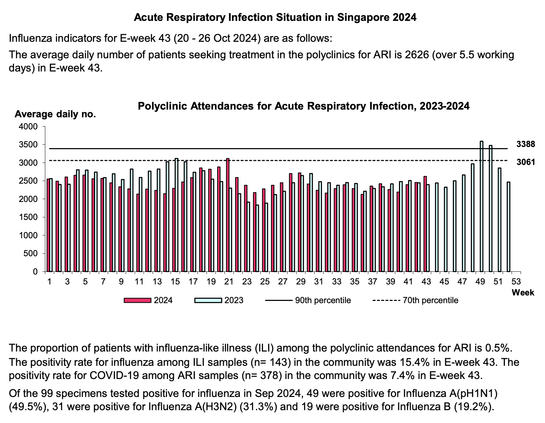
Singapore, update until wk. 43:
Markedly higher ARI numbers, with SARS2 ARI positivity slightly rising and flu ILI positivity falling. Pressure from MV.1*?
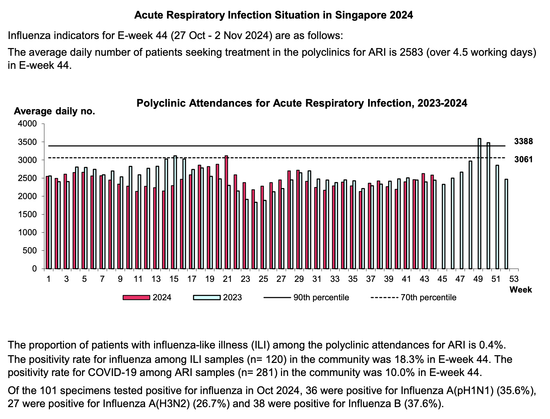
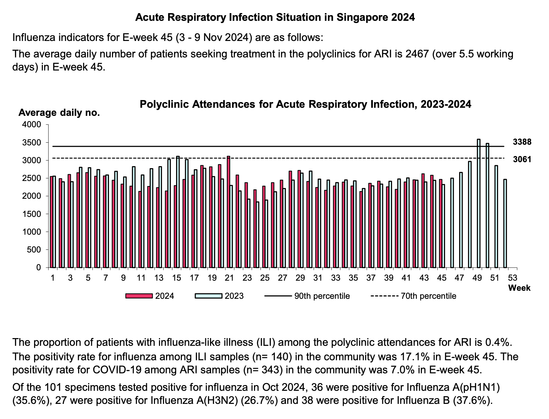
Singapore, update until wk. 45.
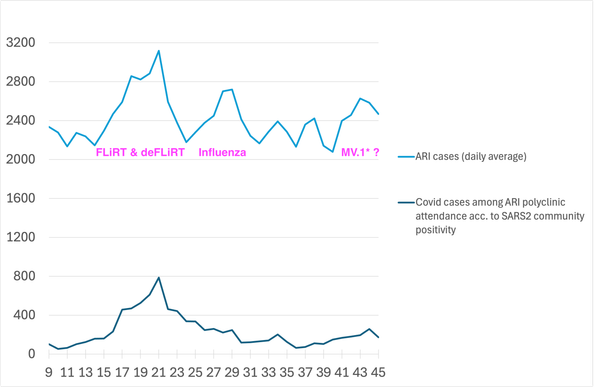
24 weeks after the peak of the last large Covid wave. We might see the effect of MV.1*. ARI cases and SARS2 positivity lower than in the last two weeks.
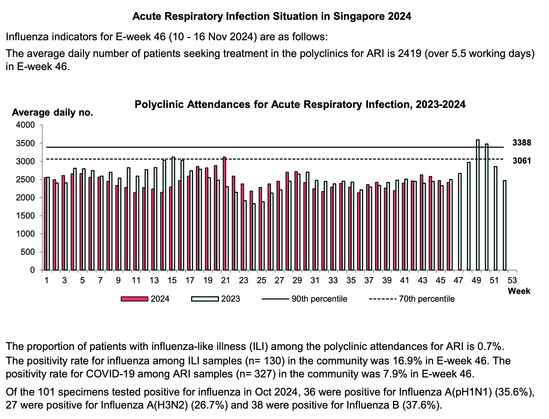
Singapore, update until wk. 46.
25 weeks after the peak of the last large Covid wave. We might see the effect of MV.1*.
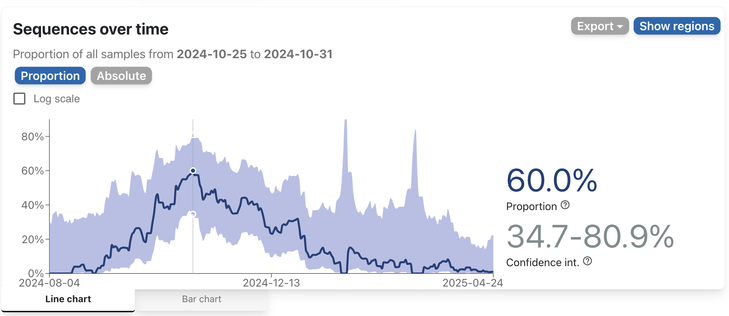
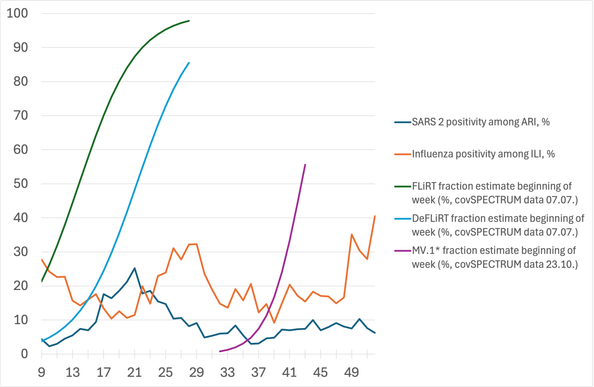
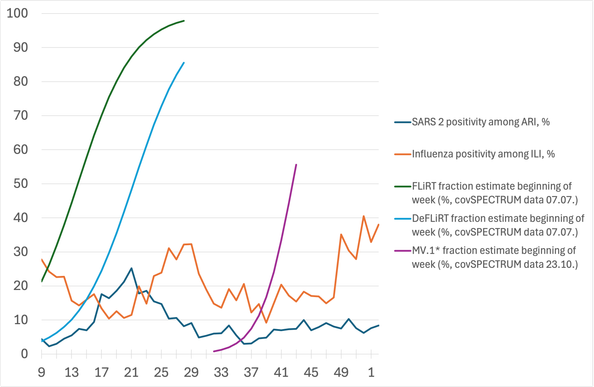
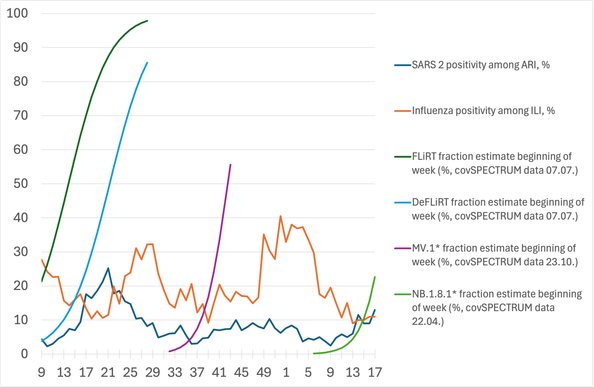
MV.1* fraction estimate from covSPECTRUM (https://cov-spectrum.org/explore/Singapore/AllSamples/Past6M/variants?nextcladePangoLineage=MV.1*)
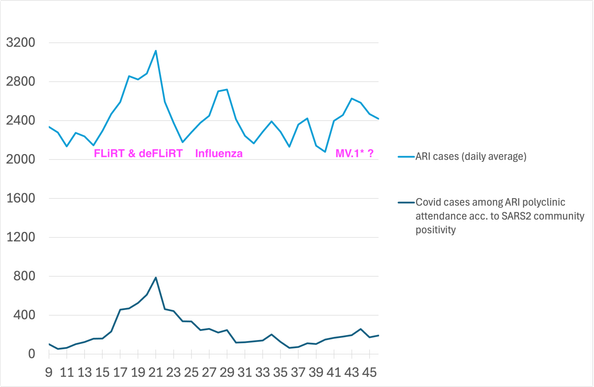
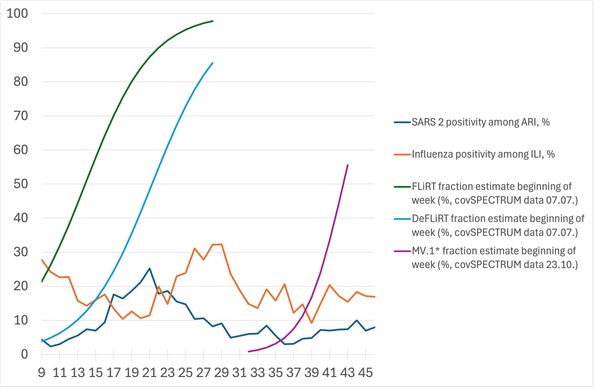
Singapore, update until wk. 49.
No Covid wave, 28 weeks after the peak of the last large Covid wave.
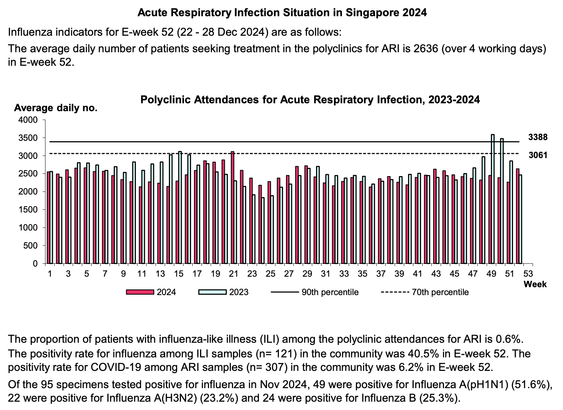
Wk. 49: Strong influenza positivity signal among ILI.

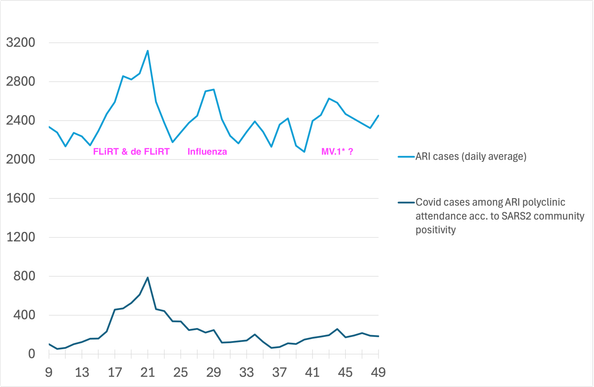
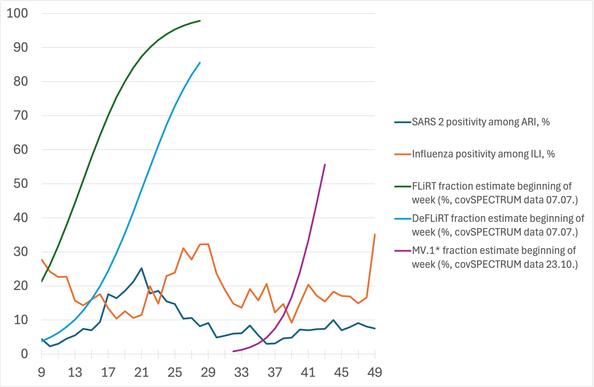
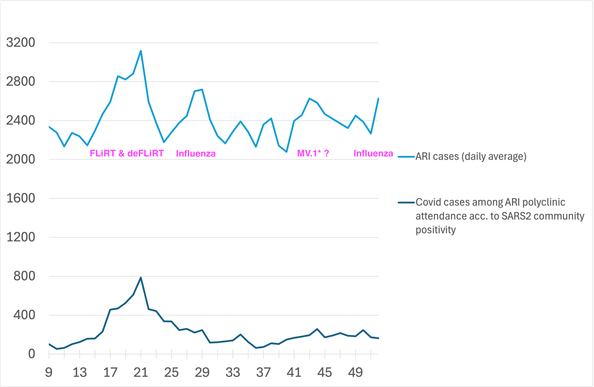
Singapore, update until wk. 52.
No Covid wave, 31 weeks after the peak of the last large Covid wave.
Influenza wave; very high influenza positivity among ILI.
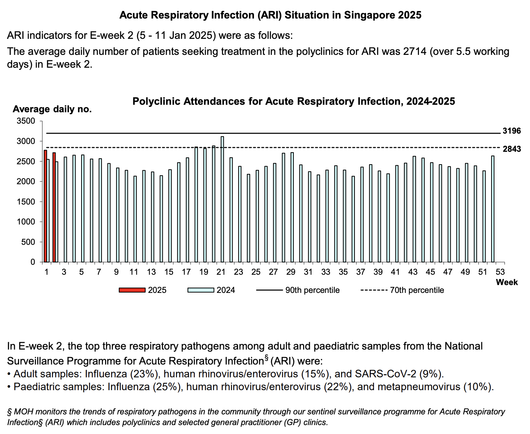
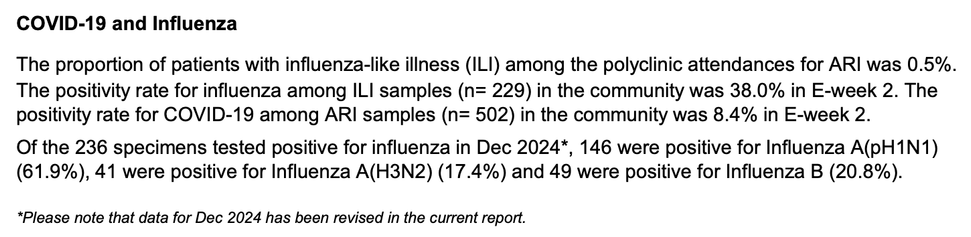
Singapore, update until week 2 2025.
No Covid wave, 33 weeks after the peak of the last large Covid wave.
Influenza wave; very high influenza positivity among ILI.
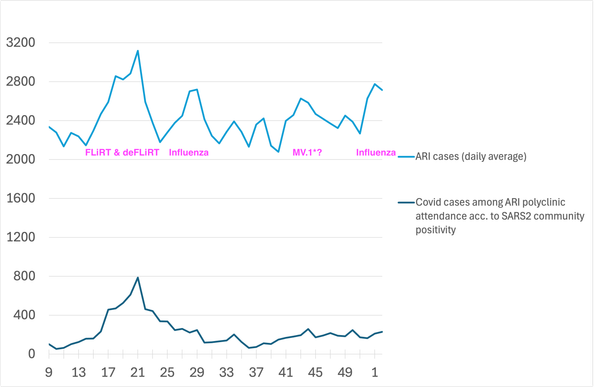
Singapore, update until week 5 2025.
No Covid wave, 36 weeks after the peak of the last large Covid wave.
Bad Influenza wave.
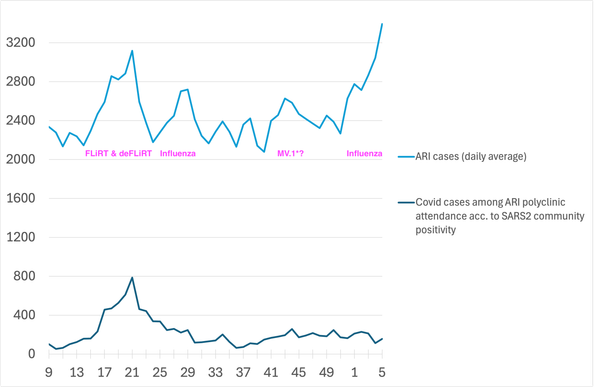
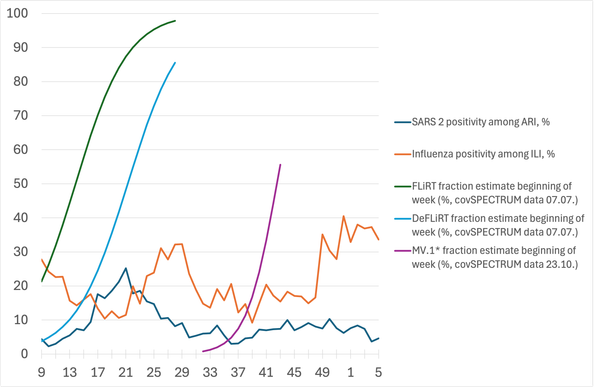
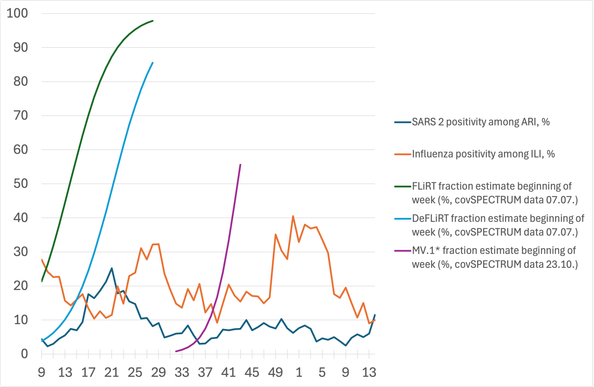
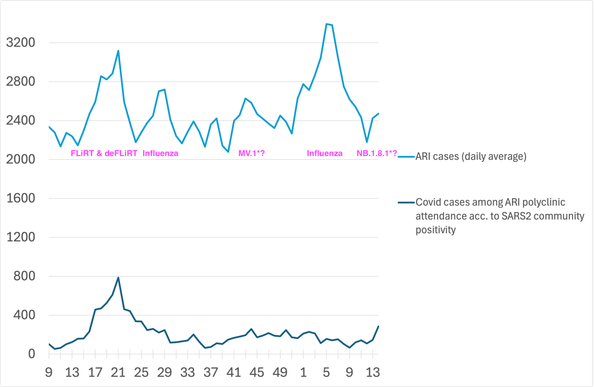
Singapore, update until week 13 2025.
The bad flu wave is over. There was no large Covid wave since almost a year.
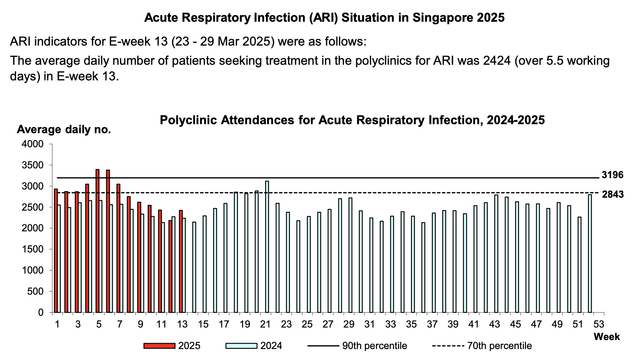
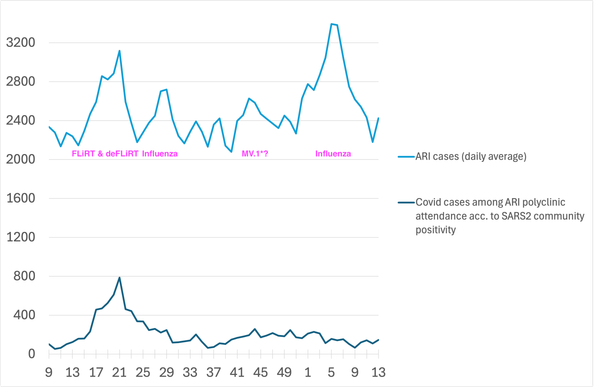
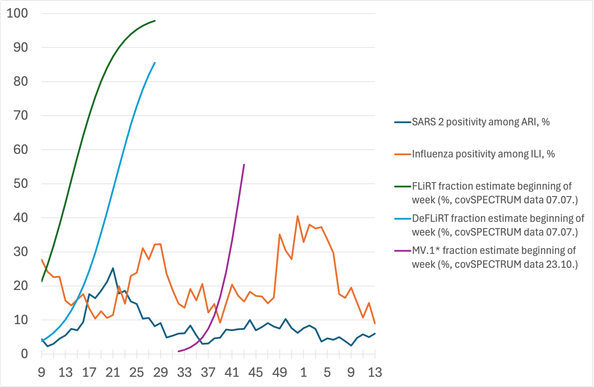
Singapore, update until week 14 2025.
Highest SARS2 positivity among ARI since the last large Covid wave.
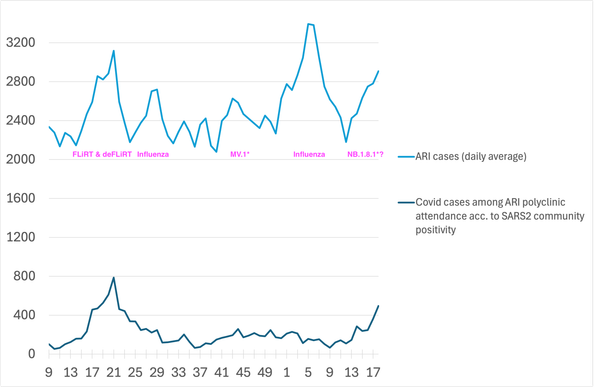
Might be the start of a wave. Might this be NB.1.8.1*?

Dominik Steiger (@[email protected])
Attached: 3 images #Covid A variant to watch: NB.1.8.1* It's become dominant in Hong Kong and is growing quite fast.
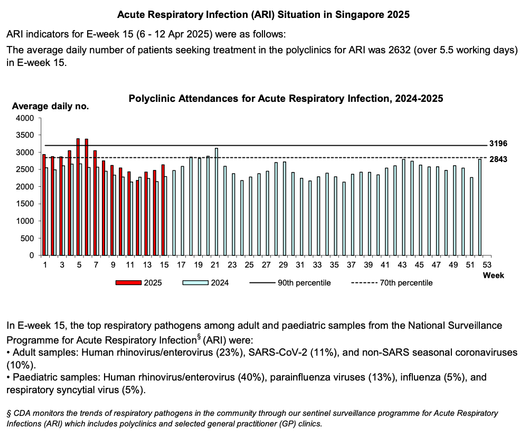
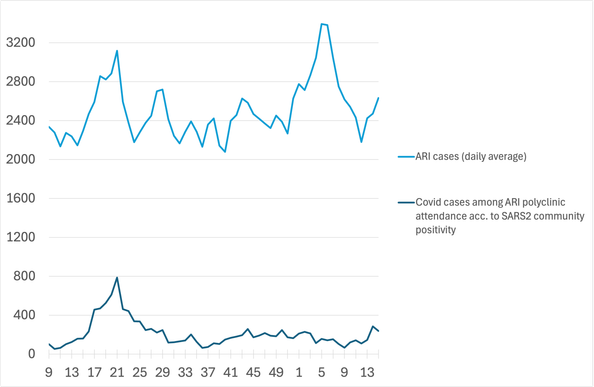
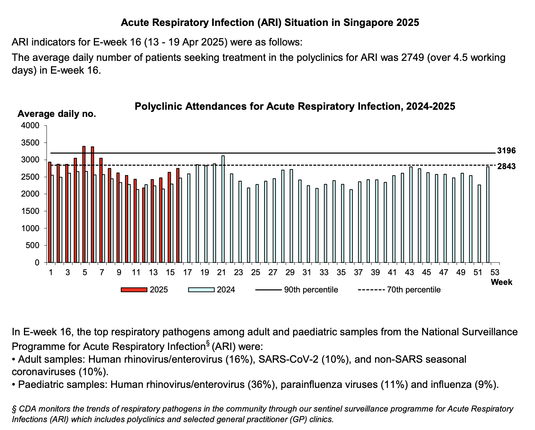
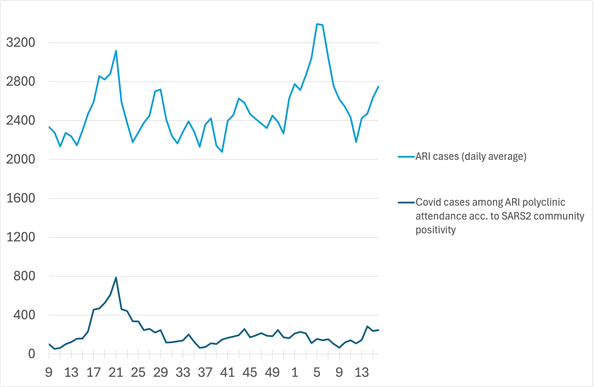
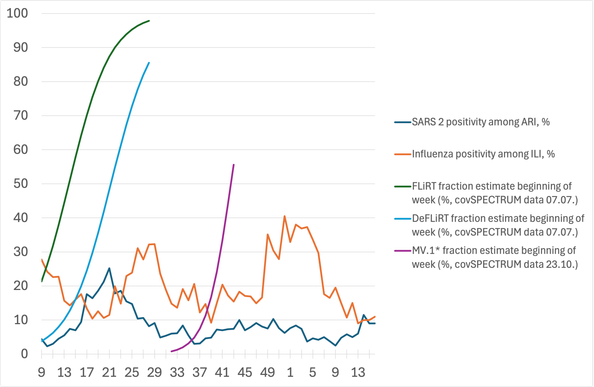
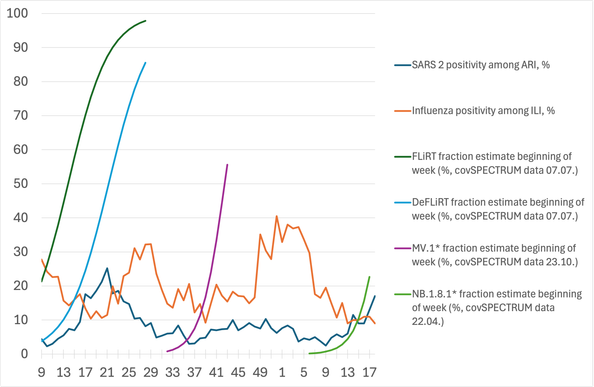
Singapore, update until week 17 2025.
Highest SARS2 positivity among ARI since the large wave last May.
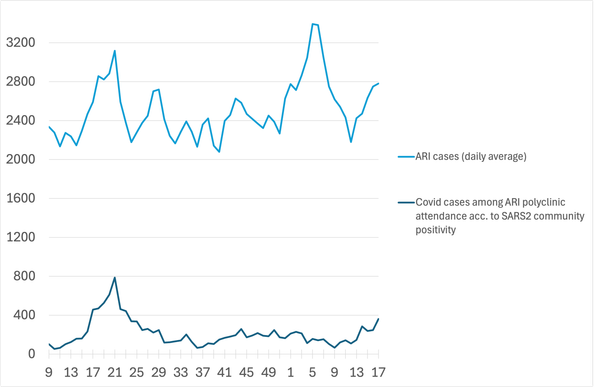
Not clear to me if NB.1.8.1* is the cause.

Dominik Steiger (@[email protected])
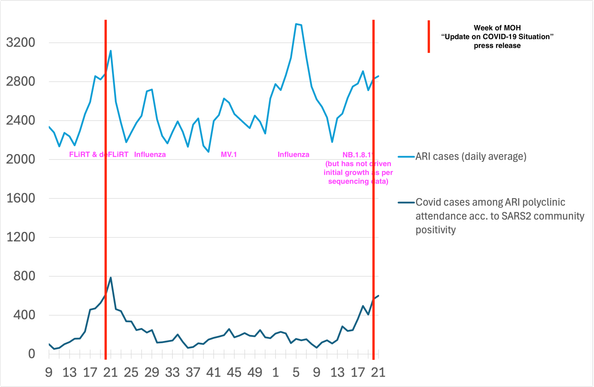
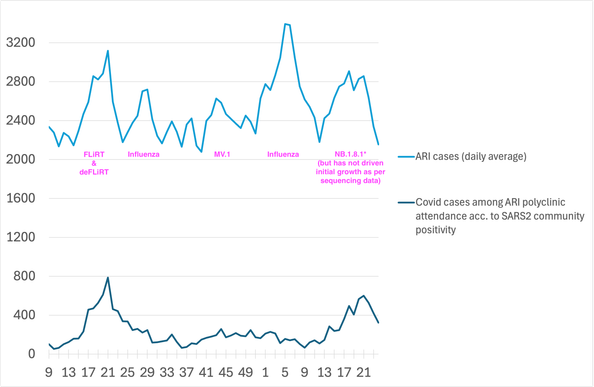
Attached: 3 images #NB.1.8.1* #Covid #Singapore Given the insufficient numbers of seqs, it continues to be hard to say if the rise in Singapore ARI figures is related to NB.1.8.1*. The ARI and SARS2 positivity rise precedes NB1.8.1* fraction growth. Also, ARI numbers seem to rise more then Covid positivity alone would suggest. https://swiss.social/@dominiksteiger/114335575042821674
Singapore, update until week 18 2025.
Definitely a Covid wave, one year after the last large.
SARS2 positivity among ARI: 17%
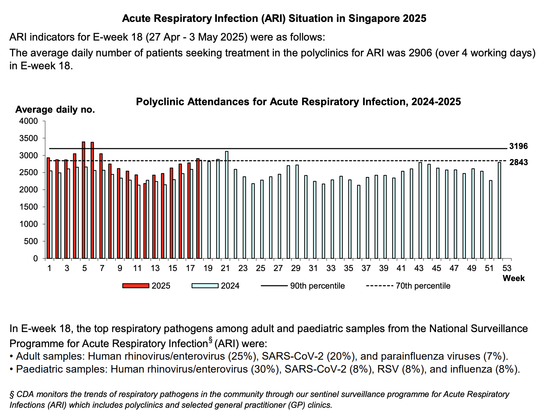
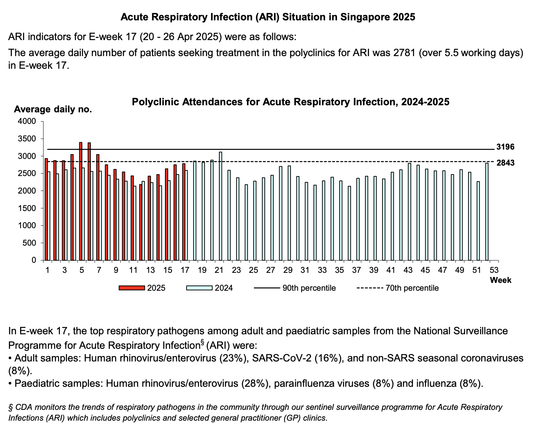
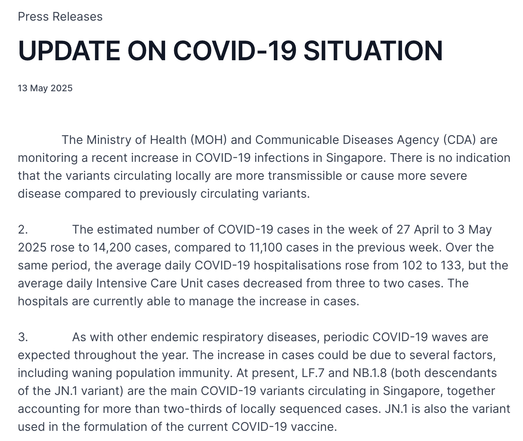
And here the MOH's announcement (from yesterday). They cite
102 daily hospitalisations for wk 17
133 daily hospitalisations for wk 18
Compare to last year's figures.
https://www.moh.gov.sg/newsroom/update-on-covid-19-situation-
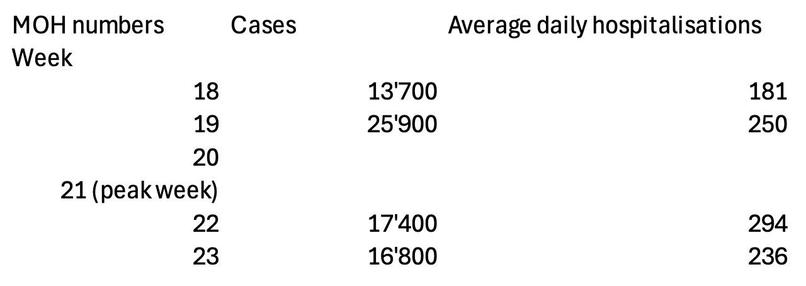

Singapore, update until week 19 2025.
ARI numbers and SARS2 positivity slightly down. If this trend continues, it will have been a much smaller wave than last year.
Note the patchy case and hospitalisation numbers derived from occasional press releases.
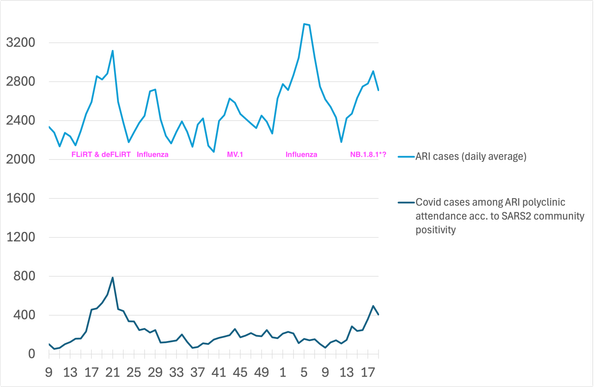
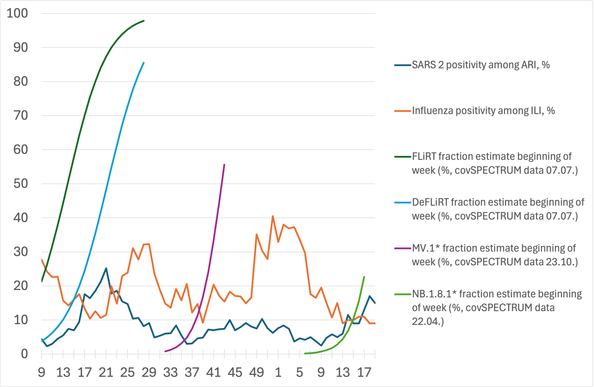
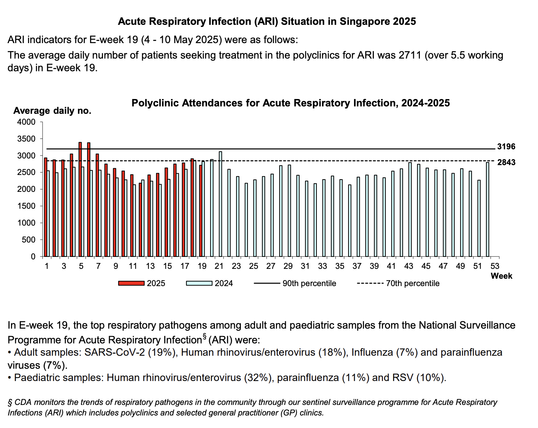
Singapore, update until week 20 2025.
SARS2 positivity among ARI now 20%, close to what was seen at the peak of the wave one year ago.
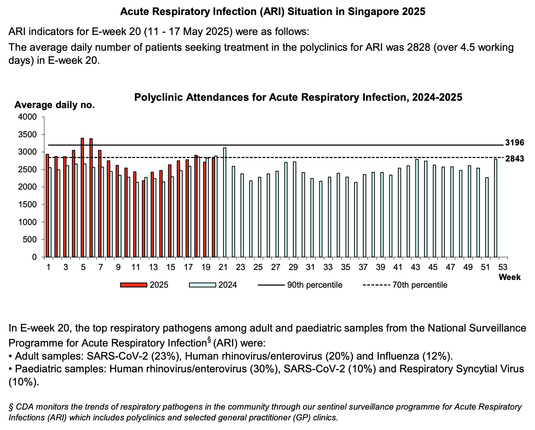
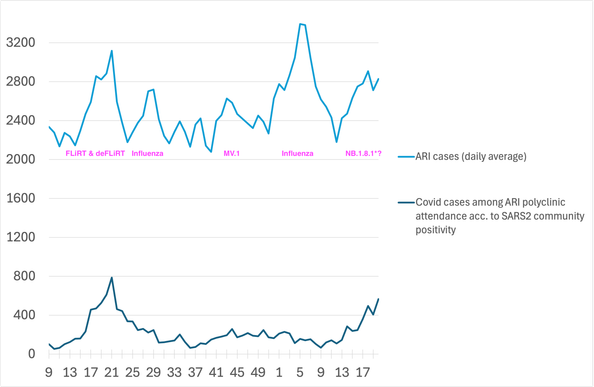
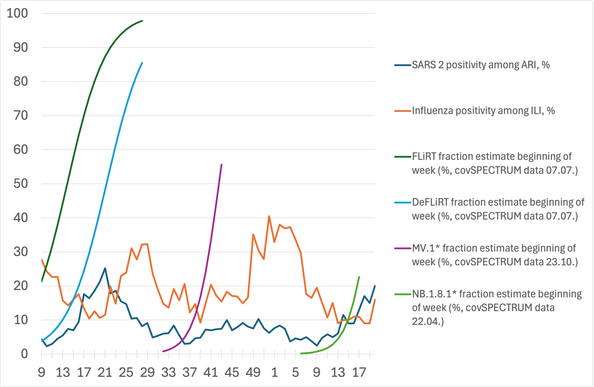
#Covid wave in #Singapore
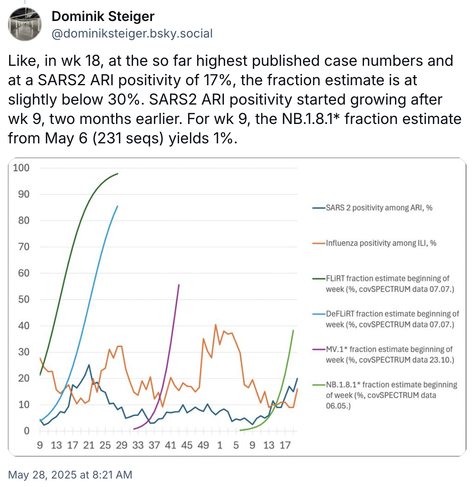
covSPECTRUM has been updated with seqs until 06.05.
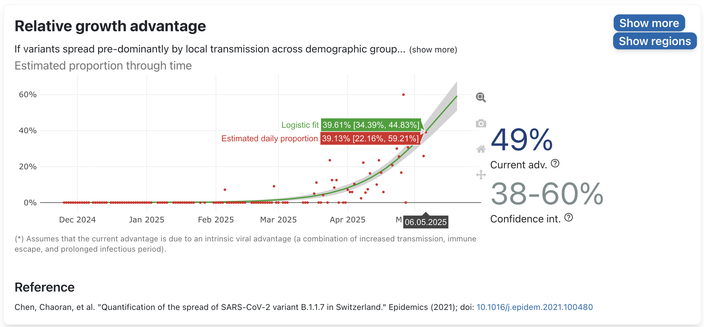
The fraction growth estimate for NB.1.8.1* is based on low seq numbers (231 for NB.1.8.1*).
Growth of SARS2 positivity among ARI had started when NB.1.8.1* fraction was still low.

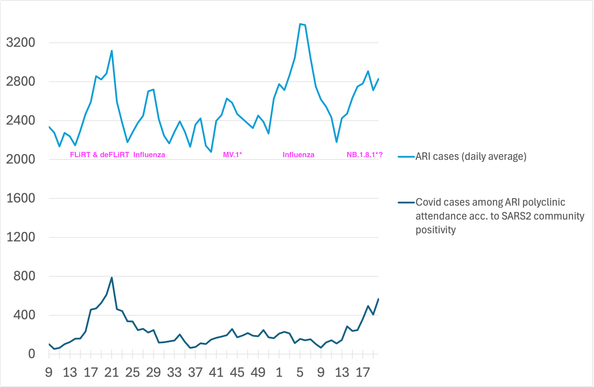
#Covid wave in #Singapore, update until week 21 2025.
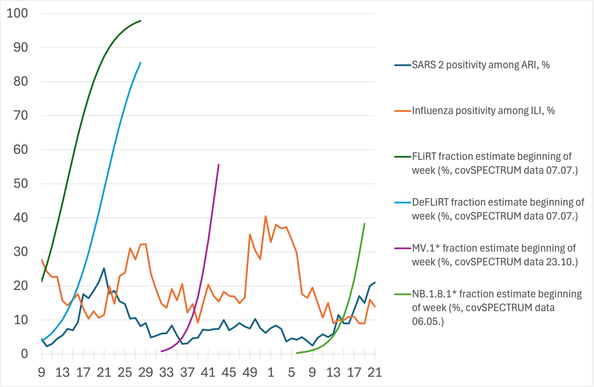
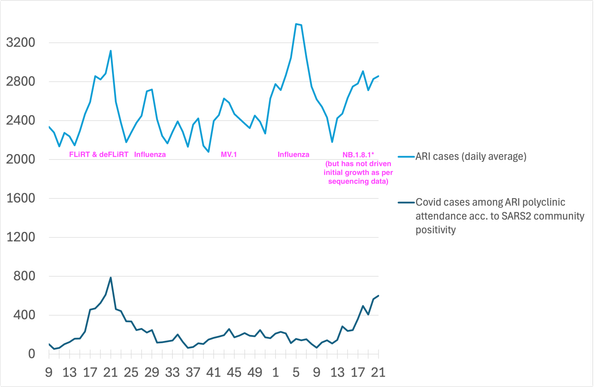
SARS2 positivity among ARI and ARI cases have slightly risen.
Will be interesting to see if the MOH will publish new case and hospitalisation data.
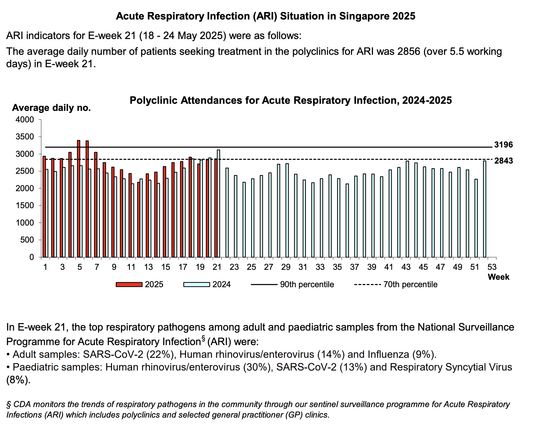
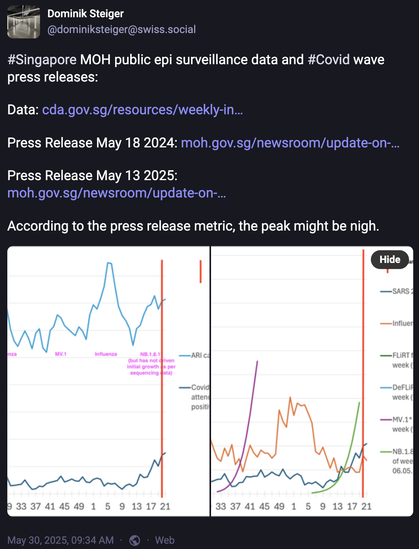
#Singapore MOH public epi surveillance data and #Covid wave press releases:
Data: https://www.cda.gov.sg/resources/weekly-infectious-diseases-bulletin-2025
Press Release May 18 2024: https://www.moh.gov.sg/newsroom/update-on-covid-19-situation
Press Release May 13 2025:
https://www.moh.gov.sg/newsroom/update-on-covid-19-situation-
According to the press release metric, the peak might be nigh.
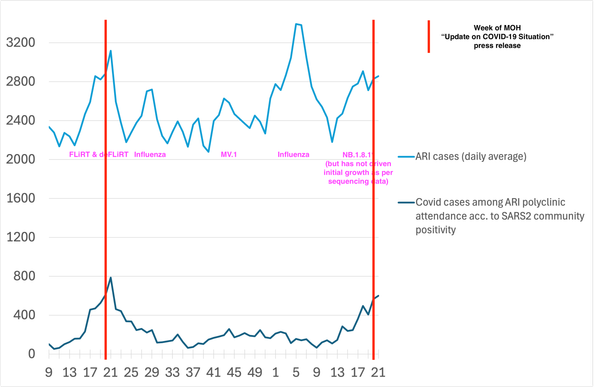
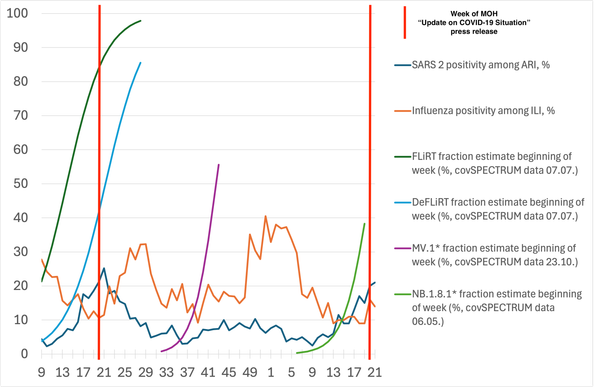
#Singapore #Covid wave, update until week 22 2025.
Perhaps we've indeed passed the peak.
New seq data (last seq date May 16): No change to the conclusion that NB.1.8.1* cannot have driven this wave.
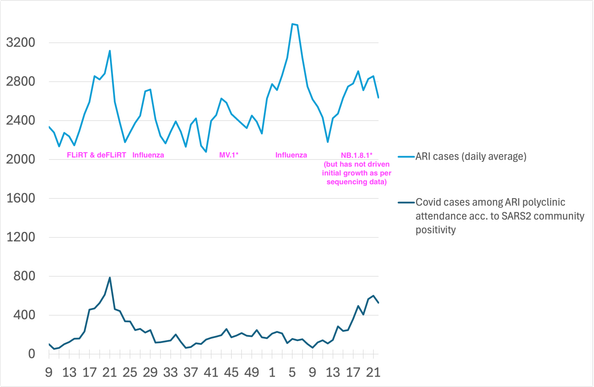
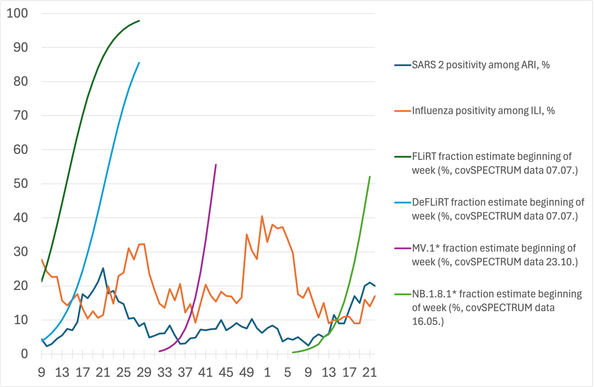
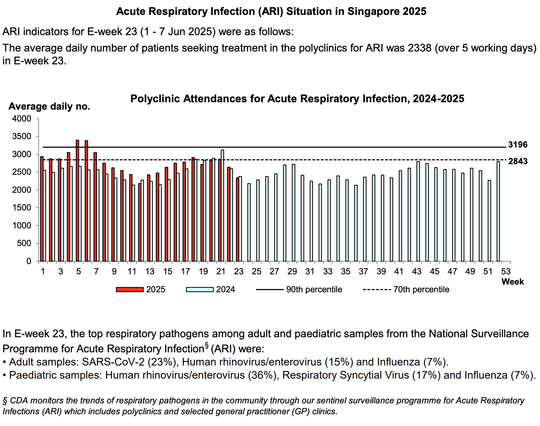
#Singapore #Covid wave, update until week 23 2025.
Seems to have peaked.
New seq data (last seq date May 27): No change to the conclusion that NB.1.8.1* cannot have driven this wave.
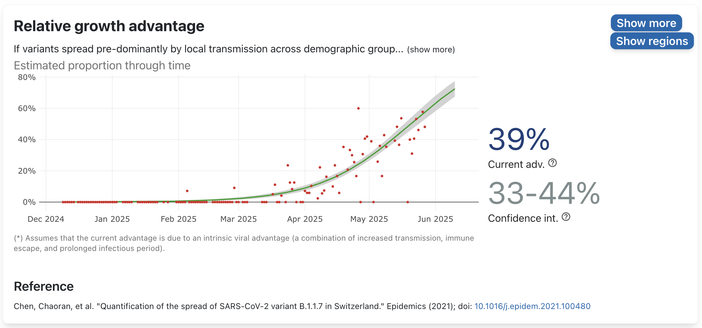
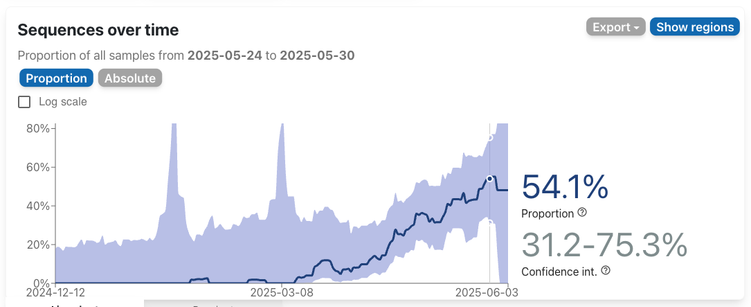
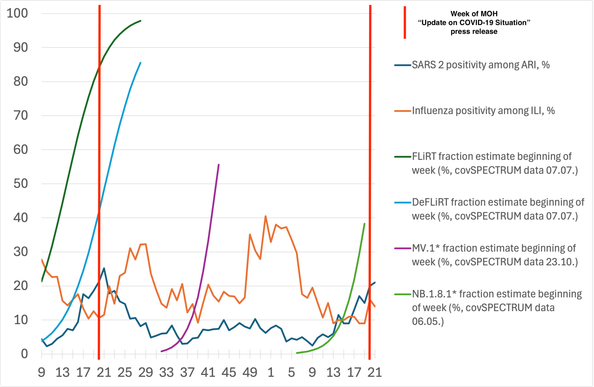
NB.1.8.1* has reached ca. 50% in the presumptive peak week 21 according to the covSPECTRUM estimate.
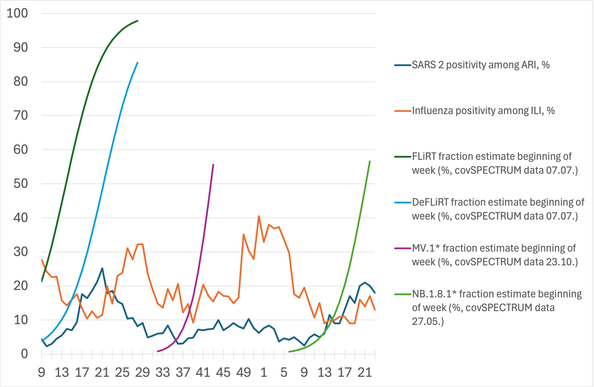
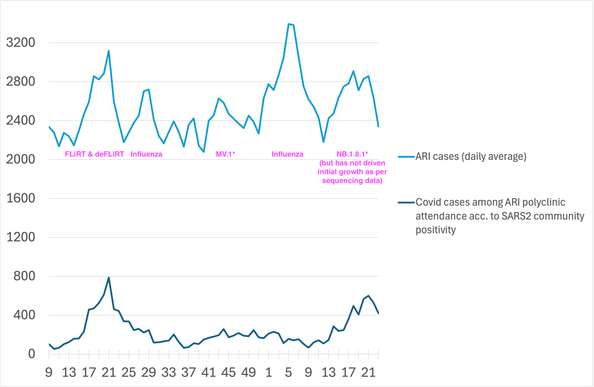
NB.1.8.1* fraction growth seems to be slowing already (upper figures from covSPECTRUM).
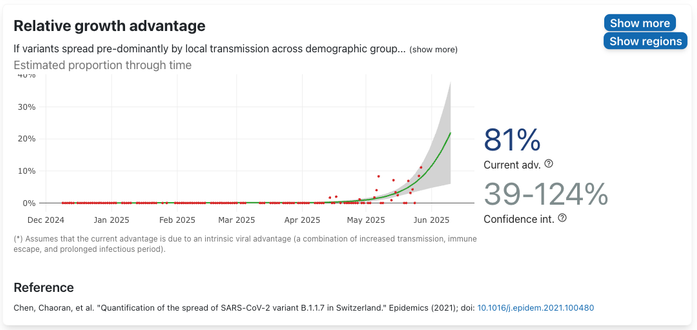
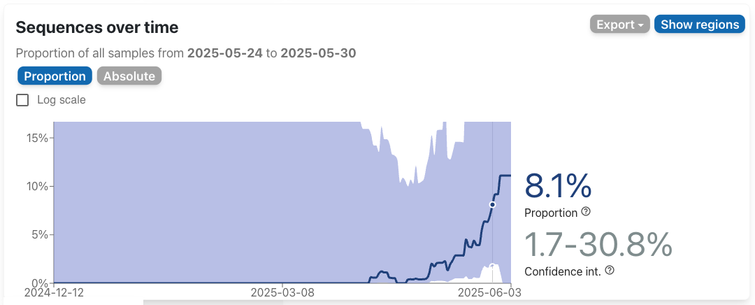
XFG* (lower figures, only 28 sequences) seems to be growing fast, currently still at low fraction size.
We'll see what impact it will have on the currently steeply lowering ARI numbers.

A plausibility check:
Applying the UKHSA Winter CIS IHR (0.45%, https://bsky.app/profile/dominiksteiger.bsky.social/post/3knnplfebjl2b) to the MOH hospitalisation figures:
100 average daily - 7d /100k incidence 12 - 7d /100k infection incidence 2'600
200 average daily - 7d/100k incidence 24 - 7d /100k infection incidence 5'300
Such incidences would be in the order of magnitude range independent measurements and estimates yield for Covid waves.
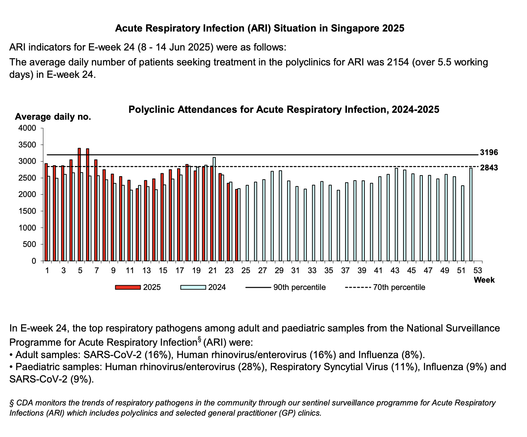
#Singapore #Covid wave, update until week 24 2025.
The wave has peaked, as expected.
No new seq data that would change the conclusion that NB.1.8.1 has not driven initial growth.
"Nimbus" reached 50% at the peak. Growth started long before it reached significant fraction size.
 Eve
Eve 
If the growth in ARI positivity started before NB.1.8.1* became dominant, it would indeed be hard to attribute the wave solely to that sublineage. It’s possible another variant or broader factors (like behavioral changes, testing rates, or other circulating respiratory viruses) contributed to the initial uptick. NB.1.8.1* might still play a role in sustaining or accelerating the wave later, but it doesn't seem to be the trigger based on these data.
 Andreas Burger