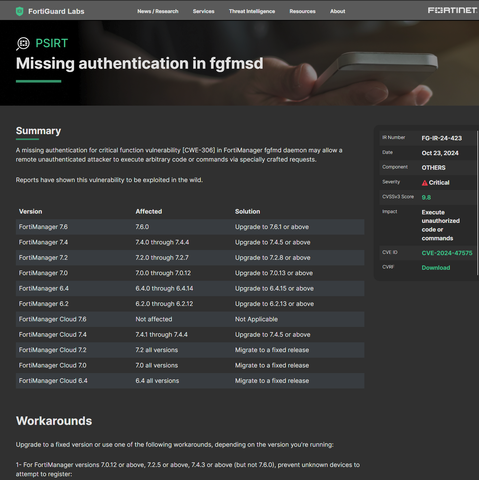
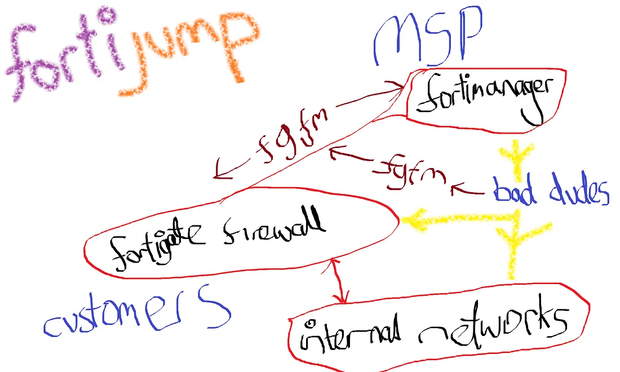
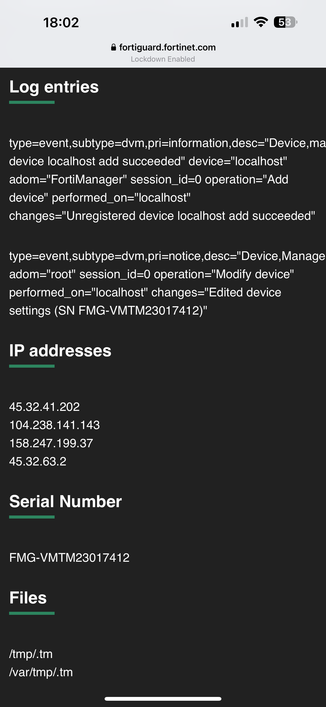
@dangoodin @GossiTheDog I don't know details, but from reading this with my PSIRT hat on this is what I'm leaning toward: it sounds to me like there's an issue with stealing certs, so first they steal a cert, then they load it onto a Forti device they own, and use the cert to register their attacker-controlled device to your organization. I only see one mention of certs, so alongside the mention of localhost, perhaps they just need to establish some means of being trusted (self-signed for localhost, vs. stolen cert via this vuln?) and then the onboard an attacker-controlled device into the fortimanager pool and use that to cement their access.
From there, they can configure their way into your network or possibly take other admin actions (eg. possibly sync configs from trustworthy managed devices to their own?) It's not super clear from these threads. The mitigation to prevent unknown serial numbers suggests that a speedbump to fast onboarding prevents even a cert-bearing(?) device from being included into the fortimanager
 Kevin Beaumont





 Luigi
Luigi 
 fellmoon 🏴
 System Adminihater
 RonnyTNL
 Otmar Lendl
 Jamie Booth
 Zapa
Zapa 

 grey
grey 
 tachi
tachi Lawrence Abrams
 Ewen McNeill
 Arne Visscher
 Ryan Clough
 C1S0
C1S0
 Lesley Carhart
 Altytwo Altryness, BS
  Colin Haynes
 Interpipes 💙
 VessOnSecurity
 NosirrahSec 🏴☠️ guillotine enthusiast
 Cirio
Cirio forivall on hachyderm ₰ 🐻🦉
 Zeljka Zorz
 Bill
Bill ck0
ck0 Blake Ridgway
 Dan Goodin
 Seth Hanford 🐡
 rx13
rx13 

 Andrzej Stamburski