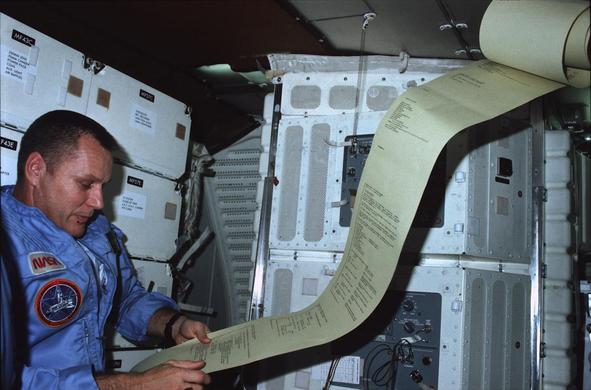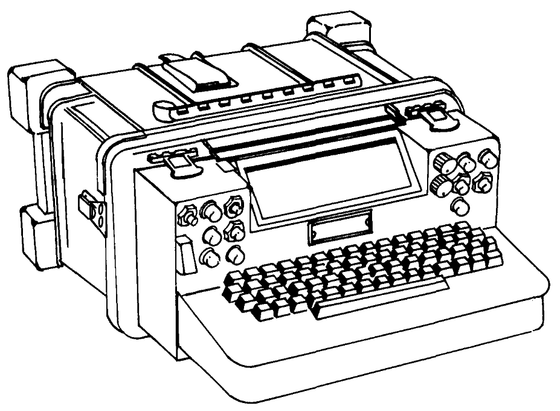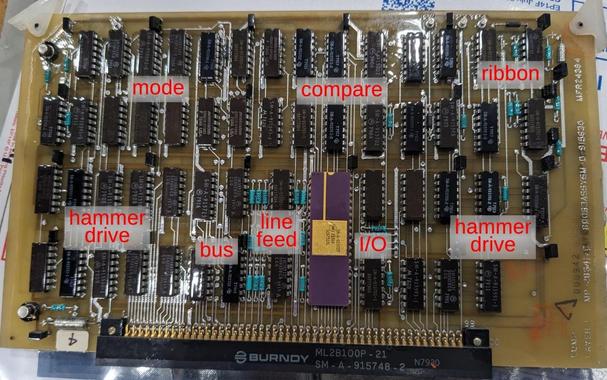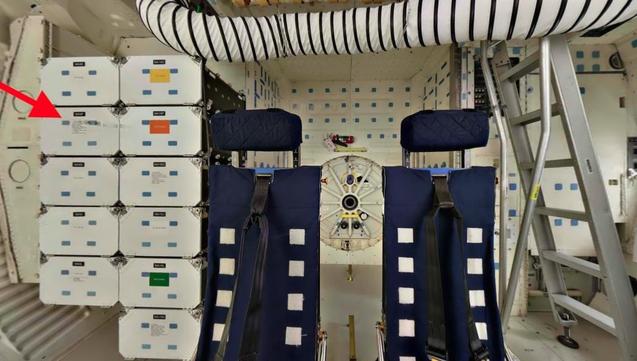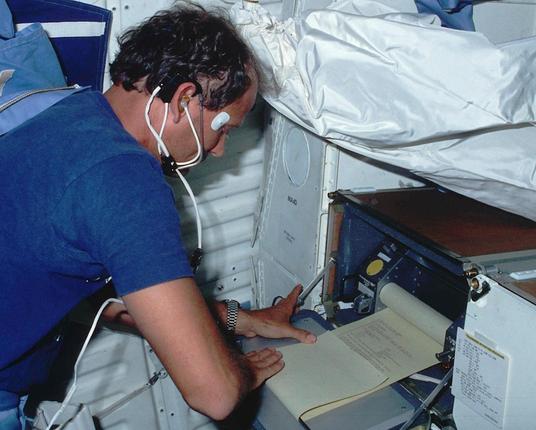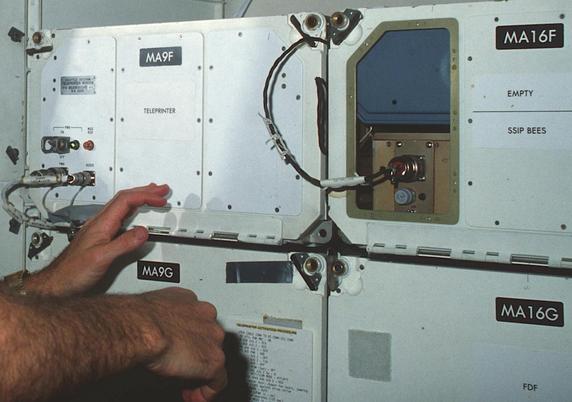

providing the astronauts with mission plans, weather reports, and other documents from Mission Control. Let's take a look inside... 1/12
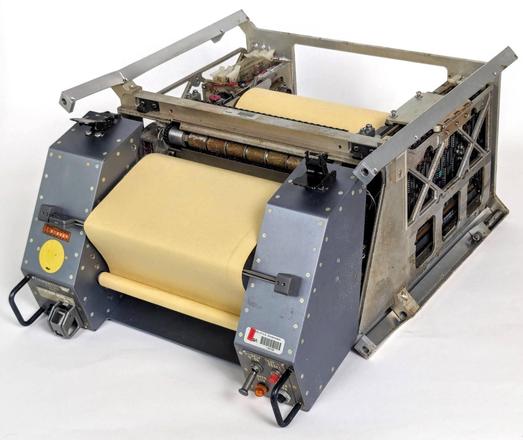
Here's a closeup of the hammers in action as the Shuttle teleprinter prints a line. 3/12
The teleprinter design thrown together in just 7 months after a delay in the TDRS satellites meant that the fancier digital printer wouldn't work for the first few flights.
Although the Interim Teleprinter was expected to be used for a short time, it remained in operation for over 50 flights, acting as a backup printer. 4/12
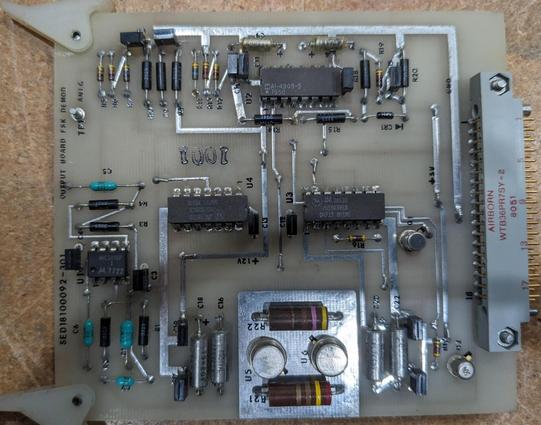
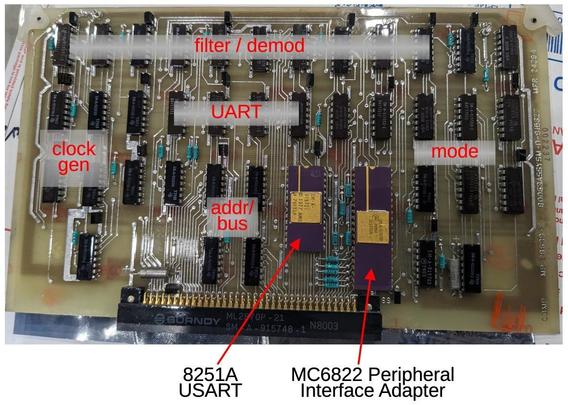
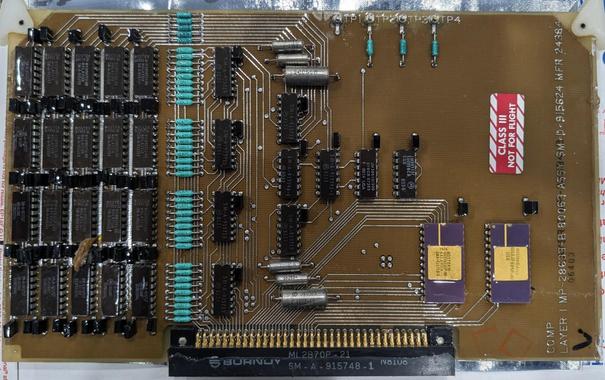
The teleprinter was based on a military communications terminal, with many modifications. The keyboard was removed and boards were added to interface with the Shuttle's audio system.
The system still contained a word processor, unusable without the keyboard. 5/12
We managed to get the printer operational. This wasn't easy because the rubber rollers had turned to liquid, gumming up the mechanism. CuriousMarc carefully disassembled the printer, cleaned all the parts, and realigned the hammers. 10/12
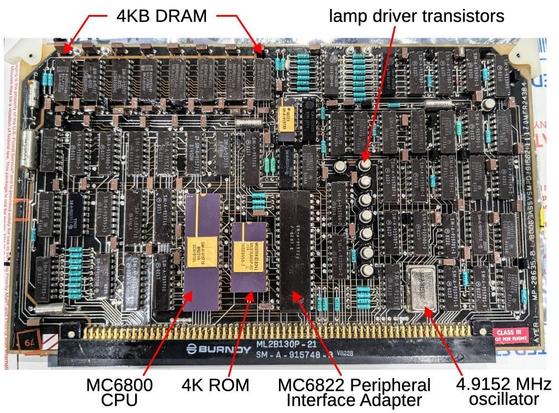
I love these boards!
@kenshirriff these old designs are amazing, real time data processing with a hundred hardware actuators all on a ~1 MHz 8-bit CPU, 4K ROM and 4K RAM.
These days you can buy watches with several GHz class CPUs and a couple of gigabytes of RAM.
I love auto-correlation functions / functionality and used that for certain tasks in the past, too.
You're confusing some of us now because C.Itoh made actual "shuttle (line-)printers"
Their "shuttle printer" was a matrix printer, but instead of a head which traveled the full length of the line, they had a head with 132 pins which just vibrated the width of one single character each.
Huge beasts, very fast (300 and 600 LPM as I recall) and you could hear the hum from the vibrating head two floors down when it ran...
@kenshirriff What a weird modification of ASCII.

LB: for those outside USA, 59 lbs is 27 kilograms (so still fairly heavy even by the standards of 1980s era tech equipment on land)
@kenshirriff Wow. It is mind blowing that something so big and complicated was deemed to be the best solution for this, and kept in service so long.
It is also mind blowing that you and your amazing friends went to so much effort to get it going again.
I can't wait to watch the video. Thanks for doing what you do. It is always so interesting and enjoyable to learn from you.
All of this reminds me of the great Kodak Eastman Co. and my own personal experience working for its french subsidiary Kodak-Pathé in the late 90's.
The #BridgeHead project.
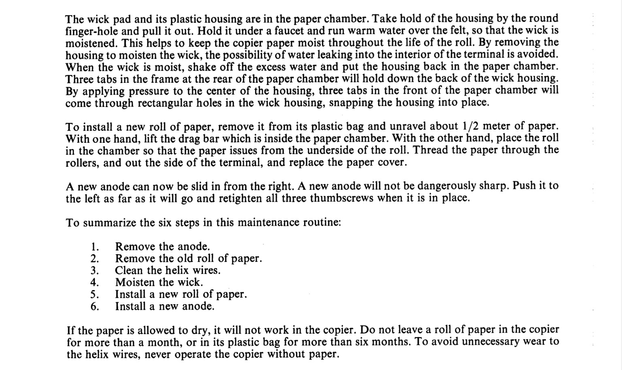
A great source paper, obtained from the kodak Wikipedia archived page source [note 78]. Here under.
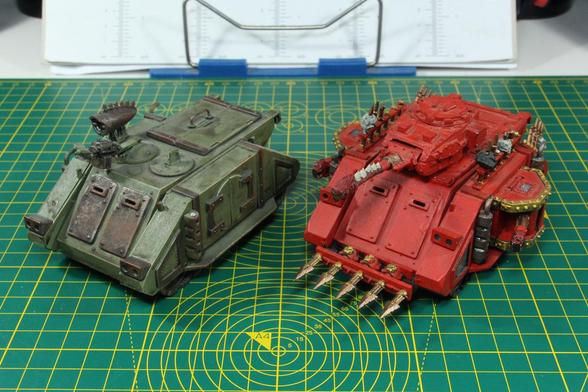
It looks like the rhino model from warhammer 40k!