The Space Shuttle had a 59-pound printer on board, known as the Interim Teleprinter. Putting this heavy printer in orbit cost $1.5 million per flight, but it was a key piece of flight hardware,
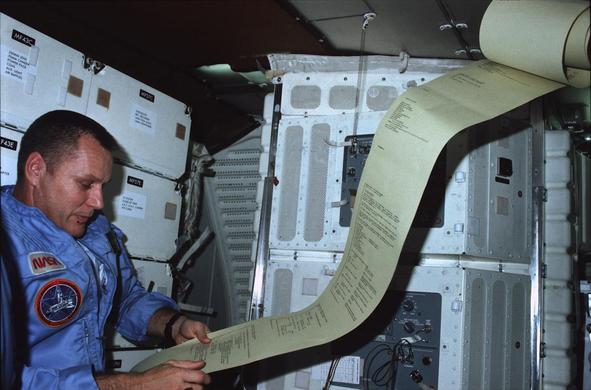
providing the astronauts with mission plans, weather reports, and other documents from Mission Control. Let's take a look inside... 1/12
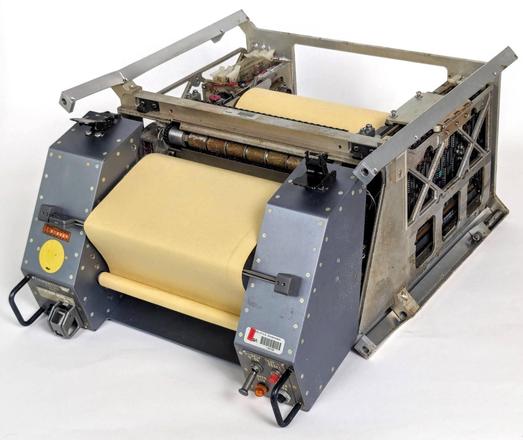
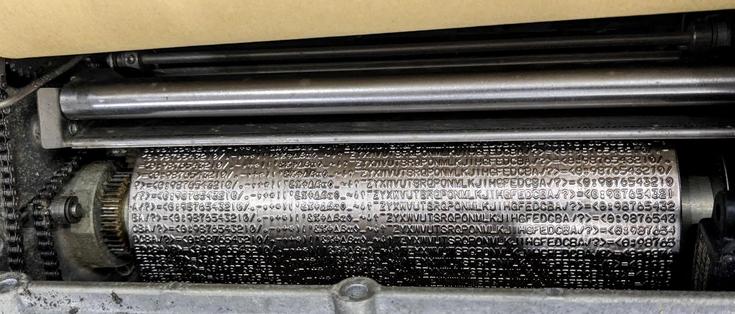
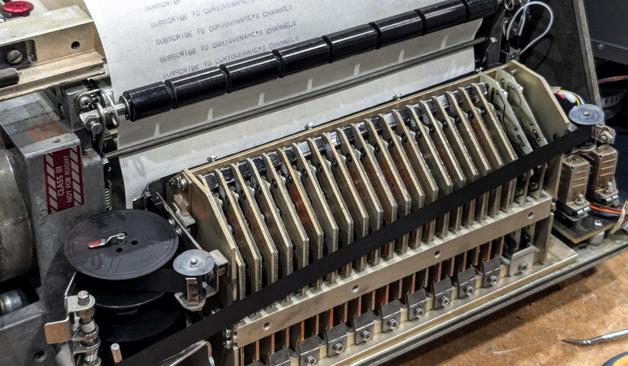
The Shuttle printer uses a spinning metal drum with raised characters. 80 hammers, one for each column, fire at the exact moments to hit the ribbon and paper against a character on the drum as it spins by. 2/12

Here's a closeup of the hammers in action as the Shuttle teleprinter prints a line. 3/12

https://youtu.be/1SjtmePBZjo

- YouTube

Enjoy the videos and music you love, upload original content, and share it all with friends, family, and the world on YouTube.

The teleprinter design thrown together in just 7 months after a delay in the TDRS satellites meant that the fancier digital printer wouldn't work for the first few flights.

Although the Interim Teleprinter was expected to be used for a short time, it remained in operation for over 50 flights, acting as a backup printer. 4/12

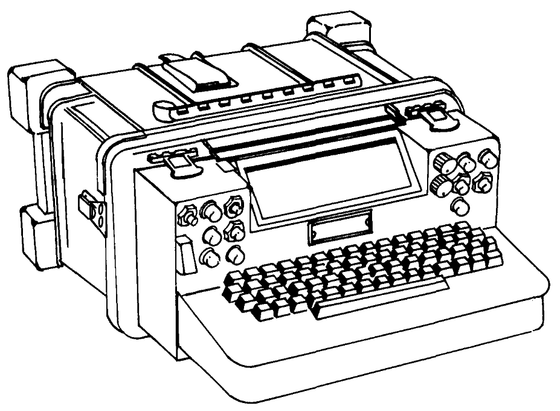
The teleprinter was based on a military communications terminal, with many modifications. The keyboard was removed and boards were added to interface with the Shuttle's audio system.

The system still contained a word processor, unusable without the keyboard. 5/12

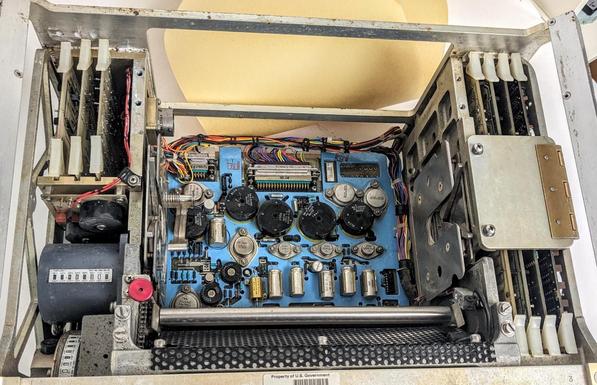
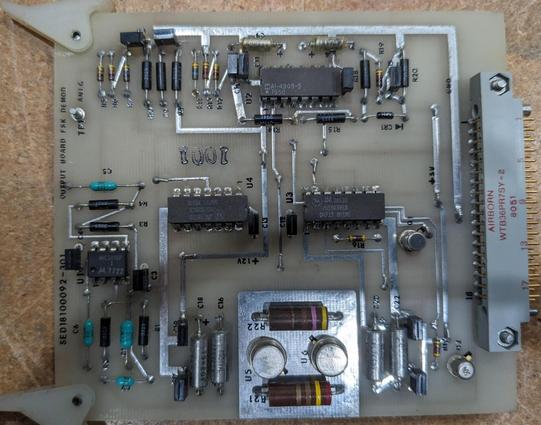
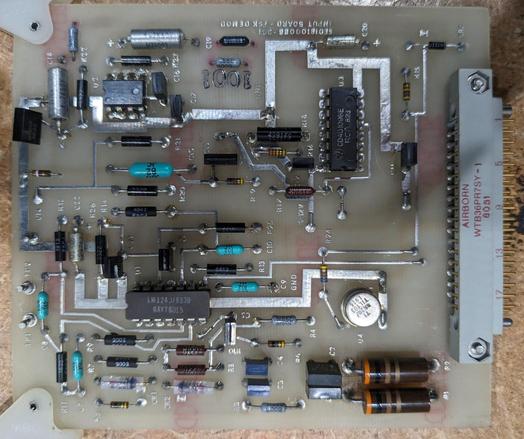
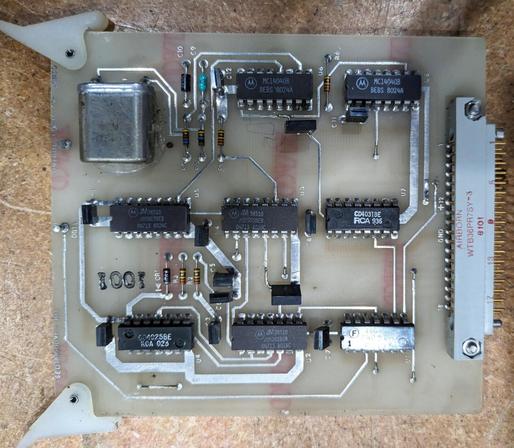
This view inside the teleprinter shows the three custom Shuttle boards (left), the power supply (blue), and the four logic boards (right).
6/12
I reverse-engineered the three custom Shuttle boards to determine the signal format (FSK with 3600 Hz and 7200 Hz).
A digital circuit demodulates the signal using auto-correlation. 7/12
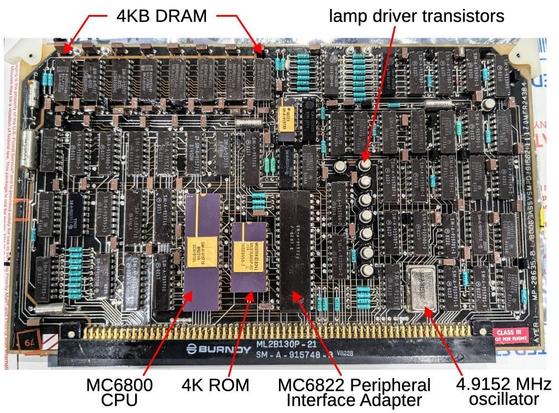
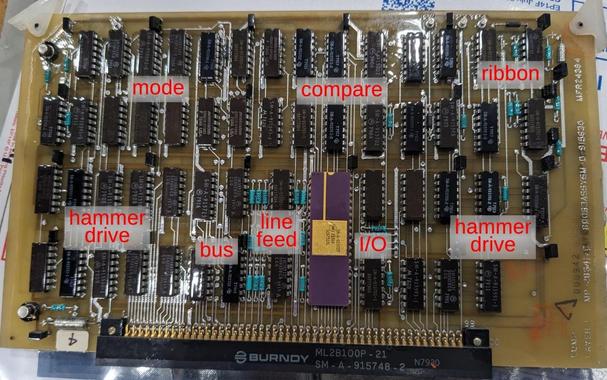
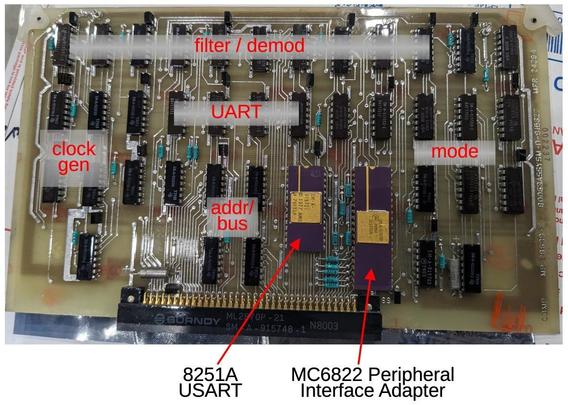
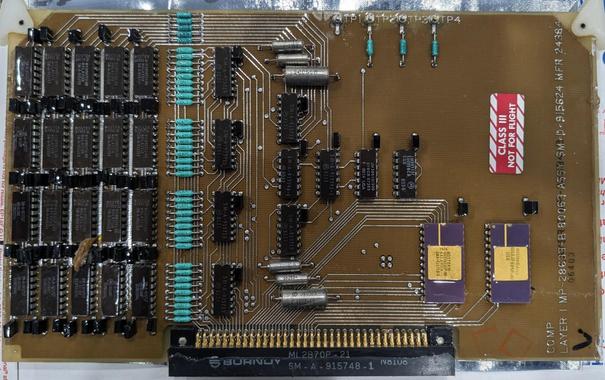
The Shuttle teleprinter kept the four logic boards from the military teleprinter: the CPU board, print control board, communication board, and memory board. These implemented a 6800-based microprocessor. 8/12

@kenshirriff these old designs are amazing, real time data processing with a hundred hardware actuators all on a ~1 MHz 8-bit CPU, 4K ROM and 4K RAM.

These days you can buy watches with several GHz class CPUs and a couple of gigabytes of RAM.