 Patricia Aas
100/ but hold up… I just argued that the size of the money supply was not fixed… but I guess that fits… because the public side can create money to cover it’s deficit, but private sector doesn’t have that option. So under austerity we create a zero sum game.
Am I even making sense anymore ?
https://www.nytimes.com/2019/02/25/opinion/running-on-mmt-wonkish.html

103/ seems to me from reading this and some of the references that the disagreement seems to be “technical”. Krugman seems to agree that the fear of deficits is overblown, but seems to argue that interest rates are another tool to manage possible inflation. Tbh I haven’t gotten the opposite impression yet from the book, but maybe I missed it.
One thing I do wonder about is that if the deficit is in the form of bonds, won’t higher interest rates affect the cost of the accumulated deficit? Wouldn’t the public side now also have to pay more for the accumulated deficit? How does that work?
Maybe I don’t know how any of this works
105/ she is describing a model for interest rate that I think she is going to argue against. In it there seems to be a mechanism where one imagines that the private sector and public sector compete for loans in the same fixed sized market. And so the public sector deficits are in this model financed by loans in this market. And therefore the increased deficit would then be a significant increase in demand on a finite supply of money. And therefore drive the interest rate up.
But… that’s not how it works? In the real world? The banks increased their interest rates when the central bank did. So this model doesn’t make sense at all to me.
https://youtu.be/ZuXzvjBYW8A?si=g_1Z9XfgsTpioq2G
(h/t @Di4na)

Have the Boomers Pinched Their Children’s Futures? - with Lord David Willetts
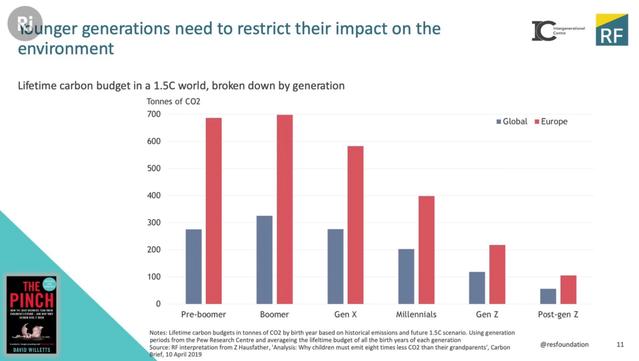


https://social.vivaldi.net/@Patricia/112704863073553929
Patricia Aas (@[email protected])
4/ “Capital in the Twenty-First Century” by Thomas Piketty https://social.vivaldi.net/@Patricia/112681938811222913
https://www.ecb.europa.eu/press/key/date/2024/html/ecb.sp240626~0cdeaedbb1.en.html

114/ And here from the Congressional Research Service
Deficit Financing, the Debt,
and “Modern Monetary Theory”
https://sgp.fas.org/crs/misc/R45976.pdf
116/ But one thing I haven’t read much about is this inflation they’re currently fighting with interest rates globally. What do they think caused that? The EU guy didn’t seem to think it had anything to do with the financial measures during the pandemic, but rather fallout from the supply chain breakdown? I really need to read that speech more closely.
For Norway imo imported inflation of 2-3 percent doesn’t really matter when exchange rates mean that imports are 25(?) % higher than a couple of years ago. And I’ve realized that people aren’t distinguishing the two much in the media. But the interest rate hike that they are apparently doing to fight the insignificant inflation is killing households who are struggling with food prices due to the weak NOK.
For real. I don’t get the interest rate hike at all, it seems purely destructive for no reason. It clearly has zero effect on the value of the NOK.
117/ For real, how does this make any sense? Companies costs are increasing because the NOK is historically weak and interest rates shot up, so costs are way up and demand is way down. So their answer is to continue to beat Norwegian households into “submission” because they are already lying on the ground?
“There is uncertainty about the further development of the Norwegian economy. If companies' costs continue to rise rapidly or the krone becomes weaker than forecast, price inflation may remain high for longer than we currently envision. Then the committee is prepared to raise the interest rate again.” (Google translation)
https://www.norges-bank.no/kort-forklart/inflasjon/
https://youtu.be/fjoDjv1R3to?si=0jJNF-sEFAdFC8rR

Sellers Inflation [Isabella Weber]
https://youtu.be/RyIeC21XeLs?si=O7YOGfZd_ETpc8vR

Jon Stewart Forces Economist To Admit Capitalism Screws Us All
121/ Finished chapter 7 and 8 and it is pretty clear to me that this is mainly aimed at the US, and seems to be intended as an economic lever to shift the US in a more social democratic direction.
This is her summary of MMT
123/ I have been trying to find someone saying what is causing this inflation. And it's weird how little there is to find on this. But I found a page on the national statistical institute of Norway (SSB) talking about inflation in 2023. And it is really funny how they even point out the same feedback loops I've talked about in this thread (plus some more):
- rents are up (increased interest rates are probably a factor)
- imported goods are up (weak NOK is probably a factor)
Other things they brought up was that energy prices had been very high and that those losses were probably also being priced in.
The thing is... That means that we are turning up interest rates partially because we turned up interest rates and partially because our currency is weak and that energy prices were high a year ago. And turning up interest rates is not made to fix any of that.
It is made to cool down an overheated (too much money, too much spending) economy.
But that isn't what the economy looks like. But since they have reduced the entire state of the economy into one number (plus some including this, excluding that numbers), all context is gone and they pull out the same hammer that is part of the reason we got in this mess.
https://www.ssb.no/priser-og-prisindekser/konsumpriser/statistikk/konsumprisindeksen/artikler/kraftig-prisvekst-i-2023

Kraftig prisvekst i 2023
Året vi har lagt bak oss var nok et spesielt år når det gjelder prisvekst. I et historisk perspektiv steg prisene uvanlig mye. I motsetning til året før, da prisveksten økte kraftig for de fleste varer og tjenester som husholdningene kjøper, var bildet litt mer sammensatt i 2023.
124/ Their whole model is based on the assumption that when prices go up it is because demand is up. But sometimes prices go up because costs are up. And... that is not fucking supported.
I don't know what to say.
https://no.wikipedia.org/wiki/Norges_statsgjeld

https://youtu.be/0G6obeUKWmw?si=-rW1dPklrdytZCMz

How Do We Fix The Economy? Modern Monetary Theory, Explained | The Problem With Jon Stewart Podcast
129/ Ok, I had an epiphany.
And it’s about all the money that goes to the rich/banks. Where does it go? Because we don’t see it much in the real “normal” economy. (Or at least I thought so)
So what if, when we double or triple the money supply, but only/mostly give it to the rich/banks, we actually see inflation, but we didn’t recognize it as inflation?
What if the goods that got hit with inflation were “Capital” - that is real estate and stocks etc.
What if what we think of as capital gains is actually inflation on rich people stuff?
And maybe when rich people got a lot of money they spent it, but they spent it on rich people stuff?
Like apartment buildings.
And back to Harvey/Marx’ definition of “use value” vs “exchange value” - their money 💰 inflated the “exchange value” of real estate. Which is why nobody can afford a home anymore.
So basically the rich have their own economy, which shares its currency with us. But the stuff they can buy, at the scale they are at, are different things. We would perhaps get a nicer couch or more food if we got a lump sum in our scale (2000$ for example). They buy real estate and stocks at their scale (2.000.000$).
So you don’t see the inflation on groceries, but real estate values go up (or don’t go down).
130/ Which reminds me of a story a guy told me. So his building only had one electricity meter (I’m assuming it’s old), and so they had a practice of splitting the bill evenly between the units. But suddenly they had gotten a massive bill, 10-20x what they usually got. Turns out one of the units had started up a pot farm and apparently this was pulling a lot of energy for heating lamps or something (look I don’t know anything about growing pot). But since they only had one meter they had to split it anyway.
Or in my radiator system metaphor, what if one of the units had connected a pipe to the system and was siphoning off the water into the system next door? It’s a separate system. So our system would have this “weird quirk” where we filled and filled with water/money, but it never became over-pressurized. But if we filled a bit too much on a part of the system that bypassed this guys unit, then we actually saw over-pressurizing on occasion.
However, next door, they had to remove water regularly because it was constantly becoming over-pressurized from the continuous stream of water.
My brain is visual 🤷🏻♀️
https://youtu.be/m4MahOuEdVw?si=gisQblyM__PZGdTC

How Can We Fix Inflation? With Economist Steve Hanke | The Problem With Jon Stewart Podcast
133/ Lol, I’m still stuck on inflation. Remember way in the beginning of this thread when I said I’d be done with it soon? Well, here we are, way after the end of the book and I’m still stuck on inflation.
The problem is that inflation is like colic. If you ask people what colic is they’ll say something about stomach issues. But when you look up the actual diagnostic criteria it’s (for Norway): baby cries more than 3 hours a day, more than 3 days a week for more than 3 weeks.
So would it surprise you when I tell you about a study on kids that were diagnosed with migraines as children, one of the findings was that every single one had been diagnosed with colic as babies?
You have one single metric: baby cries.
IT COULD BE LITERALLY ANYTHING
(I’m clearly not annoyed by this)
So back to inflation. They have basically a shopping cart of stuff. And if it costs more then they say INFLATION. But why does it cost more?
Friedman (their hero) literally says that inflation happens (partially?) because people think it will happen.
I just can’t. This “field” is driving me nuts. It’s a wandering self fulfilling prophecy.
134/ Maybe some went up because their costs were up when rebooting their supply chains after the pandemic, maybe some went up because costs went up because of war (wheat in Ukraine), maybe some went up because of weaker currencies, maybe some went up because THEY RAISED THE INTEREST RATE, maybe some went up because… Everybody Else Did It And If We Do It Too Maybe We Can Make Some More Money???
But hey. We have one variable in our high school math equation. So fuck all of you.
😬🥳
135/ You know, one of the upsides of having more diversity in your field is new (and better 😇) metaphors, my gift to you:
Inflation is like colic
You don’t know why the baby/economy is crying
136/ I give up. Norwegian inflation went down more than projected, so now Norwegian economists are predicting interest rate hikes 🤯Wait what? Reason: the NOK got even weaker. Wat? Well, you see, since the Norwegian economy looks like it’s going better than expected, people think we’ll lower the interest rate so then NOK isn’t that interesting anymore so… 🤪
This is such a bullshit field, no other field would get away with this crap. They just gaslight you constantly.
https://e24.no/norsk-oekonomi/i/MnnAxK/kronen-svekker-seg-videre-reell-fare-for-renteheving

137/ This is a joke. They’re just doing the economics equivalent of techno-babble. “Well, actually, the NOK is weak because inflation is low”
Fuck you, Mr Economist, y’all said the opposite a month ago.
Just say it like it is: WE DON’T KNOW, BECAUSE WE DON’T KNOW HOW THE ECONOMY WORKS, WE’RE JUST FAKING IT
Economics is not only a pseudoscience, economists are rude and condescending
https://borsen.dagbladet.no/nyheter/svakeste-pa-24-ar/81685750

 FCLC
FCLC