 Patricia Aas
35/ it’s funny how Norwegian newspapers and even the central bank are not even pretending this has anything to do with us. You want to know what numbers the Norwegian central bank is looking at to figure out if they can lower the Norwegian interest rate?
The unemployment rate in the United States of America.
https://e24.no/internasjonal-oekonomi/i/Xj6olo/viktige-jobbtall-kan-skyve-paa-rentehaapet-fed-har-tatt-feil-foer
https://www.nrk.no/ytring/det-haster-overhodet-ikke-med-rentekutt-1.16778904

36/ Turns out that the pre-Friedman King of Economy, John Maynard Keynes, agreed with me (according to the book), or the quote is about the opposite (about lowering the interest rate to make people take out loans)… but it turns out to be kind of the same for the NOK 🤪
“You can’t push on a string”
Turns out that perhaps the quote is misattributed 😅
https://en.wikipedia.org/wiki/Pushing_on_a_string
My point being: you can try to make your currency attractive, but you can’t make people buy it.
And I posit that the NOK is weak because the planet is fucked and everybody knows it.
https://youtu.be/q4k8SGmJqIA?si=MbtjKvkm6uxnl_54

How George Soros Broke the Bank of England
40/ And one sector is particularly vulnerable: construction. Because:
1. Materials (imported) are much more expensive
2. Interest rates are way up, so a lot of projects are halted due to financing
3. They are dominated by highly unionized workers and their salaries just went up (because the unions didn’t negotiate with them, they negotiated with the swimming in money export sector)
So all sorts of companies associated with construction are going bankrupt.
points out, housing prices are not going down as we expected.
https://hachyderm.io/@intarga/112719682482183505
Ingrid (@[email protected])
@[email protected] I find the interest rate situation in Norway extra annoying, because even with it not working to bring down inflation, the one silver lining it should have had was to cool the housing market. Instead, house prices are still going up because we completely stopped building 🙄🙄🙄
43/ And that gets us the whole “what is inflation?”. Because if it is that it is harder to make ends meet because everything is more expensive. Then they are actually creating MORE inflation.
Yeah, we are exposed to the exchange rate, but now we are killing the economy that’s supposed to compensate, while driving actual living costs even further through the roof.
44/ Housing is also a weird market in general, because once you’re in, you buy and sell in the same market. So that market becomes sort of disconnected from everything else. Because demand is constant and supply is pretty constrained: the people selling their homes and newly built stuff.
But with no construction the supply is even more constrained, and the people buying are mostly the people selling, so it becomes a strange closed loop system.
45/ However, if you are a renter you are also getting hit, again by different effects. The current left coalition (and previous iterations) have wanted to make it less lucrative to be a landlord. So margins have shrunk due to higher taxes etc. But a lot of this has been funded through loans, and so those margins are getting squeezed further. So landlords are either selling off their properties, which are often in the cities, or raising rents. But the housing market is undersupplied so it just absorbs these properties.
So now we have fewer rental properties, which would drive up prices on its own (according to economic theory 😅), but the remaining market is also increasing rent to compensate for higher interest rates.
So even if you rent you are getting hit by the interest rate. And actually it’s worse there, because rents will for sure not go down in the same way mortgages will if/when they reduce the interest rate.
46/ Or in kubernetes analogy (because of Cybercyn and the book The Unaccountability Machine): some stuff in our system (the Norwegian housing market) are auto-scaling in some cloud, some are manually scaled (by buying and adding new servers in our on prem data center) and once the peak in consumption is over, some things might scale down quickly, but some are stuck now with a lot of expensive hardware taking up space in our server racks.
Mortgages are in AWS and rents are on-prem in my very confusing analogy.
47/ I don’t know what the answer is, my earlier idea of constraining the supply of NOK… it looks like they did that, and it had apparently about as much effect as the interest rate (not much if any).
Maybe without these two things it would’ve spiraled out of control… but I don’t think so, because this wasn’t caused by our economy.
So maybe the best thing would’ve been to just accept it? Yeah, the NOK is weak, because the world is rough, increase salaries some and just sit tight? Maybe even stimulate internal growth to compensate?
52/ Ok, I think I get it. MMT says that a deficit isn’t a sign of government overspending, inflation is. (And here they are clearly talking about the overheated economy inflation) So as long as the spending doesn’t cause inflation, it doesn’t matter if you run with a deficit even over a longer period (she mentioned decades).
So basically she is sort of saying that deficits aren’t real because taxes aren’t real.
This is more like the water in a radiator system (my analogy). You can add in water or remove water, but the system isn’t the water. And adding water (money) only becomes a problem when the pressure in the system gets too high and water starts spilling out somewhere.
Basically, money isn’t “real”. It’s… just water in a radiator system in a building. The building and the radiators and the people living there are the real things.
(h/t @joelving and the 5 other people who have brought it up)
https://mastodon.joelving.dk/@joelving/112720891429481986
Peter Toft Jølving (@[email protected])
@[email protected] @[email protected] Most economic forecasting models are relatively simple and don't require supercomputers (because the models are oversimplified). Steve Keen takes a System Dynamics approach and has many more feedback loops in his models. He's also one of the fiercest critics of mainstream economics I know of, for many of the same reasons @[email protected] is. Worth looking up, if it interests you.
https://debunkingeconomics.com/episode/does-modern-monetary-theory-make-sense

Does Modern Monetary Theory make sense? | Debunking Economics - the podcast
Modern Monetary Theory states that’s, because the government of a country is the monopoly supplier of money, it has an unlimited capacity to pay for things and...
https://en.wikipedia.org/wiki/Reserve_currency

1. Through exports
2. Printing money
3. Borrowing from banks
https://www.norges-bank.no/en/topics/liquidity-and-markets/Foreign-exchange-purchases-for-GPFG/
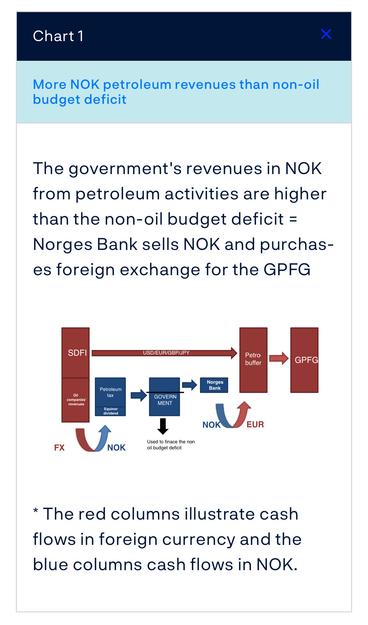
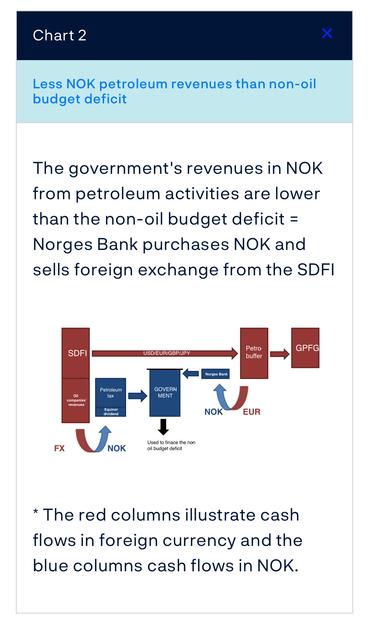
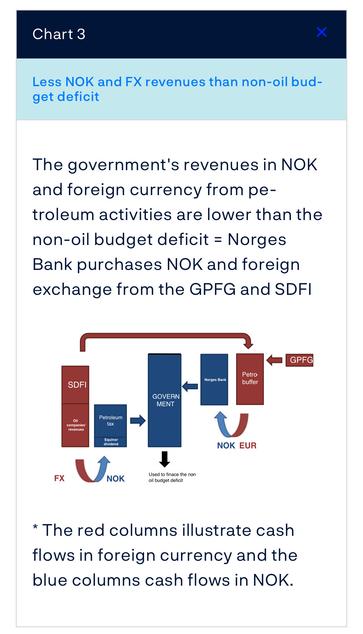
Norges Bank’s foreign exchange transactions on behalf of the government
The Norwegian government receives revenues in both NOK and foreign currency from petroleum activities. Some of these revenues are used to finance a planned central government budget deficit. Norges Bank carries out the necessary foreign exchange transactions associated with petroleum revenue spending. These foreign exchange transactions are planned and smoothed over the year and are pre-announced each month.
62/ I feel so smart when I read news articles that agree with me 🤓 🤣
“And an interest rate increase will not help, he believes. - The higher the interest rate goes, the more landlords have to raise the rent, and then the interest rate increase is inflationary. It does not have the same effect as in the housing market, where prices fall if interest rates rise. The interest rate is not a good weapon to deal with this kind of inflation. It makes matters worse, he says.”
https://e24.no/norsk-oekonomi/i/93zl4d/uenige-om-leieprisene-det-gjoer-vondt-verre

65/ After spending ages on inflation, I’m apparently breezing through chapter 3 “The National Debt (That Isn’t)”
Basically, in the same way tax isn’t real (in that it is just a mechanism to remove money from the economy and/or create demand for the currency. MMT says that the deficit isn’t real. Very clear that it is the US they are talking about. To generalize to more countries she picked the UK and I would’ve preferred another more “normal” country.
67/ To be fair, I think that issue is pervasive in the whole field. They are not able to separate ideology from models of the economy. And then they infuse in morality and destiny and Right and Wrong in these models until it’s more mythology than science.
And I don’t mind ideology. I have a great helping myself. But when you’re already in a non rigorous field, mixing opinions into “models” makes the whole thing even less serious.
A complex system is what it is. You find out the shape of it empirically. You can form hypotheses, design experiments and test. You don’t sit in a corner and Devine It. You might have a famous “shower thought” but then you test.
And seriously, these people (economists) don’t test ANYTHING.
68/ I really thought I’d be more convinced by leftist economists. But they are methodically all very similar. And it is the methodology I have issue with in this whole… project(?).
This field has imo structural issues and they aren’t fixed by the practitioner being less of an ass.
The problem is they believe in these simplistic models and that is standing in the way of developing the kind of tooling, discipline and humility needed when working with complex systems imo.
https://social.vivaldi.net/@Patricia/112719504676456386
Patricia Aas (@[email protected])
When you quote me I hope you pick the best quotes: “And I posit that the NOK is weak because the planet is fucked and everybody knows it.” https://social.vivaldi.net/@Patricia/112719497998588756
 Simon Frankau
@Patricia A thing that makes it more interesting/tricky is that so many of the knobs are multiplicative.
For example, in many situations, you don't care about the amount of money, you care about amount x velocity of money, as the amount of economic activity going on. And that velocity can change rapidly depending on confidence.
In another case, loans affect money supply multiplicatively via fractional reserves.
Basically, lots of opportunities for positive feedback loops.
@Patricia Also, you mention interest rates as one of the few controls available. I believe at one point people tried to target the money supply rather than interest rates. Given money supply is a lot harder to observe and manage, this was something of a mess.
IR might be slightly further from what matters, but it is at least manageable. One of the rare cases where managing what you can measure is not only a simplification, but actually works better.
@Patricia In what I was saying, I didn't mean to suggest it's the only way of intervening. More like...
If you have a patient who's dehydrated, you're better off pumping them full of fluids and watching their blood pressure, rather than trying to calculate the volume of blood they have and working off that.
For a while, IIUC, bankers spent time trying to manage blood volume.